
Roasteries / Bonanza Coffee Roasters

Bonanza Coffee Roasters
Berlin, Germany
Pioneers of European specialty coffee in Berlin since 2006. Bonanza sources with precision and roasts for clarity, sweetness, and expression — "unnecessarily good" is their standard. With four Berlin locations and global wholesale reach, they've helped define what contemporary European specialty coffee looks like.
13
coffees
2
followers
Germany
base
Locations
Bonanza Jägerstraße
Jägerstr. 58-60, 10117 Berlin, GermanyMonday: 08:00-19:00 Tuesday: 08:00-19:00 Wednesday: 08:00-19:00 Thursday: 08:00-19:00 Friday: 08:00-19:00 Saturday: 10:00-19:00 Sunday: 10:00-18:00
Bonanza Roastery
Adalbertstr. 70, 10999 Berlin, GermanyMonday: 09:00-18:00 Tuesday: 09:00-18:00 Wednesday: 09:00-18:00 Thursday: 09:00-18:00 Friday: 09:00-18:00 Saturday: 10:00-18:00 Sunday: 10:00-18:00
Bonanza Mitte
Alte Schönhauser Str. 15, 10119 Berlin, GermanyMonday: 08:00-19:00 Tuesday: 08:00-19:00 Wednesday: 08:00-19:00 Thursday: 08:00-19:00 Friday: 08:00-19:00 Saturday: 10:00-19:00 Sunday: 10:00-18:00
Bonanza Oderberger
Oderberger Str. 35, 10435 Berlin, GermanyMonday: 08:30-19:00 Tuesday: 08:30-19:00 Wednesday: 08:30-19:00 Thursday: 08:30-19:00 Friday: 08:30-19:00 Saturday: 10:00-19:00 Sunday: 10:00-19:00
Coffees
13 coffees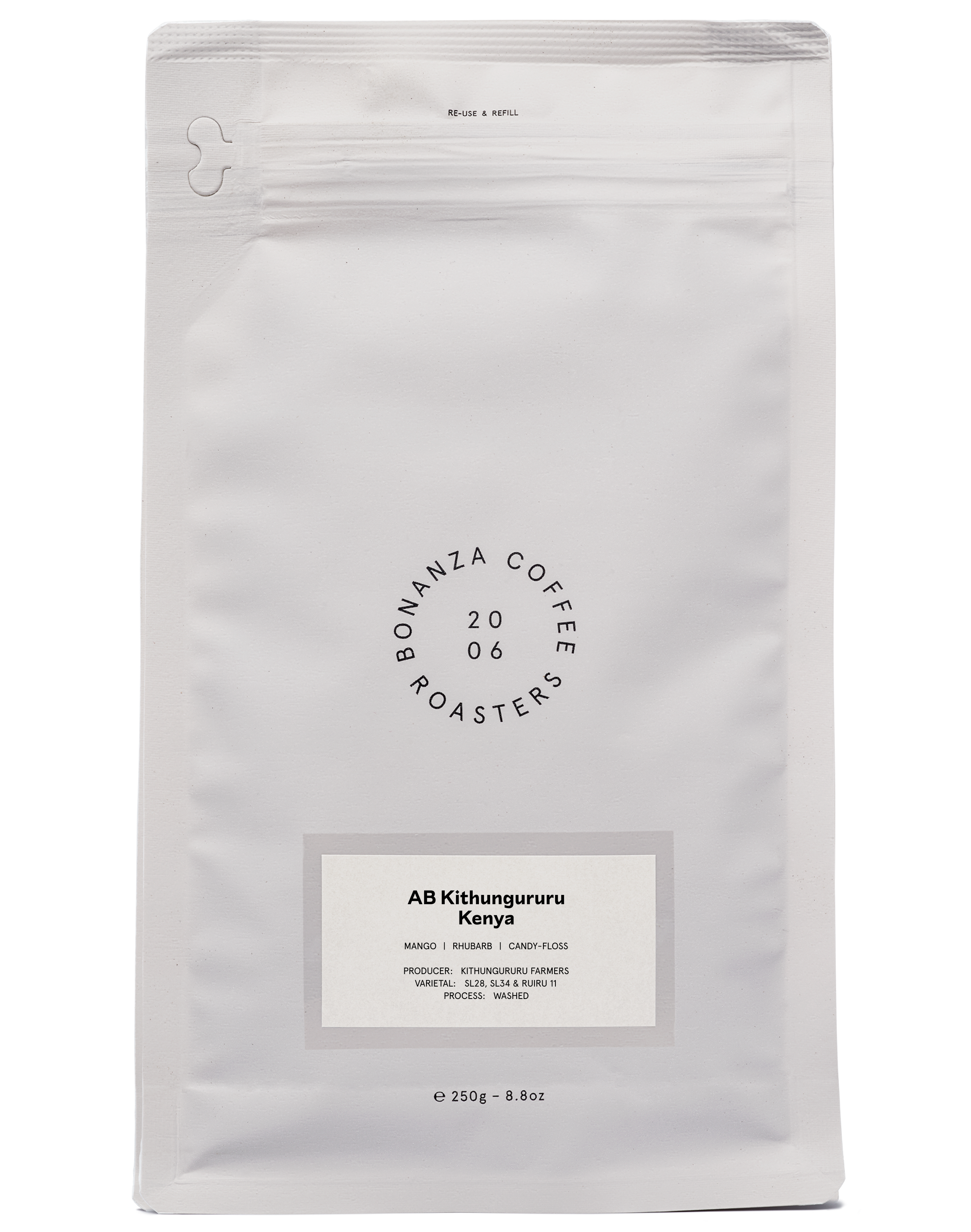
AB grade from the Kithungururu Factory in Embu County, which serves local smallholders growing SL28, SL34 and Ruiru 11. The factory trains its farmers in pruning, mulching, fertilisation and disease management, which shows in how consistent the coffee is year after year.
Mango, Rhubarb, Candy floss
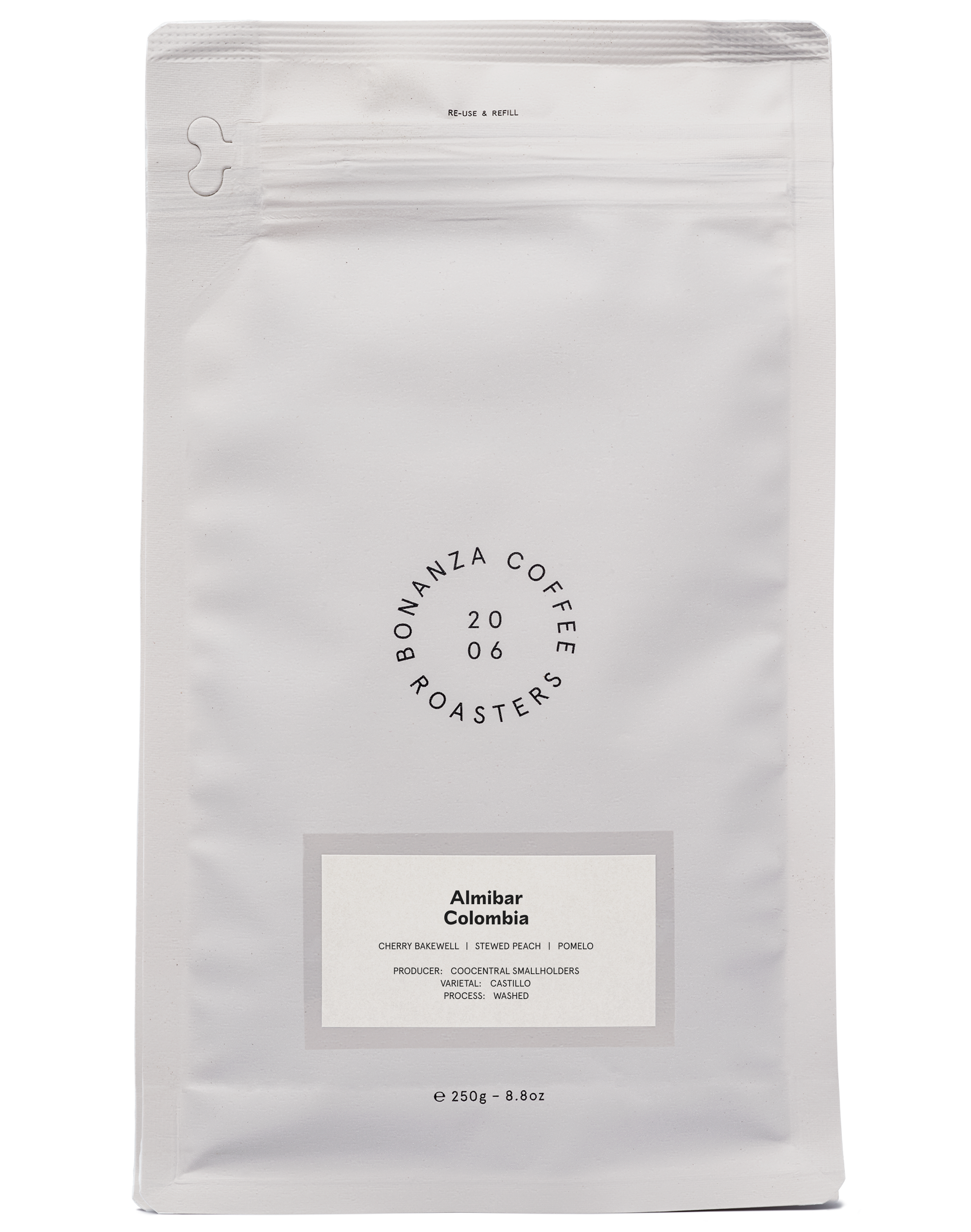
A communal blend from select Coocentral smallholders in Huila — each farming 2–3 hectares above 2000m. Incredibly balanced, sweet, and complex. Clean and transparent, it functions as Bonanza's go-to house coffee for espresso and filter alike.
Cherry Bakewell, Stewed apricot, Pomelo
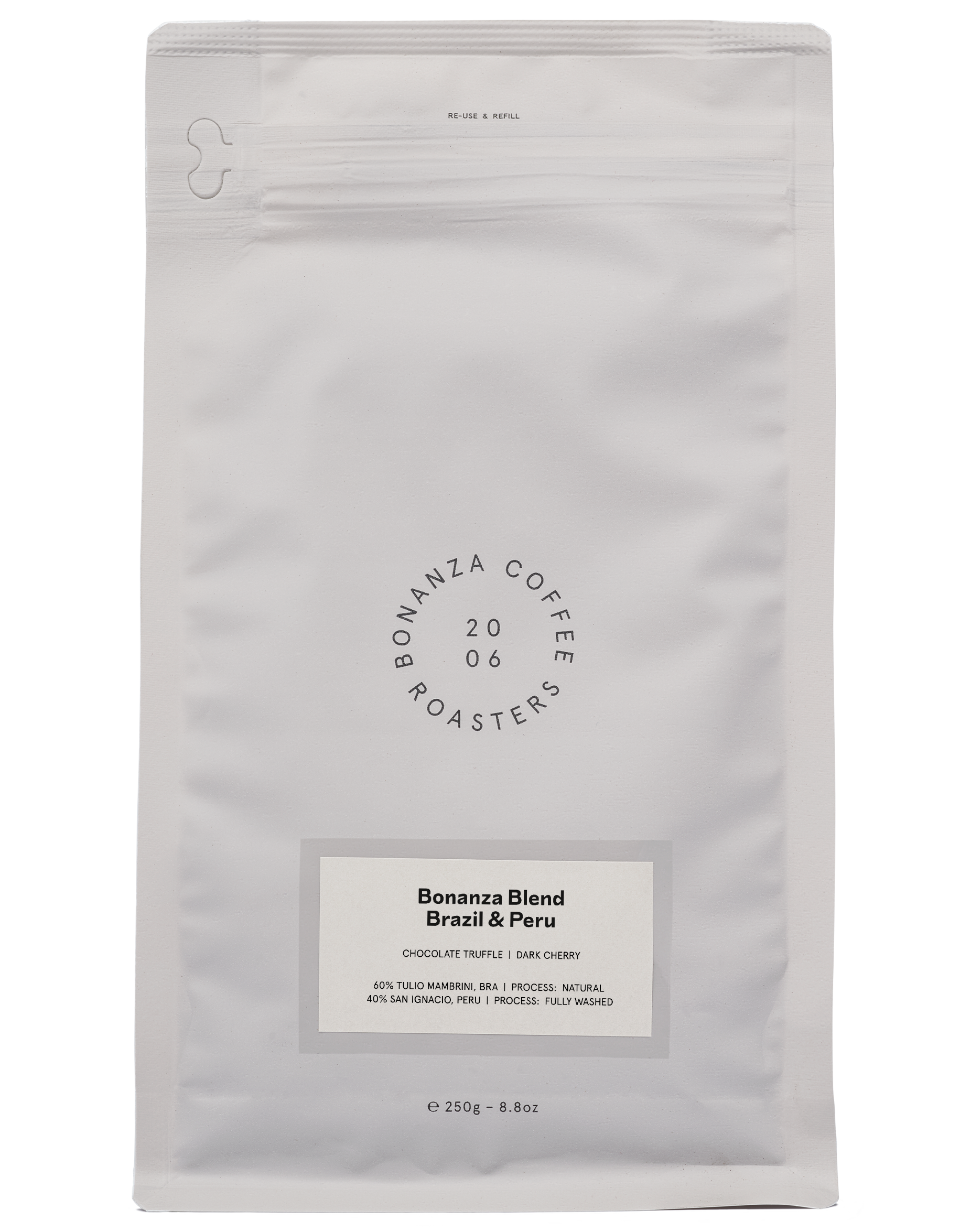
60% natural Brazil from Tulio Mambrini's Mogiana farm, 40% fully washed Peru from Cajamarca. Chocolate-like sweetness and a bold, creamy body meet deep forest fruit character — Bonanza's most easy-drinking blend yet.
Chocolate truffle, Dark cherry
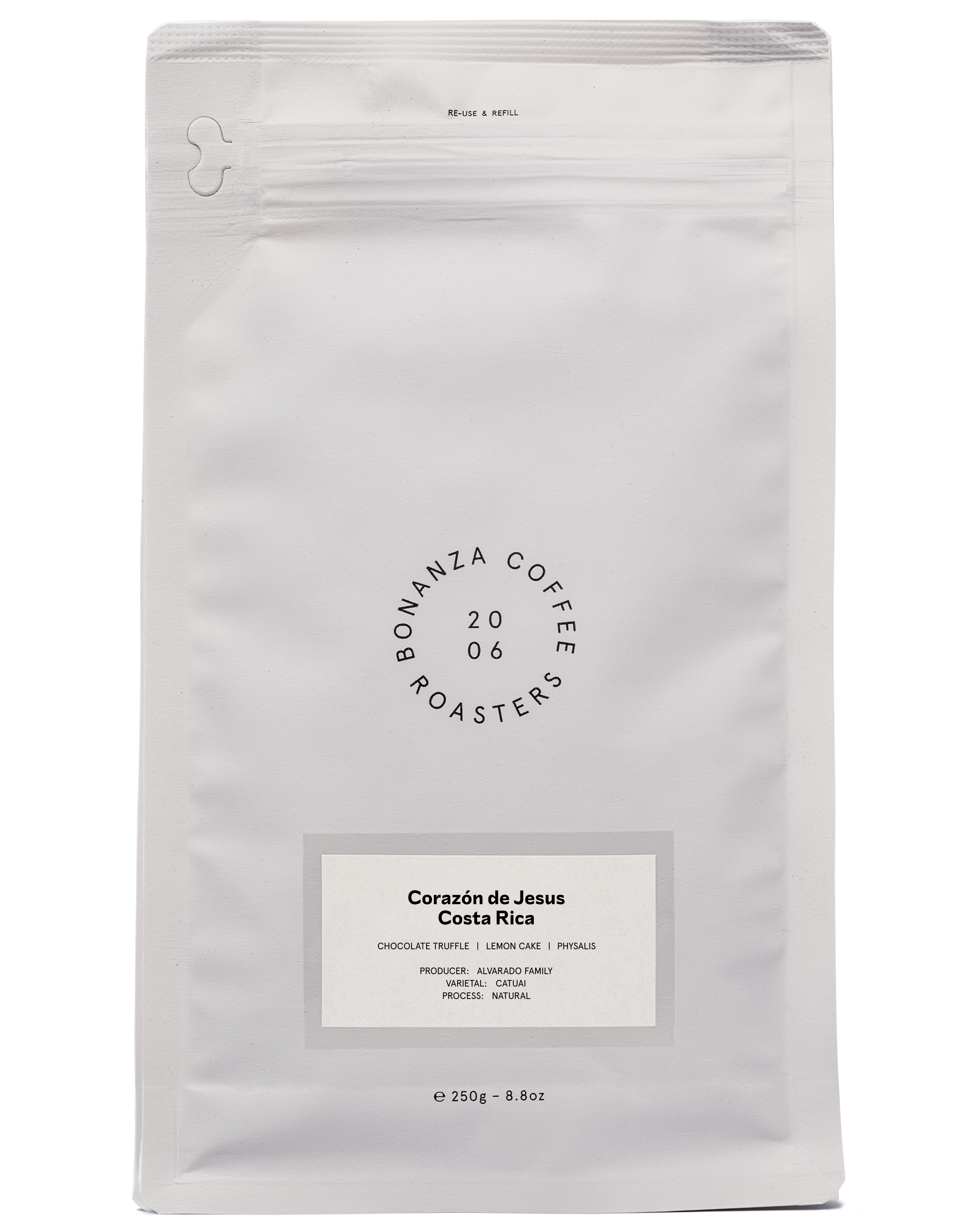
The farm Bonanza sold as La Pitina, now under its original name after a recent Cup of Excellence win in Costa Rica. The cherries rest ("reposado") before going onto the drying beds, which intensifies the fruit: a bright, complex Costa Rican natural.
Chocolate truffle, Lemon cake, Physalis
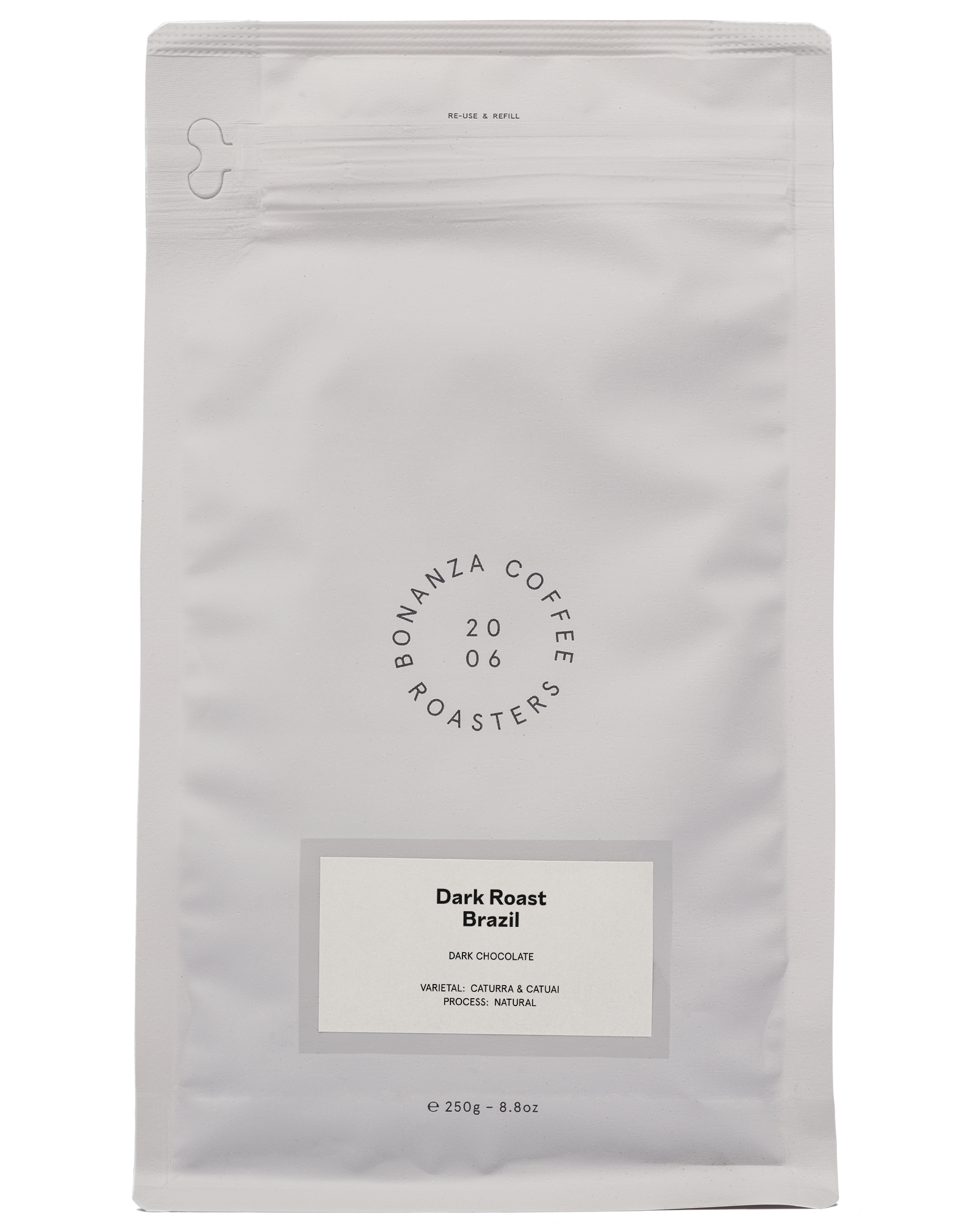
Bonanza's take on a dark roast, a profile they once considered "too far". Consistent and easy to brew, made for fully automatic machines in a busy restaurant or at home.
Dark chocolate
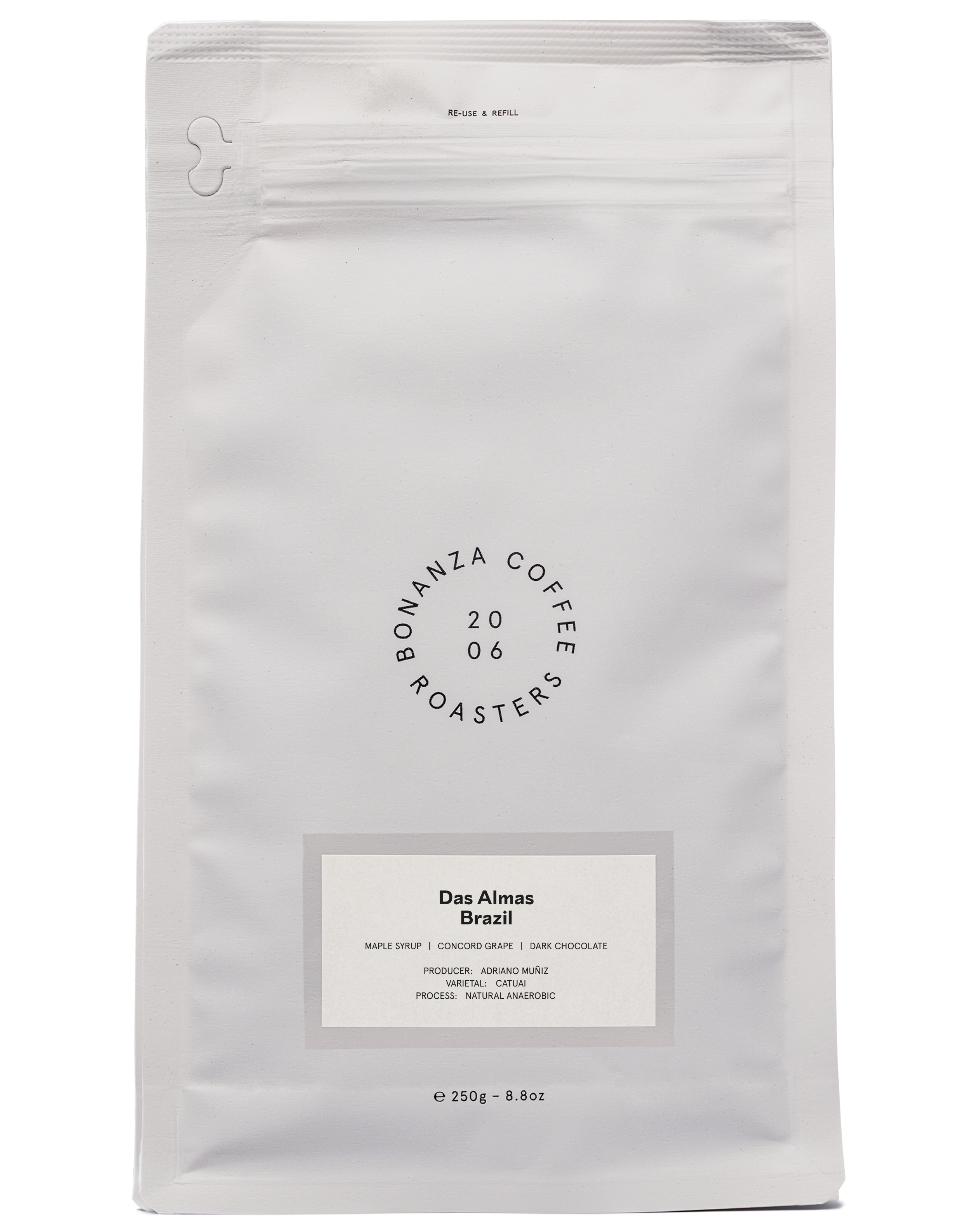
From Adriano Muñiz in Sul de Minas — a producer running an experimental plot where new cultivation techniques are tested based on sensory analysis. Natural anaerobic processing yields rich maple syrup sweetness, deep grape complexity, and a dark chocolate finish. Easy-going and flavourful.
Maple syrup, Concord grape, Dark chocolate
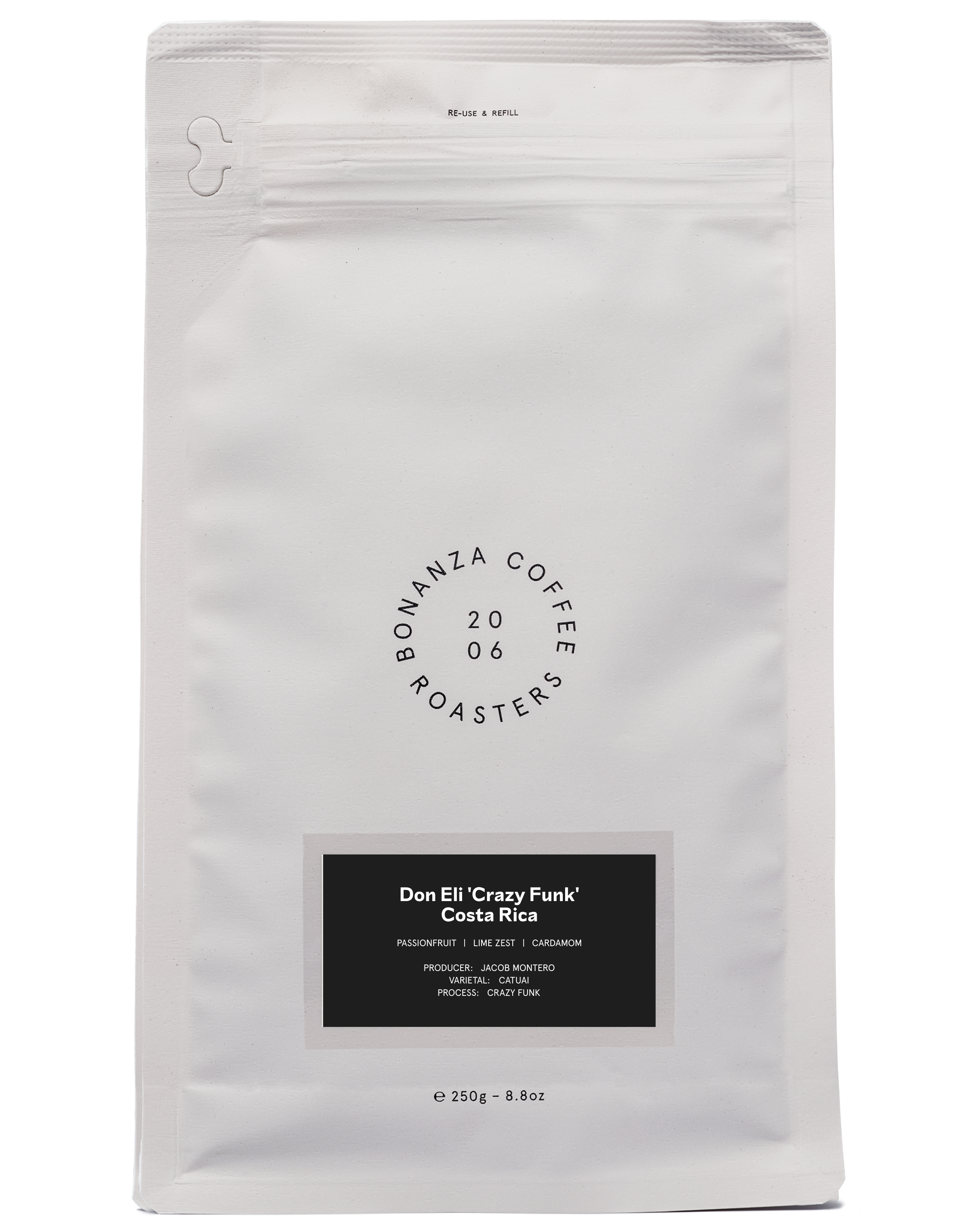
From Jacob Montero's Manzanal lot at the Don Eli mill in Tarrazú. A deliberate "Crazy Funk" protocol: 24 hours open-air aerobic fermentation, 3 days in stainless steel tank, then slow-dried on raised beds under shade. Vivid and complex — not for the timid.
Passionfruit, lime zest & cardamom
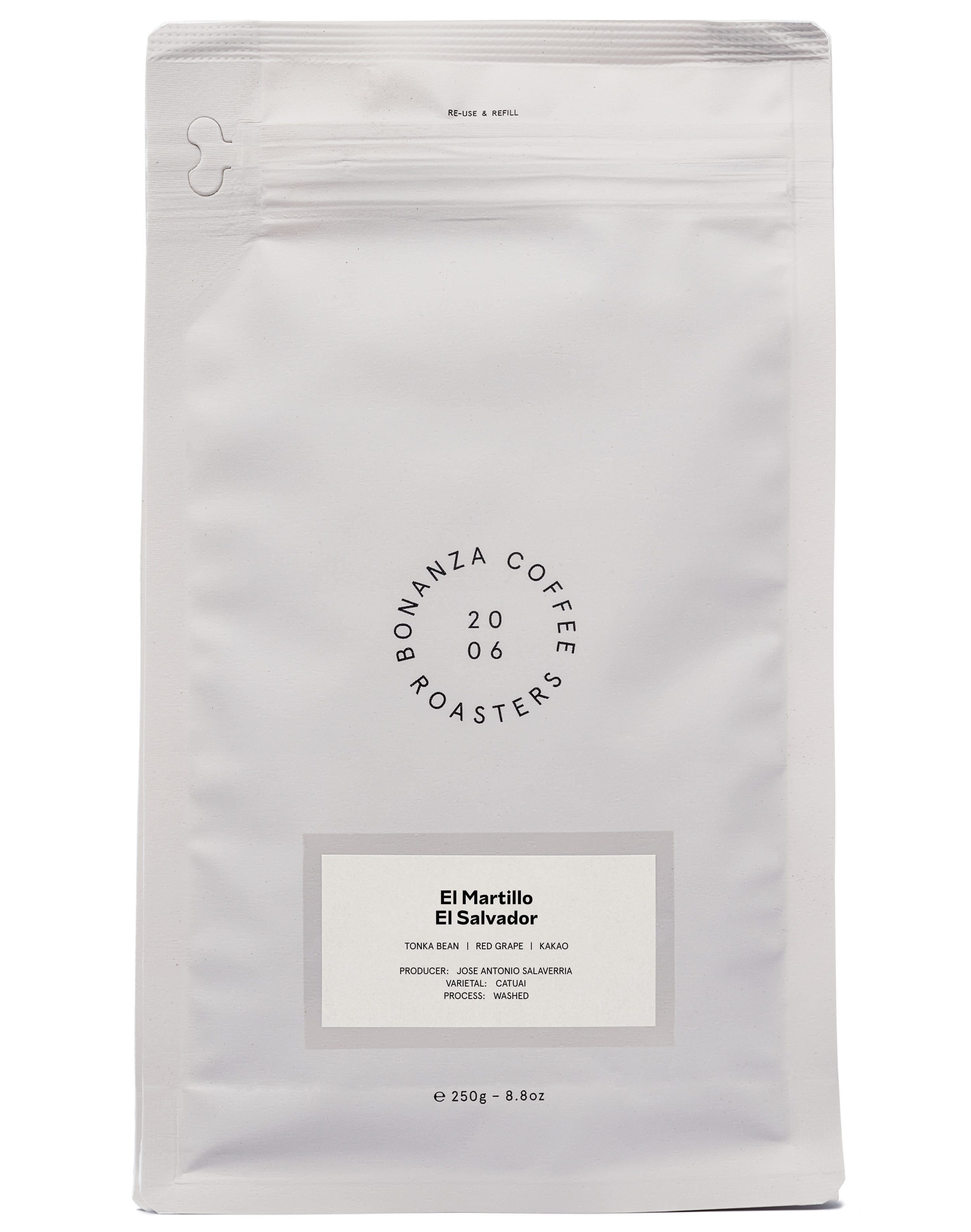
One of Jose Antonio Salaverria's highest farms, at 1,700 m in the hills around the Santa Ana volcano. Depulped, soaked 10 hours for a mild fermentation, then dried under shade on clay patios for a slower, more even dry. Clean, balanced and elegant, for any brew method.
Tonka bean, Red grape, Cacao
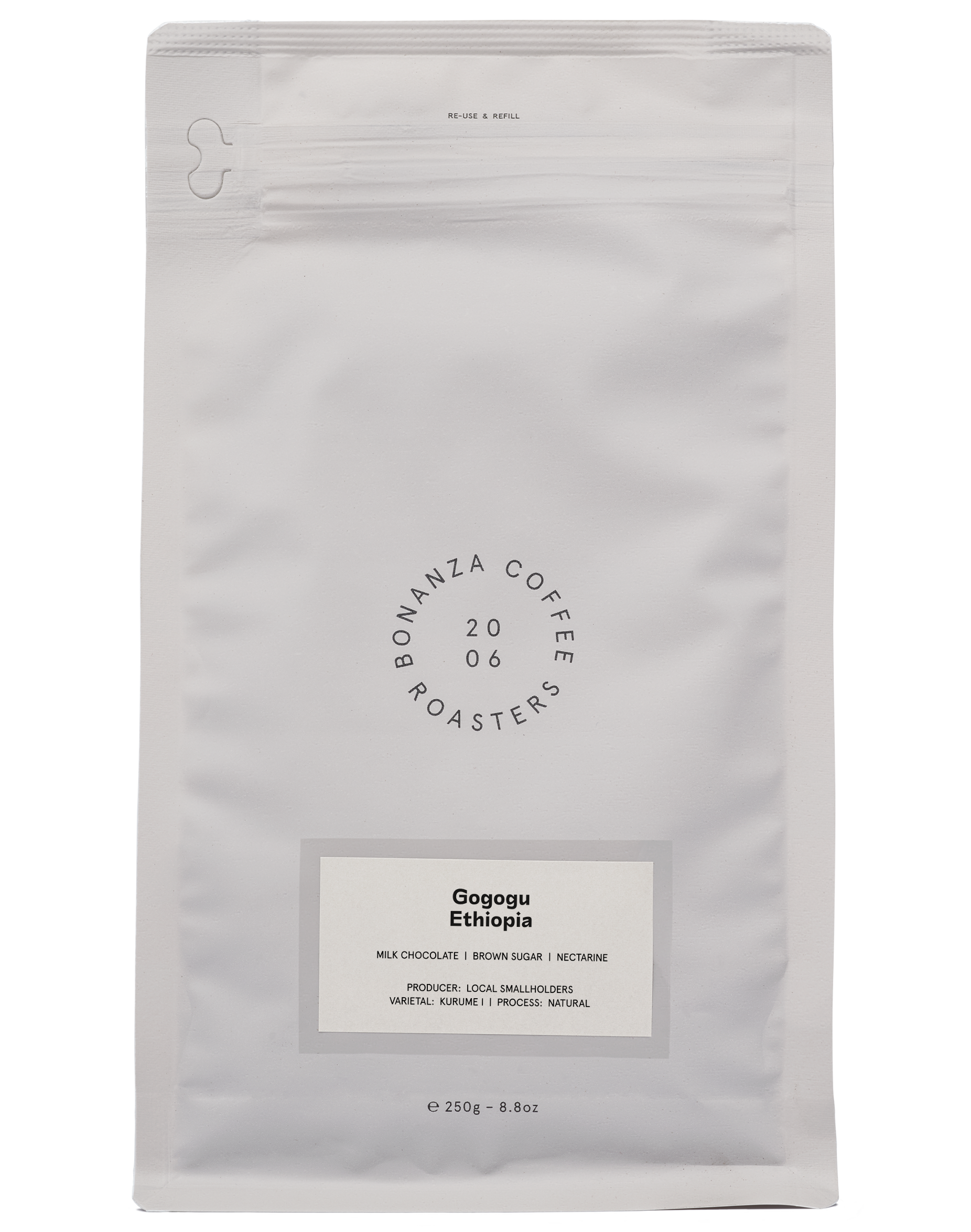
Bonanza's signature Ethiopian — a sweet, round, and beautifully clear natural from East Guji's Uraga region. Versatile across espresso, filter, and milk-based drinks. Complexity without complication.
Milk chocolate, Brown sugar, Nectarine
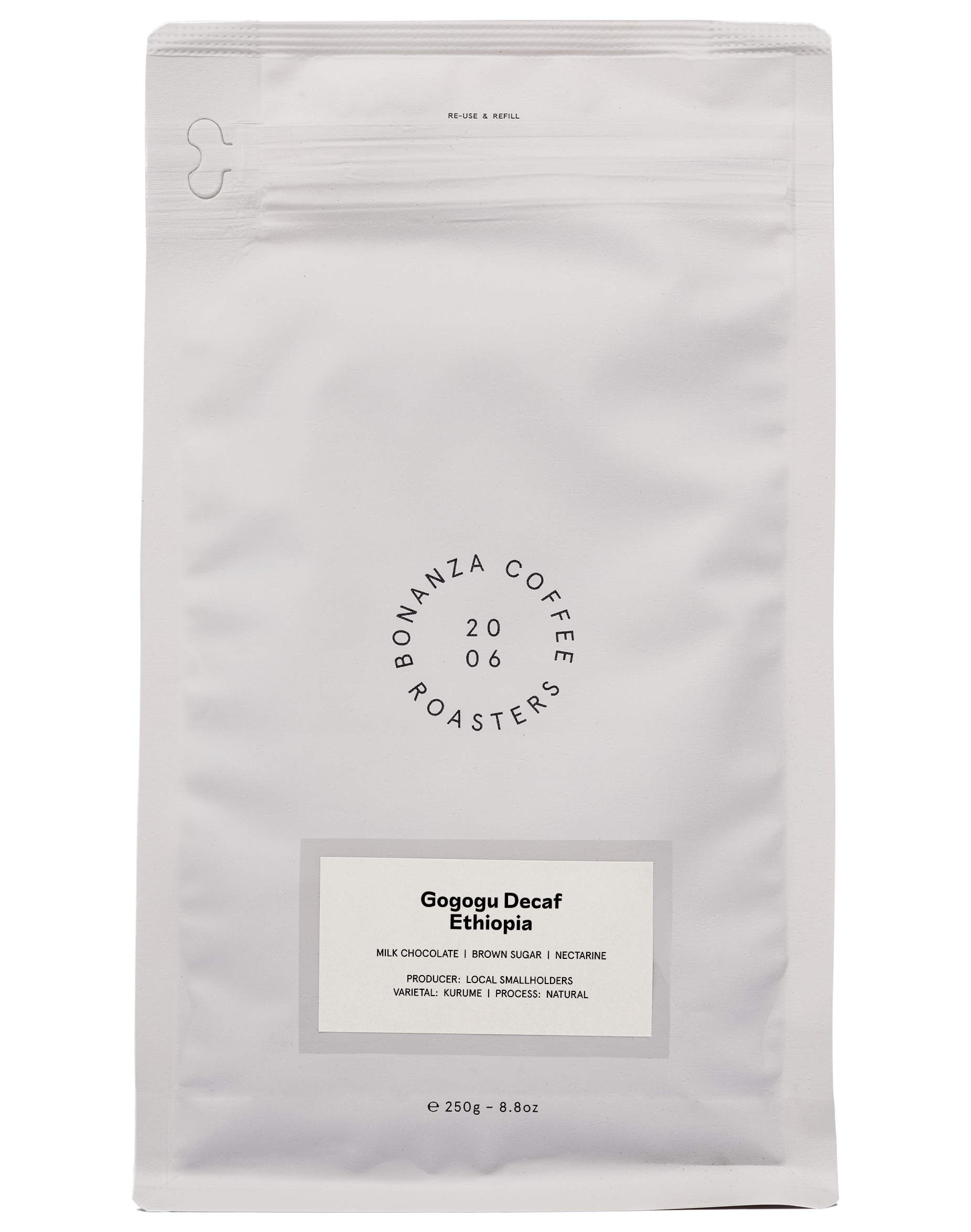
An exclusively processed decaf batch of their Gogogu lot — the same Kurume cultivar from East Guji, decaffeinated using ethyl acetate from sugarcane to preserve the natural flavor profile. Easy-going and complex at once.
Milk chocolate, Brown sugar, Nectarine
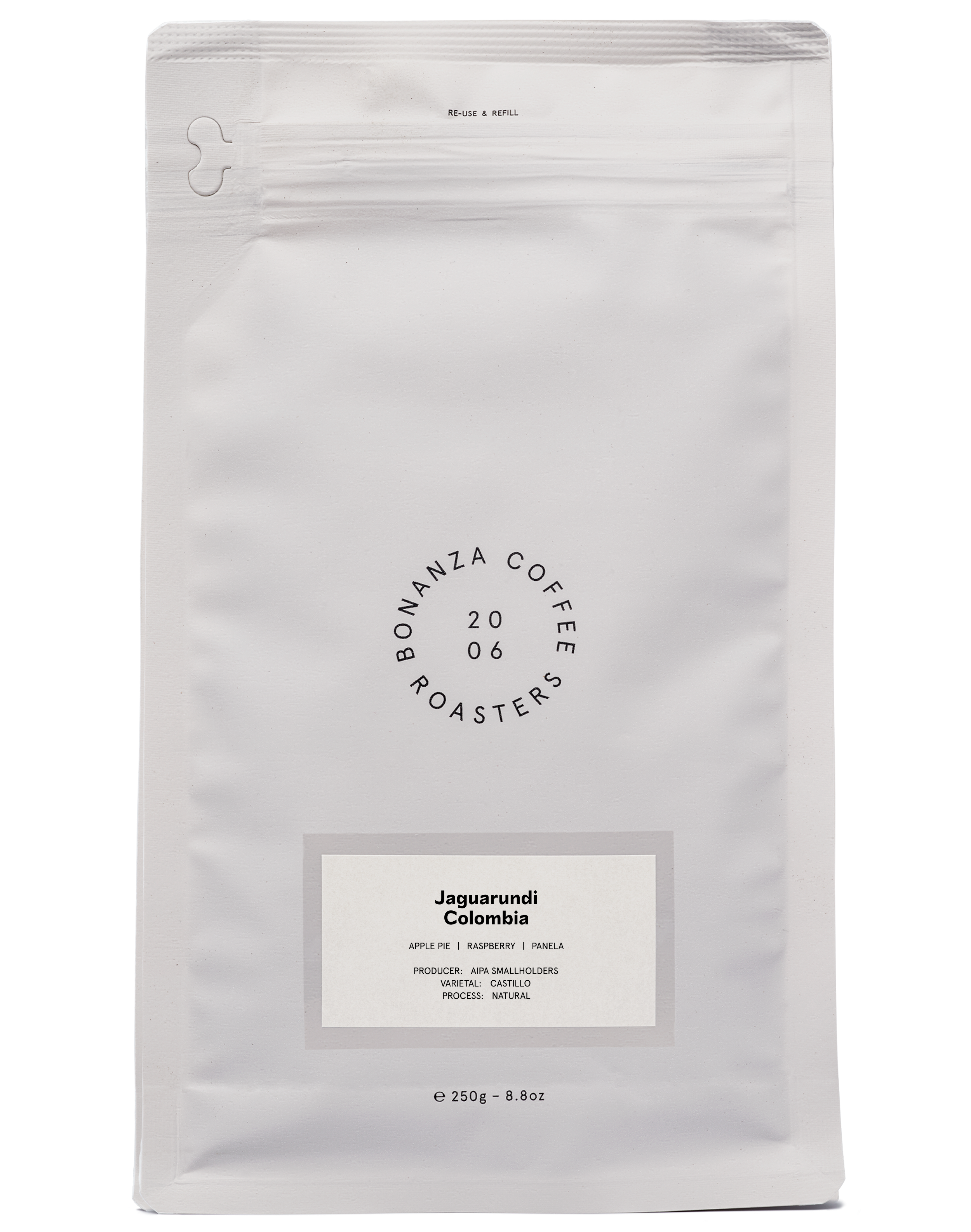
A community lot from smallholders on the warm slopes of northern Huila, named after the local wild cat. The cherries are dried with the whole fruit intact; warm days and cool nights slow the drying so more sugar and tropical fruit carry into the cup. Sweet and intense with bold fruit, for any brew method.
Apple pie, Raspberry, Panela
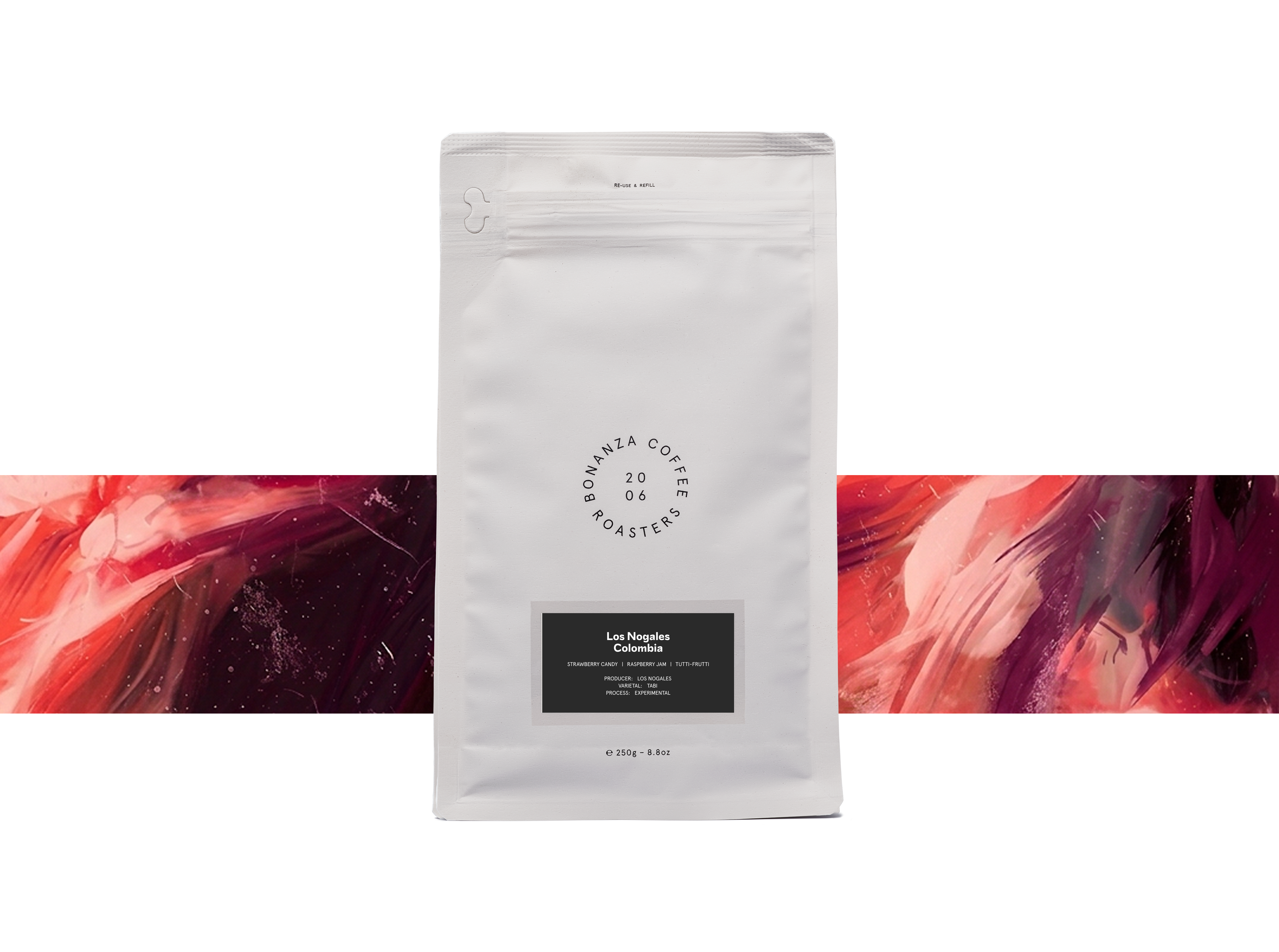
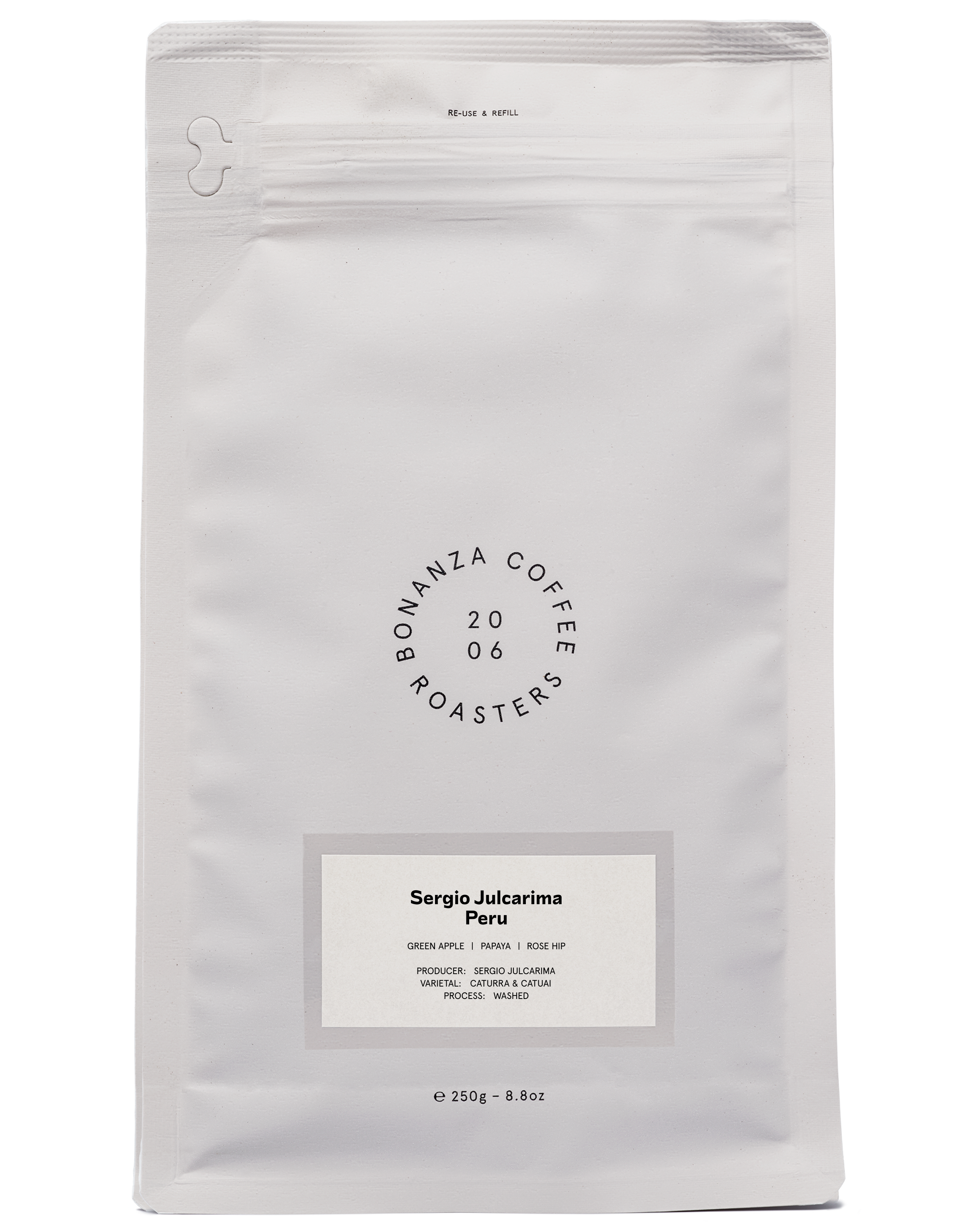
An intense, complex washed lot from Sergio Julcarima, a third-generation producer in the dry temperate province of Jauja in central Peru. Long fermentations — 72 hours in cherry, then 96 more in sealed bags — build a tropical and stone-fruit character. Source: bonanzacoffee.de (2026-08-30).
Green apple, Papaya, Rose hip