
Roasteries / Kaffee Alt Wien

Kaffee Alt Wien
Vienna, Austria
Long-running Viennese coffee roaster — a range from strong & dry through medium & chocolatey to mild & fruity, with a shop and bar on Schleifmühlgasse in the 4th district. Source: altwien.at
37
coffees
Austria
base
Photos
Location
Kaffee Alt Wien
Schleifmühlgasse 23, 1040 Wien, AustriaCoffees
37 coffees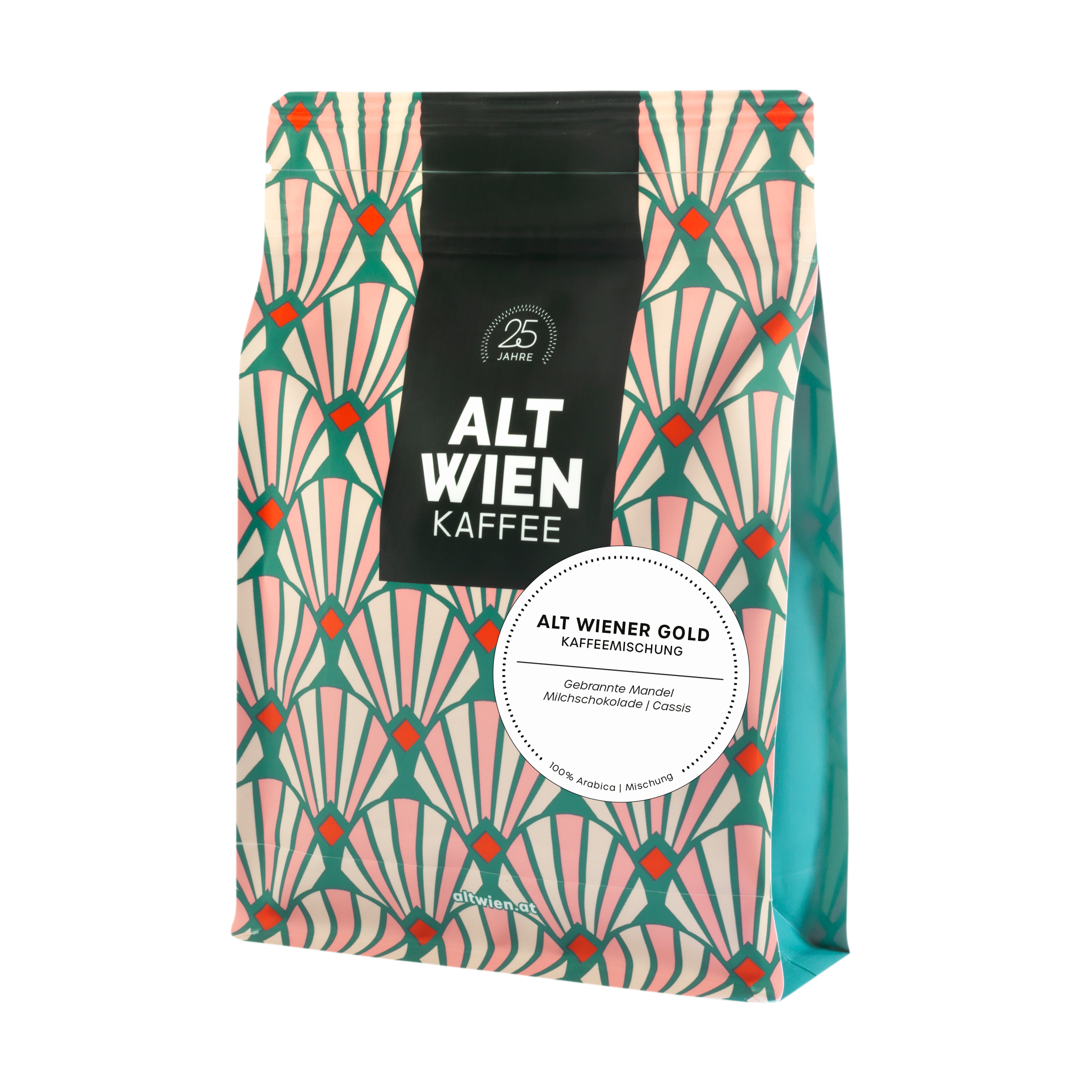
Roasted since the company was taken over in 2000: Alt Wien's idea of the old Viennese coffee, round, full and easy with a light fruity edge. Its initials match the firm's motto, "Alles wird gut". Good for Melange, cappuccino and classic filter.
Round, full, light fruit
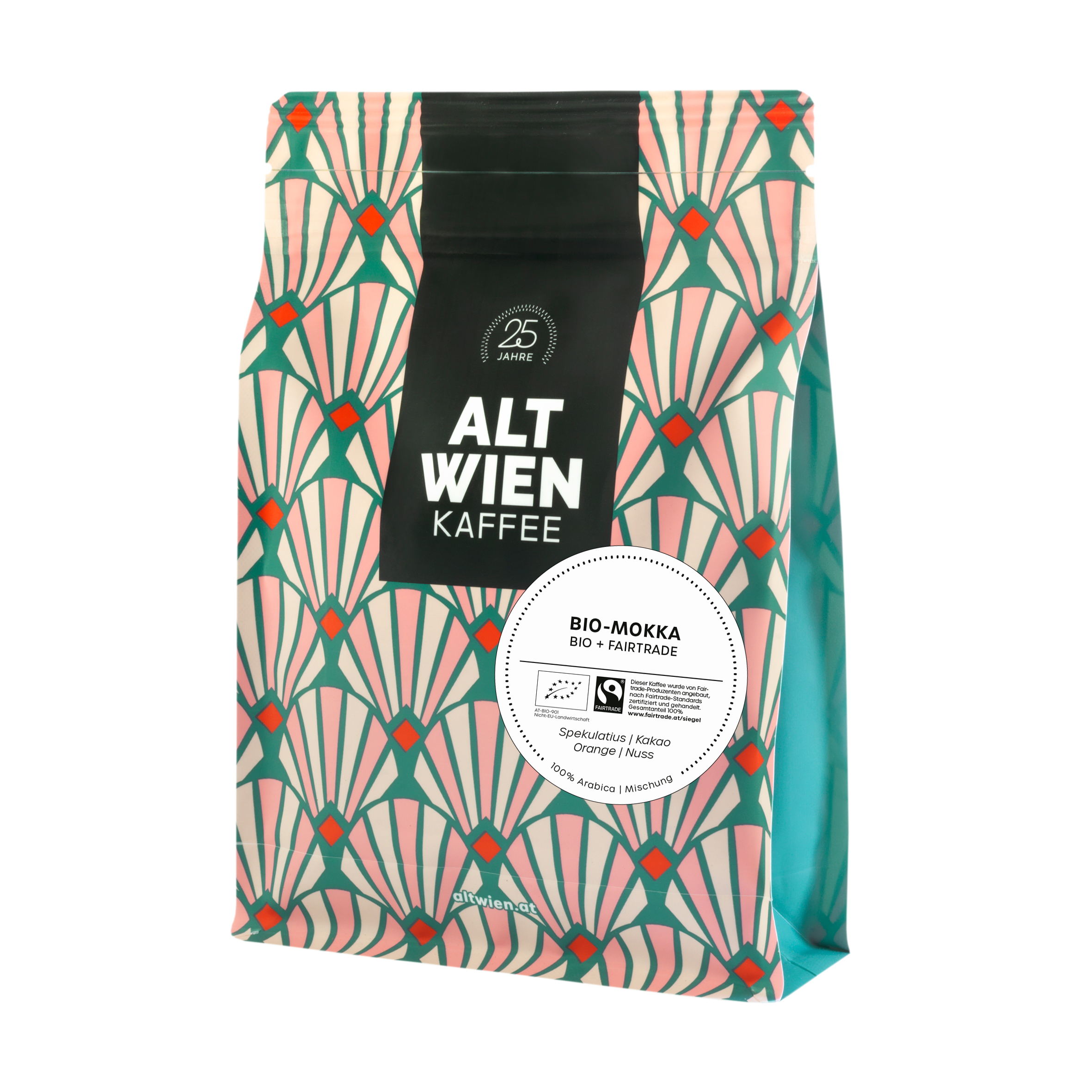
A strong organic Fairtrade arabica blend in the range since 2008, built as the organic counterpart to the Caruso Blend after 29 trial blends. Chocolatey and soft with roast notes but no bitterness; especially good as espresso.
Chocolate, roast, soft
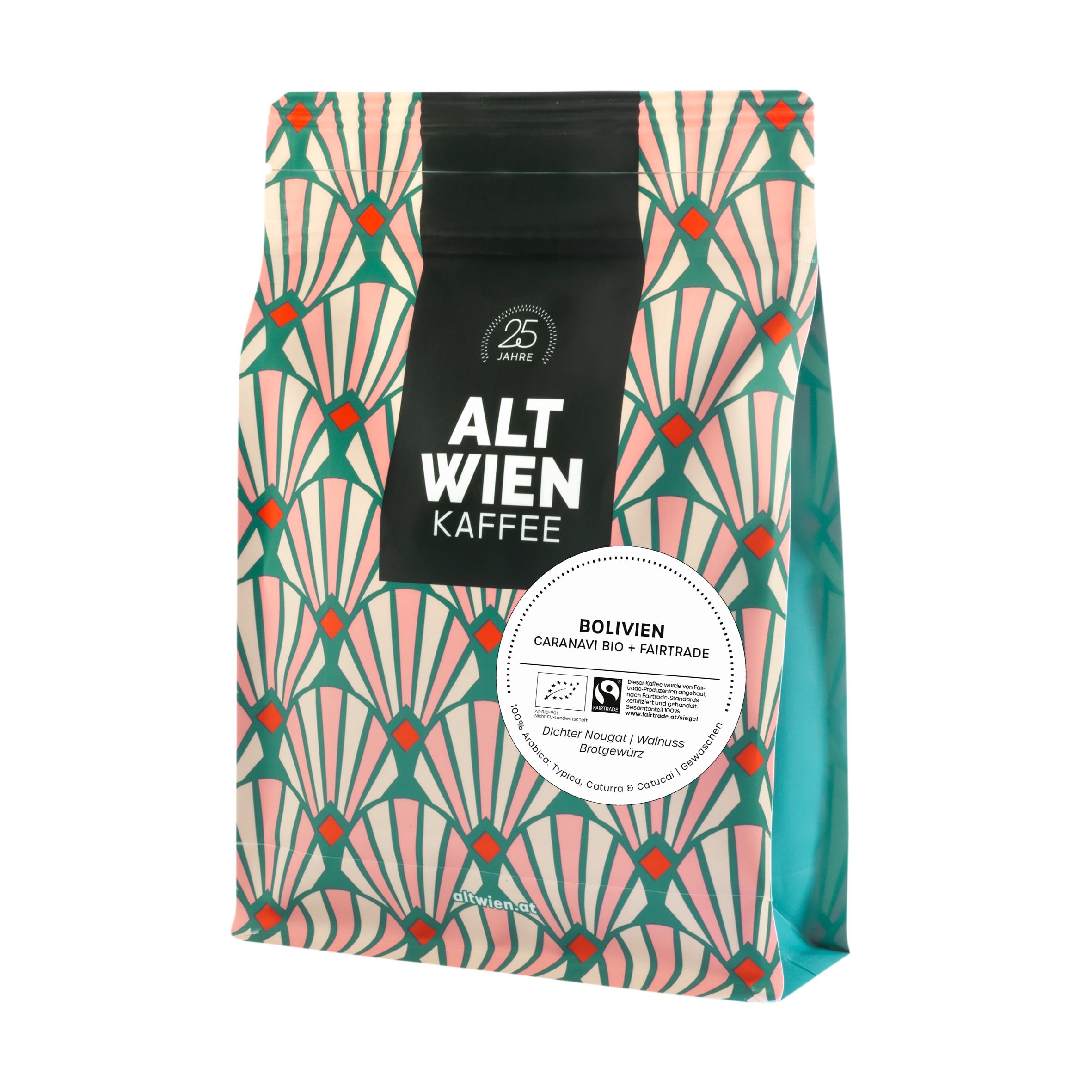
From 300 smallholder families of the ASOCAFE cooperative in Tapiplaya, Caranavi, growing under jungle canopy in the eastern Andes. Hand-picked, pulped, fermented, washed and sun-dried. Chocolatey density without sharpness or bitterness, one of Alt Wien's most popular organic coffees.
Chocolate, dense, no bitterness
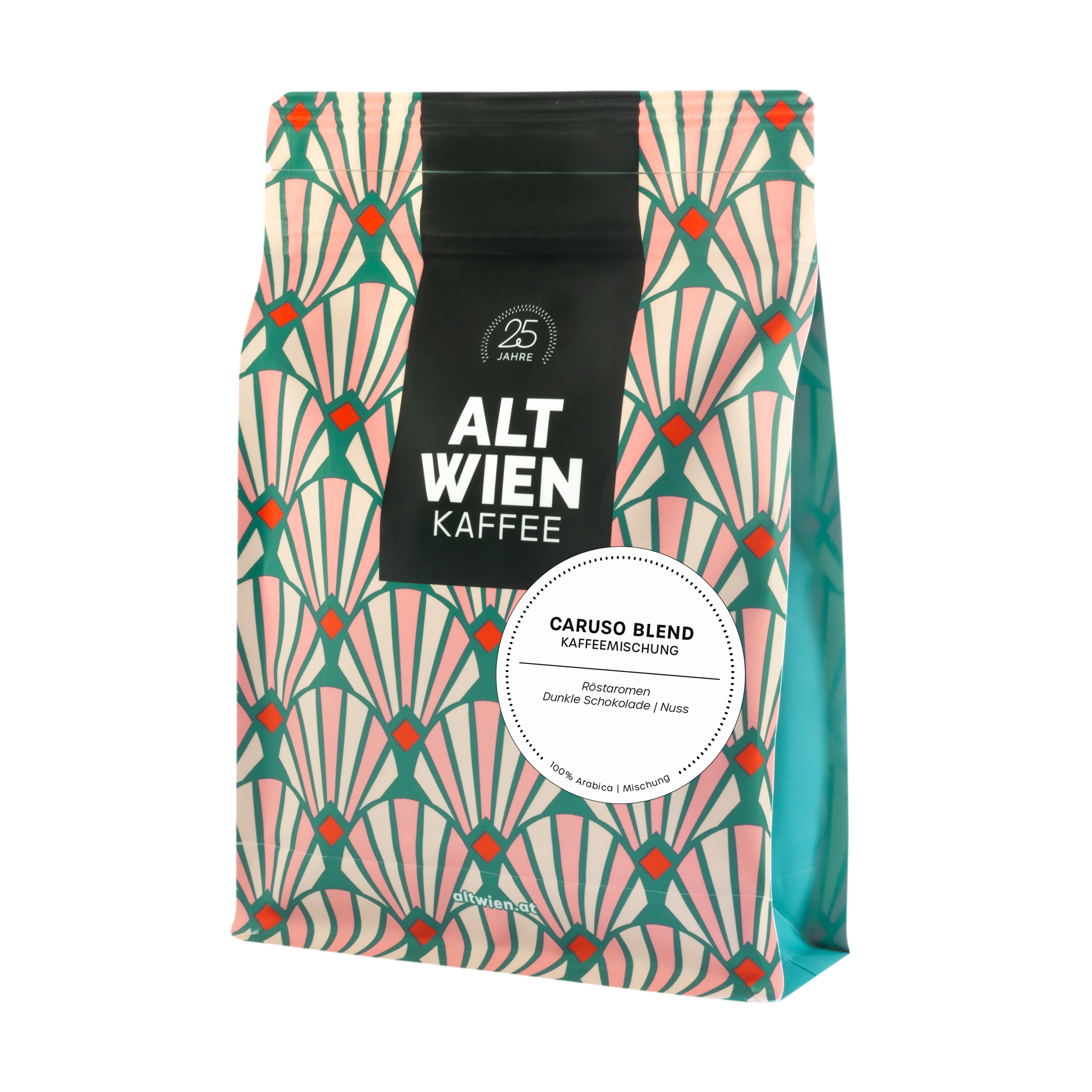
Alt Wien's best seller: an arabica blend from the Trieste green-coffee house Sandalj, sold exclusively in Austria. Not too mild, not too strong and low in acidity; nutty and dry as a northern-Italian espresso, soft and spicy in filter, chocolatey in French press and moka pot.
Nutty, chocolate, spice
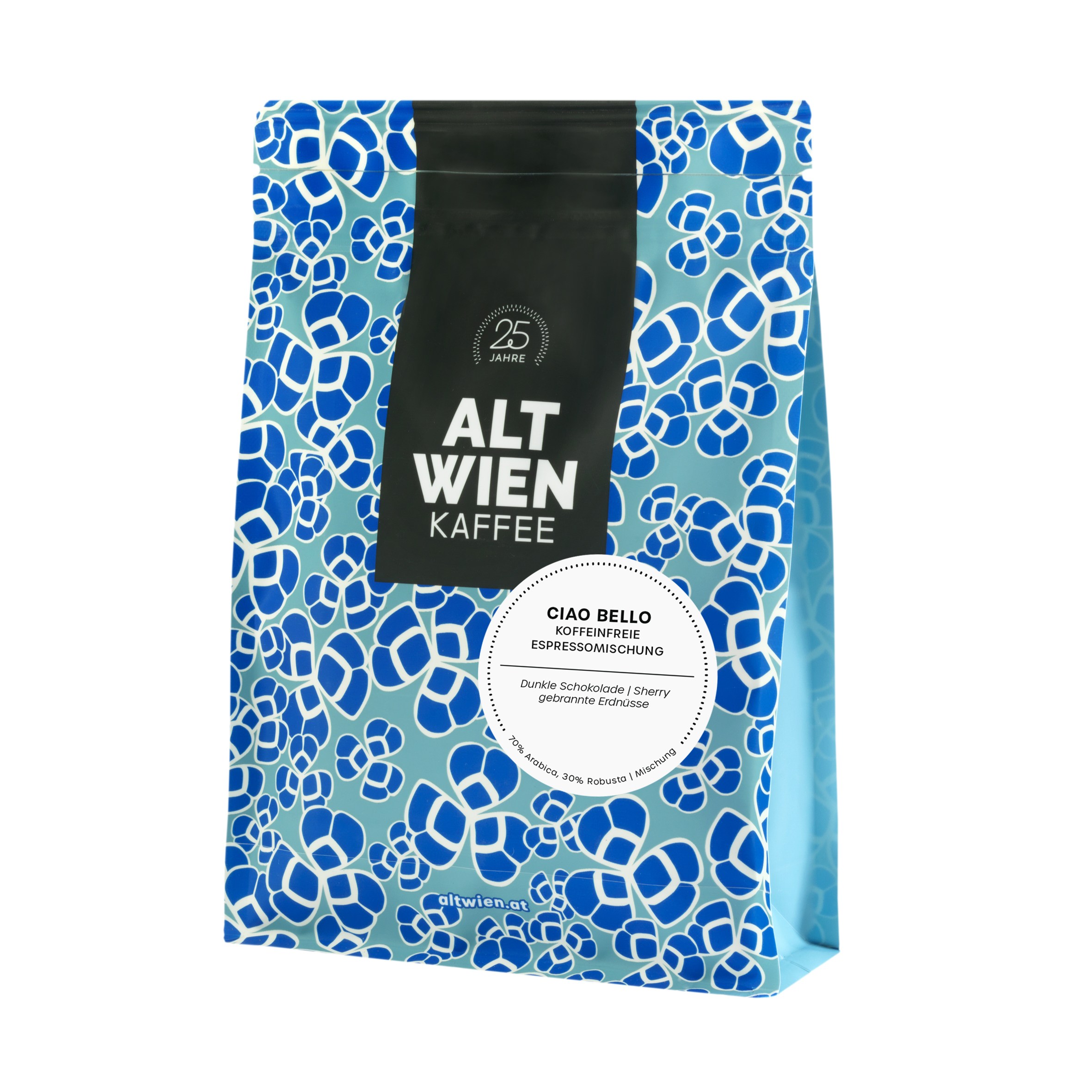
A decaf arabica-robusta espresso blend in the classic, dry Italian style, with plenty of sweetness and no fruit acidity. Roasted a little longer, so the beans turn oily sooner and are best used up quickly.
Sweet, no fruit acidity
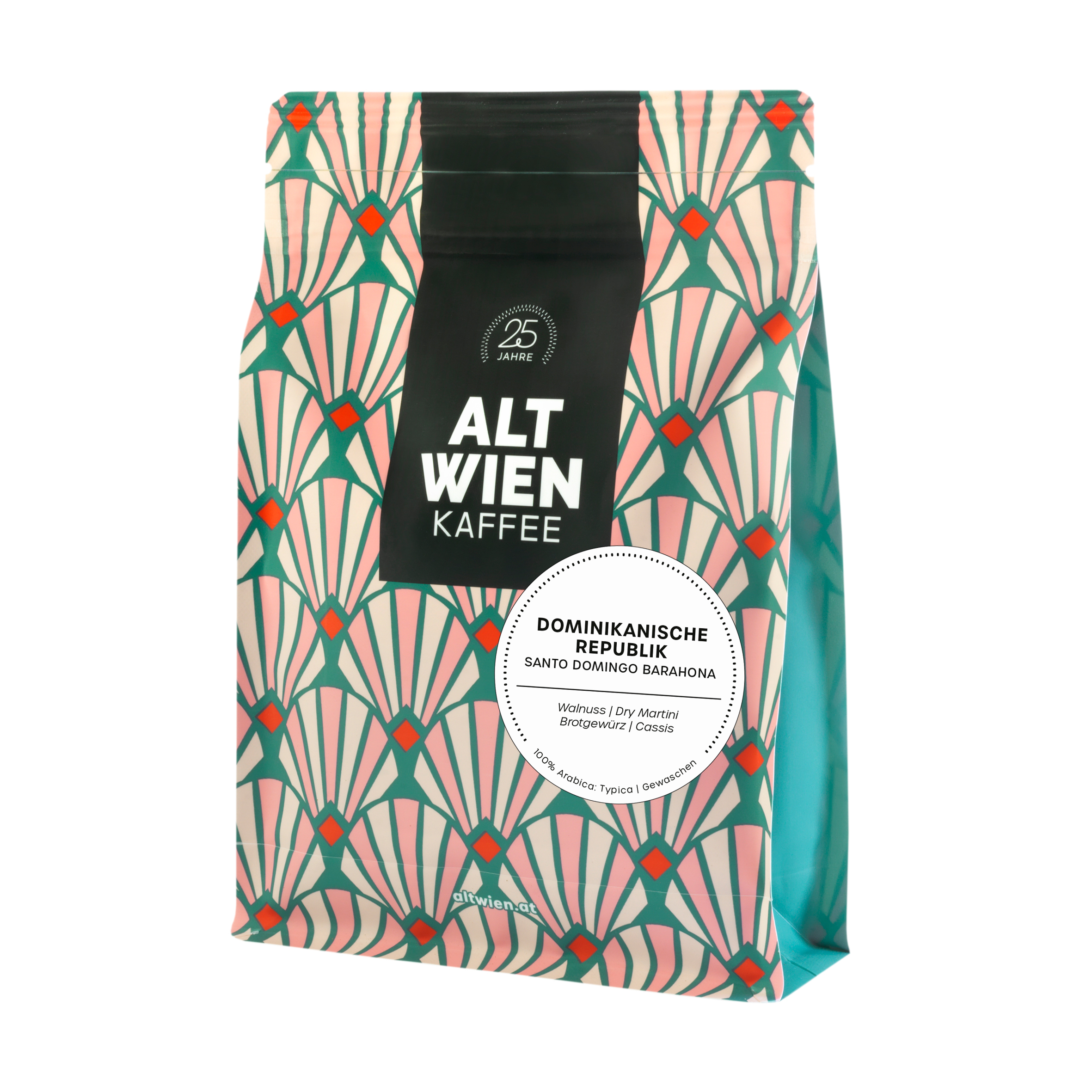
A customer favourite from the Gajo del Toro farm near Polo in Barahona, in the south-west of the Dominican Republic, where only about 20% of the harvest is exported. Shade-grown, hand-picked and washed; as weighty as the Cuban, almost free of acidity and strong and dry on the palate.
Powerful, dry, almost no acidity
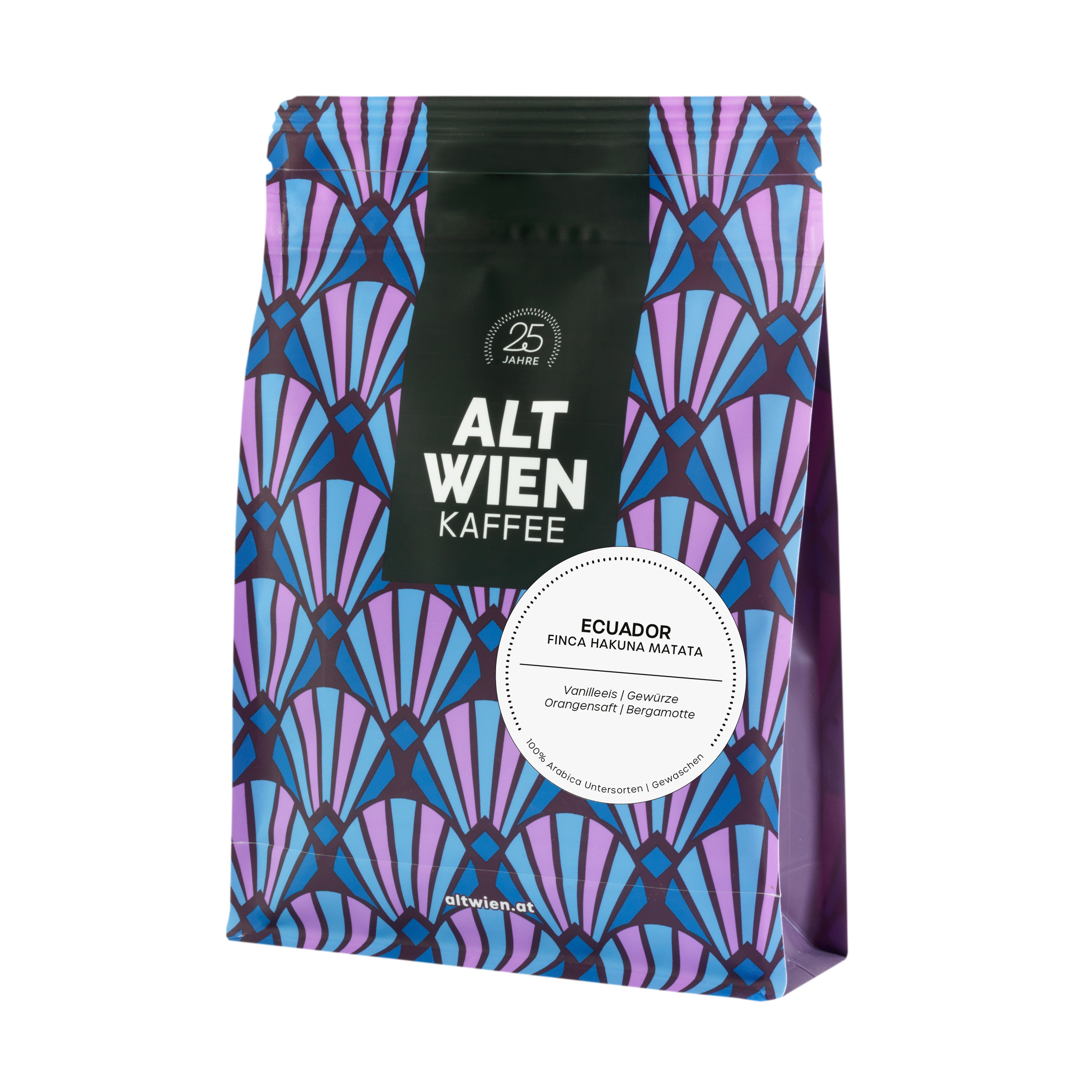
A Typica from the cloud forests of Pichincha, grown between volcanoes by Henry and Verena Gaibor, who met on a Médecins Sans Frontières mission in Burundi in 1996 and later swapped their Quito clinic for coffee. They run their own micromill and handle every step from harvest to slow drying. Warm honey sweetness with lively citrus.
Caramel, vanilla ice cream, honey, citrus
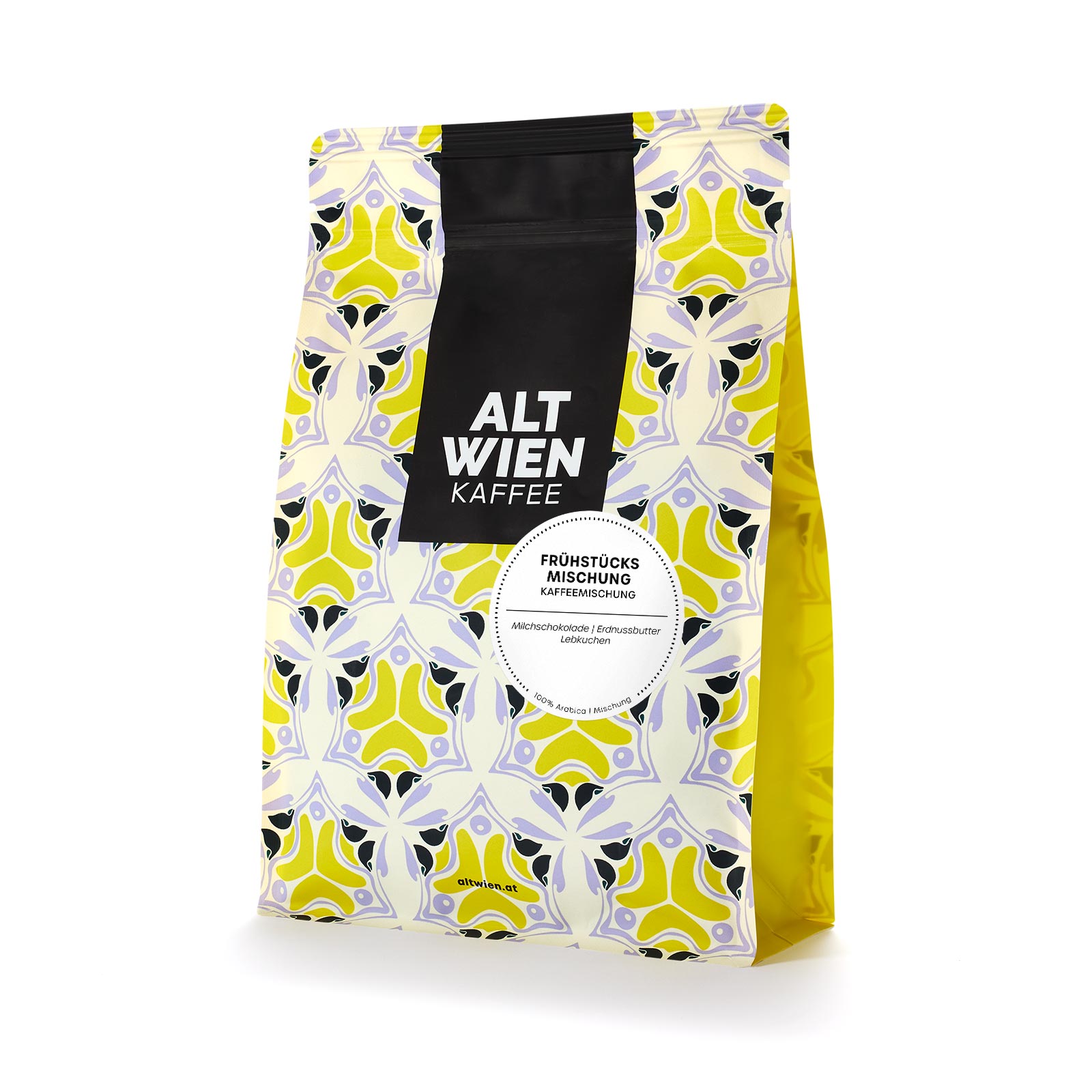
Designed as a filter coffee for a lively start to the day from mild, low-acid arabicas; also good as a medium-strength espresso, in the moka pot and in bean-to-cup machines. Dry and lightly nutty with dark chocolate.
Dry, nutty, dark chocolate
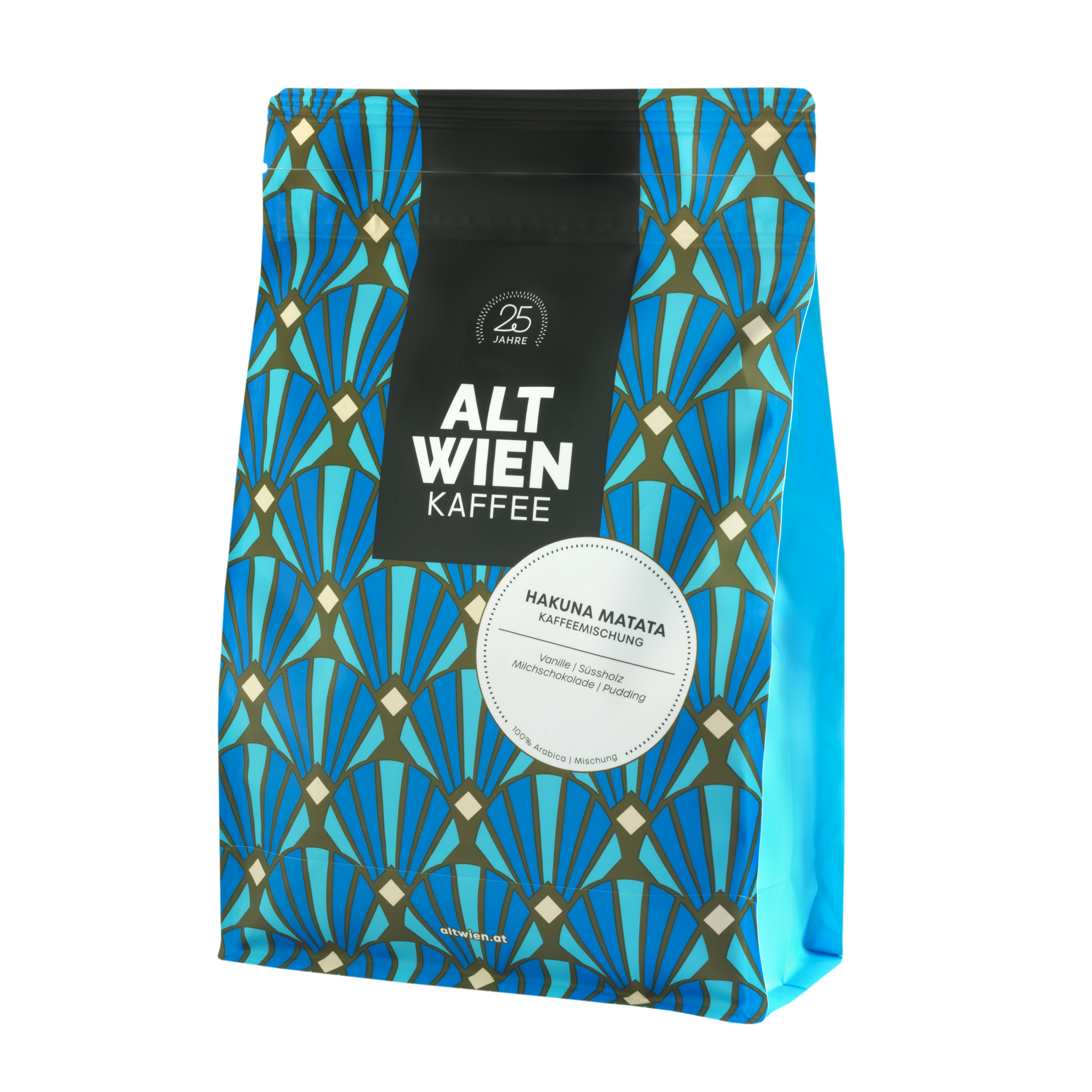
A creamy arabica blend with a high share of African coffees, built for cappuccino and latte: a little fruit acidity in the espresso turns into a soft, sweet caramel note with milk. Meant as a limited edition and kept by popular demand.
Caramel, light fruit, creamy
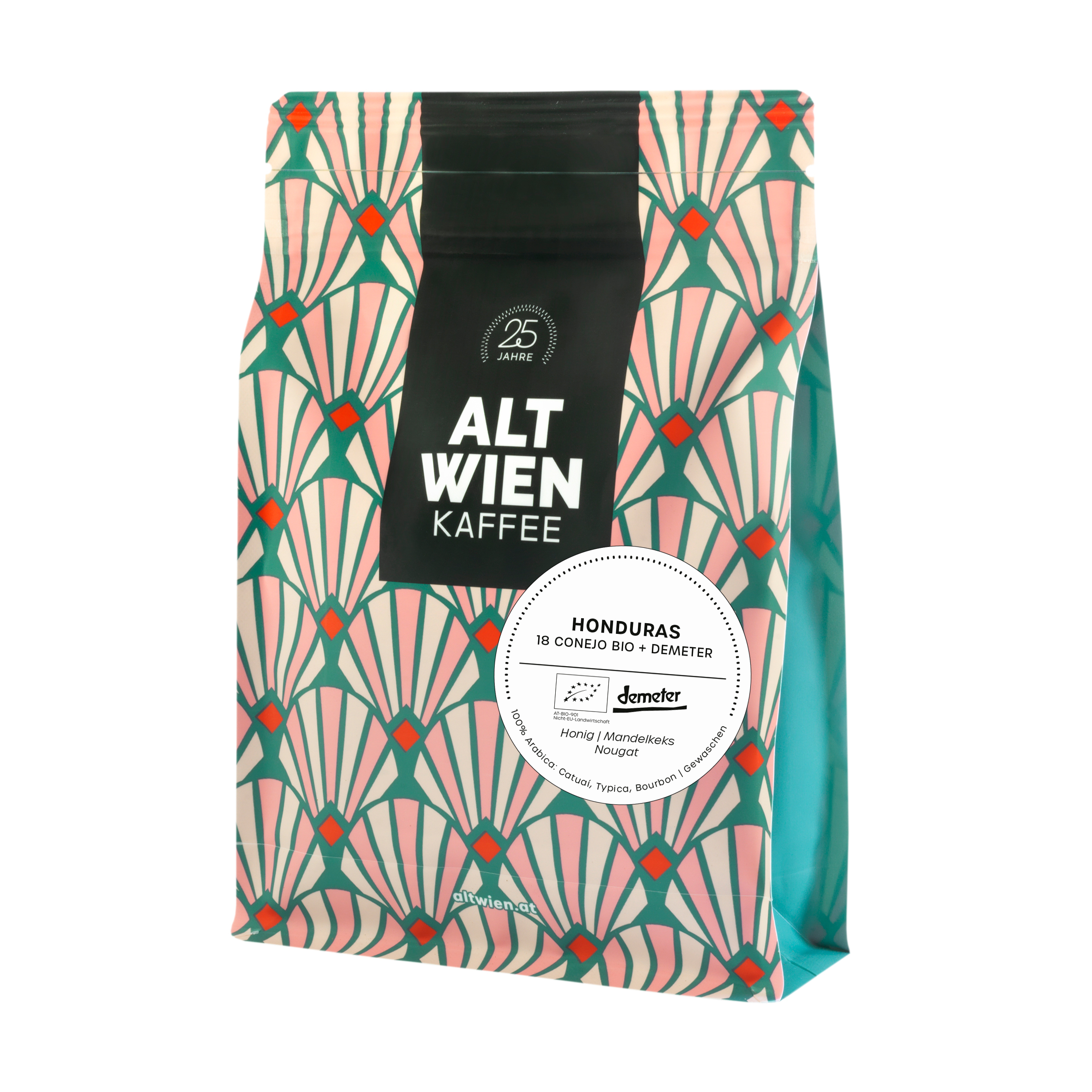
An organic and Demeter-certified arabica from the 18 Conejo cooperative in Marcala, named after the Maya king Uaxaclajuun Ub'aah K'awiil and grown biodynamically by smallholders. A classic-roast all-rounder for espresso, filter and moka pot, led by chocolate and nuts.
Chocolate, nuts
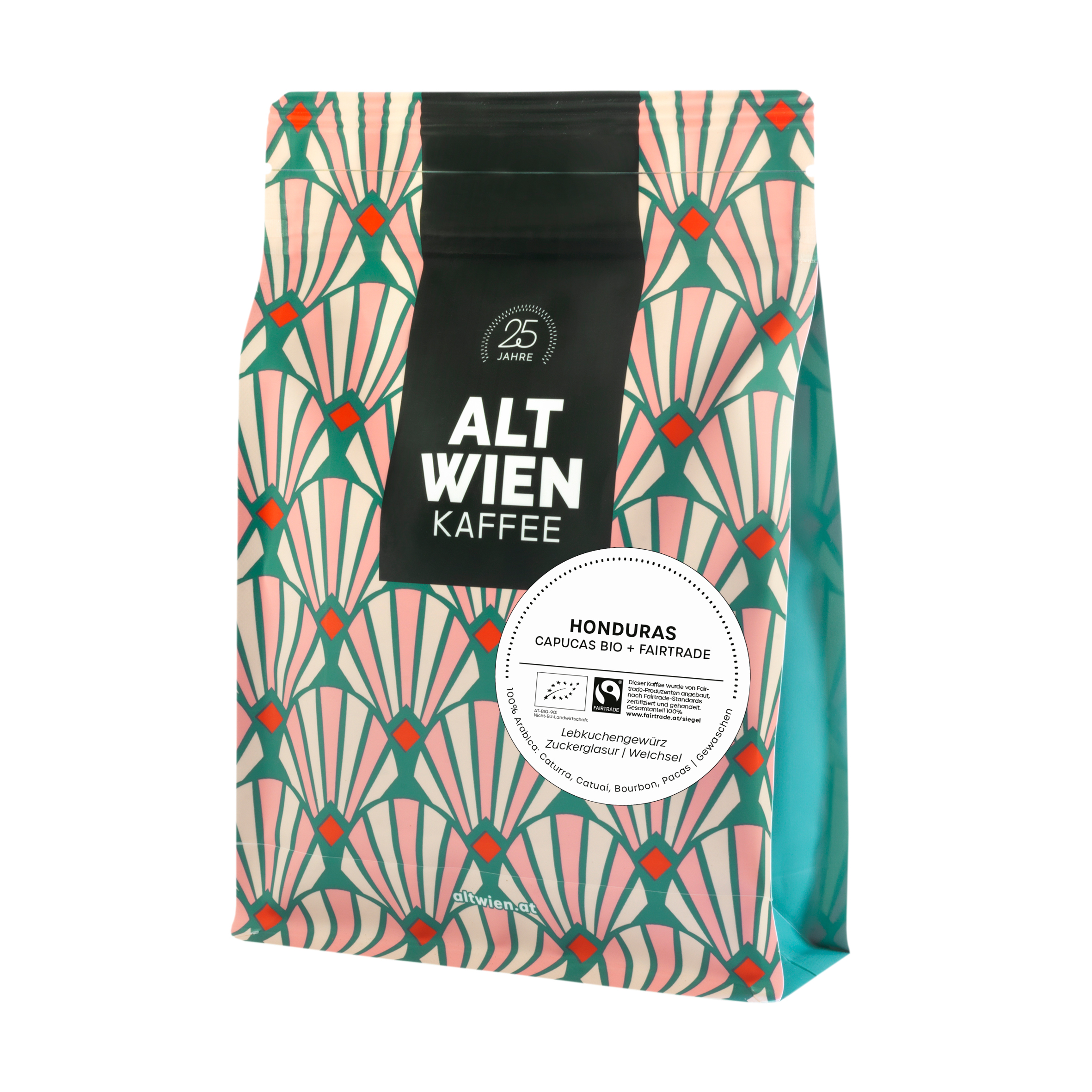
A long-standing organic Fairtrade single origin from Omar Rodríguez's 5,000-member COCAFCAL cooperative near Celaque National Park in western Honduras. A medium-strength espresso, less dry than most of Alt Wien's classic roasts; very good as filter or in the moka pot.
Medium body, gentle acidity
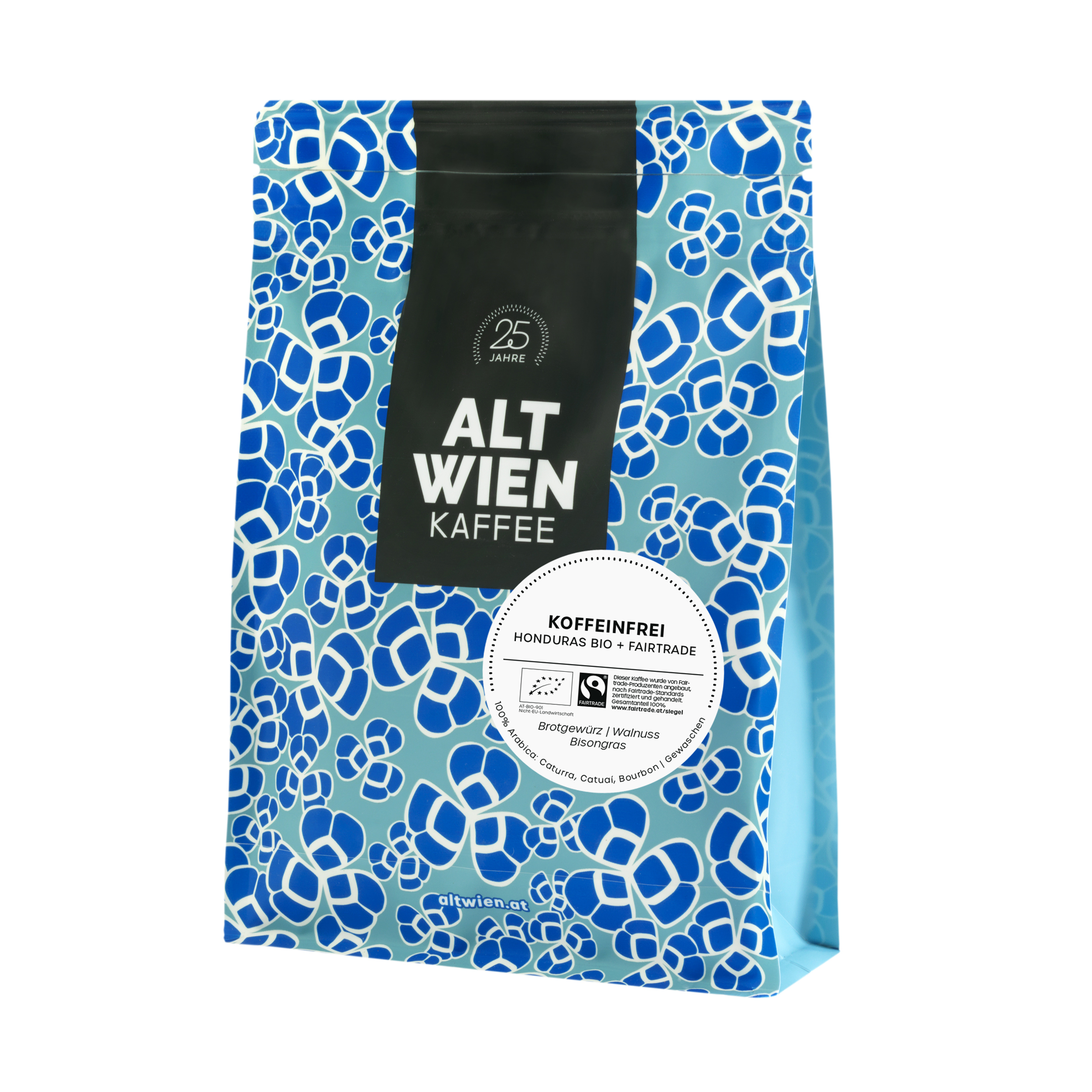
An organic Fairtrade Honduras decaffeinated with natural spring CO2 (the CR3 process), which selectively removes caffeine without synthetic solvents. Mild and very drinkable.
Mild, soft
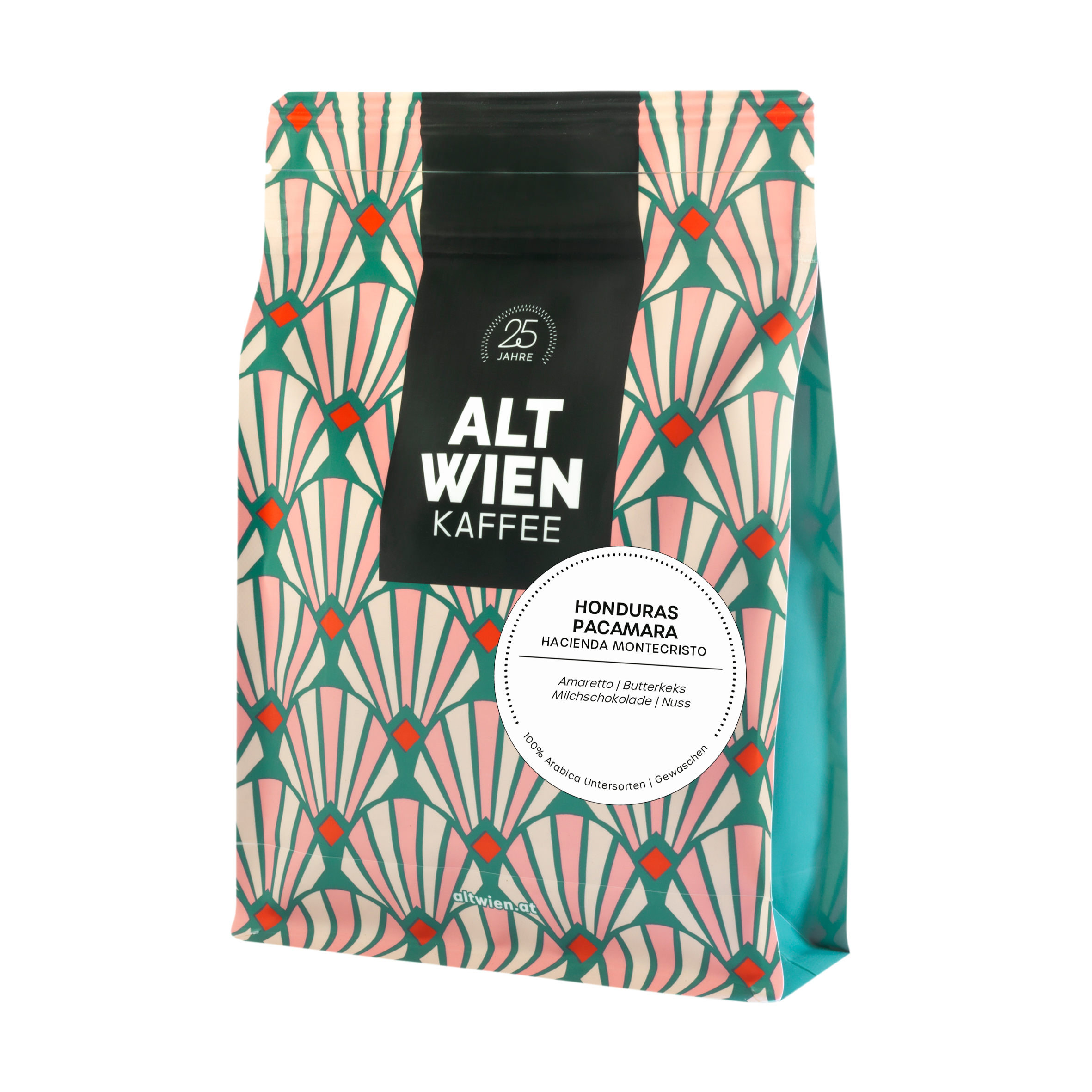
Large-bean Pacamara from the Medina family, who have farmed near Santa Rosa de Copán in the Maya mountains for five generations. Amaretto, milk chocolate and butter biscuit with dark chocolate, nuts and a hint of red wine, finishing sweet and dry.
Amaretto, milk chocolate, butter biscuit, nuts
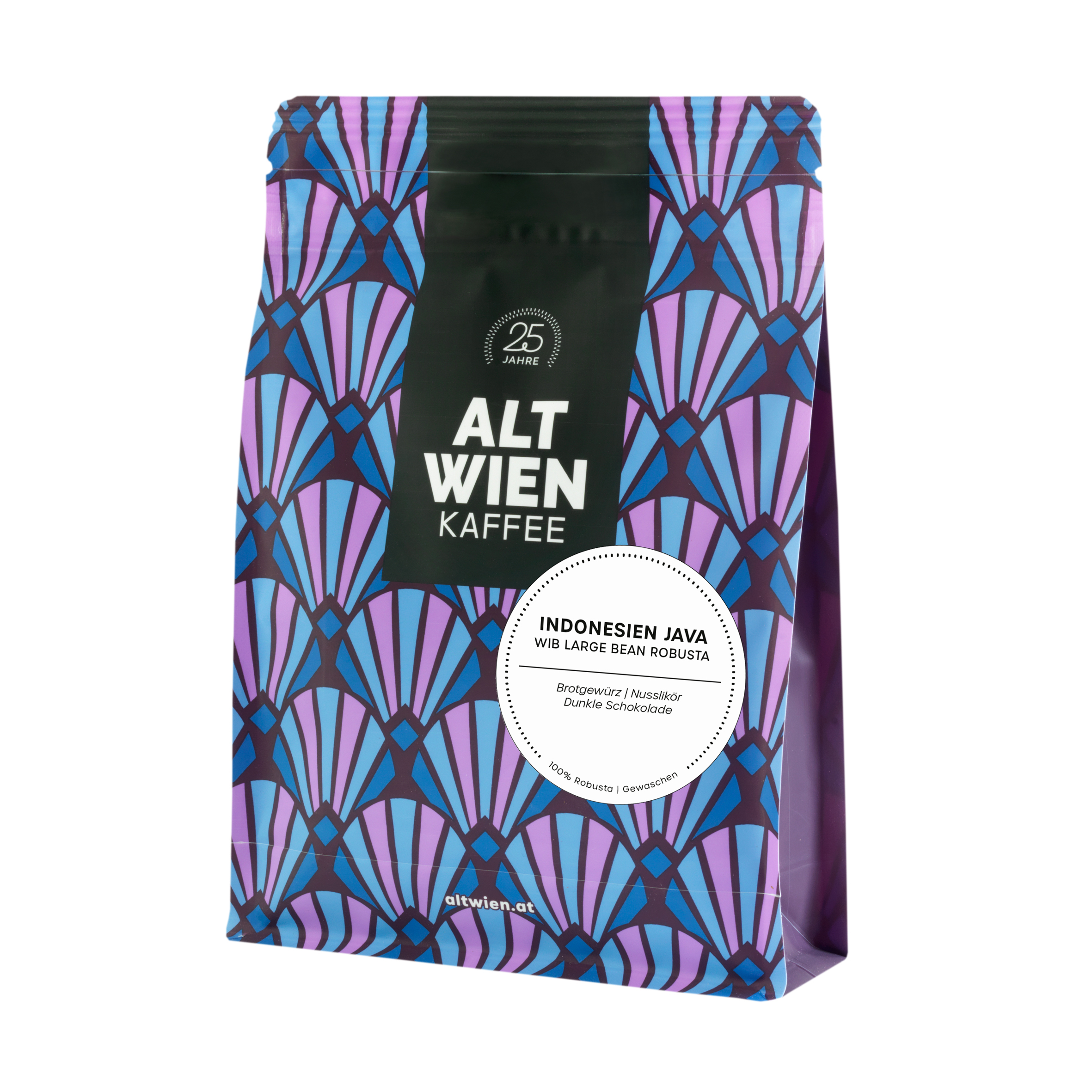
A large-bean robusta from smallholders in the Argopuro and Raung foothills of Jember, East Java, washed in the West-Indische Bereiding style rather than the usual dry robusta process. Dense, chocolatey and sweet: a caffeine kick without harshness.
Dense, chocolatey, sweet
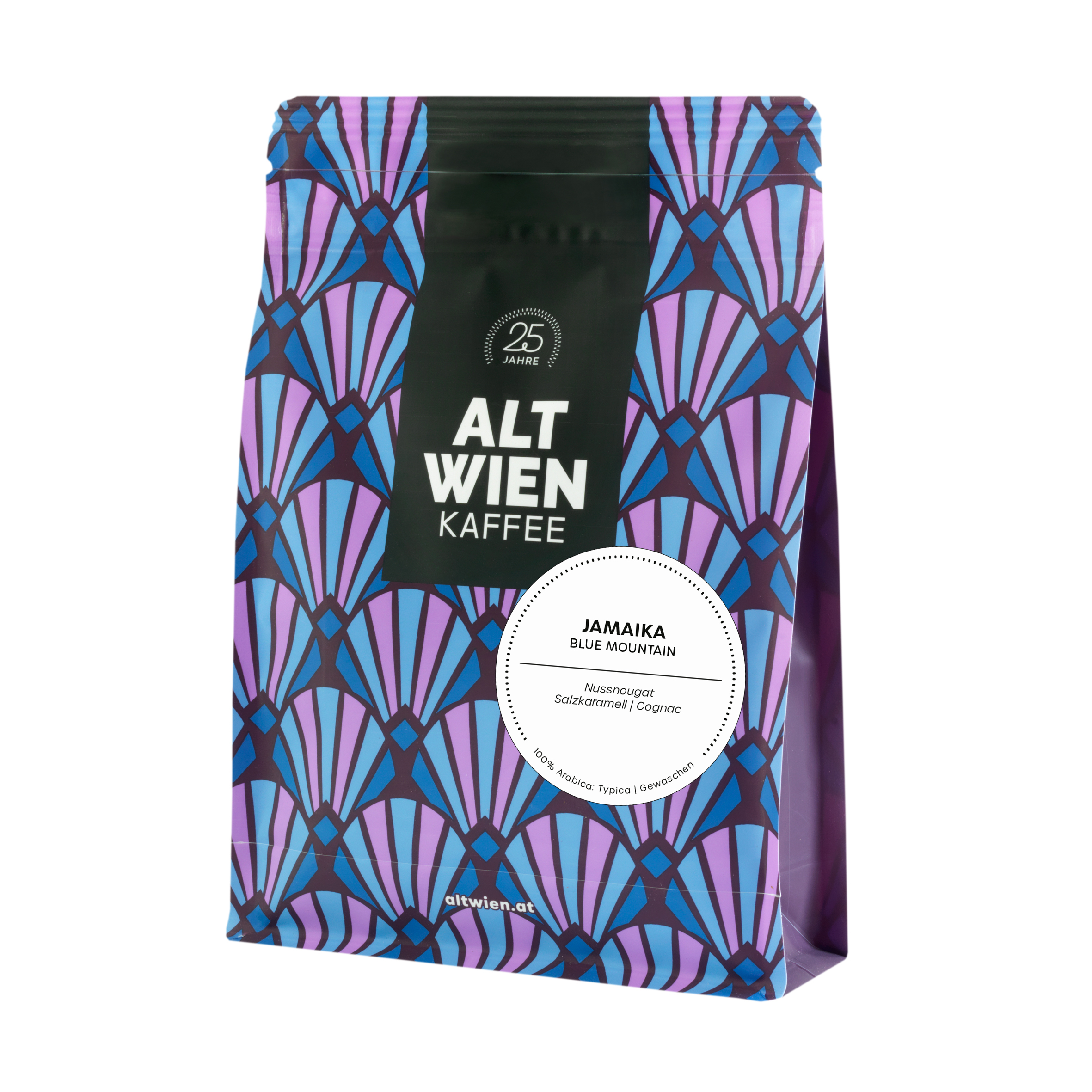
The famous Jamaica Blue Mountain from Mavis Bank, a Typica said to descend from the plant Captain Gabriel de Clieu carried to the Caribbean in 1723. Long rare and priced like gold.
Mild, balanced, smooth
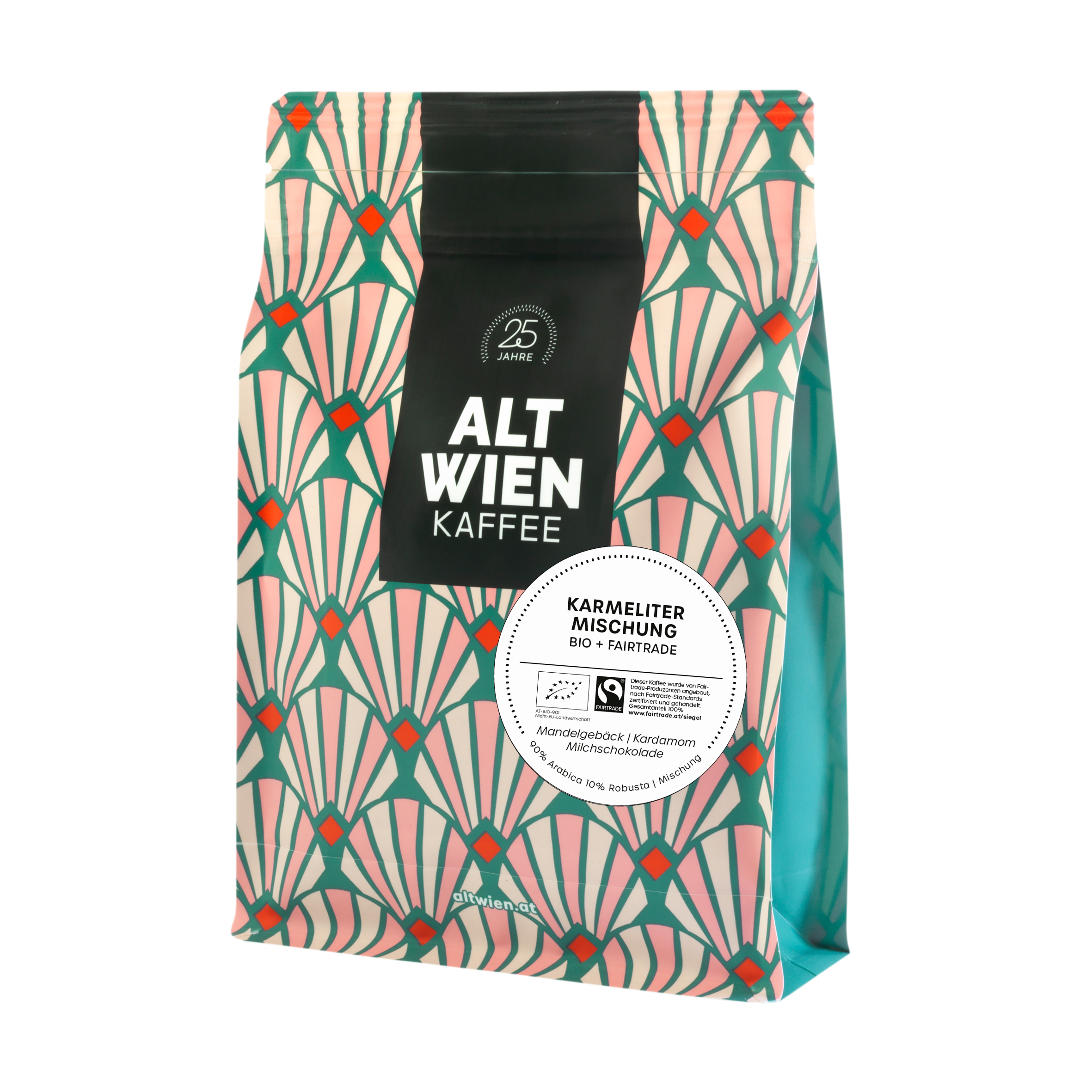
Created for Alt Wien's Karmelitermarkt coffee stand in 2012 to prove organic Fairtrade coffee can be dry, chocolatey and Italian-strong: an Italian-style blend with 10% organic Fairtrade robusta from Tanzania.
Dry, chocolate, strong, sweet
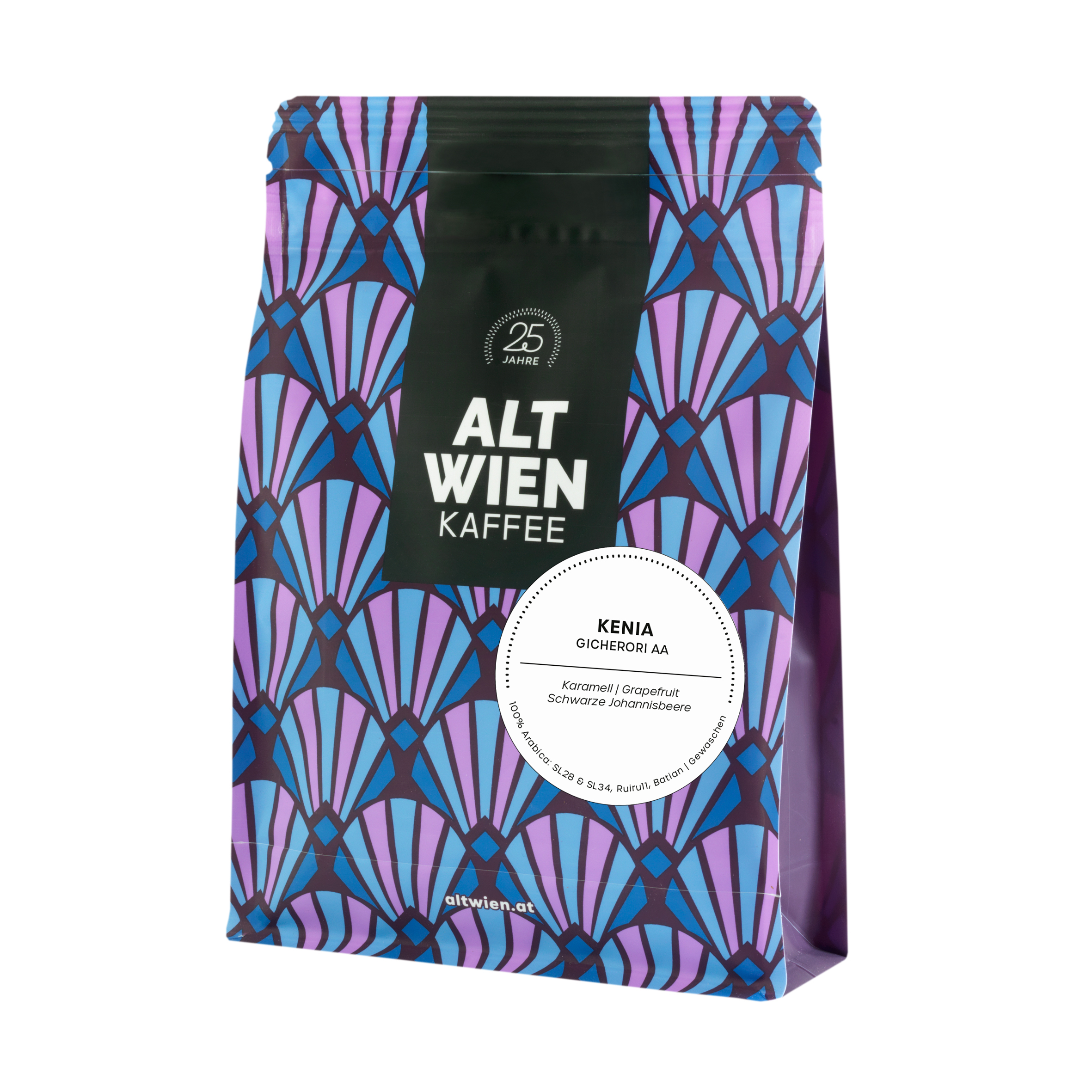
From the Gicherori Factory in the green hills of Embu, part of the 1,200-member Kibugu cooperative: dry-fermented, washed and dried on raised beds. Caramel and blackcurrant on the nose, grapefruit, green tea and herbs on the palate, and a lemon, ginger-biscuit and cacao-nib finish.
Blackcurrant, grapefruit, green tea, lemon juice, cacao nibs
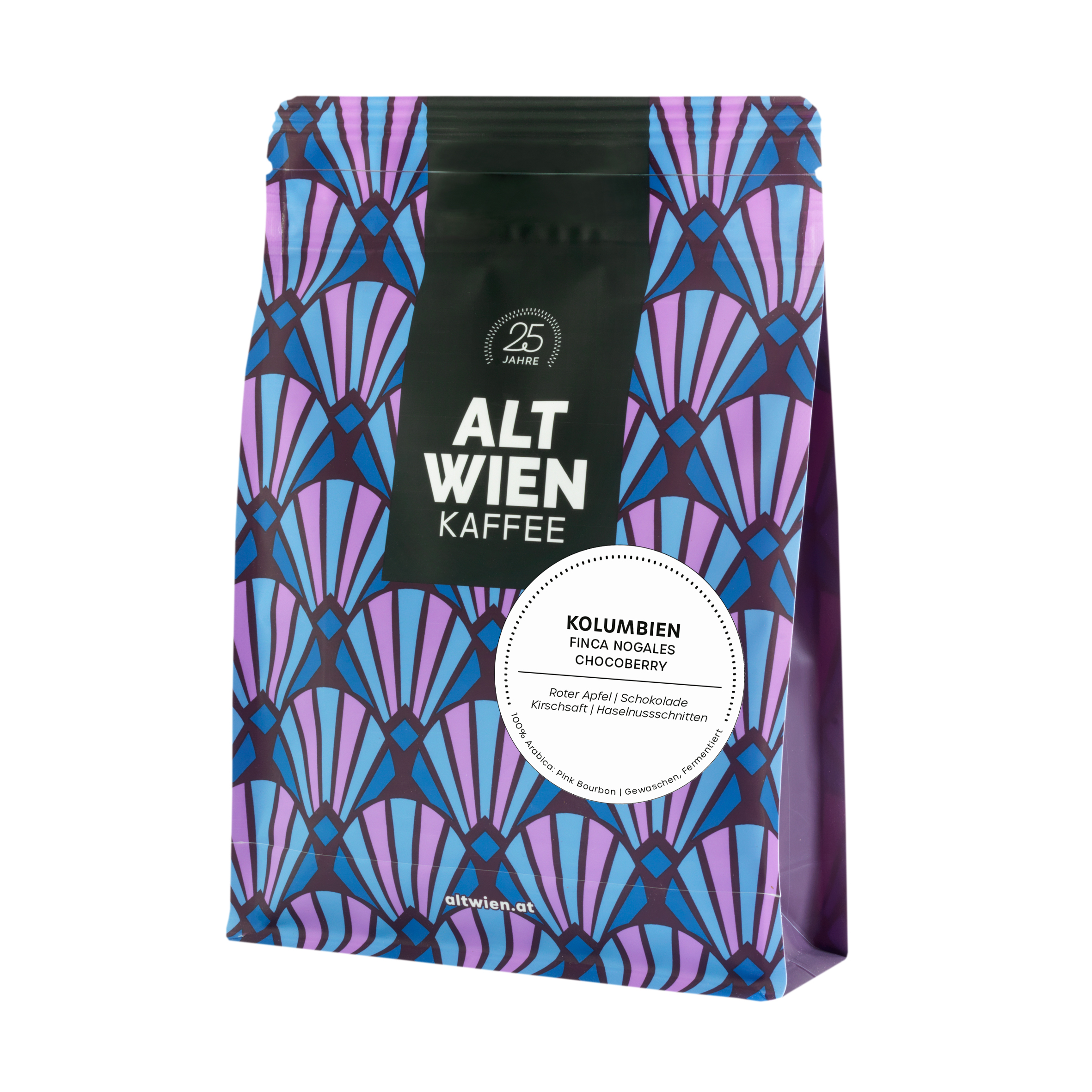
A Pink Bourbon from Oscar Hernandez, who has turned his family's Finca Nogales towards quality. Hand-picked cherries are sorted, fermented with natural microorganisms to a per-lot "recipe" and dried slowly, giving a clean, precise cup of amarena cherry, red apple and a touch of chocolate over fresh citrus.
Amarena cherry, red apple, chocolate, citrus
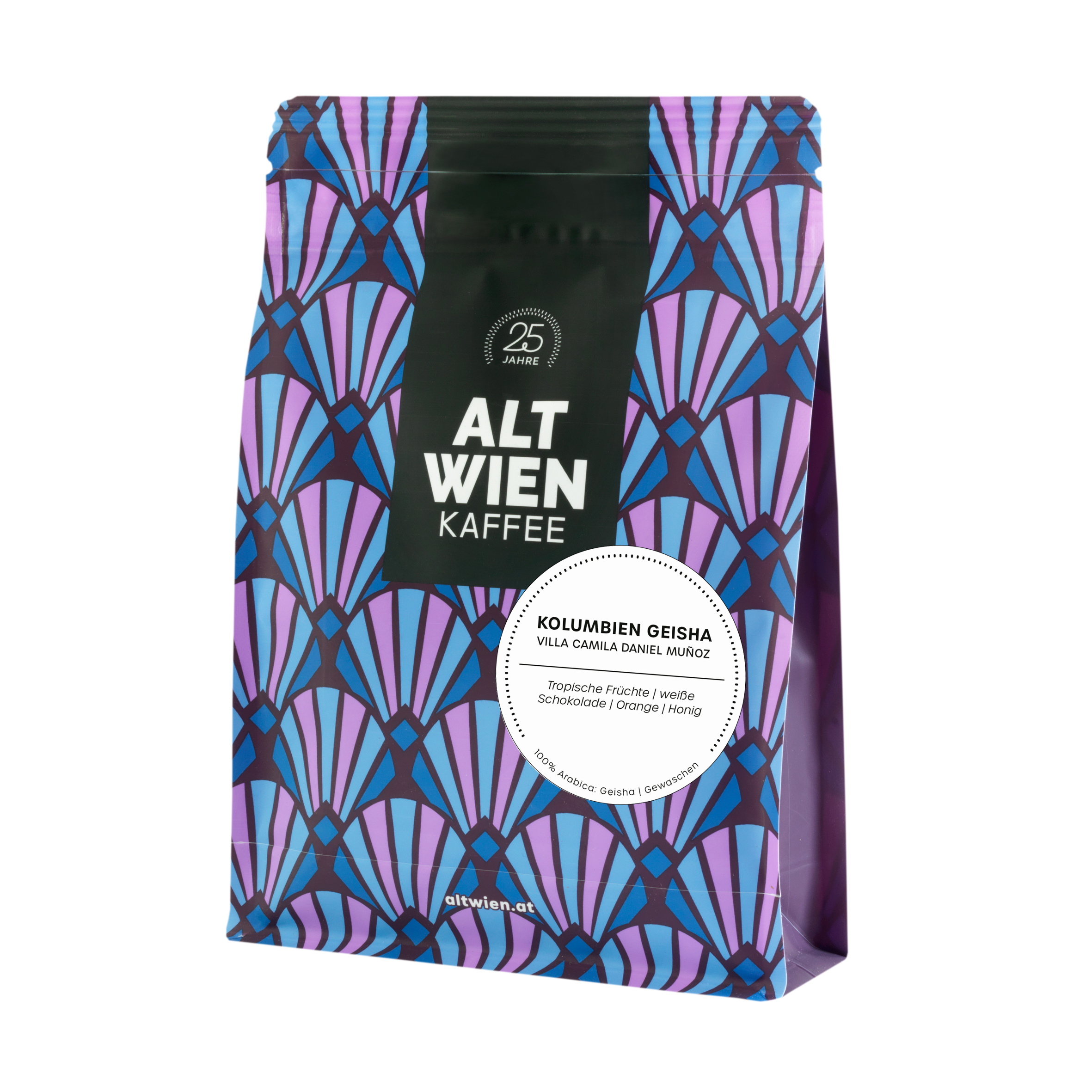
A Geisha from Finca Villa Camila, which Daniel Muñoz named after his daughter and rebuilt from the soil up for Geisha and Pink Bourbon. Fully ripe cherries go through a long fermentation, several washes and slow drying on raised beds. A modern filter coffee with tropical fruit, honey and florals.
Tropical fruit, honey, florals
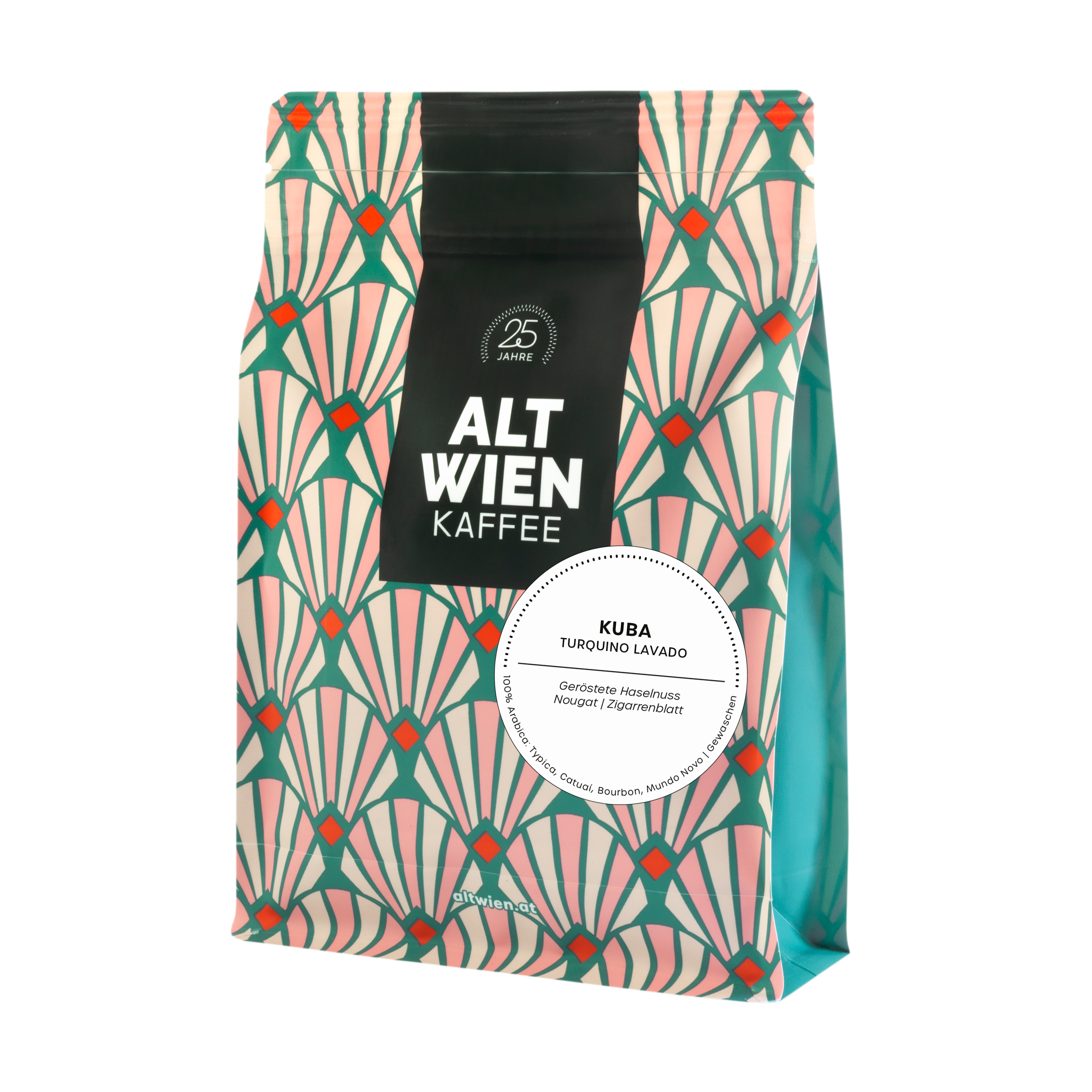
Back after a break: a washed arabica grown at 800 m around Pico Turquino in the Sierra Maestra. Cocoa powder, pipe tobacco and amarena cherry on the nose; walnut, dark chocolate and cane sugar in the cup, with a long, dry finish. Good for bean-to-cup machines and espresso.
Cocoa, pipe tobacco, amarena cherry, walnut, dark chocolate
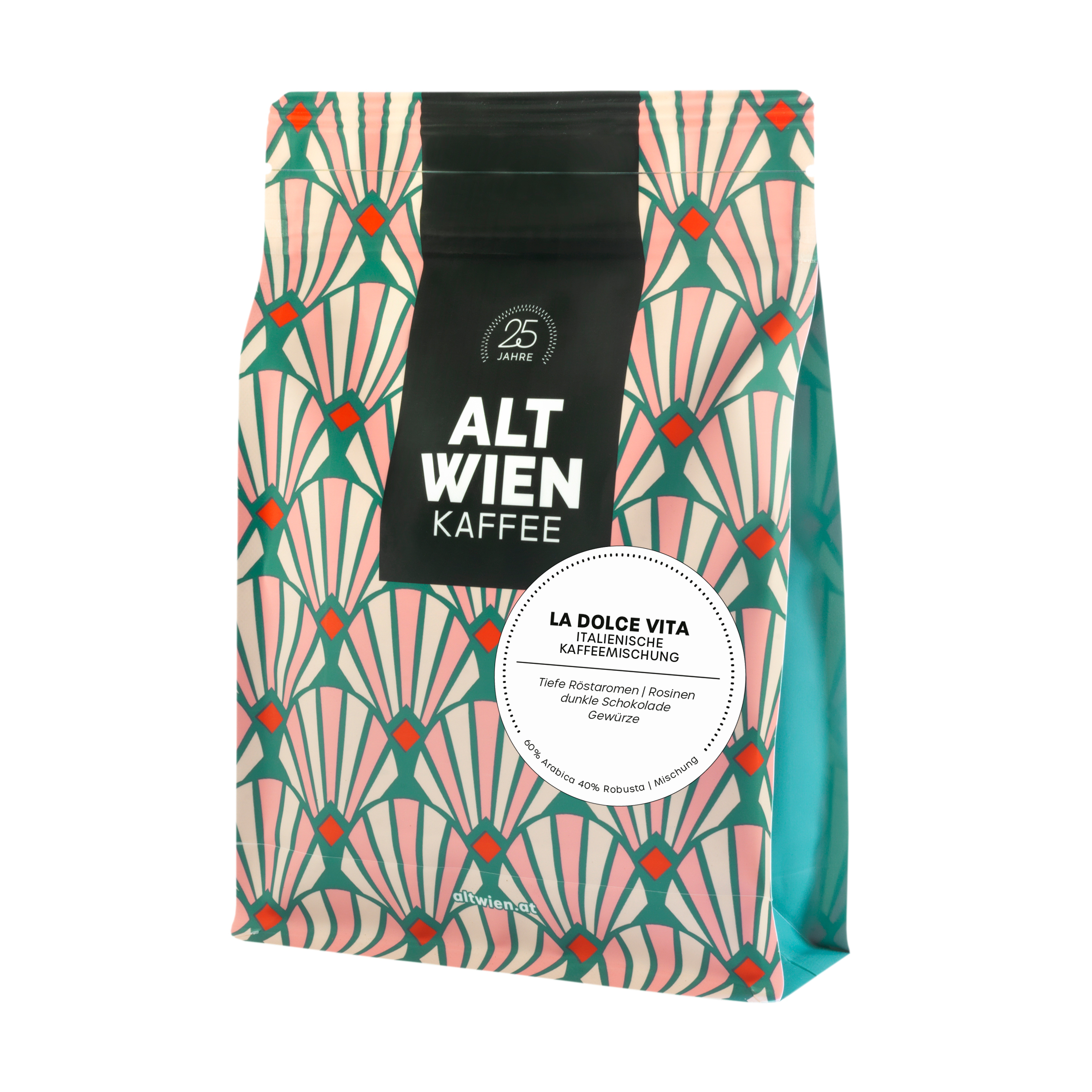
A house blend in the southern-Italian caffè al banco style, 60% arabica and 40% robusta: deep roast notes with raisin, dark chocolate and spice, a velvety texture and no acidity. For espresso and bean-to-cup machines.
Raisin, dark chocolate, spice
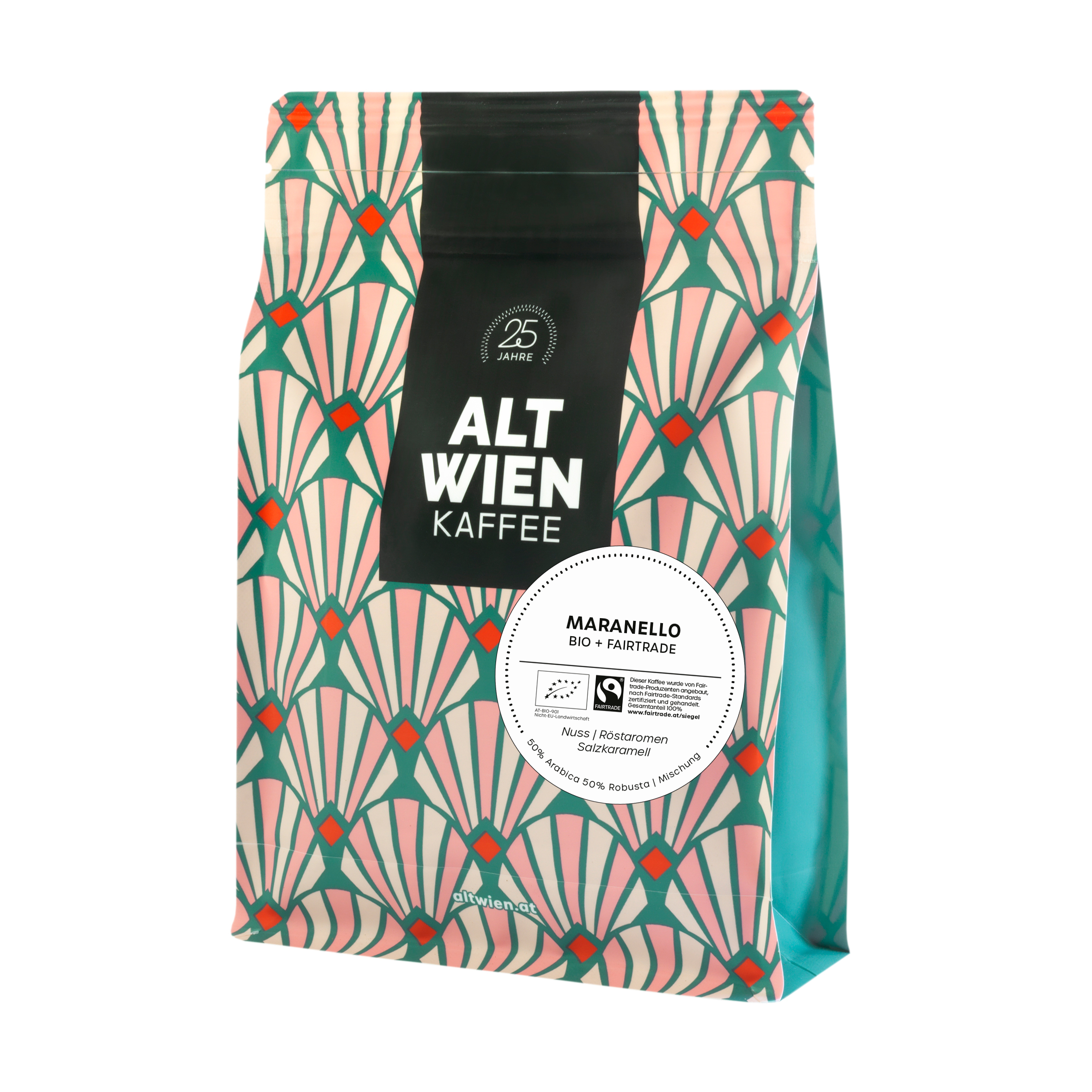
Southern Italy from Vienna in organic Fairtrade quality, with 50% of one of the best robustas Alt Wien has found: the strongest of their blends by caffeine. Named after the Ferrari home town, near the balsamic producer Alt Wien used to stock.
Chocolate, powerful
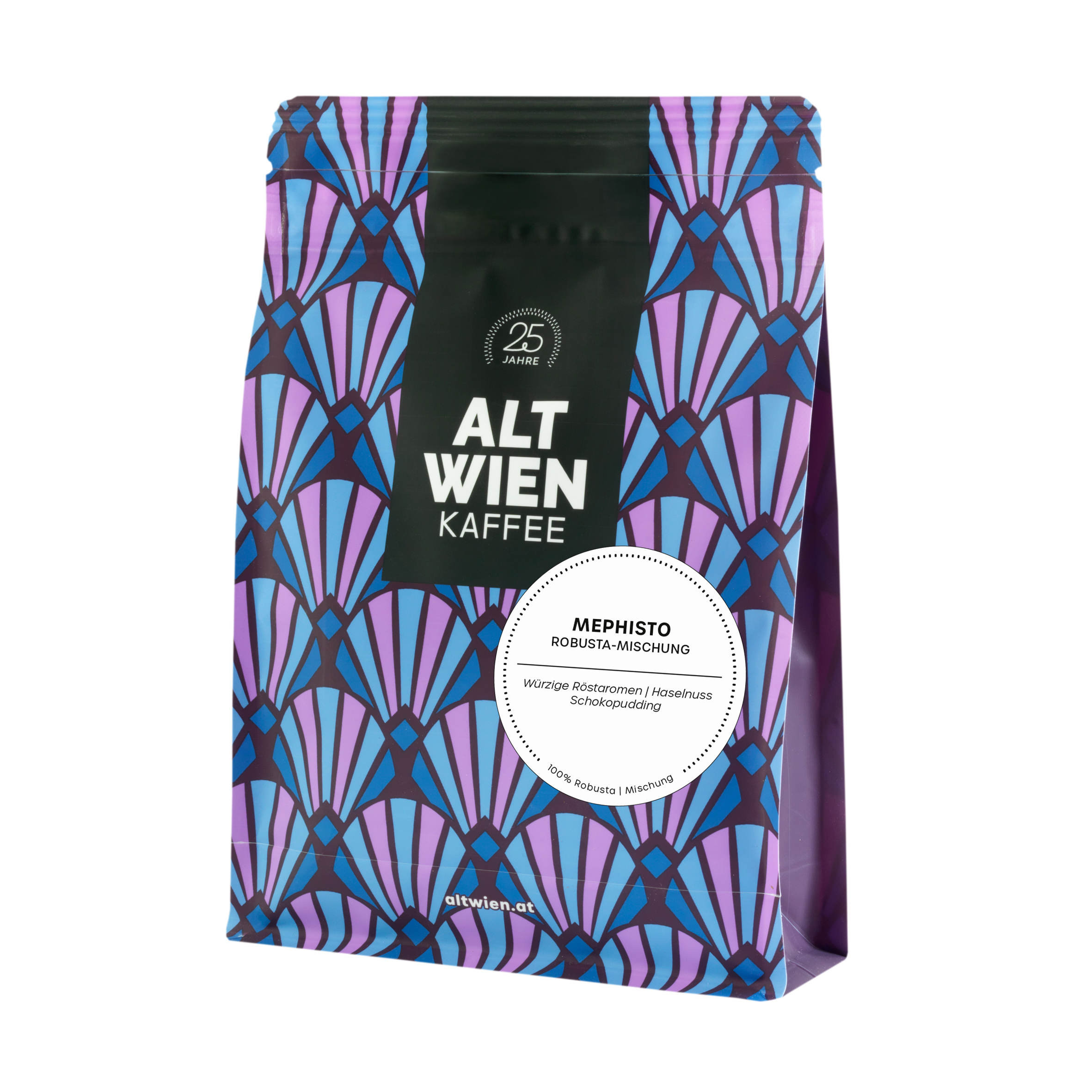
An extremely strong 100% robusta blend with a firm crema, no fruit acidity, a huge body and a lot of caffeine. Meant as a limited edition for hard times and kept on after winning many fans.
Dark chocolate, unsweetened chocolate pudding
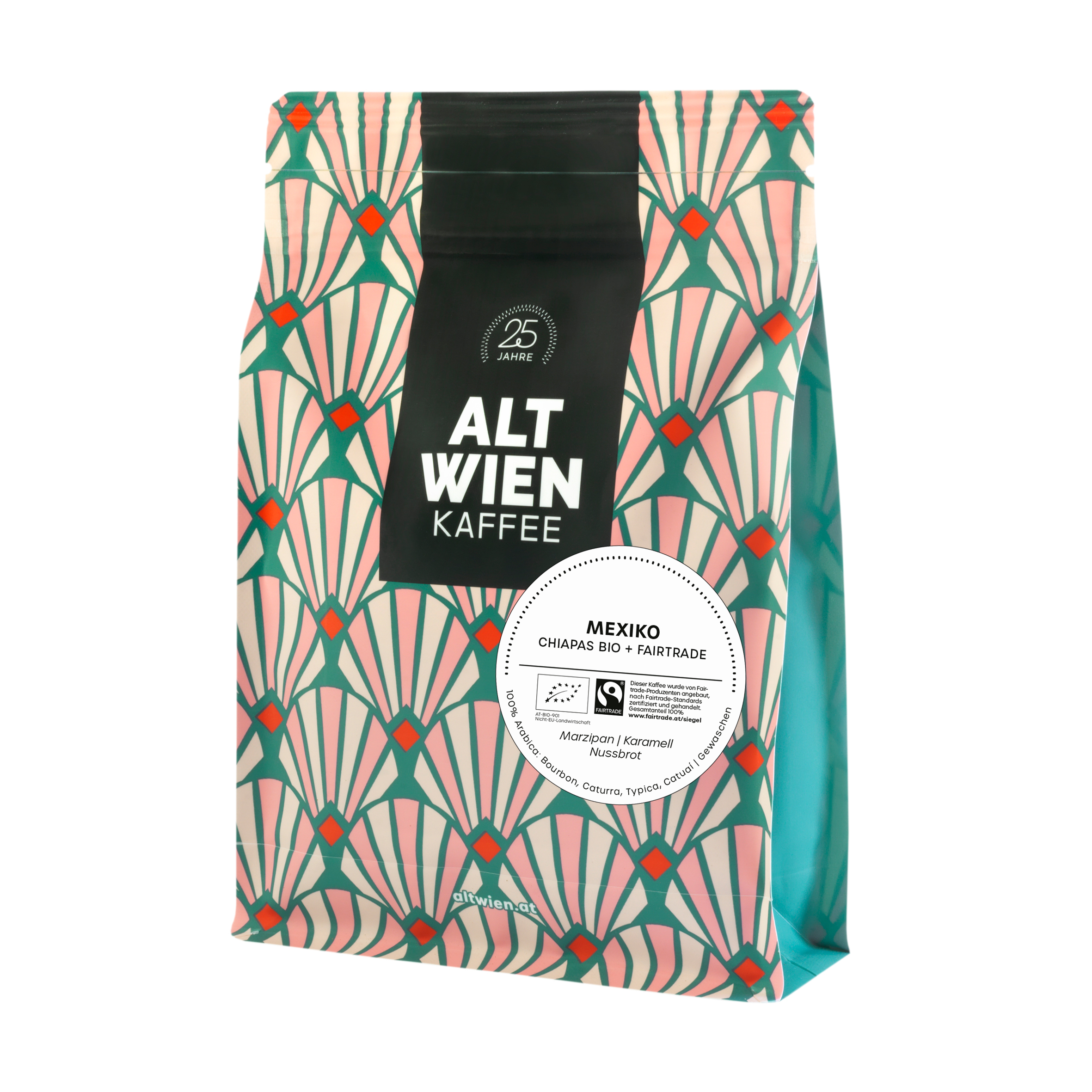
A mild, easy-going organic Fairtrade single origin from FIECH, a federation of 15 cooperatives, 21 communities and 2,800 members in Chiapas founded in 1993; the Fairtrade minimum price funds local infrastructure and social programmes.
Mild, relaxed
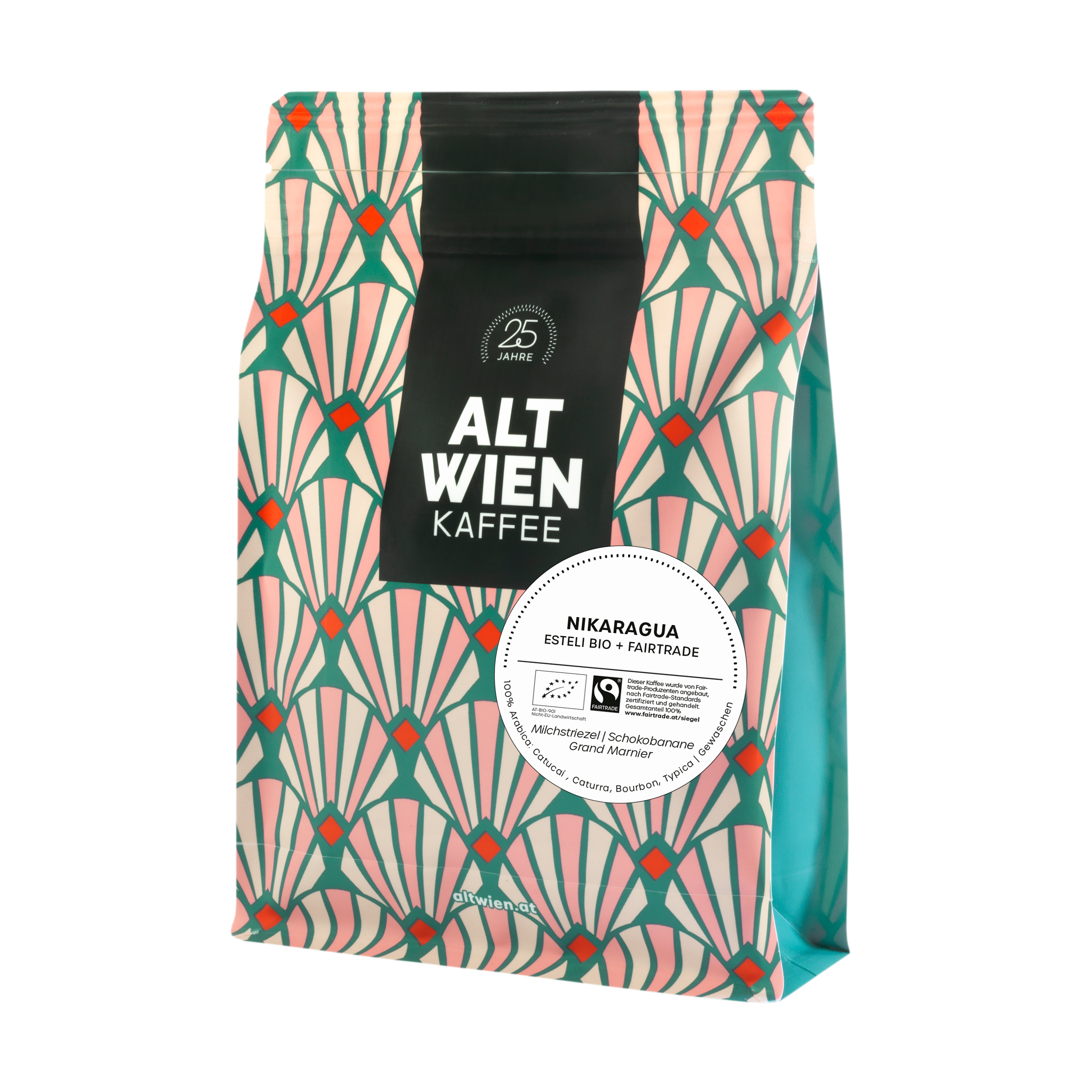
From Prodecoop in Estelí, northern Nicaragua, Fairtrade-certified since its founding in 1993. Mild, soft and friendly; best as classic filter or in the moka pot.
Mild, soft, friendly
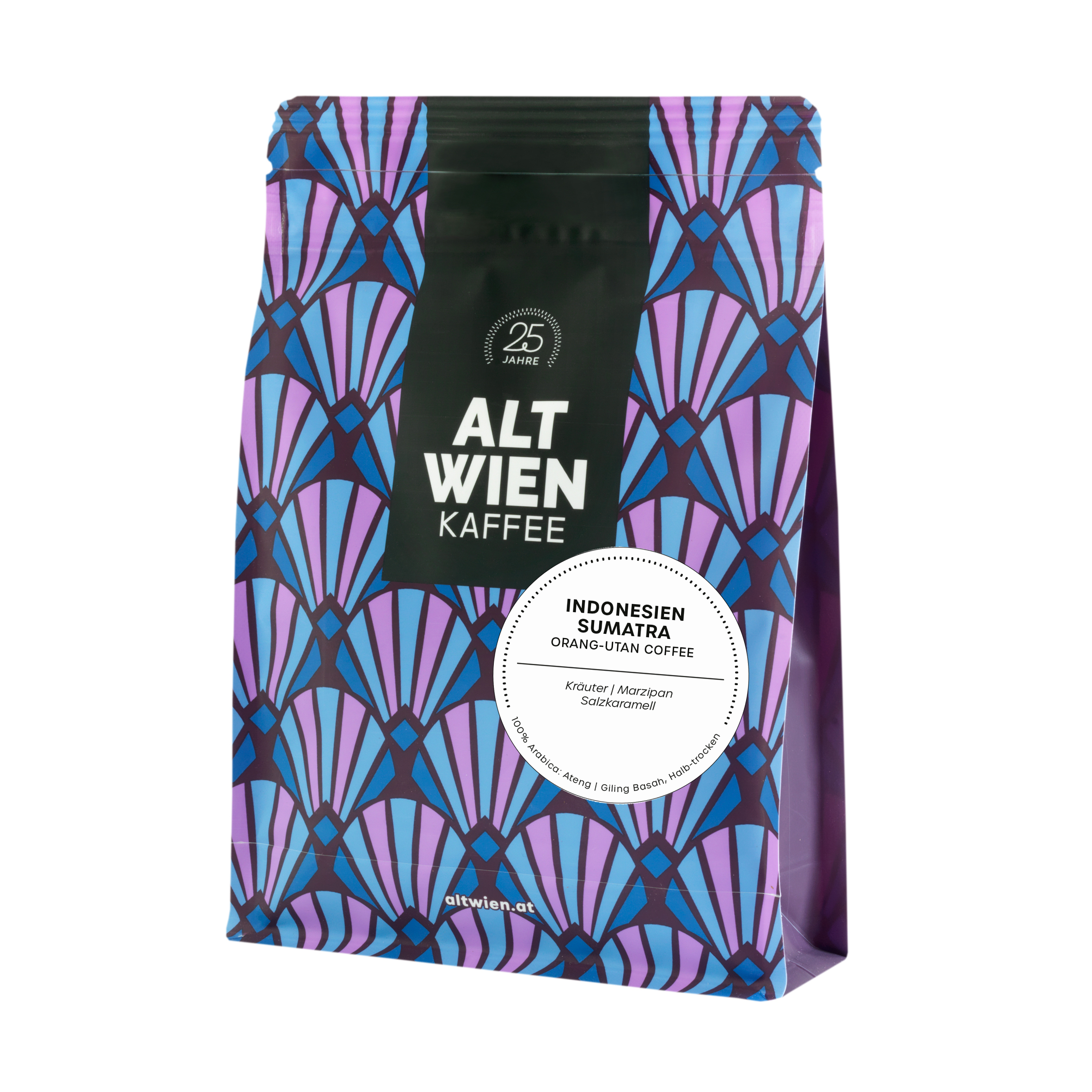
A Sumatran arabica from the Orang Utan Coffee Project, which pays farmers premiums to keep growing in the rainforest that shelters the last 14,000 wild Sumatran orangutans, against the spread of palm oil.
Strong, earthy, chocolate
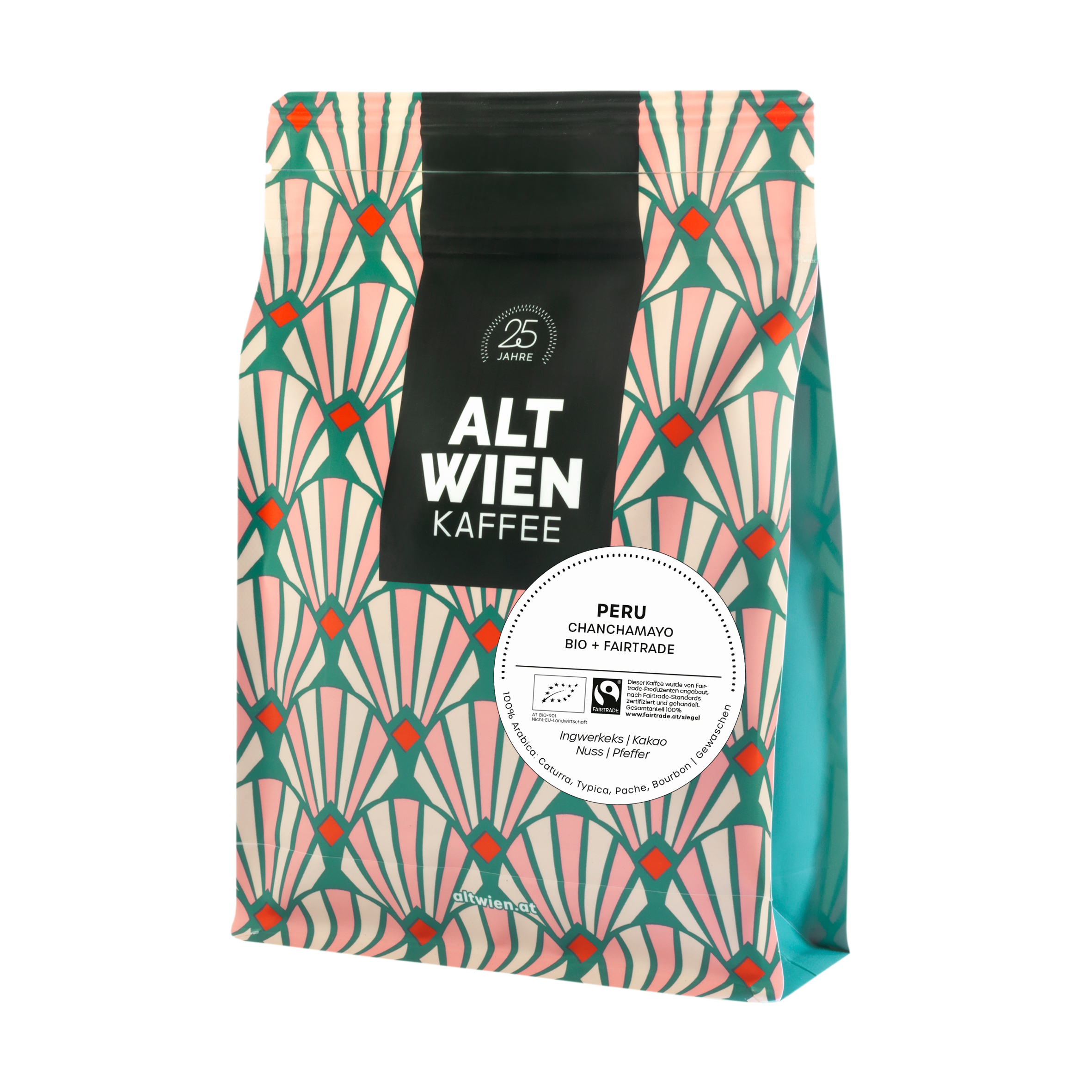
An organic Fairtrade single origin from Aproselva smallholders (about 2 ha each) in the Chanchamayo valley, which grows some 40% of Peru's coffee. Solid, nutty, classic and dry in espresso and filter, like a very good Lebkuchen.
Nutty, dry, gingerbread
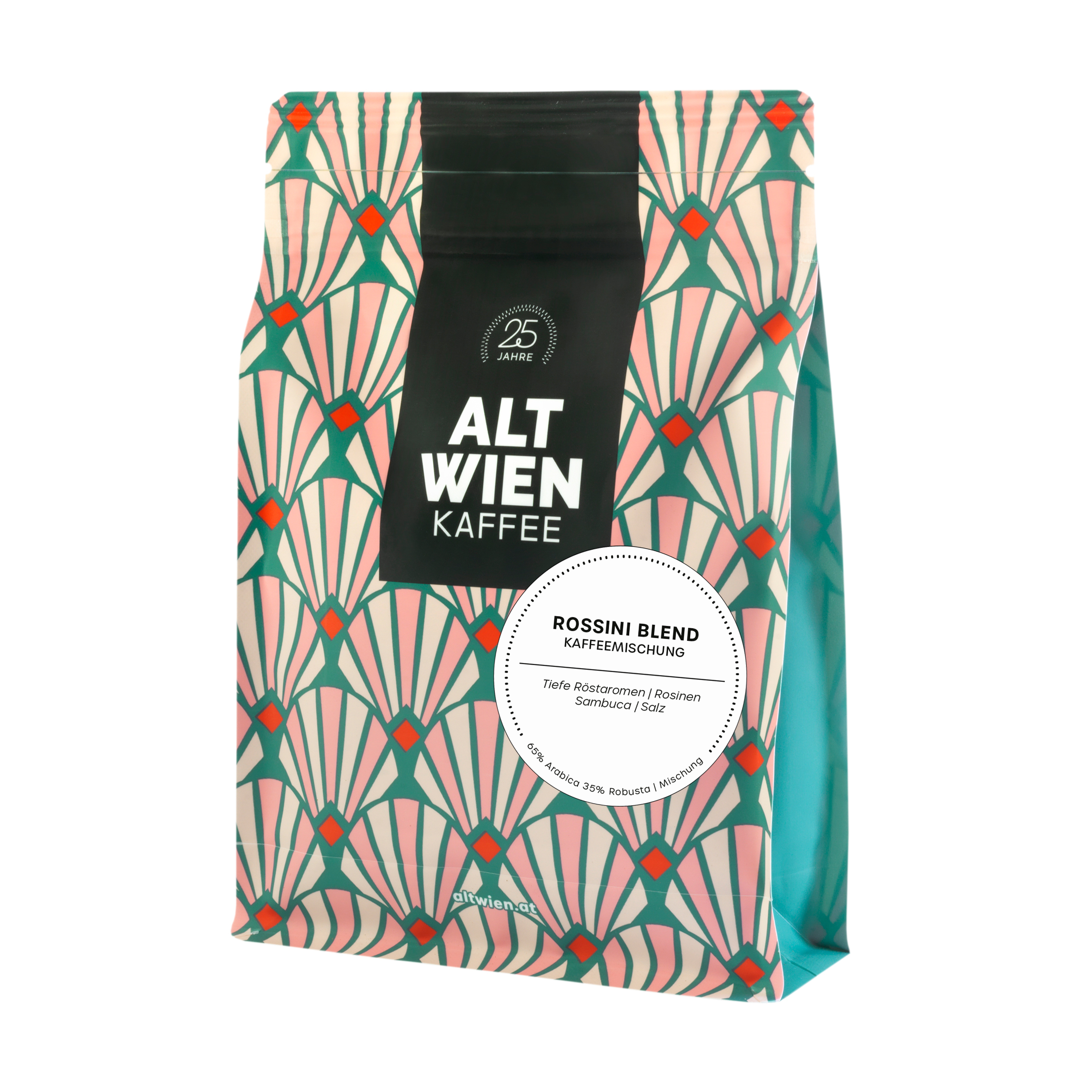
The "big Italian": a southern-Italian blend with 35% robusta, roasted slowly to a deep, even dark. Dense, roasty, dry and chocolatey, best as a double ristretto. Green coffee from Sandalj in Trieste for almost two decades.
Dense, roasty, dry, chocolate
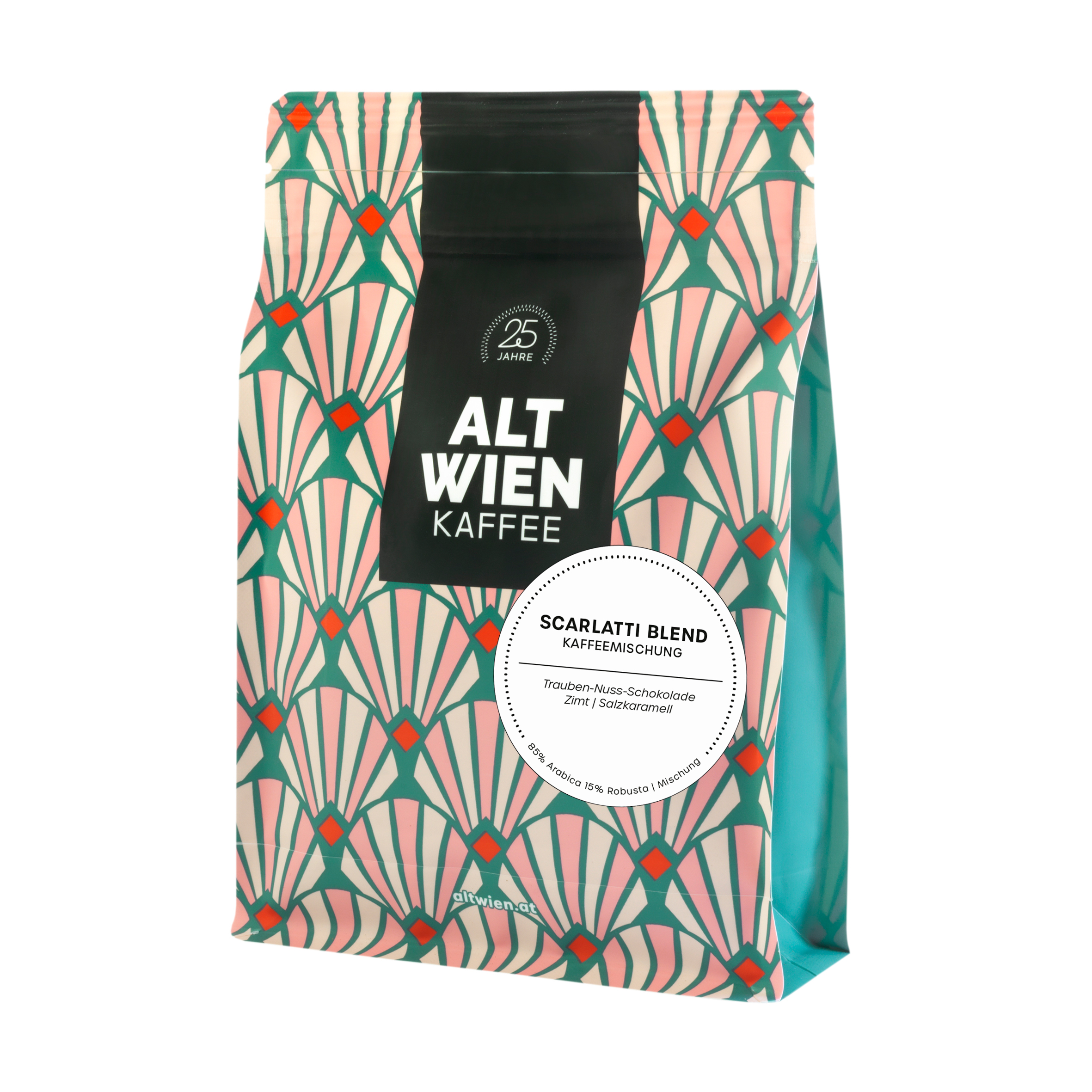
The "little Italian" beside the Rossini, with just 15% robusta: a dense, creamy classic espresso with dark chocolate and dried fig even at higher temperatures, and good as filter too. From Sandalj in Trieste.
Dark chocolate, dried fig, roasty
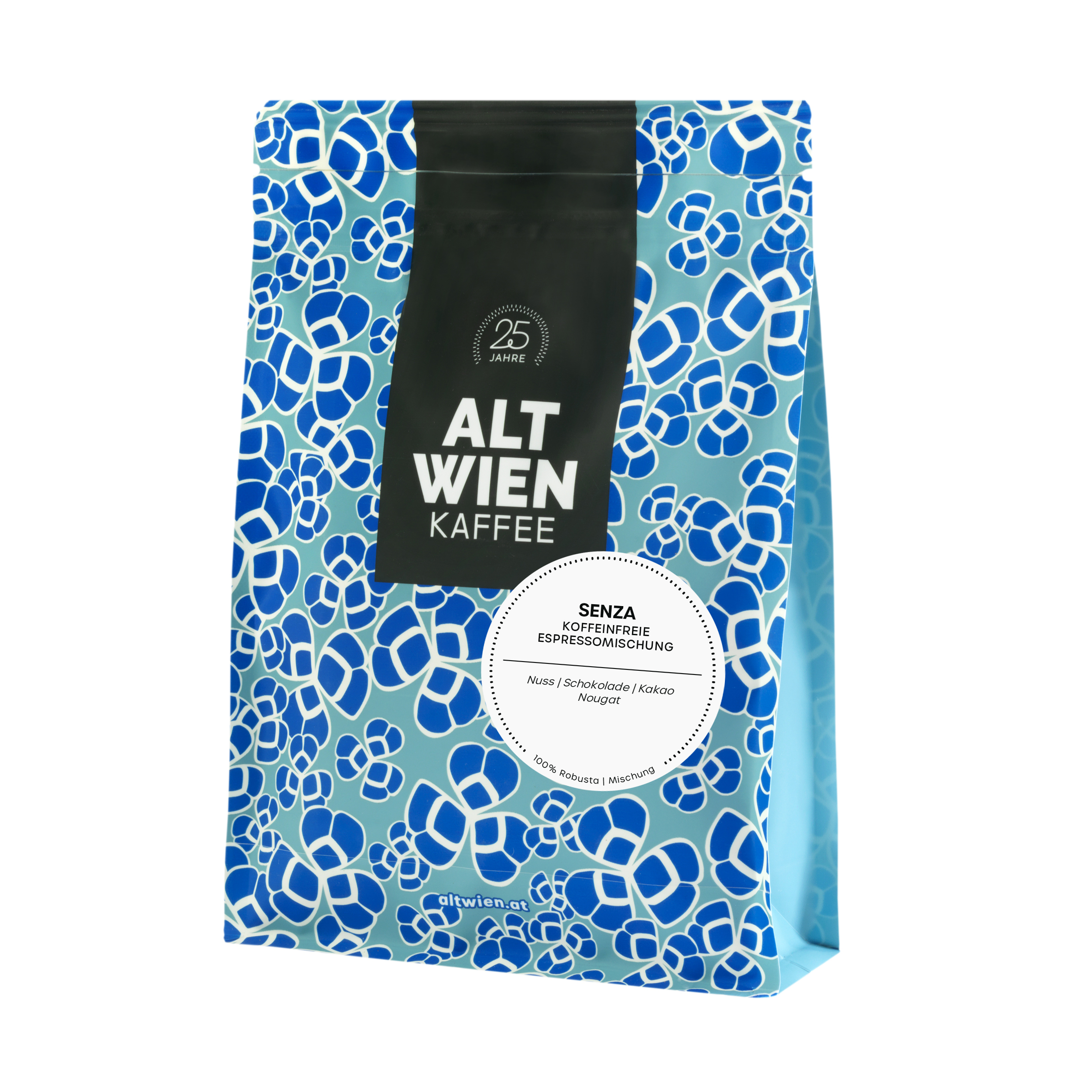
The decaf twin of Alt Wien's Mephisto: a 100% robusta blend with a firm crema, a huge body and no fruit acidity, like unsweetened chocolate pudding.
Dark chocolate, chocolate pudding
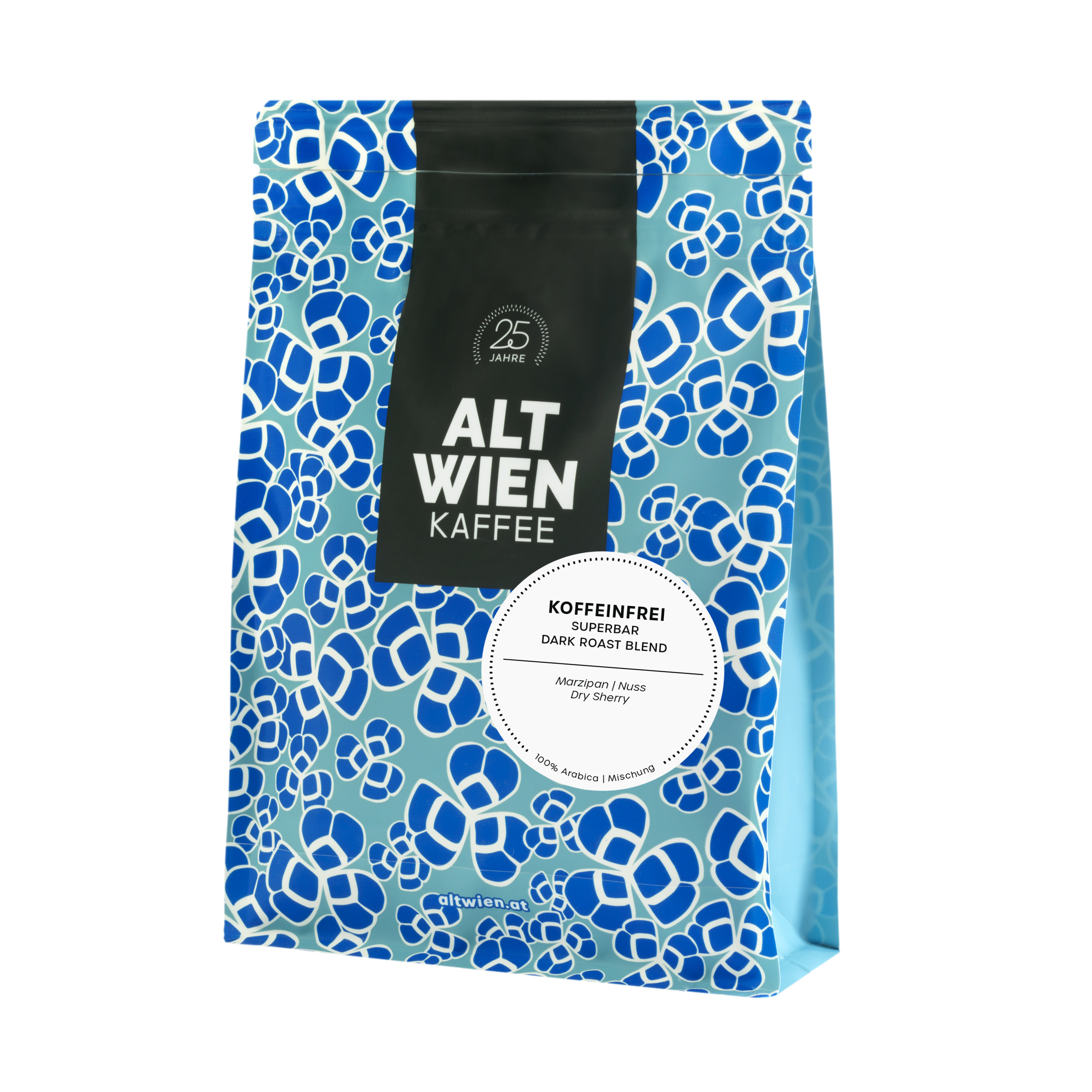
A decaf arabica blend roasted darker into an intense Italian-style espresso that customers wanted to taste like "real coffee" in the evening. The darker roast makes the beans oily, so use them quickly.
Intense, Italian-style
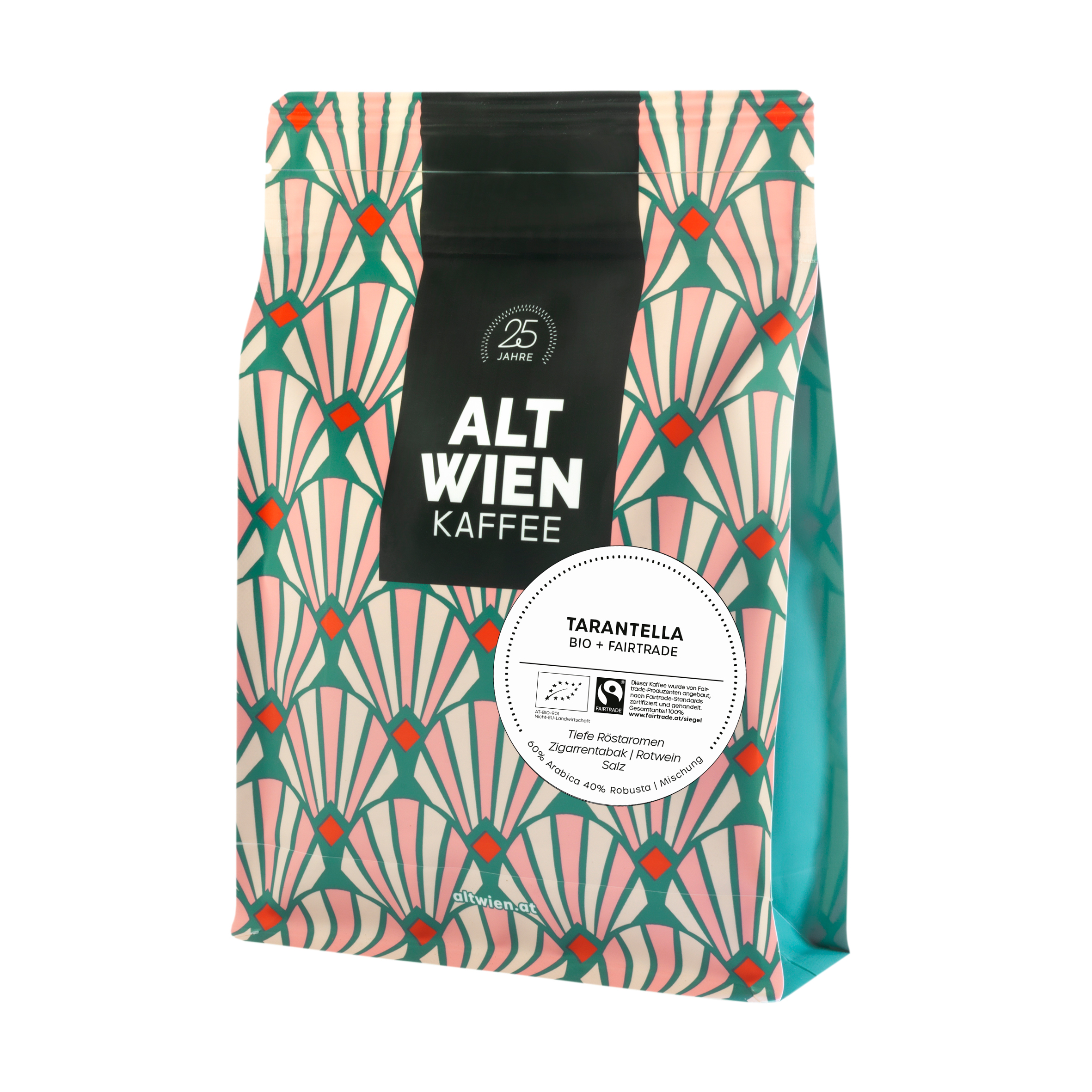
An organic Fairtrade espresso blend, 60% arabica and 40% robusta: more intense, drier and denser than the Maranello, with deep chocolate and roast notes. Also recommended for bean-to-cup machines, where it tastes almost acid-free.
Dark chocolate, roast, dry
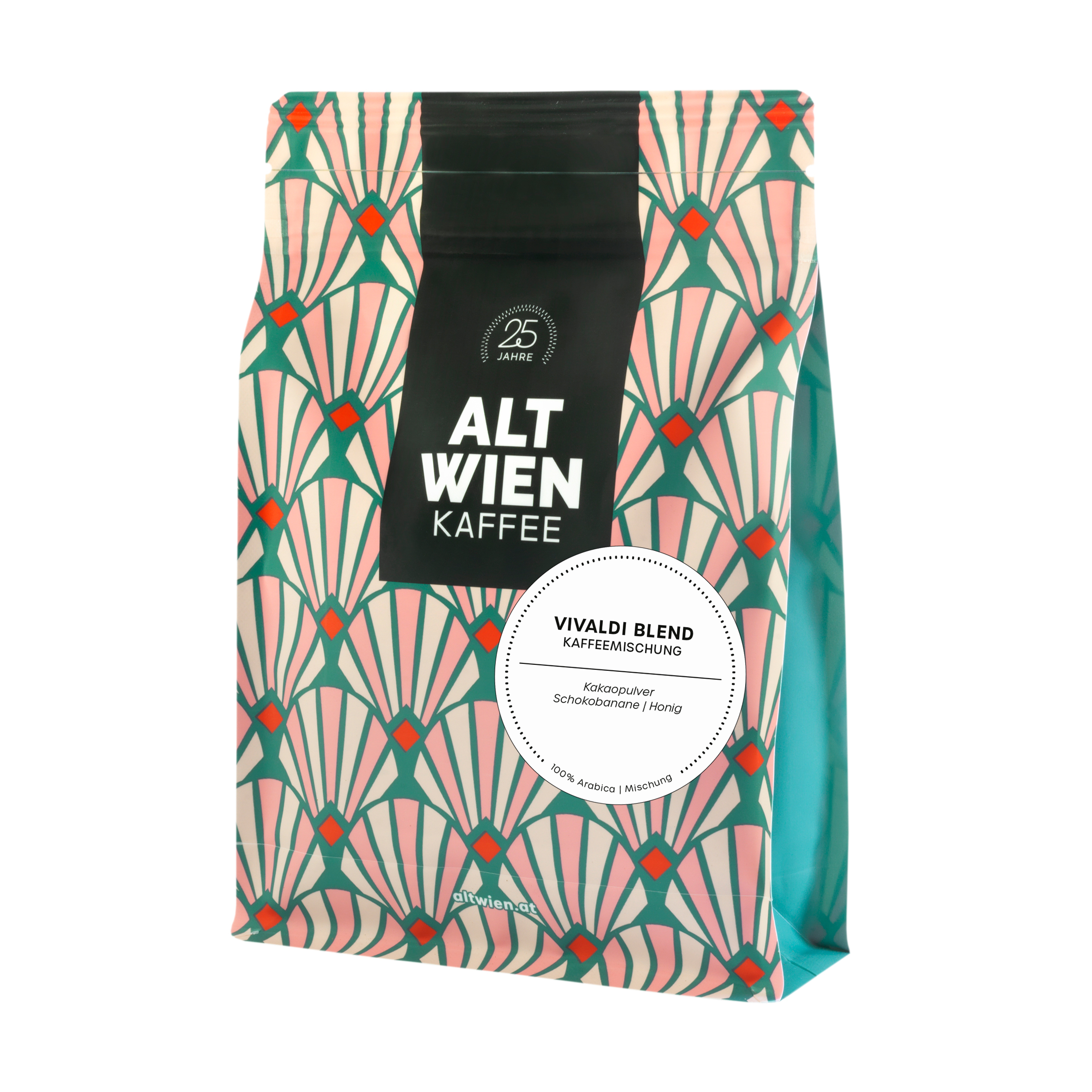
A medium-strength arabica blend sourced exclusively from Sandalj in Trieste: a friendly espresso with gentle honey sweetness and an ideal base for soft, chocolatey cappuccinos; also good in filter, moka pot and French press.
Honey, soft chocolate
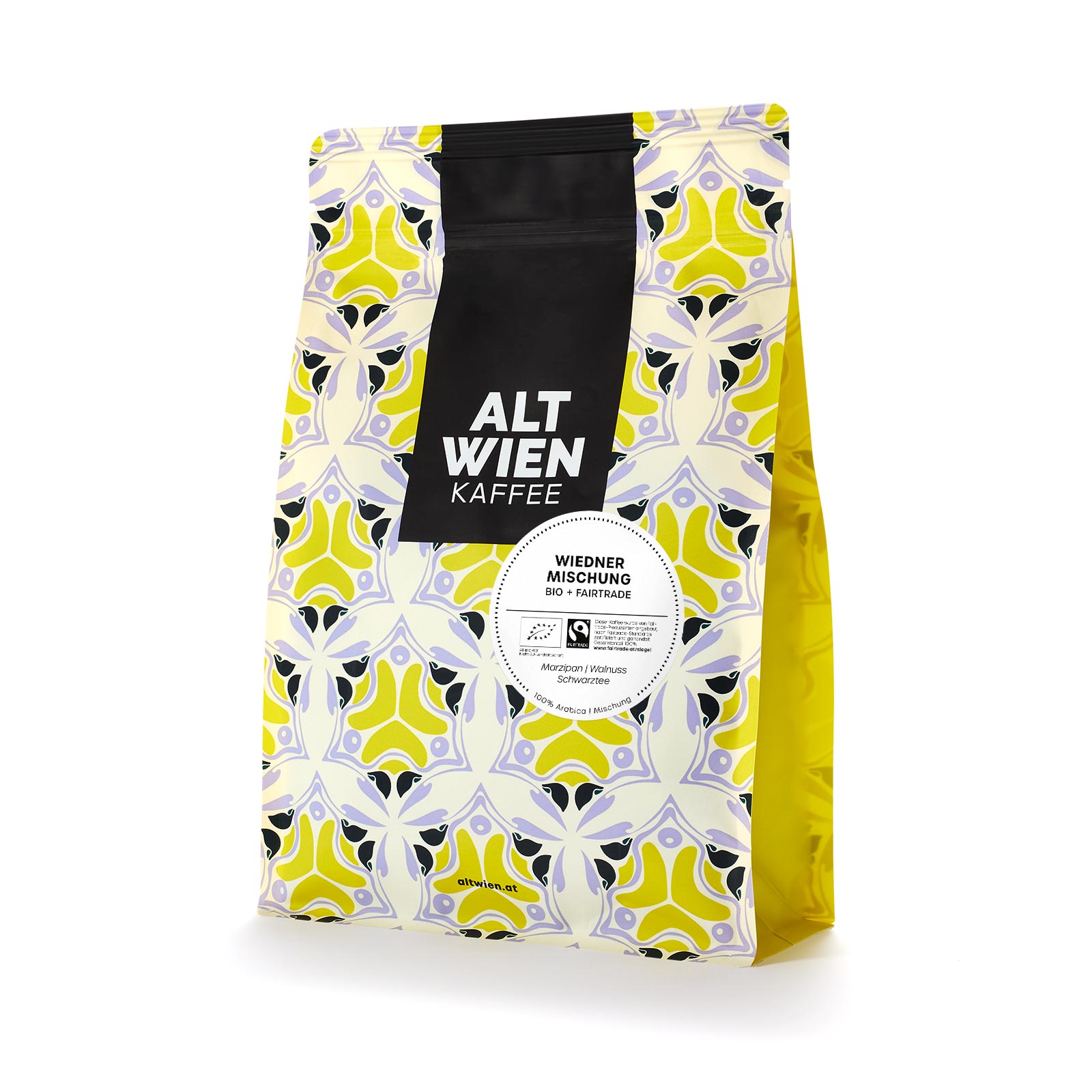
Commissioned in 2009 by the council of Wieden, Vienna's 4th district and Alt Wien's home, as its own organic Fairtrade blend and chosen in a blind tasting with Fairtrade Austria. Mild, smooth and easy-going, slightly favouring filter and espresso.
Mild, smooth, friendly
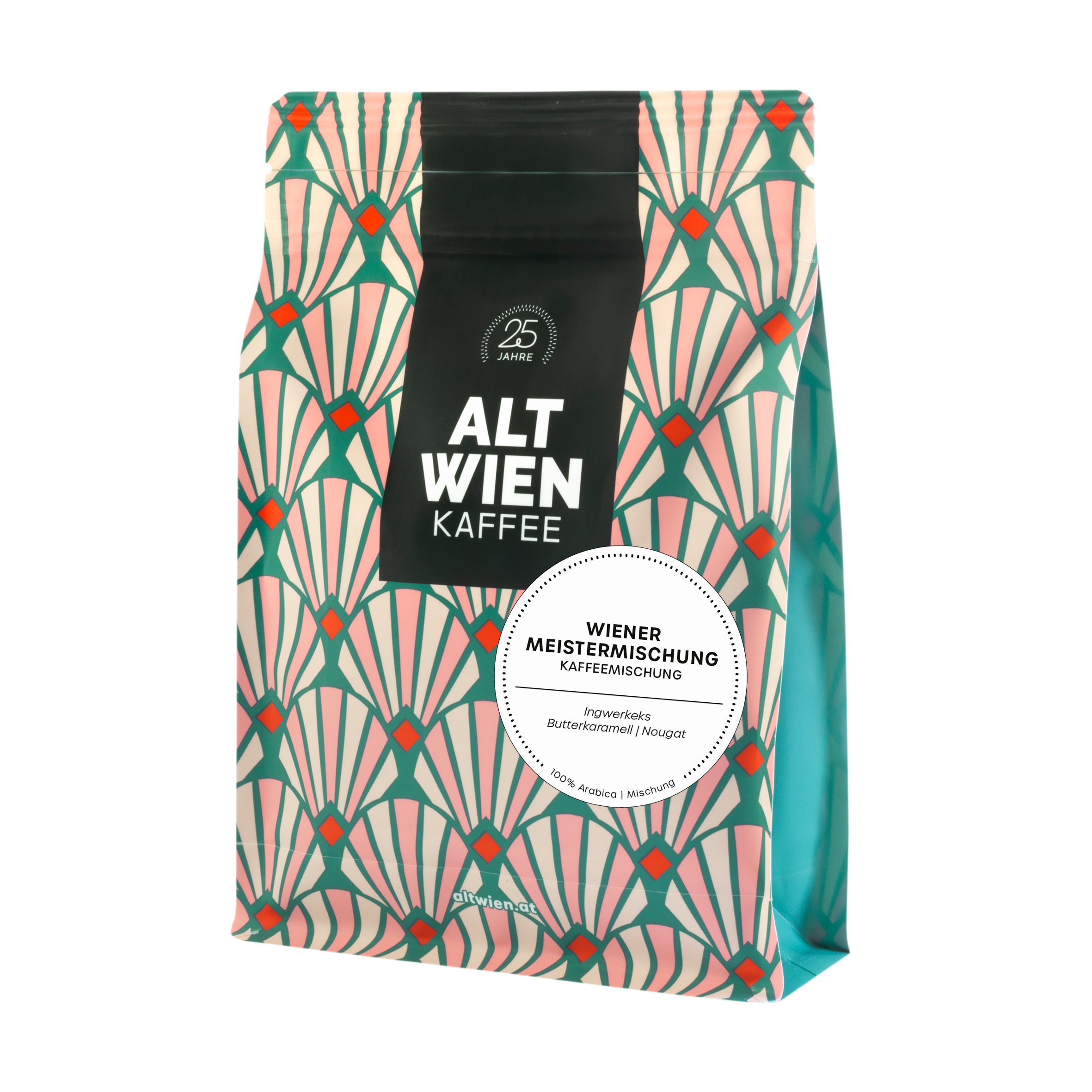
A 100% arabica blend roasted a little longer to be dense, dry and intense with a firm crema but no robusta: sweet chocolate in front and almost no fruit acidity. Named after the masters of Viennese classicism.
Dark chocolate, dense, sweet
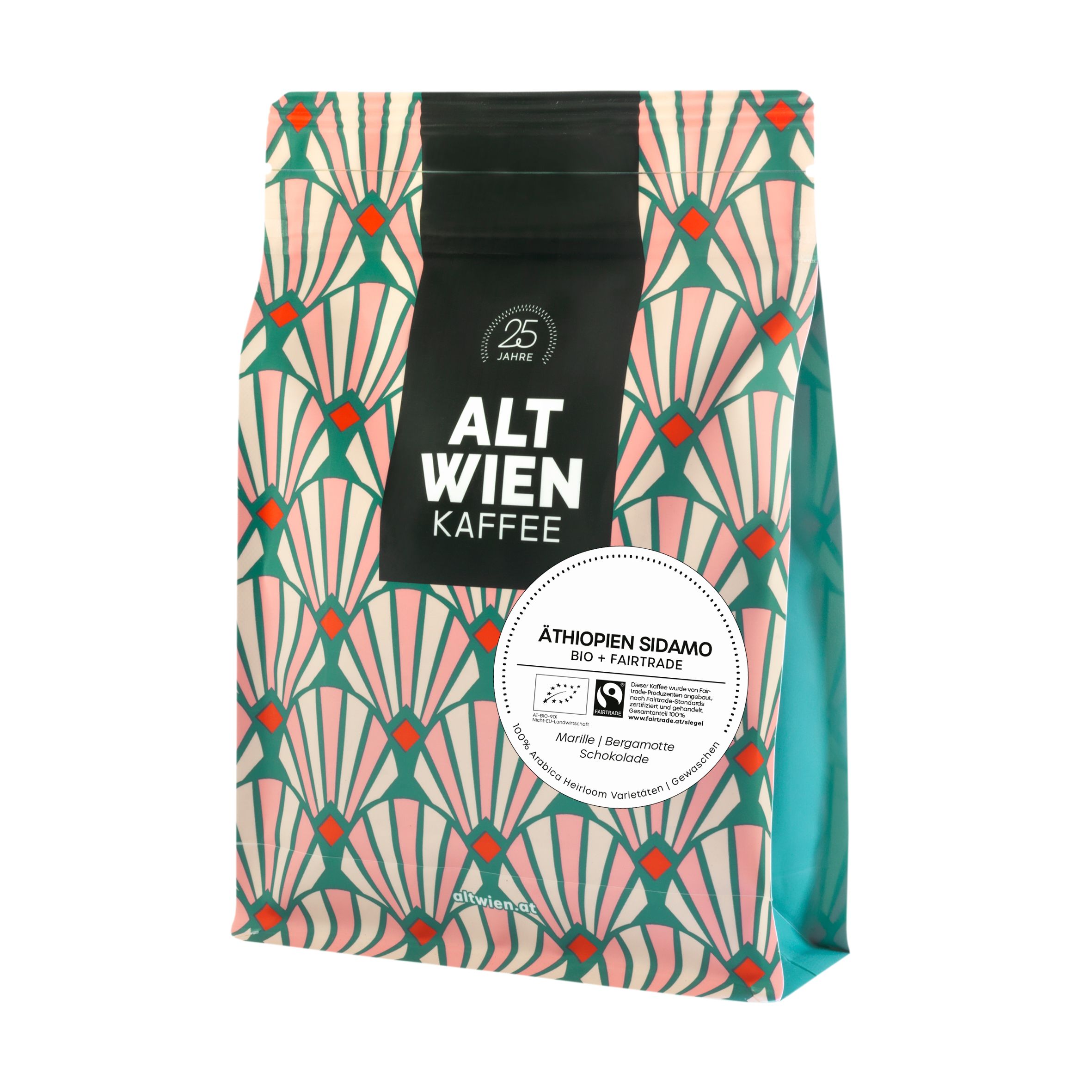
An organic Fairtrade Sidamo whose bergamot aroma makes it the Earl Grey among coffees, with a similar balance and character.
Bergamot, balanced
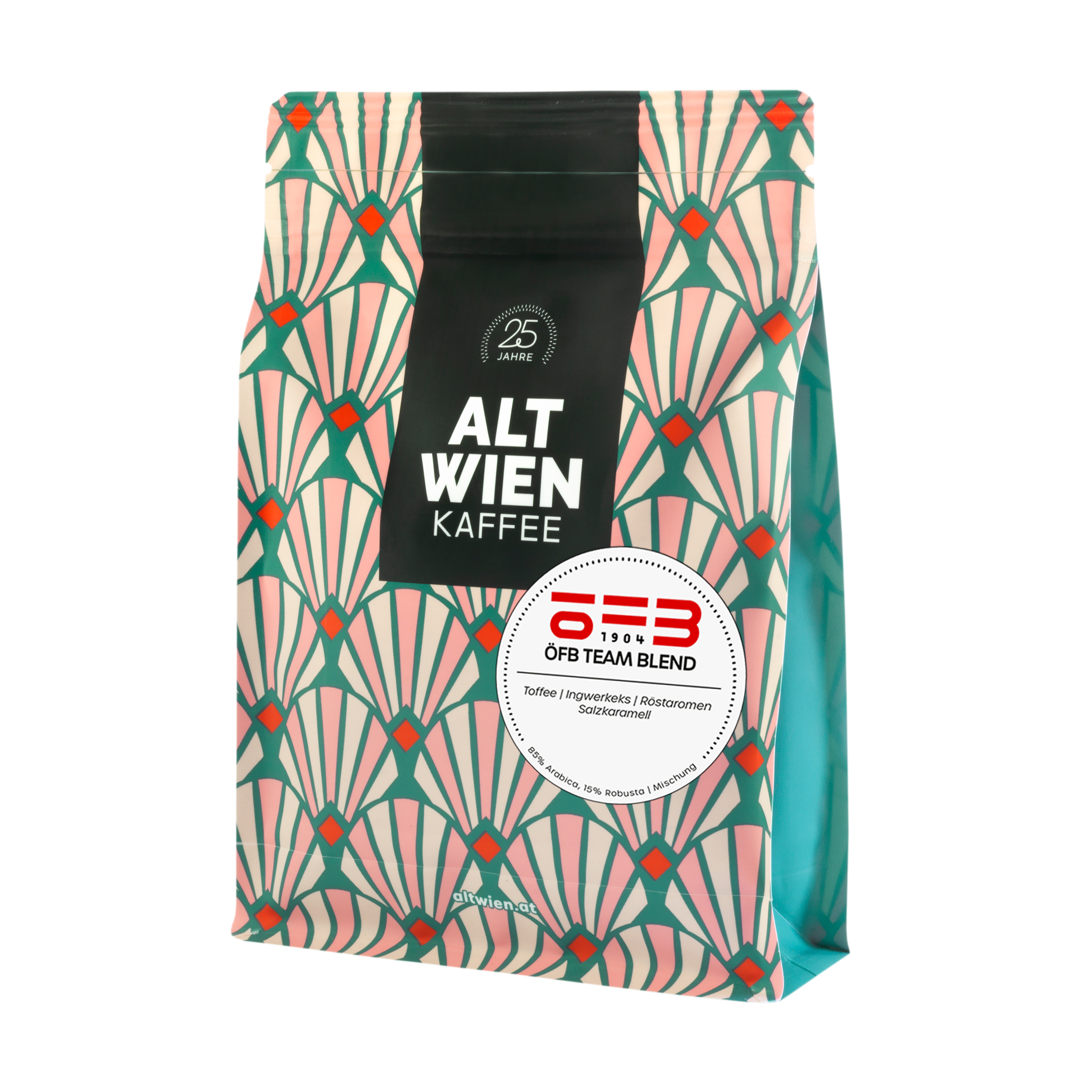
The espresso Alt Wien developed as official coffee supplier to the Austrian national football team for the 2026 World Cup: arabicas and robustas for an intense cup with dense chocolate, strong roast notes, salted caramel and a long, dry finish.
Dark chocolate, roast, salted caramel