
Roasteries / Mókuska Caffè

Mókuska Caffè
Stuttgart, Germany
Stuttgart's first specialty coffee roastery, founded in winter 2014 by Stefan Dachale with the vision of roasting "the best coffee in the city" while helping drive change across the coffee value chain. Relocated to Stuttgart-Feuerbach in January 2018, where single-origin and single-variety lots from Ethiopia, Brazil, Colombia, Mexico, Peru, Vietnam and Nicaragua are roasted multiple times a week — always light enough to let each variety's own character show through. Every green coffee cups at a minimum SCA score of 83, many above 90, sourced through transparent, direct trade relationships and hand-filled and sealed one bag at a time.
14
coffees
Germany
base
Location
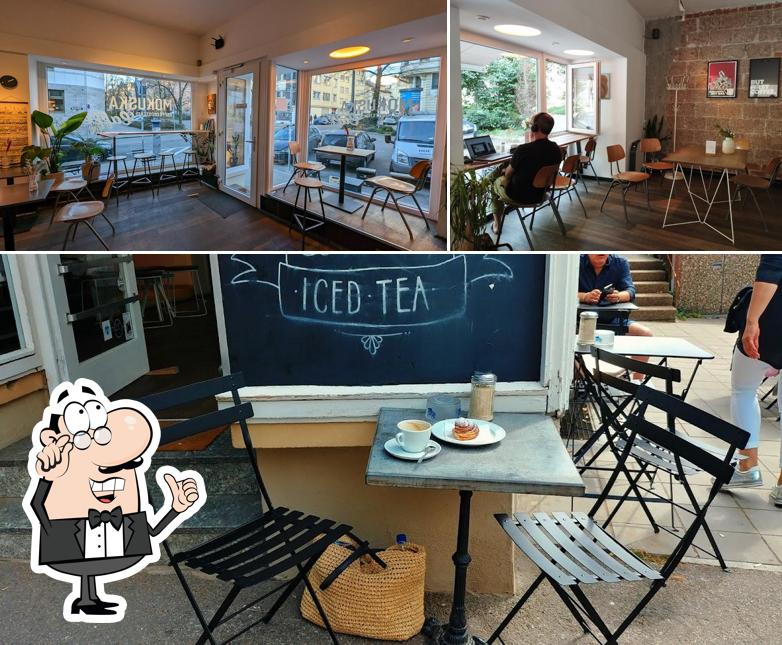
Mókuska Caffè
Johannesstraße 34, 70176 Stuttgart, GermanyMon–Sat 8:00–18:00, Sun closed
0711 933 290 39Coffees
14 coffees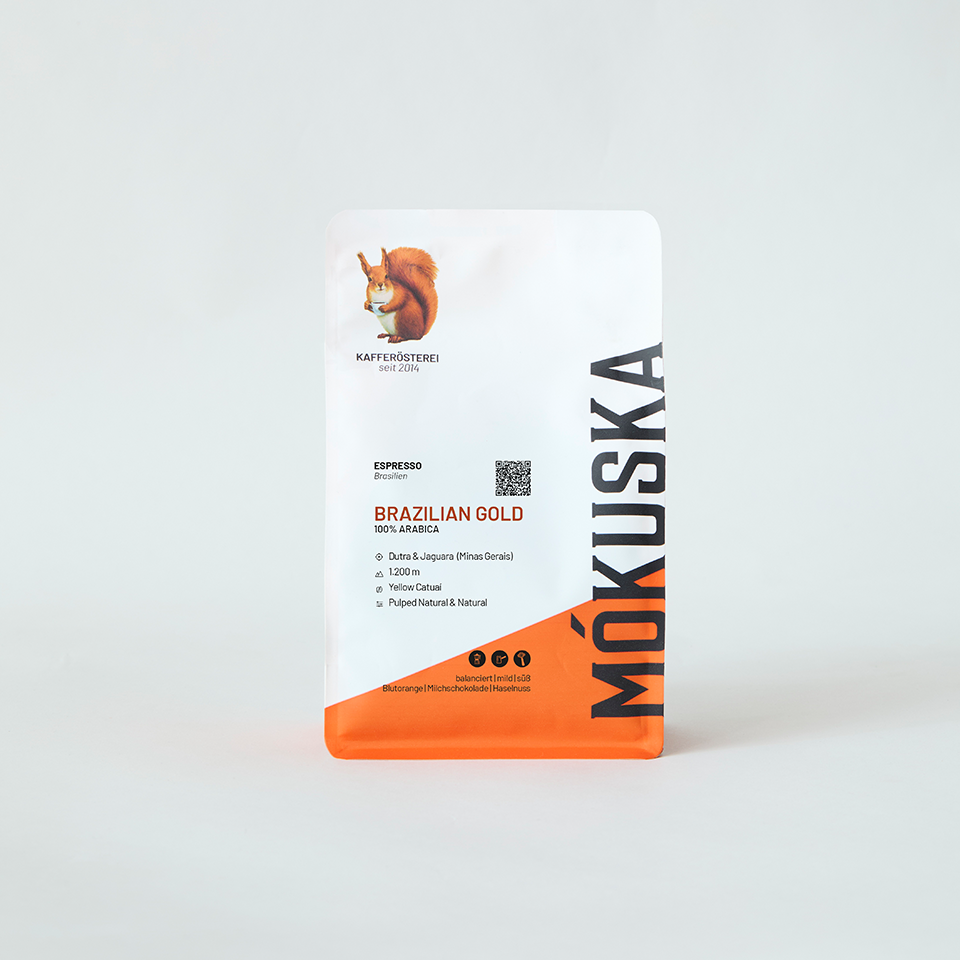
A blend of Fazendas Dutra & Jaguara Estate. Mild, balanced and sweet.
Blood orange, cherry, hazelnut & milk chocolate
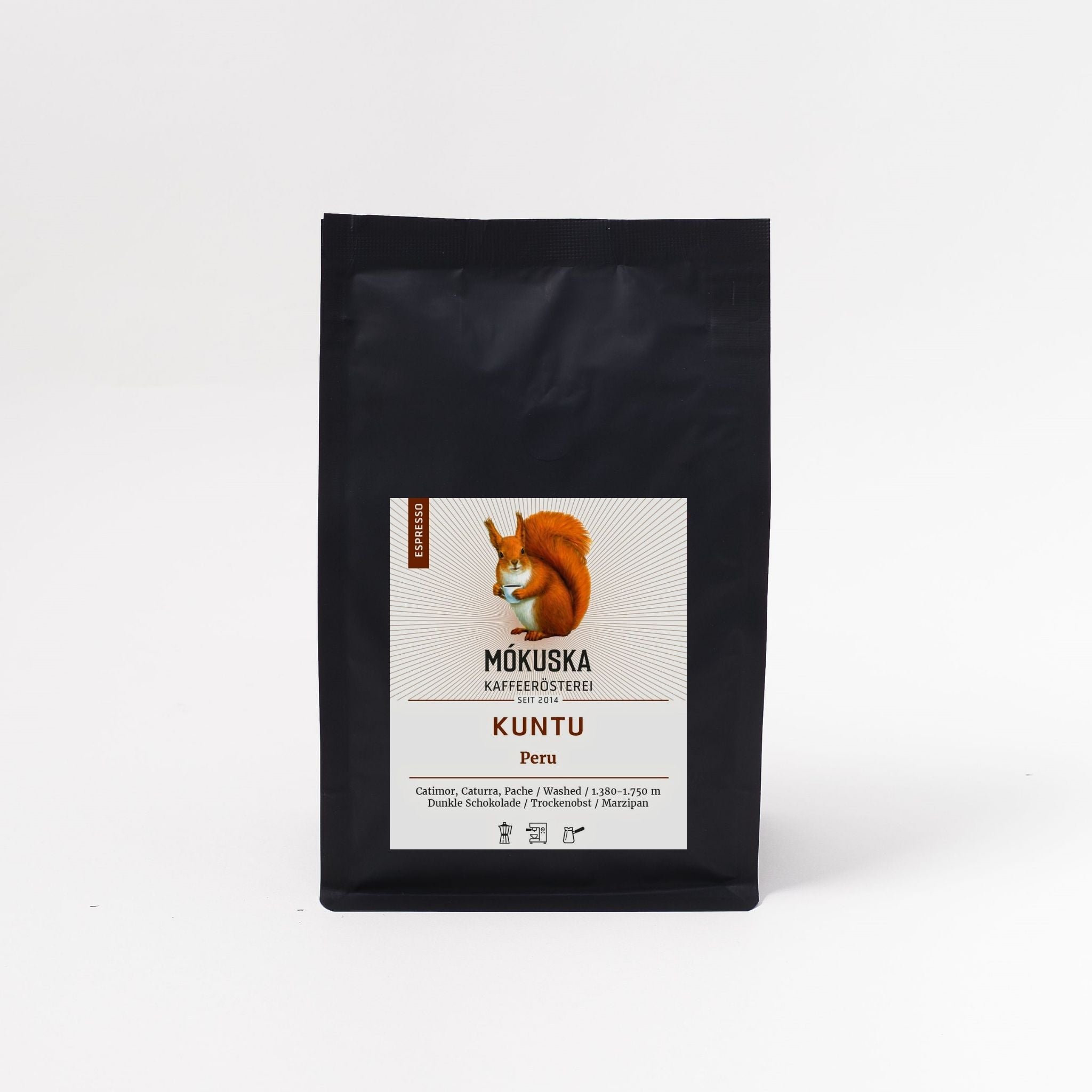
From the Aproeco cooperative of 300 farmers in Alto Mayo. Certified Fair Trade, Organic and Rainforest Alliance. An Italian-style, low-acid, chocolatey espresso with full body and cream.
Dark chocolate, dried fruit, marzipan & molasses
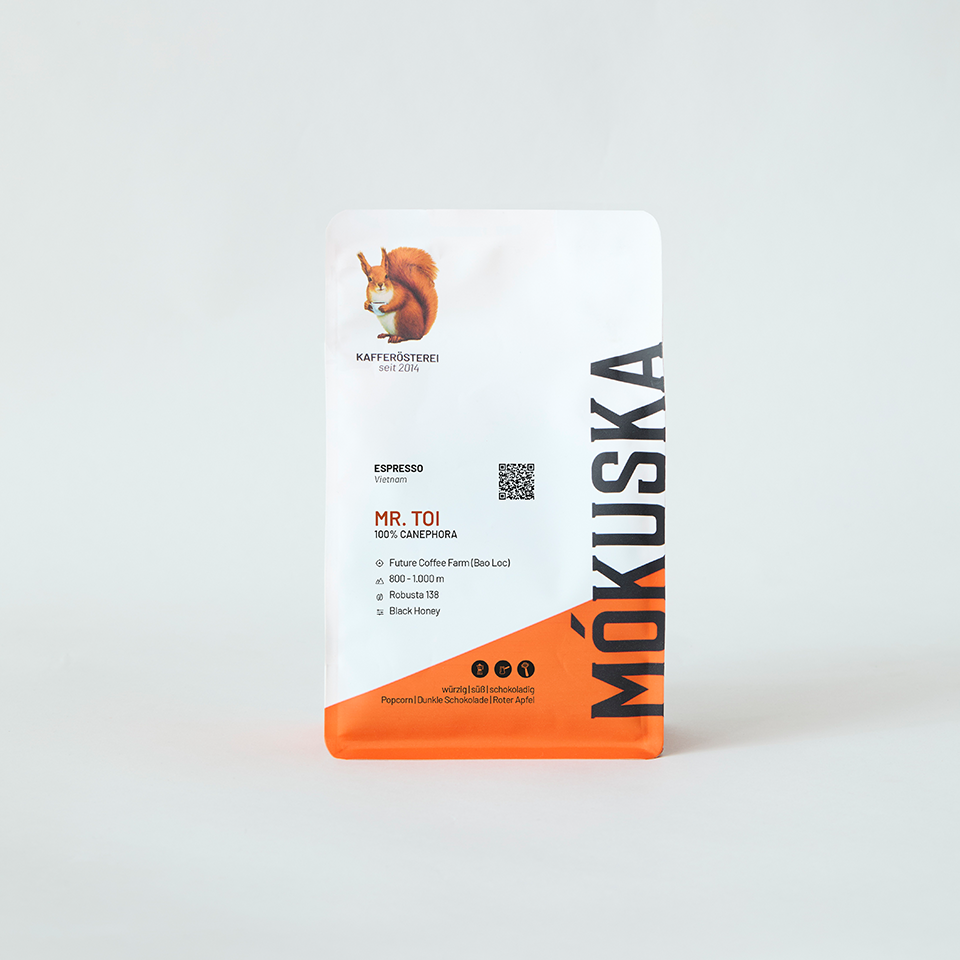
A fine Robusta from Toi Nguyen, who began as a harvest hand selling corn cobs on the street and became Vietnam's pioneer of fine Robusta. His black honey process, pulping ripe cherries without prior fermentation and drying them about 12 days on raised beds, is his answer to processing with the smallest possible footprint. Back after Mókuska lost its whole lot to water damage in a Hamburg green-coffee warehouse; spicy, sweet and chocolatey.
Popcorn, dark chocolate, red apple
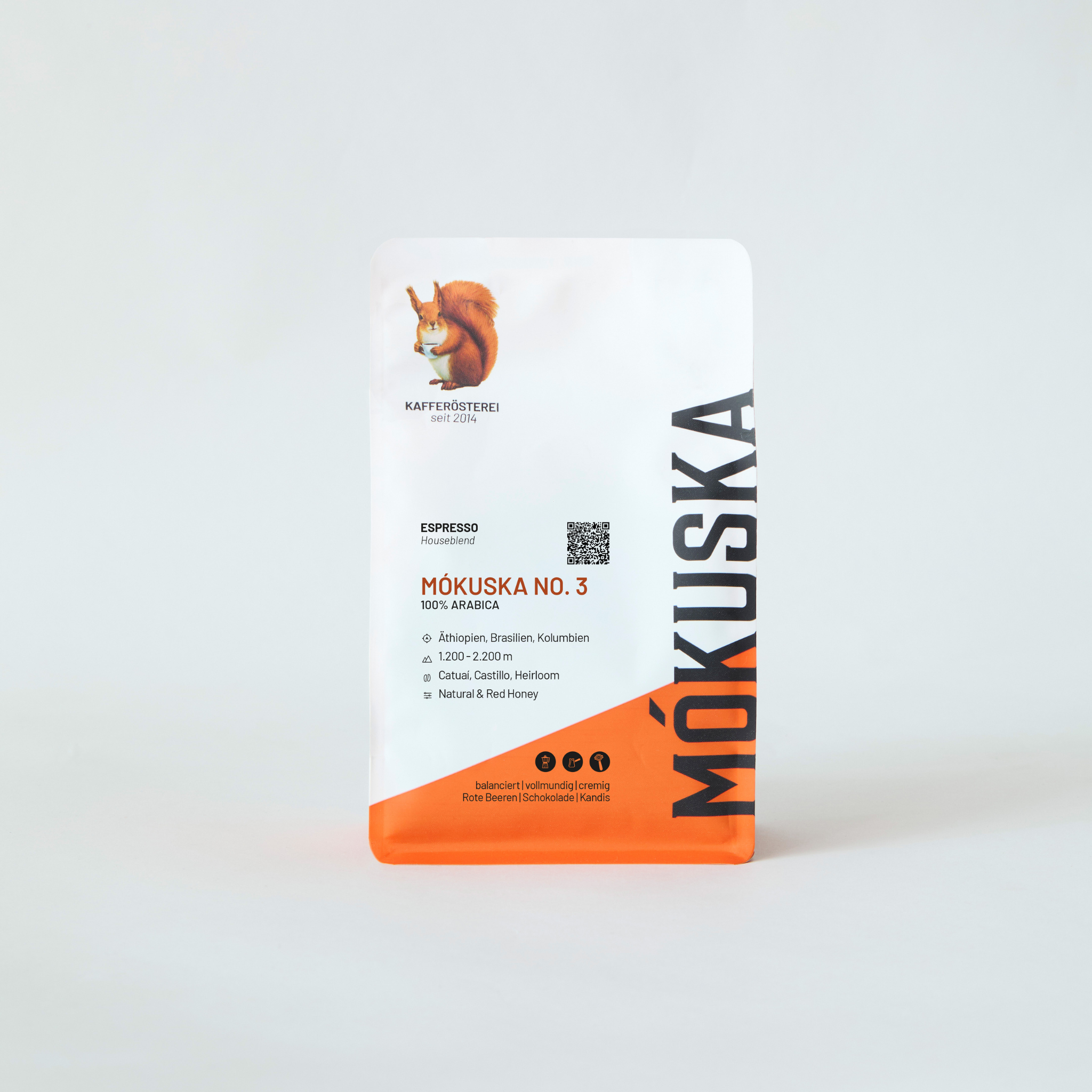
Mókuska's house espresso blend — Fazenda Fiés a Deus (Brazil), Finca La Roca (Colombia) and Bombe Washing Station (Ethiopia). Balanced, full-bodied and creamy.
Chocolate, marzipan, red berries & rock sugar
From Finca Nápoles, grown by Ronald Ardón López and his brother near the Honduran border. Classic, mild and balanced.
Milk chocolate, cherry & marzipan
Renato de Almeida's family has grown coffee on Sítio Morro Preto for 80 years, since his grandfather bought a small plot with his wages from woodworking; today Renato and his brother Tiago focus on specialty lots and different fermentations. This Catuaí went through a "Vulcano" fermentation, a natural process in which the cherries are heaped and covered so microbial activity heats them to as much as 45 °C. Creamy and balanced, with caramel sweetness lifted by grape and cacao nib.
Grape, cacao nibs, nut, caramel
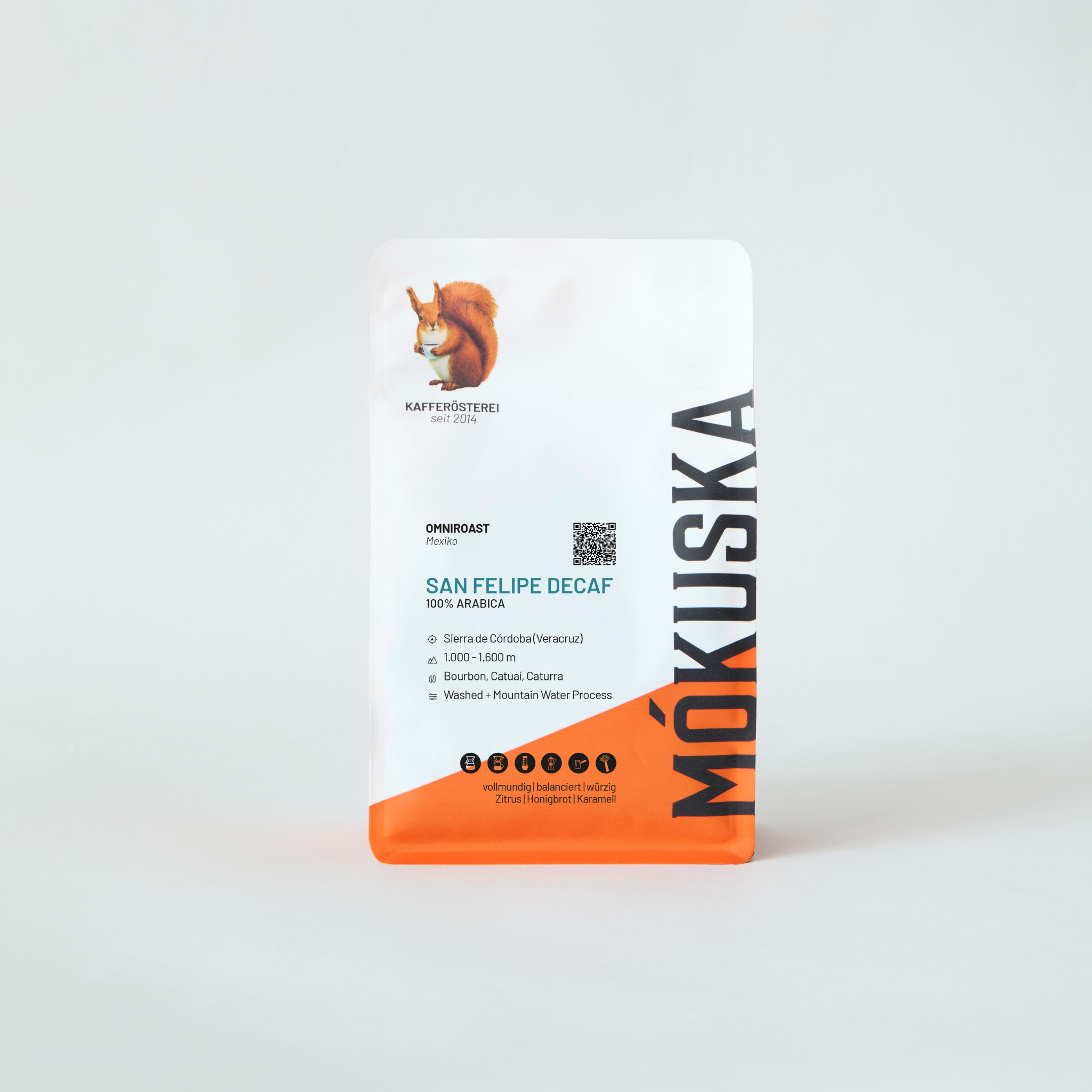
Decaffeinated with water from Pico de Orizaba. Full-bodied, balanced and spicy — same lot as the Filterkaffee San Felipe, without the caffeine.
Citrus, honey bread & caramel
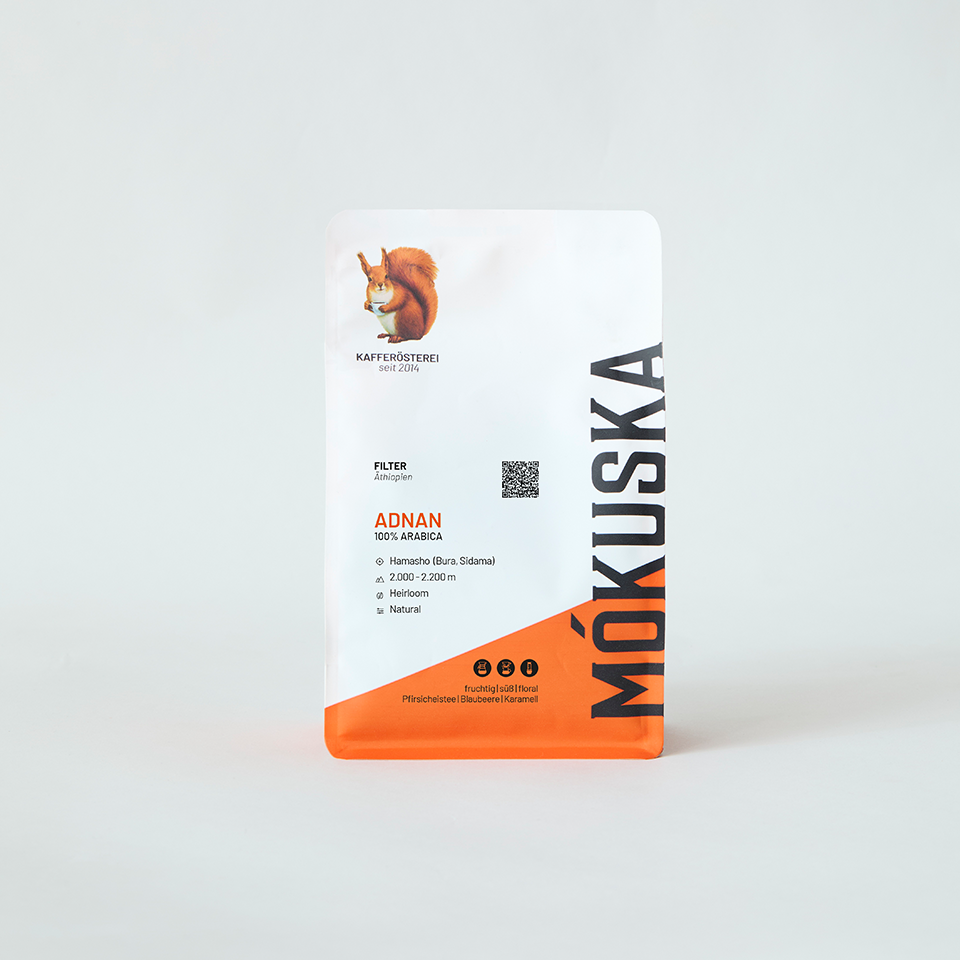
From the Adnan washing station in Hamasho village, Bura district, built in 2012 as a premium site by the family-run Testi Coffee and processing cherries from about 500 smallholders who mostly farm less than a hectare under native shade. This lot was produced under Testi's Premium Cherry Selection programme, which pays farmers specifically for careful selection of ripe cherries.
Peach iced tea, blueberry, caramel
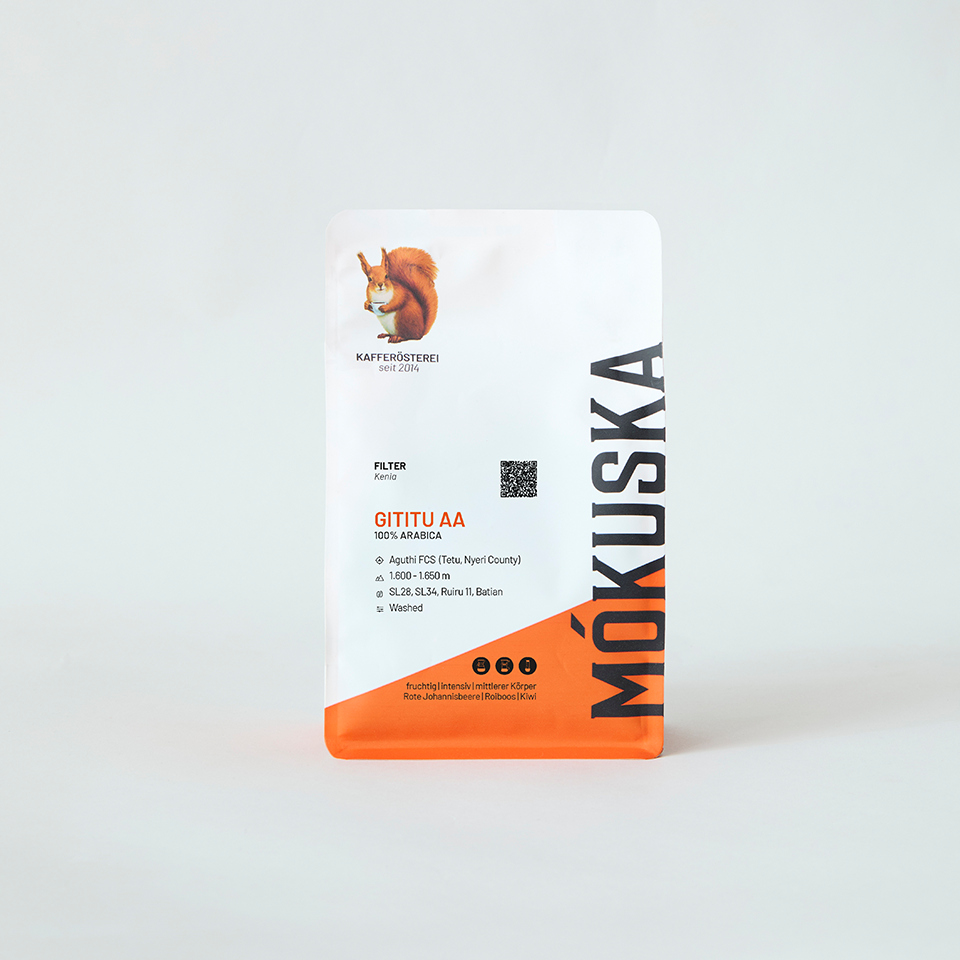
More than 2,000 smallholders deliver hand-picked cherries to the Gititu factory of the Aguthi Farmers' Cooperative Society in Tetu, Nyeri. The cherries are pulped, fermented 12 to 24 hours, washed in spring water, graded by density and dried 12 to 21 days on raised beds: a structured, juicy and very clear Kenyan cup.
Redcurrant, rooibos, kiwi
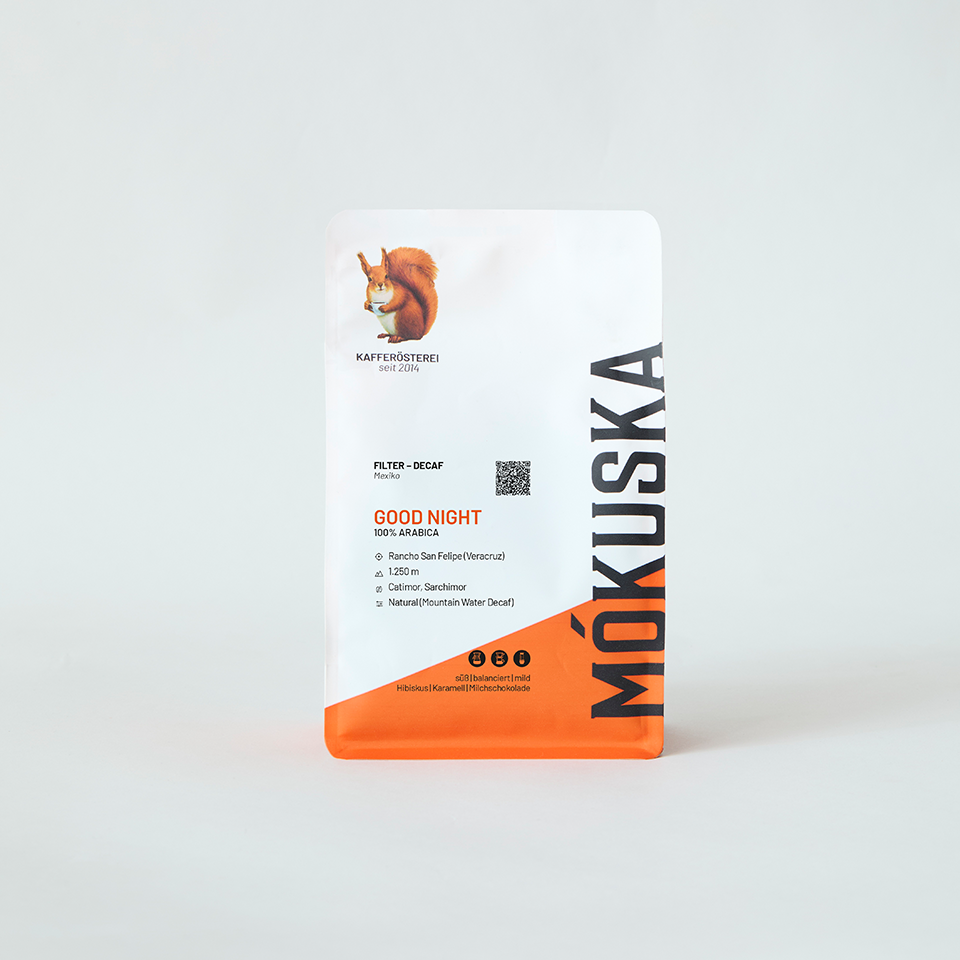
A decaf that is unusually a natural: most decafs are washed and lose aroma in decaffeination, while this one keeps a fruity, full body. Green coffee comes from Rancho San Felipe in Veracruz, where the de Gasperin family are among the last in the region to stay with specialty coffee rather than switching to sugarcane, and it is decaffeinated with the Mountain Water process.
Hibiscus, caramel, milk chocolate
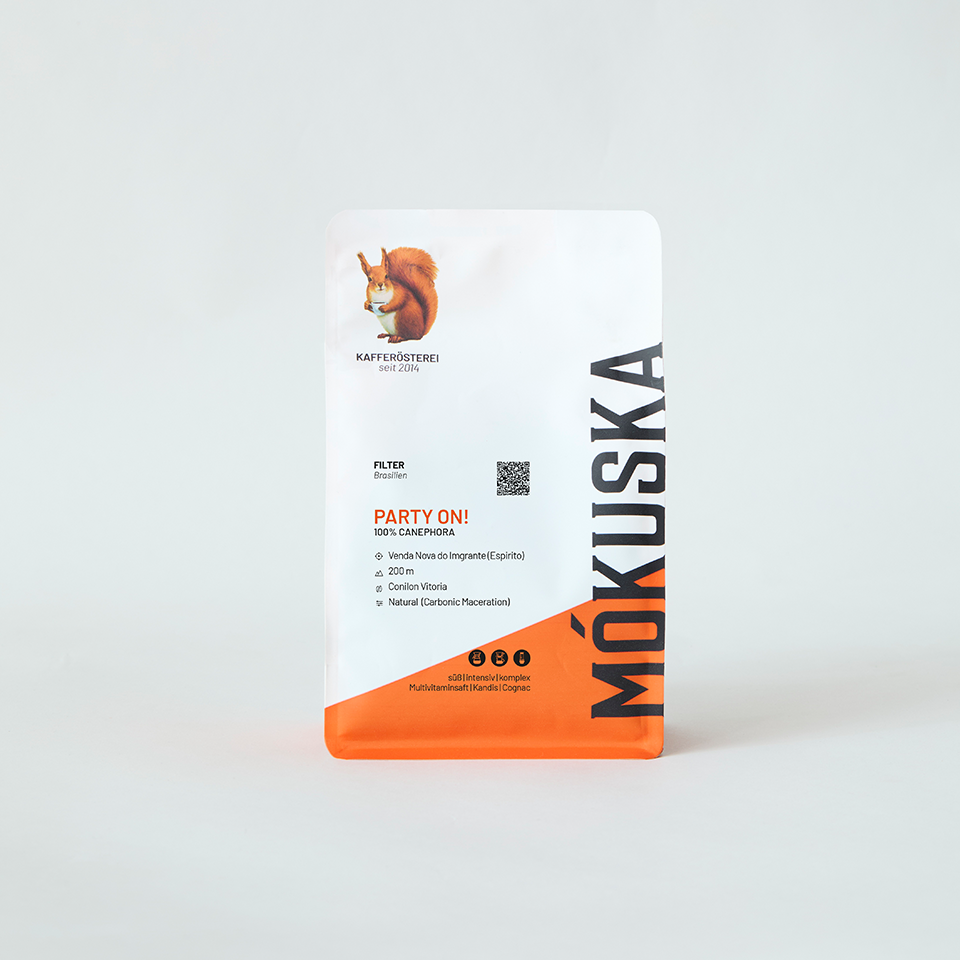
A fine canephora filter roast and, in Mókuska's words, a caffeine bomb. The Bastianello family farm four plots in Nova Venécia: father Flavio manages the farm, brother Robson leads processing and fermentation, and Elisa, whose lots have won national prizes, champions high-quality Conilon. The contact came through Mókuska's friends at Cumpa in Herrenberg.
Multivitamin juice, rock candy, cognac
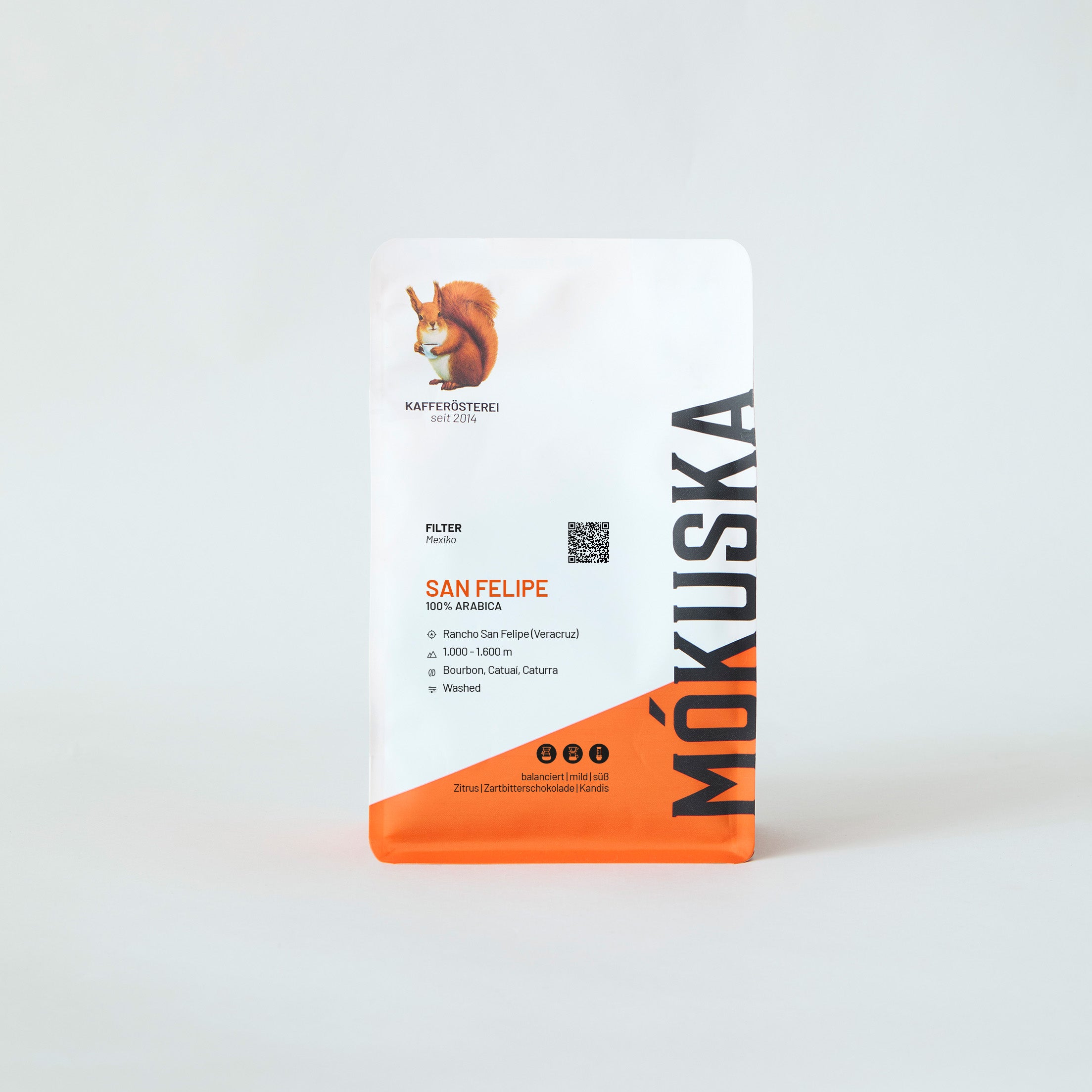
From the de Gasperin family's Rancho San Felipe. Full-bodied, balanced and spicy, with a finely balanced citric acidity.
Citrus, dark chocolate & rock candy
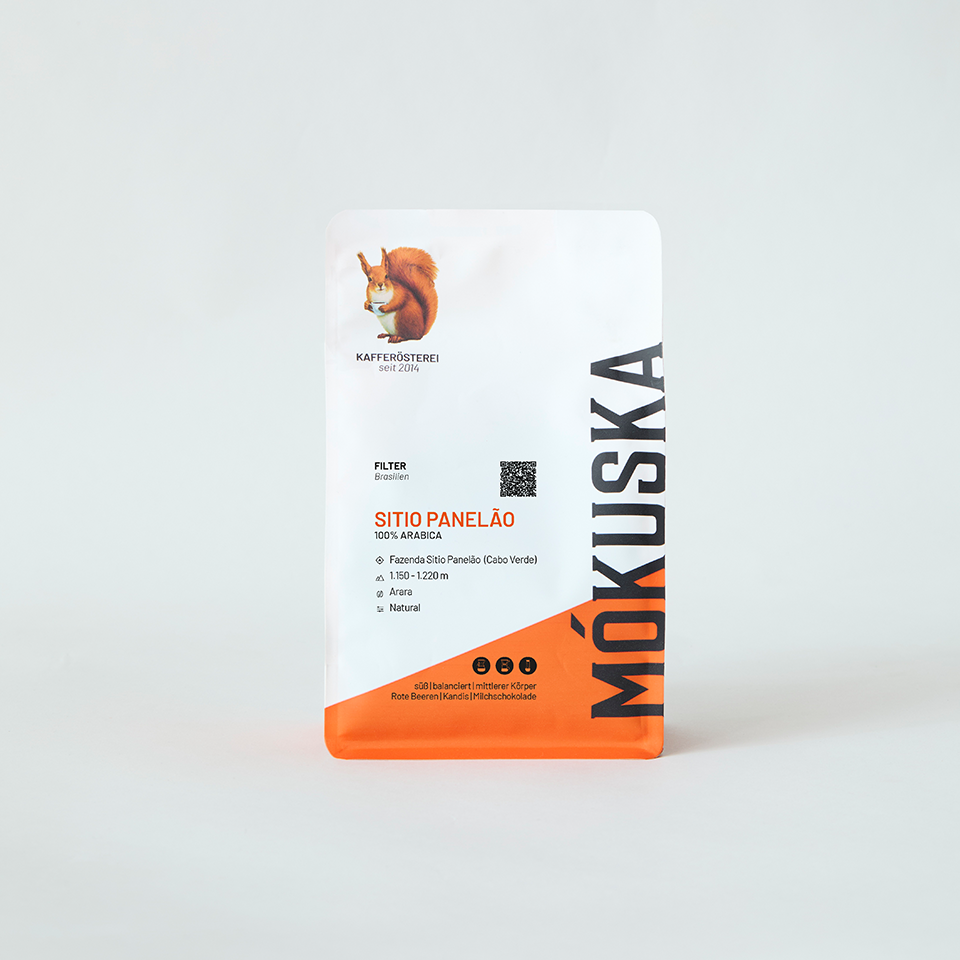
A family farm in southern Minas Gerais run by José Antonio, known as Zé, which keeps part of its land out of coffee to protect long-term soil health. Hand-picked ripe cherries dry for 10 to 14 days on the terreiros, turned regularly, which gives the round, sweet body: milk chocolate and rock candy with a lift of red berries and gentle, well-integrated acidity.
Milk chocolate, rock candy, red berries
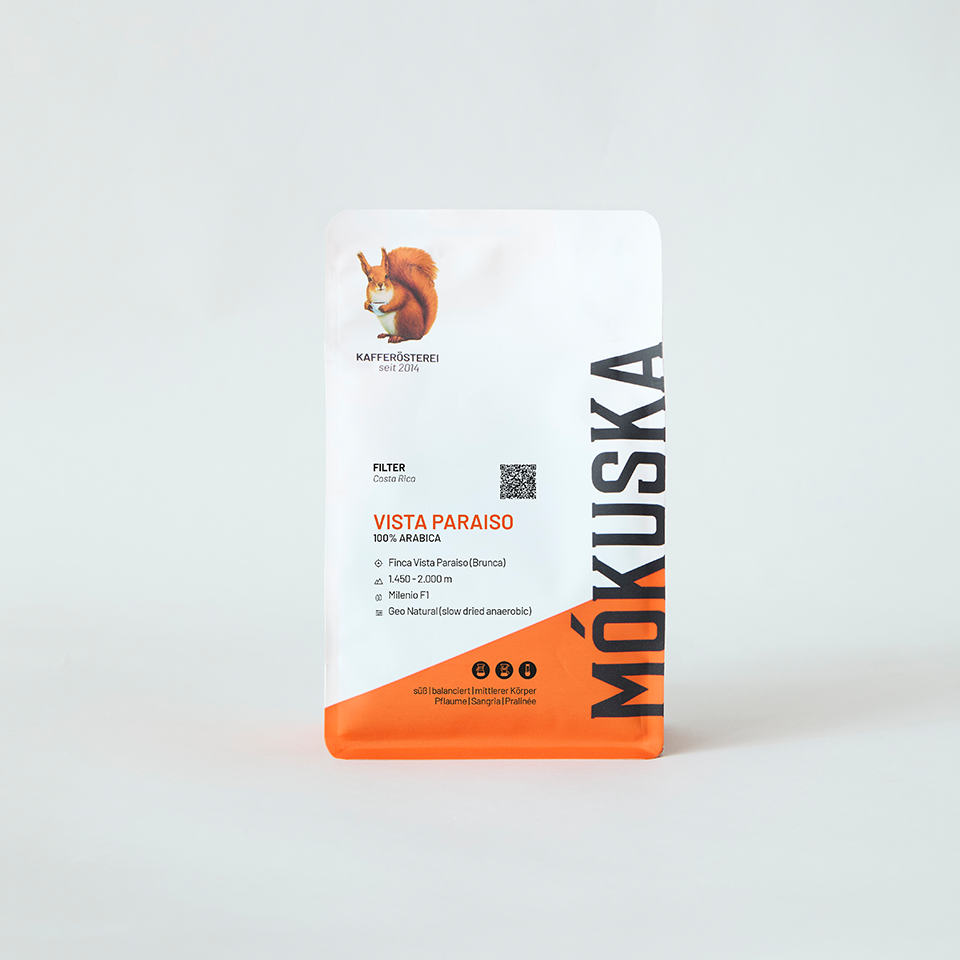
From Corazón de Jesús, a family that gave up growing tomatoes and chillies in 2015 to build a future in coffee in the misty mountains of Chirripó. They now farm five regenerative-certified farms totalling about 50 hectares and handle everything from growing to export themselves, with rare varieties such as Geisha, Java, Wush Wush and this Milenio F1 hybrid.
Plum, sangria, praline