
Roasteries / Dark Arts Coffee

Dark Arts Coffee
London, United Kingdom
Dark Arts Coffee is a Hackney specialty roaster with a heavy-metal aesthetic, roasting espresso-forward blends and single origins on Rosina Street for wholesale and its own bar.
12
coffees
United Kingdom
base
Location
Dark Arts Coffee – Homerton
1-5 Rosina Street, London E9 6JH, United KingdomCoffees
12 coffees
From Falcon Peru's direct programme with unassociated smallholders in Cajamarca, which cuts out middlemen, pays premiums straight to producers like Segundo Estela Vasquez and moves farms from Catimor to Caturra and Bourbon and to natural processing. Over 438 farmers are now registered. Fig, red apple and dark chocolate.
Fig · Red apple · Dark chocolate
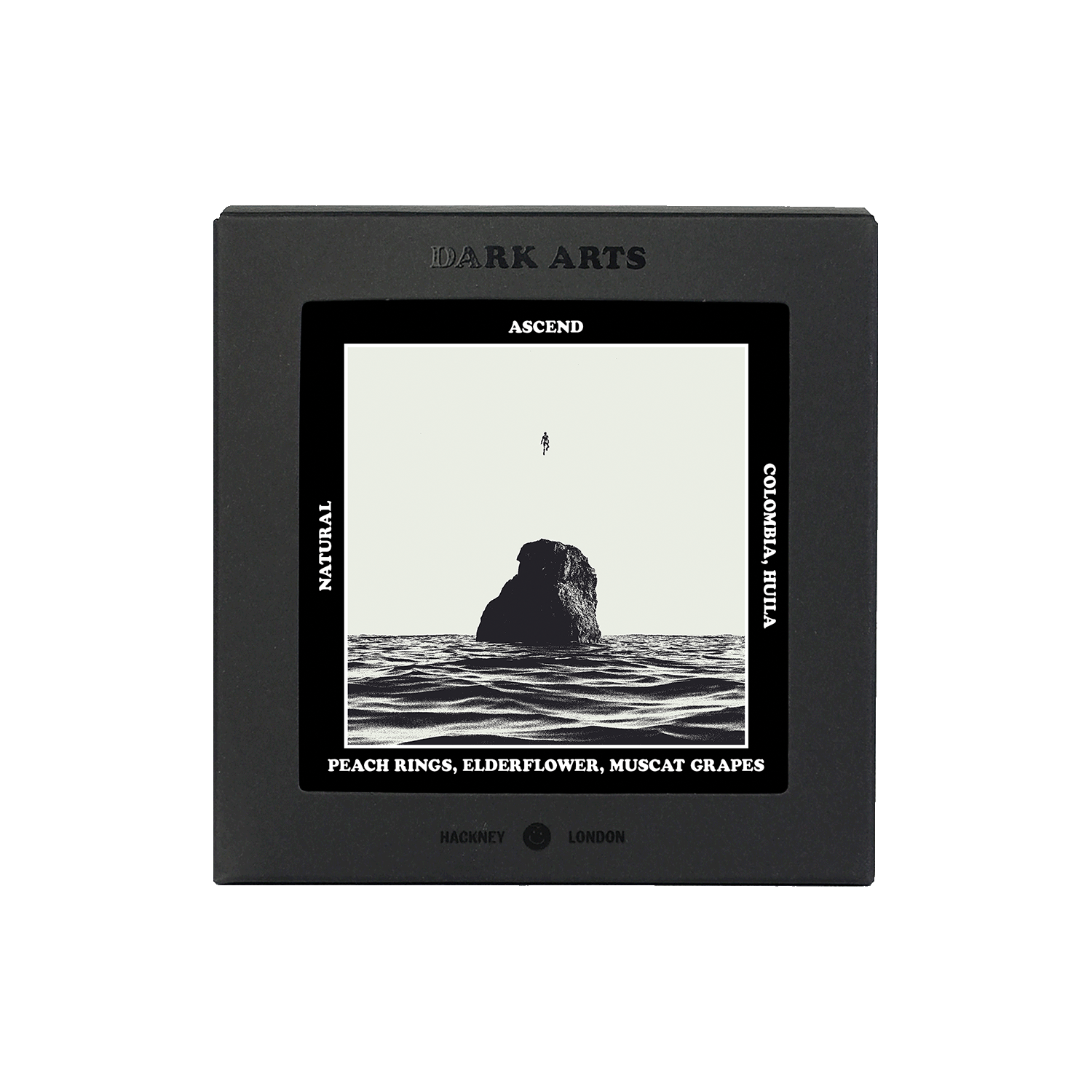
A Bourbon Ají from Néstor Lasso's El Diviso in Pitalito, Huila. Cherries oxidise 24 hours in open air, then go through two 48-hour anaerobic stages in tanks and bags and a thermal shock, before 15–20 days of solar drying and 20–30 days of rest. Peach rings, elderflower and muscat grapes.
Peach rings · Elderflower · Muscat grapes
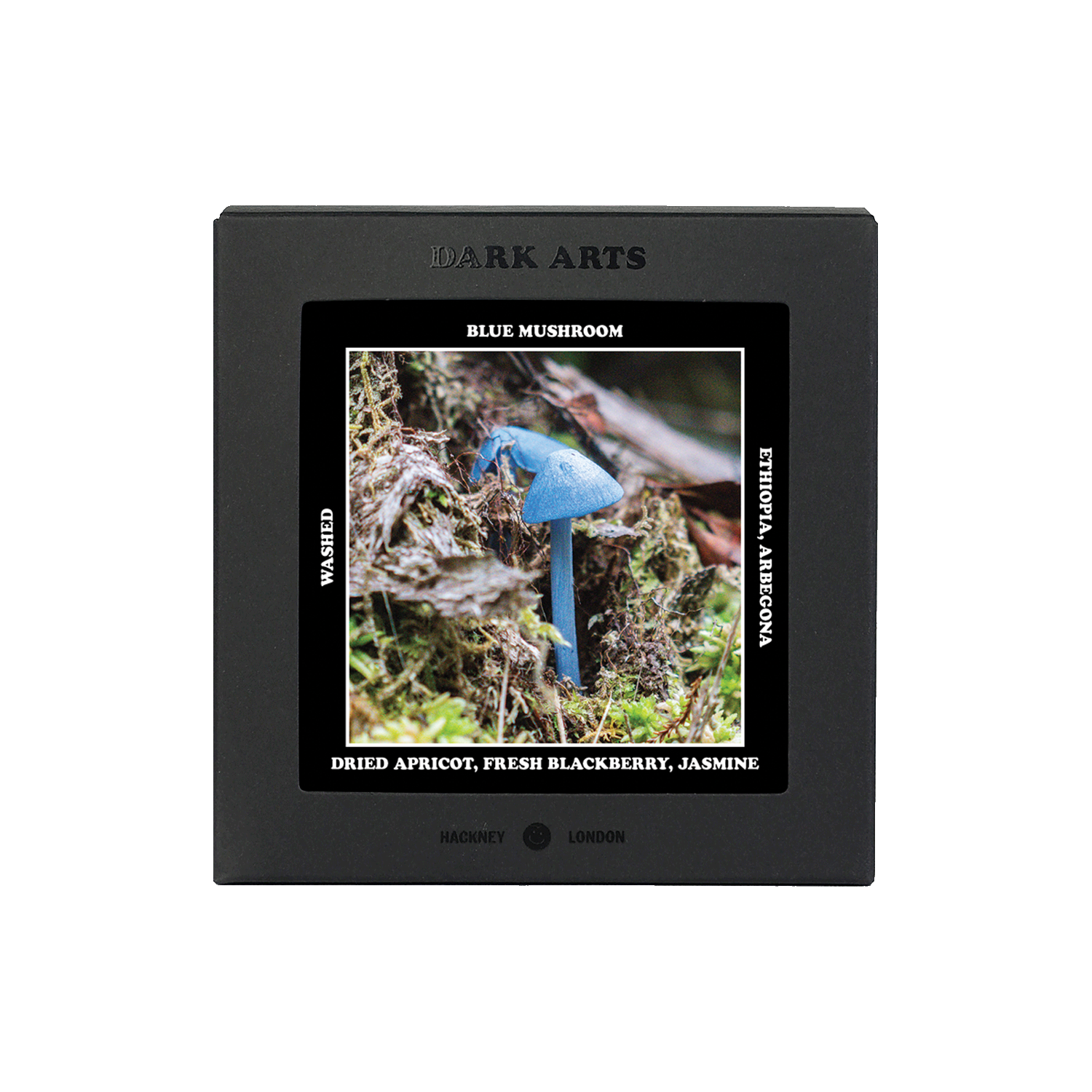
Malawo, a Grade 1 washed coffee from Daye Bensa, grown by smallholders in high-altitude Arbegona, Sidama. The 74158 cherries ripen slowly, are density-sorted in flotation tanks and dried on African beds turned every 30 minutes for 12–15 days, then rested before milling. Dried apricot, fresh blackberry and jasmine.
Dried apricot · Blackberry · Jasmine

A Castillo from Edinson Argote's family farm Quebraditas in Oporapa, Huila. Floated, oxidised 24 hours, then co-fermented 72 hours with yeast and watermelon, dried about 76 hours at around 40 °C and stabilised in GrainPro. Watermelon, gummy bear and lemongrass.
Watermelon · Gummy bear · Lemongrass

From the Kithungururu Factory in Embu, run by its farmers' cooperative on red volcanic soil. Cherry is pulped, dry-fermented 16–24 hours, washed, soaked another 16–24 hours and sun-dried on raised beds for 12–21 days. The co-op uses soak pits for wastewater and plants trees. Raspberry, blackcurrant and hops.
Raspberry · Blackcurrant · Hops
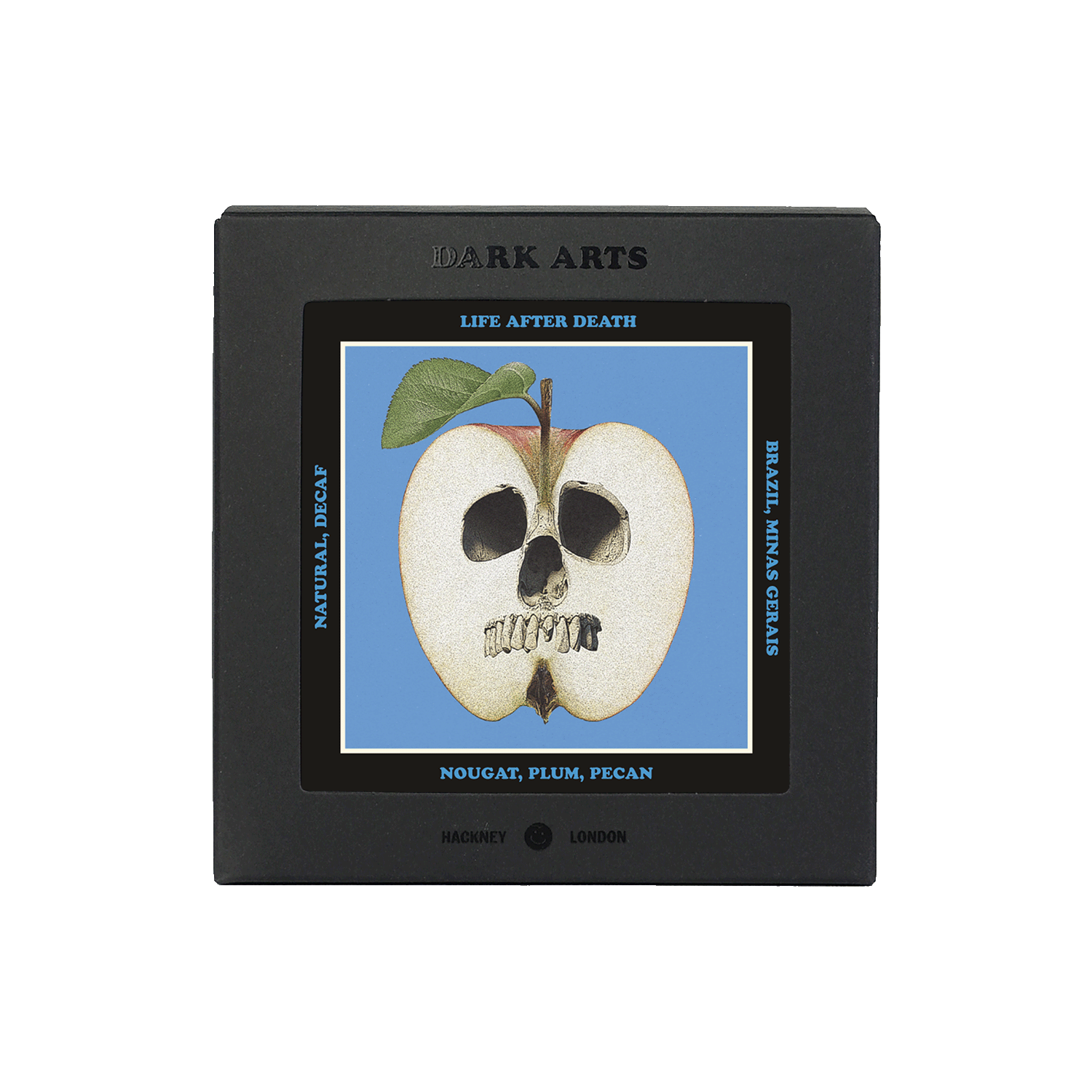
A sugar-cane (ethyl acetate) decaf from farmers across Minas Gerais: the green coffee is steamed to open its pores, washed in EA solution that bonds with the caffeine, then steamed again and dried. Nougat, plum and pecan.
Nougat · Plum · Pecan

Dark Arts' seasonal espresso from Fazenda Salto, a 30-hectare farm in Três Pontas under the Mantiqueira Mountains, with over a century of family tradition. Juliano, a civil engineer by training, runs it with his son Otávio, focusing on cup quality and protecting local flora and fauna. Named after a nearby waterfall.
Roasted almond · Raisin · Caramel
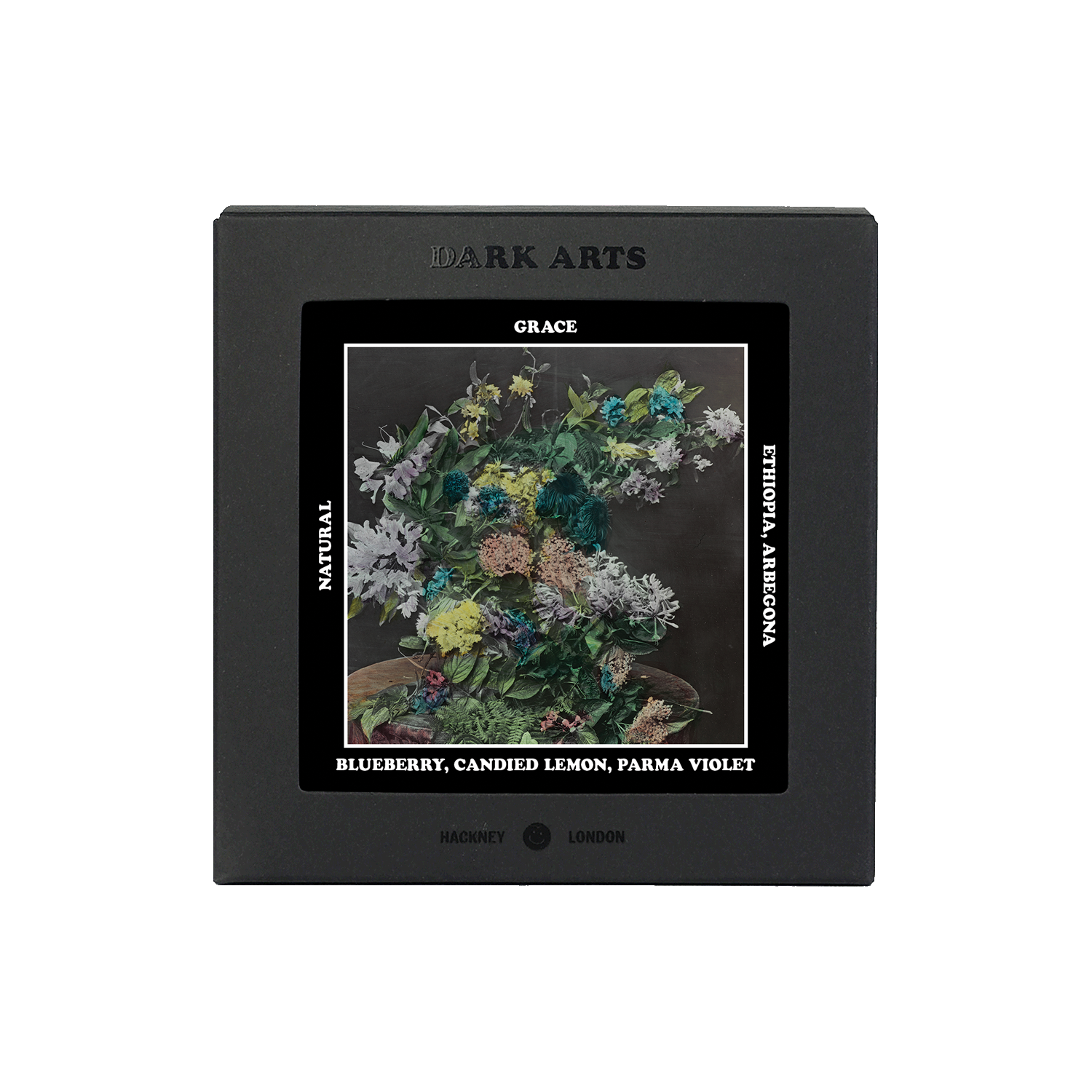
A natural from Asefa Dukamo Korma in high Arbegona, Sidama. Cherry harvested December–February is float-sorted, then dried on African raised beds turned every 30 minutes for 12–15 days and rested in local warehouses before export. Blueberry, candied lemon and Parma violet.
Blueberry · Candied lemon · Parma violet

A Caturra microlot from around 200 smallholders in an Indigenous reserve in Aponte, Nariño, through Cofinet's Regional Plus programme; they have pioneered honey processing in Colombia since 2017. Volcanic soils, cool temperatures and low humidity let the coffee dry slowly. Green grape, plum and lime.
Green grape · Plum · Lime starburst

Sasini Estate AB from the 260-hectare Tinganga Farm in Kiambu, owned by Sasini PLC, which has grown coffee in the Kenyan Highlands since 1952. Picked October–December, fermented 12–16 hours and dried 2–3 weeks on raised beds; the farm reuses pulping water and composts pulp. Blackcurrant, demerara and black tea.
Blackcurrant · Demerara · Black tea

From Huver Castillo, a former maths teacher turned third-generation grower, on his family's shade-grown El Paseo farm in Buesaco, Nariño. A 36-hour cherry pre-fermentation, a sea-salt float, then six days anaerobic in steel tanks with its own leachates and enzymes, dried below 38 °C. Parma violet, green tea and gummy bear.
Parma violet · Green tea · Gummy bear

KI SAYA, an organic washed coffee launched by Covoya in 2024 from smallholders in Tenejapa near San Cristóbal de las Casas; the name joins Mayan words for "tasty" and "nature". Every lot comes from women farmers through the Café Delas programme, which reinvests in gender equality. Shade-grown in volcanic soil, fermented 12–17 hours, patio-dried and hand-sorted.
Green grape · Digestive biscuit · Vanilla