
Roasteries / Pascal Coffee Roastery

8
coffees
Sweden
base
Locations
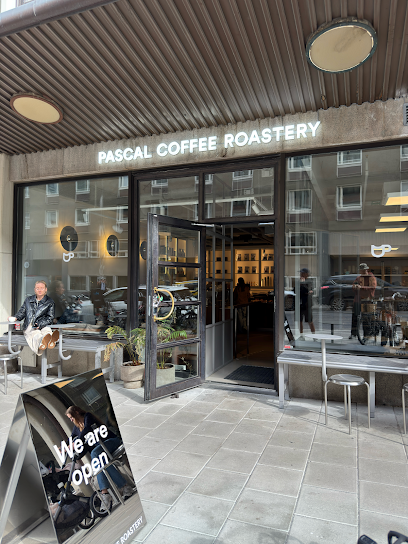
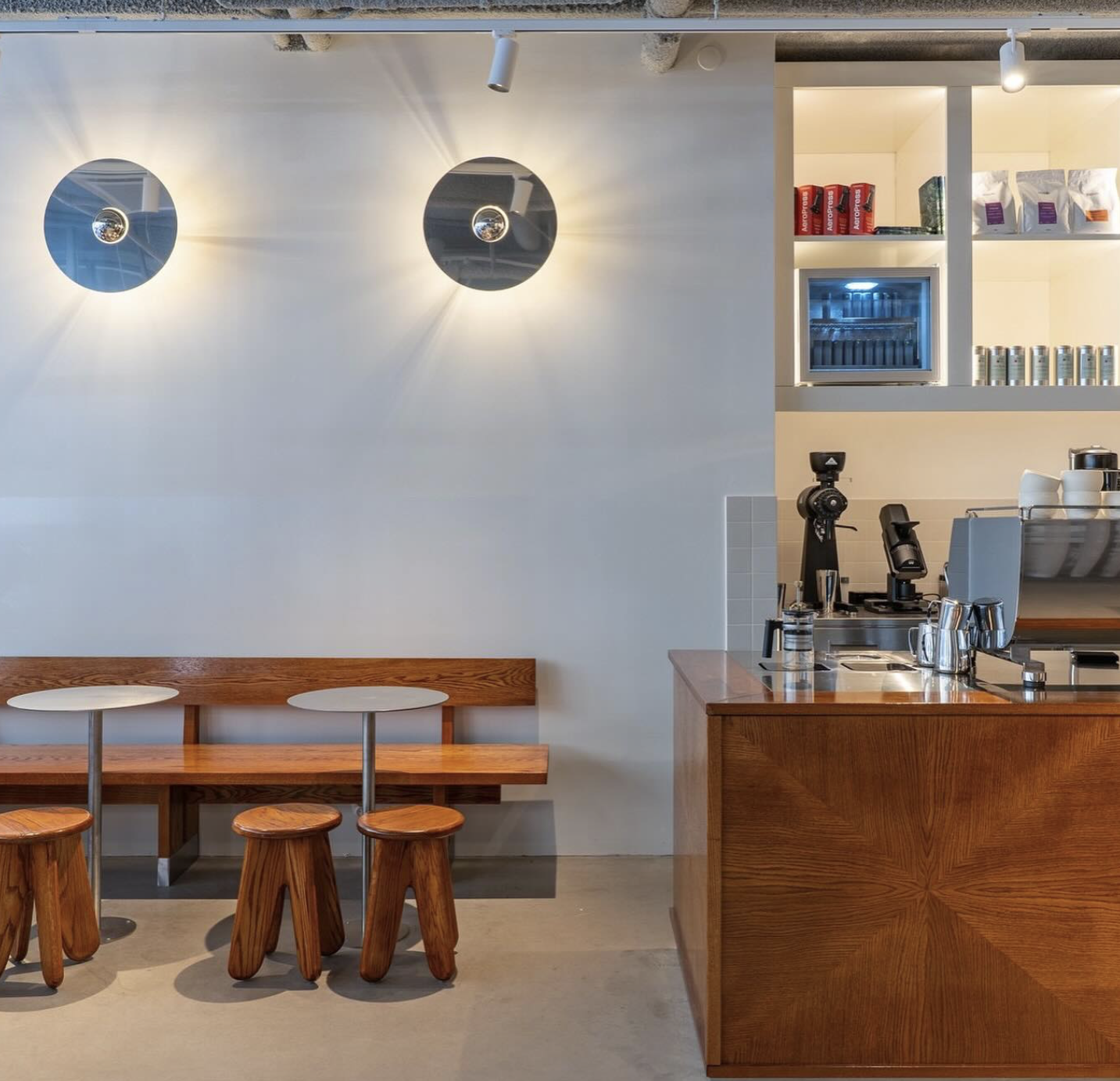
Pascal Roastery – Vasastan
Gävlegatan 22, 113 30 Stockholm, Sweden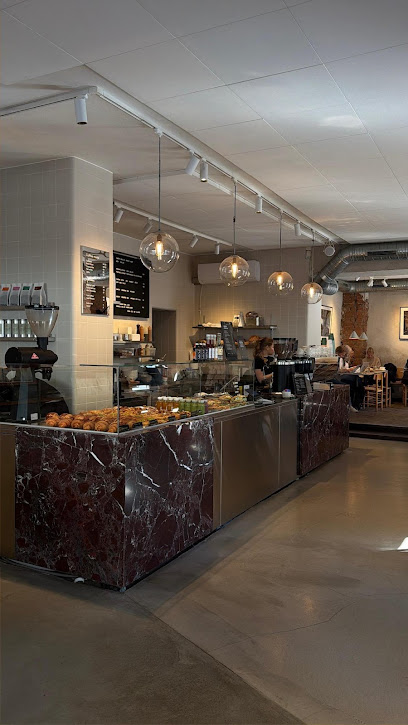
Pascal – Norrtullsgatan
Norrtullsgatan 4, 113 29 Stockholm, SwedenMonday: 08:00-18:00 Tuesday: 08:00-18:00 Wednesday: 08:00-18:00 Thursday: 08:00-18:00 Friday: 08:00-18:00 Saturday: 08:00-17:00 Sunday: 08:00-17:00
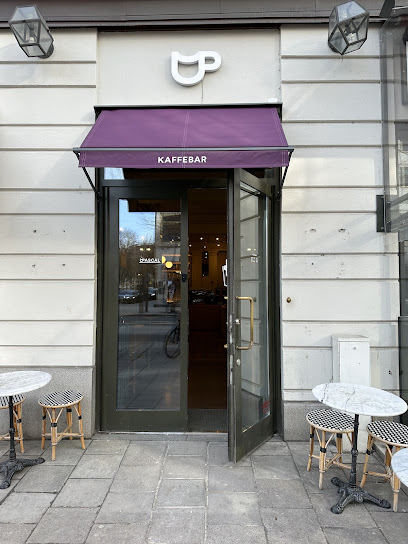
Pascal – Sturegatan
Sturegatan 8, 114 36 Stockholm, SwedenMonday: 07:30-18:00 Tuesday: 07:30-18:00 Wednesday: 07:30-18:00 Thursday: 07:30-18:00 Friday: 07:30-18:00 Saturday: 09:00-18:00 Sunday: 09:00-17:00
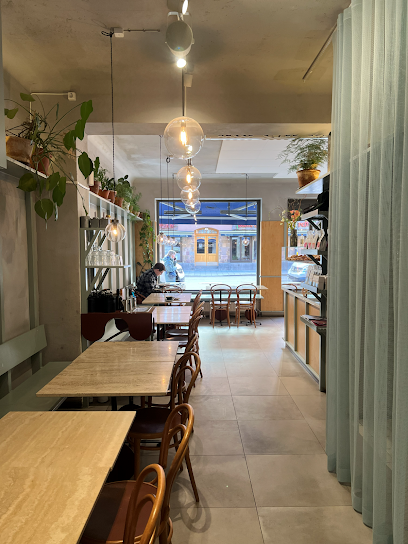
Pascal – Skånegatan
Skånegatan 76, 116 39 Stockholm, SwedenCoffees
8 coffees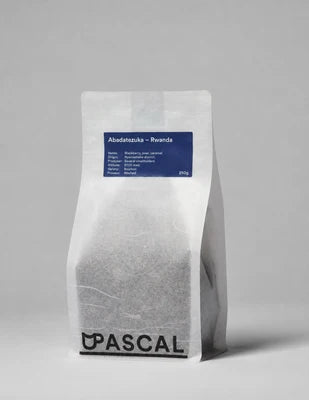
From the Abadatezuka Cooperative — the name means 'those who rise' in Kinyarwanda — a group of smallholders in Rwanda's Western Province who deliver cherry to the Cyato Washing Station. Black humus and sandy soils, a cool lake-affected climate and high elevation; the farmers use no synthetic fertilisers or pesticides, and native honeybees from the nearby Nyungwe Forest aid pollination. Washed Bourbon.
Blackberry · Pear · Caramel
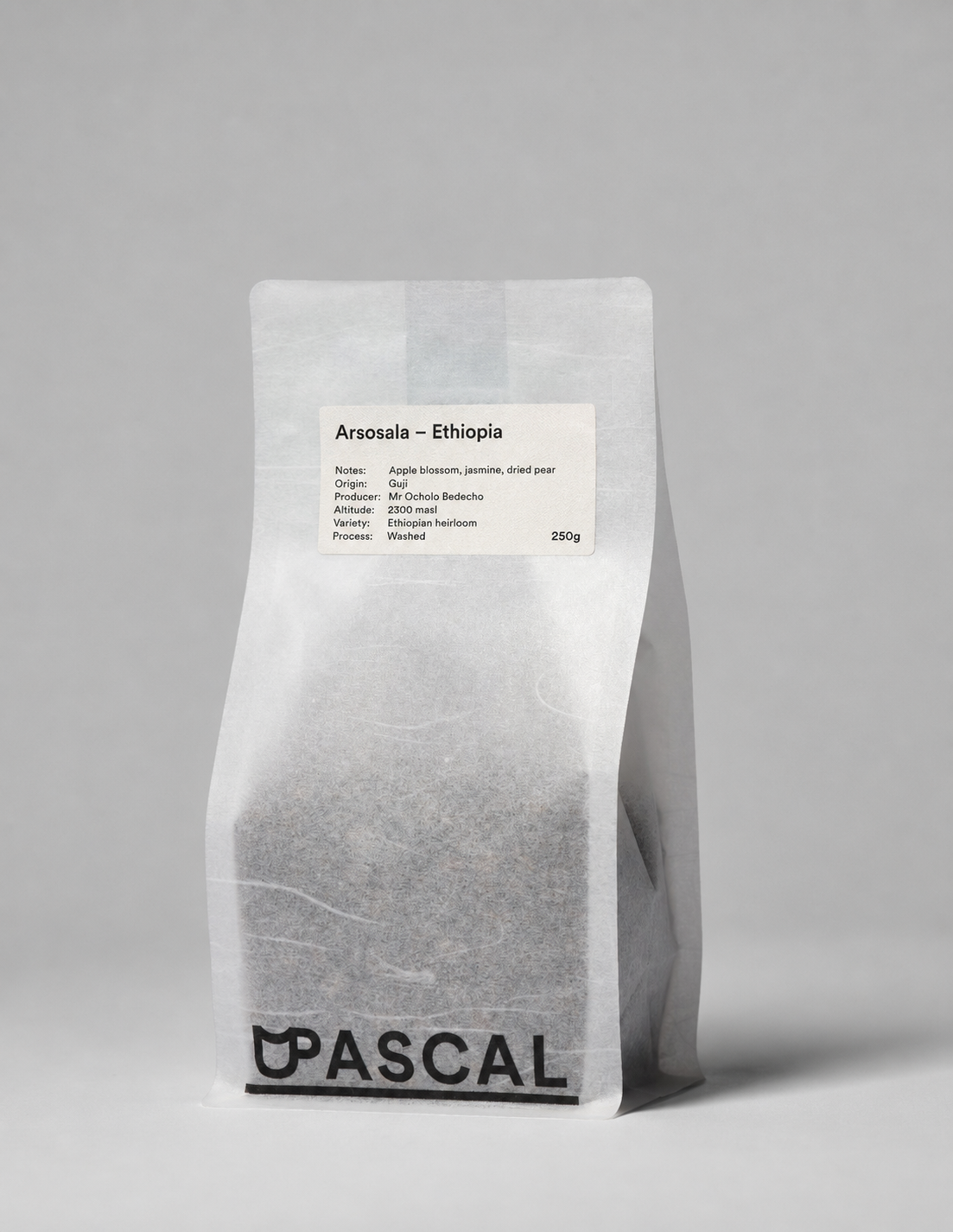
From Ocholo Bedecho's 8-hectare farm in the Urga district of the Guji zone, one of the largest in the area and worked full time by his family. Coffee grows at 2,200–2,300 masl in rich red highland soil, where the extreme altitude slows cherry development and concentrates flavour. Native heirloom cultivars, picked ripe and depulped the same day, fermented 8–12 hours in open-air tanks, then washed and dried on raised beds for up to 15 days.
Apple blossom · Jasmine · Dry pear
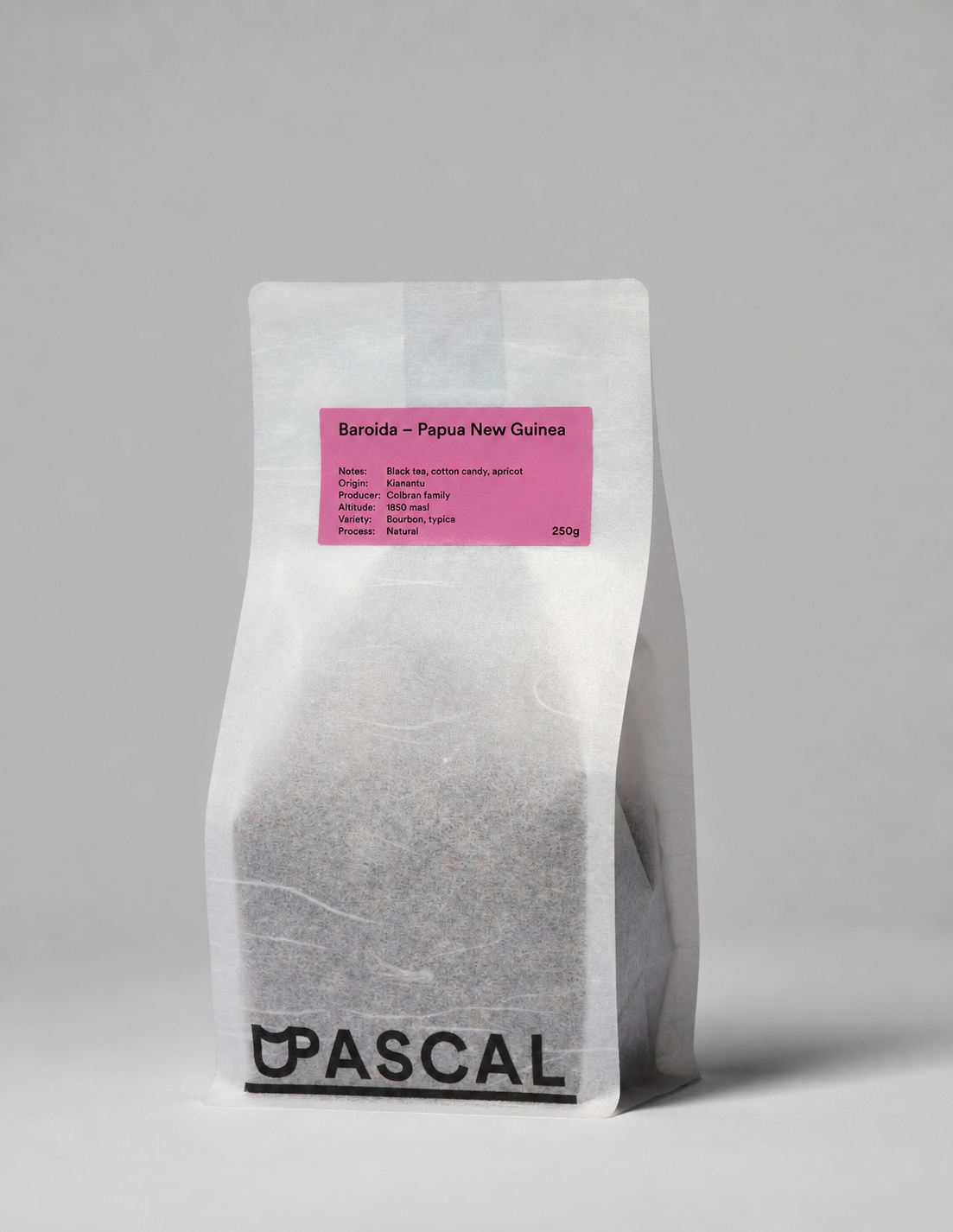
Baroida Estate in the Kainantu District was founded by Ben Colbran in the 1960s, among the first to plant coffee in these valleys; his son Nichol runs it today. It sits at the head of the Lamari river valley below the Mount Jabarra range, named for a spirit said to live in a river rock that no flood has ever moved. A natural Bourbon and Typica lot with black tea, cotton candy and apricot.
Black tea · Cotton candy · Apricot
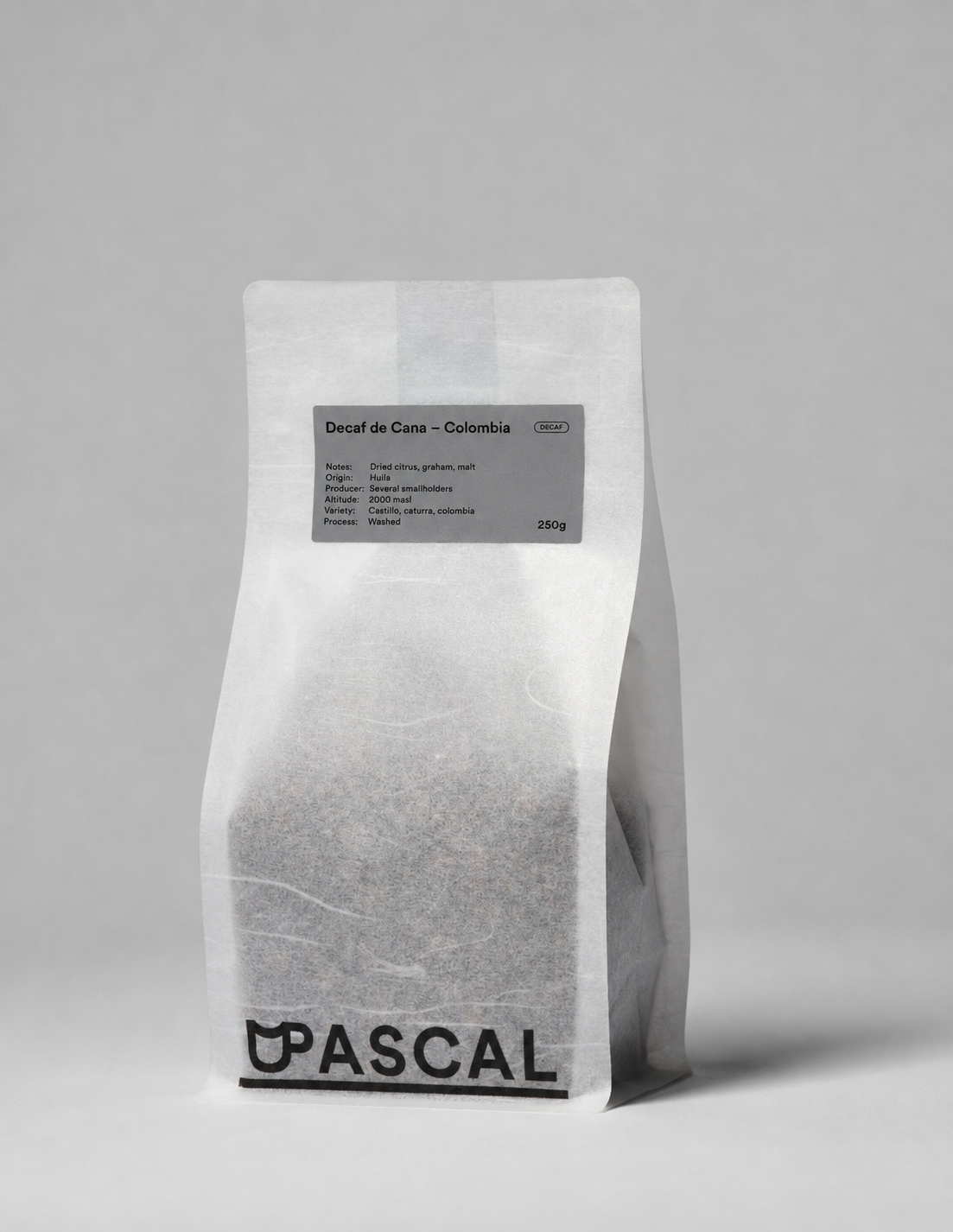
A washed Huila lot from smallholders working plots under three hectares, blending Castillo, Caturra and the Colombia variety. Depulped the day of picking, fermented in open-air tanks and dried slowly under parabolic shelters. Decaffeinated with the Natural EA method using ethyl acetate from fermented sugar cane: the green coffee is steamed open, bathed in a water-and-EA solution for around eight hours until no caffeine remains, then steamed clean.
Dry citrus · Graham · Malt
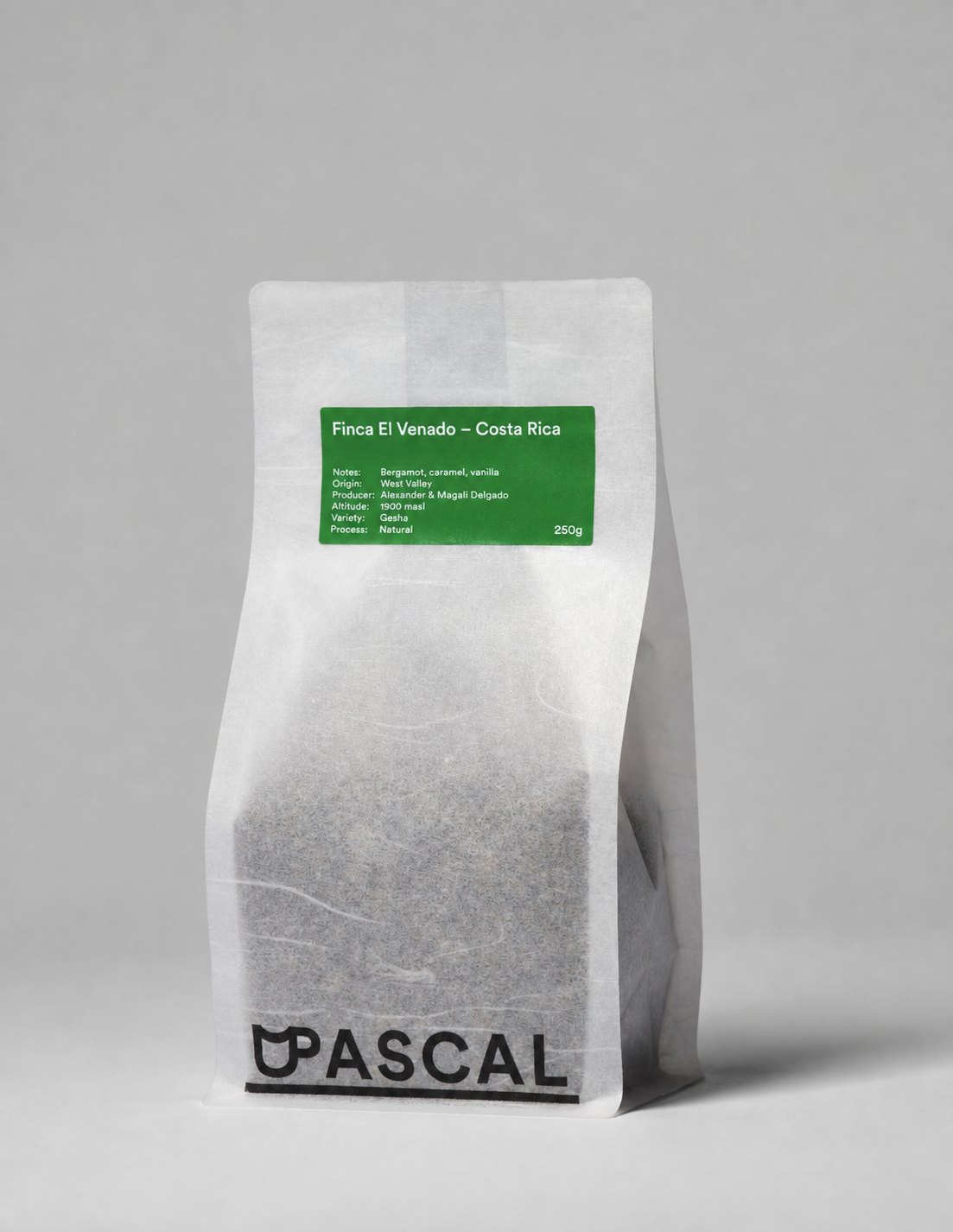
A natural Gesha from Cerro San Luis, the family micromill run by siblings Alexander and Magali Delgado in Grecia, in Costa Rica's West Valley. About four years ago they replanted with ten-plus varieties, and they process washed, honeys and naturals right at the family home. High-elevation micromills here ripen slowly in cooler weather, building sugar in the cherry. Bergamot, caramel and vanilla.
Bergamot · Caramel · Vanilla
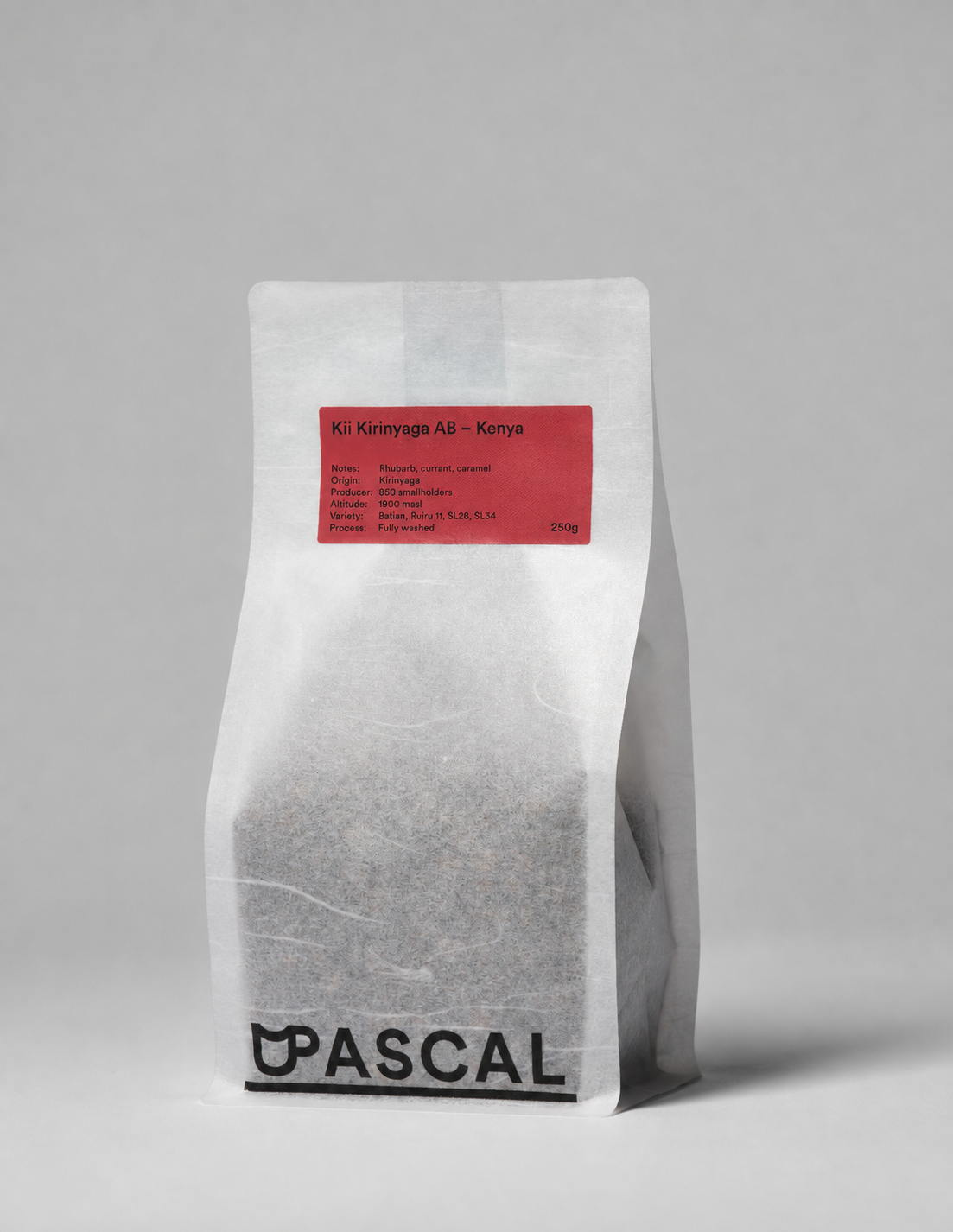
From the Kii Factory, one of three mills of the Rung'eto Farmers Cooperative Society at the foot of Mount Kenya, built in 1995 and named for the Kii river beside it. 850 smallholders, each with about 250 trees, deliver cherry here; river water is used throughout the washing. Fully washed for a clean, transparent cup of rhubarb, currant and caramel.
Rhubarb · Currant · Caramel
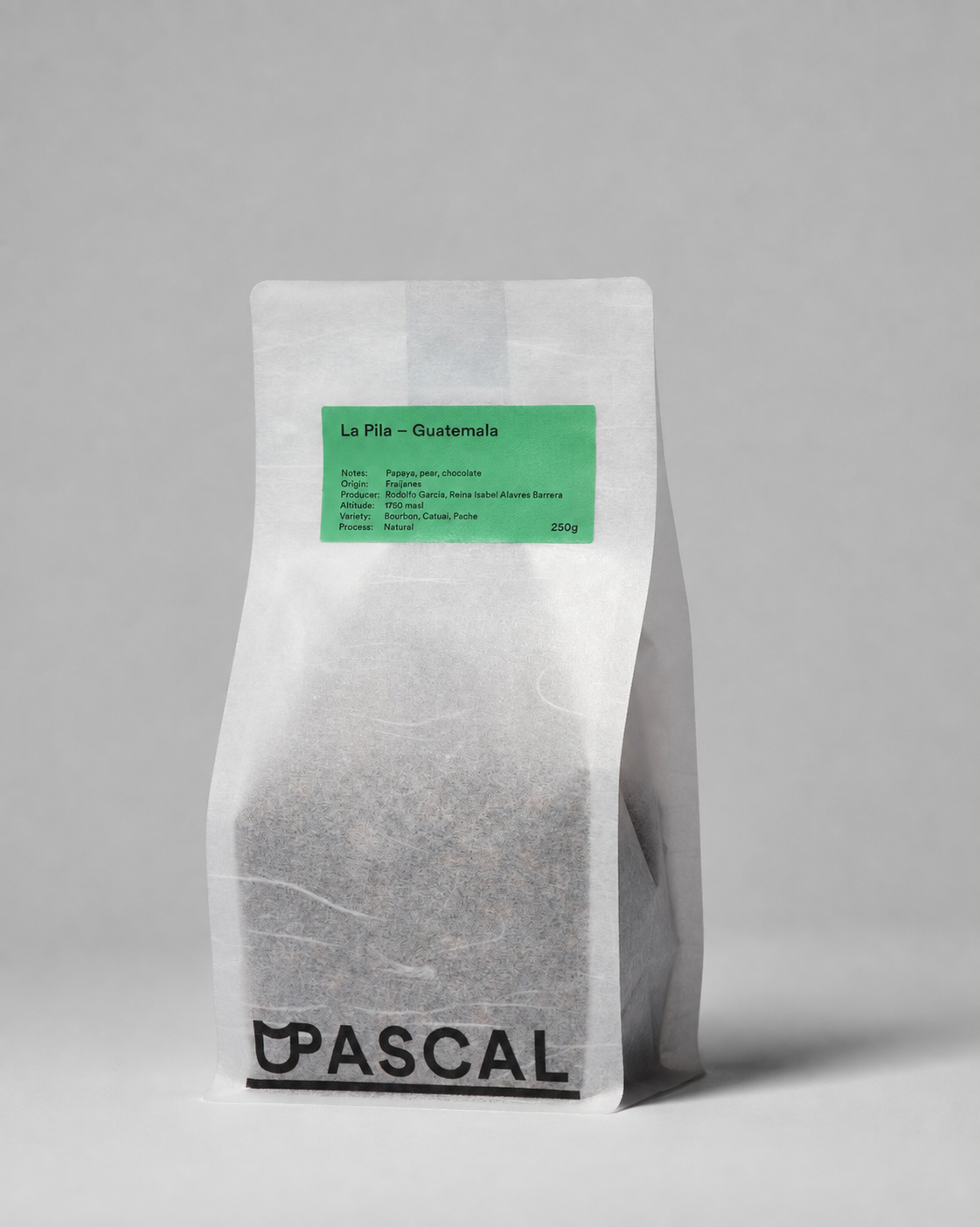
Rodolfo and Reina grow and process this coffee at La Pila in volcanic Fraijanes. Rodolfo inherited the farm at 25 and named it after the cement tank he built around a rare water source on the land; he also invented his own equipment, including a bicycle-powered depulper. Natural micro-lots from farms this small are uncommon in Guatemala; Pascal's second year with them. Papaya, pear and chocolate.
Papaya · Pear · Chocolate
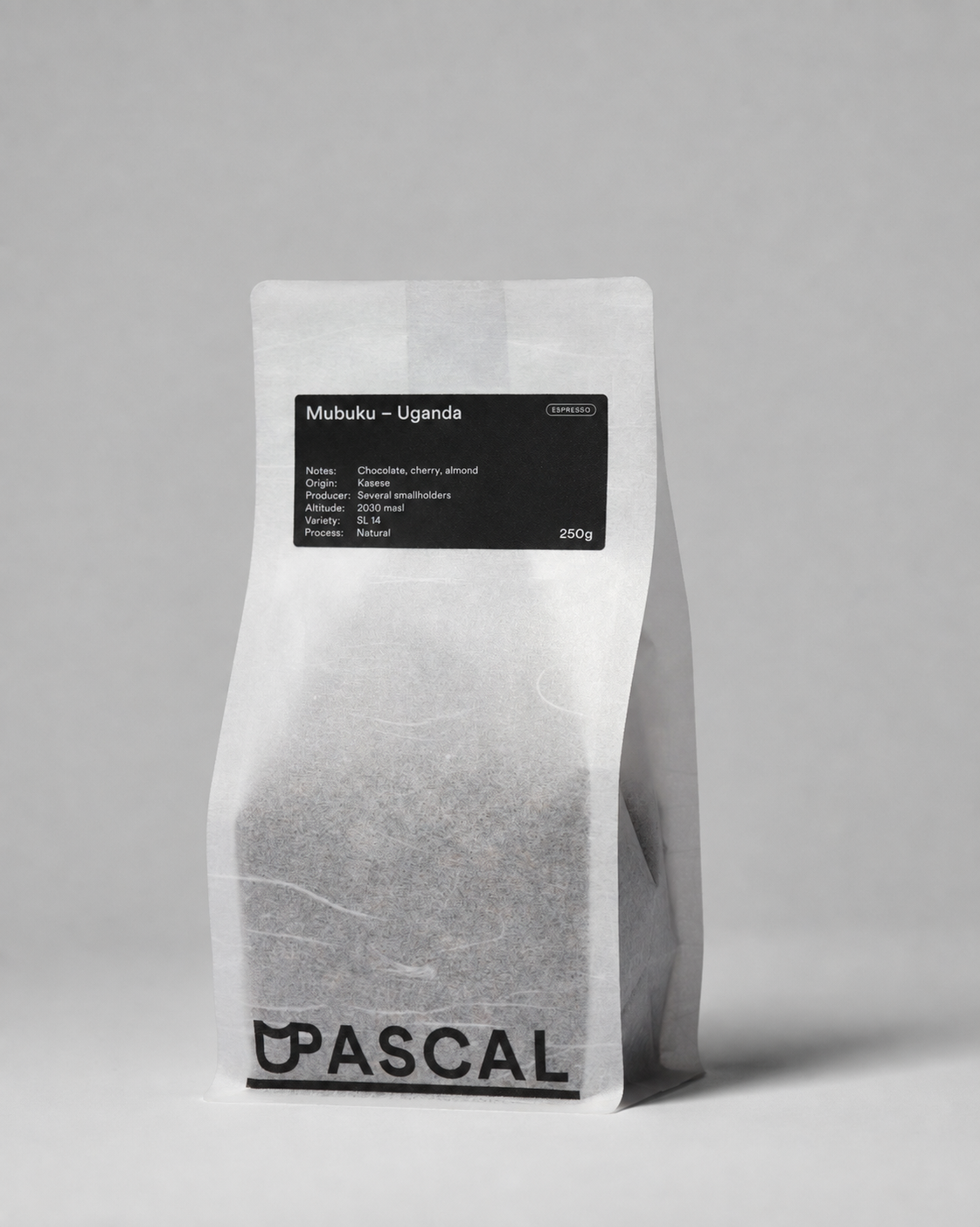
Grown by several smallholders around Kasese Station, on a 20-acre plot along the Mubuku River on the east-facing slopes of the Rwenzori Mountains. Cherries are delivered daily, floated and hand-sorted, then dried on raised beds for 18–24 days by a team of around 90 seasonal workers who rake and turn the lots for even drying. Roasted for espresso.
Chocolate · Cherry · Almond