
Roasteries / Mia Coffee

Mia Coffee
Liberec, Czech Republic
Family-owned specialty coffee roastery in the heart of Liberec, founded in 2014 and named after founder Michal Novák's daughter, Mia. Commercial roasting began in 2019 on Probat Probatone 12 and 25 roasters (up to 750kg/day), with Cropster monitoring and destoner-based quality control. Housed in a historic building on Náměstí Dr. E. Beneše that combines the roastery with a café, retail showroom, and SCA-certified training center offering barista, latte art, and alternative brewing courses. Also supplies wholesale coffee and La Cimbali espresso equipment to cafes, restaurants, and hotels across the Czech Republic.
17
coffees
Czech Republic
base
Location
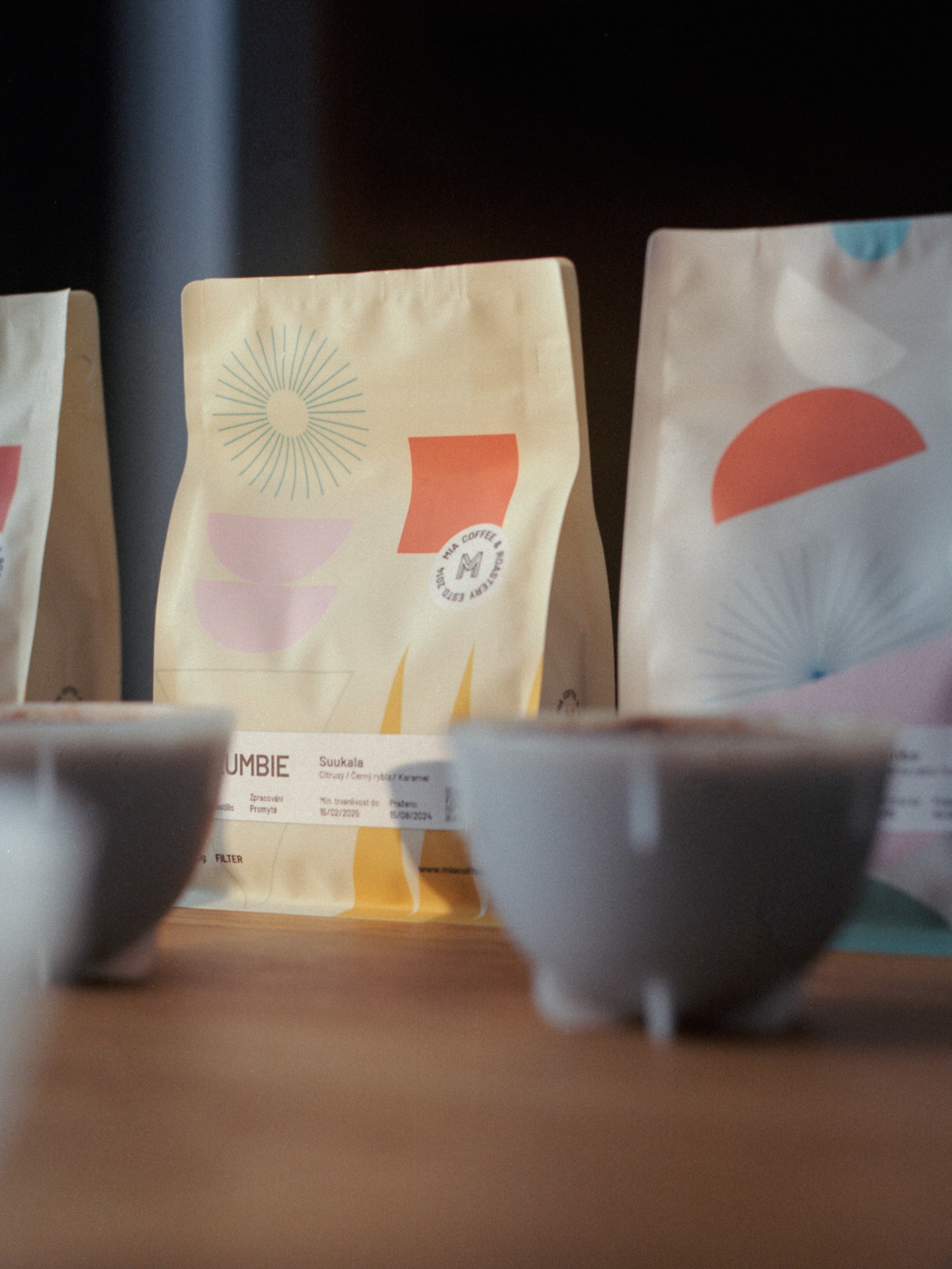
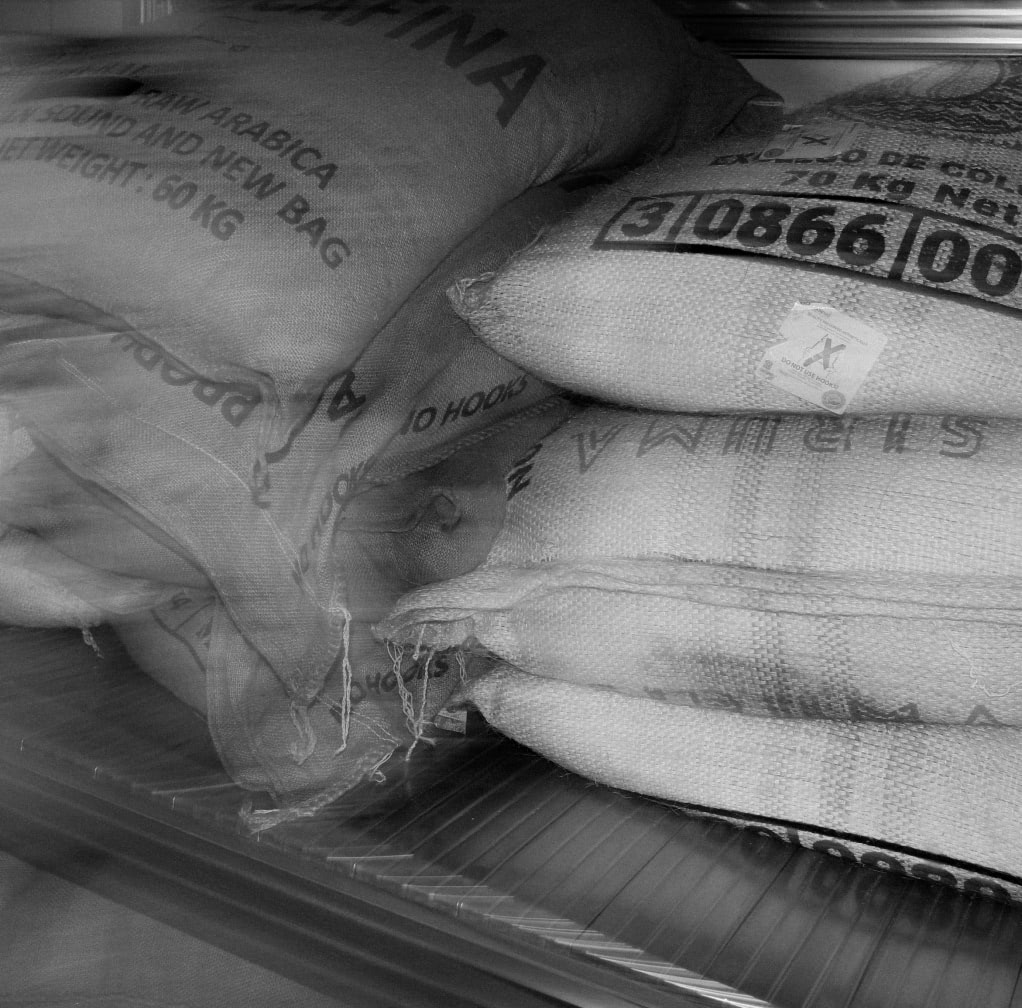
Mia Coffee — Liberec Roastery & Café
Nám. Dr. E. Beneše 6/7, 460 01 Liberec, Czech Republic+420 602 666 656Coffees
17 coffees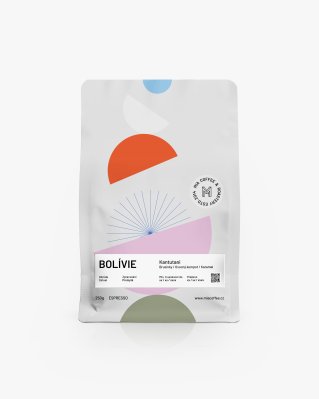
Finca Kantutani is a 13-hectare family farm run by Grover Mamani in Bolivia's Caranavi region, where the Andes meet tropical forest. Coffee is grown chemical-free under natural shade in an agroforestry system, then hand-sorted, washed and dried for about two weeks at the farm. A clean, balanced espresso — caramel sweetness, gentle fruit and a smooth body. Source: miacoffee.eu
Cranberry, stewed fruit, caramel

A limited 150 kg microlot from Fazenda Guariroba, farmed by the fifth generation of the Lamounier family in Minas Gerais. Gabriel Lamounier — a trained chemist with an on-farm lab — has won multiple Cup of Excellence awards, including the 2016 championship. Yellow Catuaí cherries get a 76-hour anaerobic fermentation in sealed barrels, then about 30 days drying on African beds. Source: miacoffee.eu
Cocoa nibs, hibiscus, Earl Grey
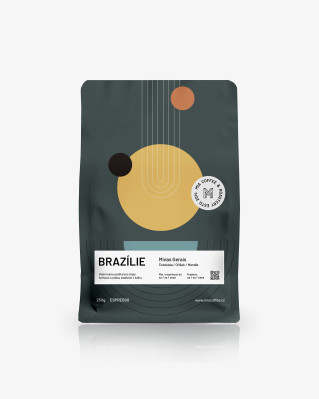
An everyday sweet espresso from Minas Gerais, Brazil's largest coffee-growing state. Dried unhulled in thin layers under the sun and regularly raked for an even dry, which gives a sweeter, fuller, more complex cup. Roasted medium — mild acidity, no bitter aftertaste, and happy on fully automatic machines. Source: miacoffee.eu
Chocolate, nut, almond
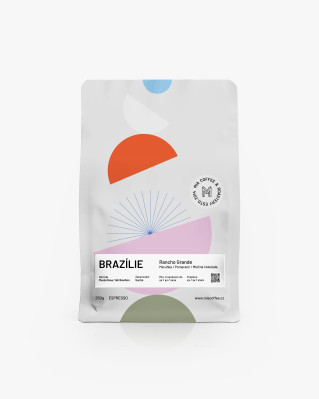
Rancho Grande has grown coffee near Três Pontas since 1933 and is now run by José Carlos Reis with his grandson Flávio. After harvest the coffee is water-sorted, dried about 16 days at 29 °C, rested for 31 days and hulled; part of the crop is terrace-dried and finished in a rotary dryer. Full-bodied and sweet — apricot, hazelnut and milk chocolate. Source: miacoffee.eu
Apricot, orange, milk chocolate
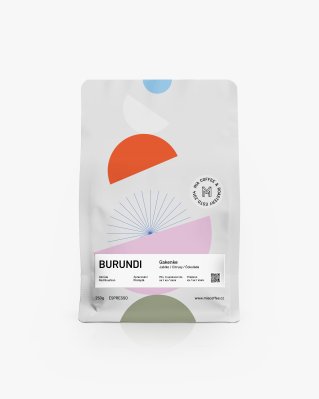
Around 1,780 smallholders in Gakenke, in Burundi's Kayanza province, each farm a few hundred Red Bourbon trees and deliver cherry to the Gakenke washing station, running since 1991. Cherries are sorted, depulped, fermented in water for 10–12 hours, washed and density-graded in channels, then dried 2–3 weeks on raised African beds. A clean cup — apple and citrus over chocolate sweetness with a soft floral lift. Source: miacoffee.eu
Apple, flowers, chocolate
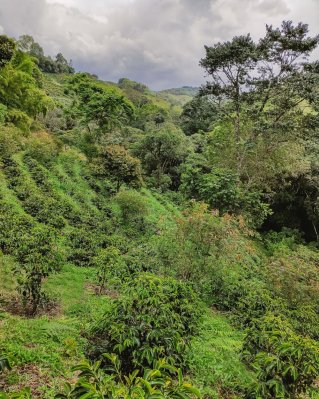
Finca Juan Martin is Banexport's research farm in Cauca, near Popayán, where varieties and processing methods are trialled and the findings shared with partner growers across Colombia. This Sidra lot is Oxidation Washed — a brief controlled oxidation before the wash — for extra sweetness and fruit while keeping a clean cup of citrus, pear and caramel. Source: miacoffee.eu
Citrus, pear, caramel
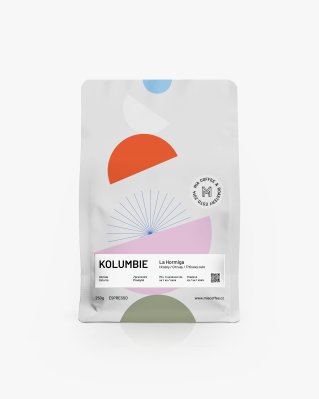
A one-hectare family farm in the mountains of San Agustín, Huila, run by Aura Rita Bolaños with her husband and son. Volcanic soils and slow ripening at 1,780–1,810 m; washed with an 18–24 hour fermentation, then 18–22 days drying on covered raised beds. A clean, bright espresso — grape and citrus over cane-sugar sweetness with juicy acidity. Source: miacoffee.eu
Grapes, citrus, cane sugar
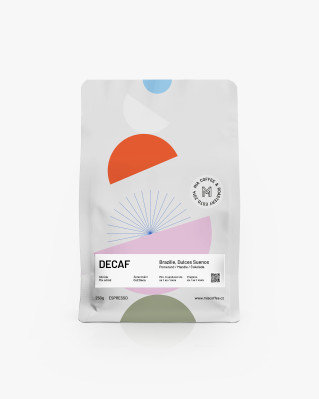
Cherry from about 300 small farming families in Paraná and São Paulo, naturally processed — hand-picked, sorted and terrace-dried for 7–10 days. Caffeine is then removed with the Sparkling Water process, which uses only pressurised CO₂ and water to strip caffeine while leaving the flavour and aroma compounds intact. Sweet and full-bodied, with orange, almond and chocolate. Source: miacoffee.eu
Orange, almond, chocolate

A three-region Brazilian espresso blend — Triângulo Mineiro for body and cocoa-nut aromatics, Cerrado for balance with almond and ripe fruit, and Santos for a smooth, sweet, vanilla finish. Rounded and very sweet, built for fully automatic machines. Source: miacoffee.eu
Cocoa, nut, vanilla
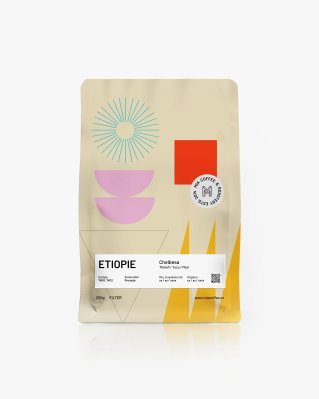
Chelbesa, in Gedeb within the Yirgacheffe zone, is farmed in small garden plots alongside enset, avocado and papaya. Processing and traceability are handled by the family-owned Kuri Mountain Coffee, whose coffee heritage goes back to 1945. Cherries are sorted, depulped, fermented, washed and dried on raised African beds for a clean, floral cup with bright acidity — cherry, yuzu and honey. Source: miacoffee.eu
Cherry, yuzu, honey
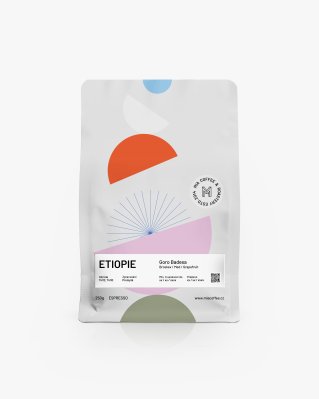
Goro Badesa washing station in Guji, run by Habtamu Fekadu Aga since 2020, works with hundreds of smallholders on the slopes of Mount Kuri and funds agronomy training, interest-free pre-harvest payments and a local school. Cherries are sorted, depulped, fermented about 24 hours, hand-washed and dried 9–12 days on raised African beds. Clean and sweet — peach, honey and grapefruit. Source: miacoffee.eu
Peach, honey, grapefruit
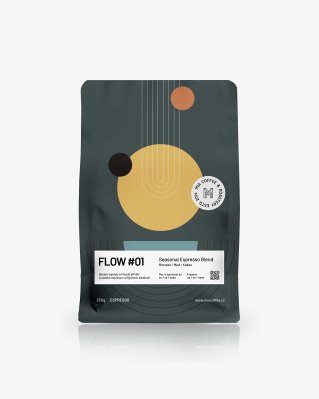
FLOW is Mia's rotating specialty espresso blend — the composition shifts with the harvest, the character stays sweet, balanced and easy-drinking. The current edition pairs washed Uganda Wanale from the Mt. Elgon region, dried at Norman Mukuru's The Coffee Yard, with washed Ethiopia Jimma from cooperatives in the Jimma Farmers Union. Roasted slightly darker for espresso and milk drinks — peach, honey and cocoa. Source: miacoffee.eu
Peach, honey, cocoa
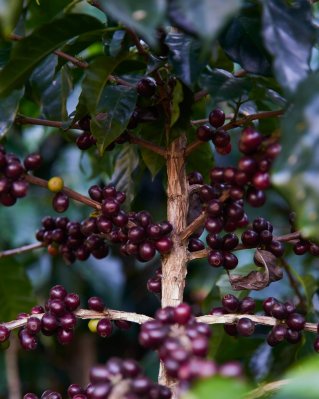
Waykan Regional Select is a natural-process regional blend drawn from smallholder lots across the microregions of Huehuetenango, most grown by indigenous Mayan communities with support from Guatemala's coffee institute Anacafé. High altitude, limestone soils and dry mountain winds give slow ripening; whole cherries are dried on raised beds and patios, then hulled. Sweet and light-bodied — cocoa, cinnamon and sour cherry. Source: miacoffee.eu
Cocoa, cinnamon, sour cherry
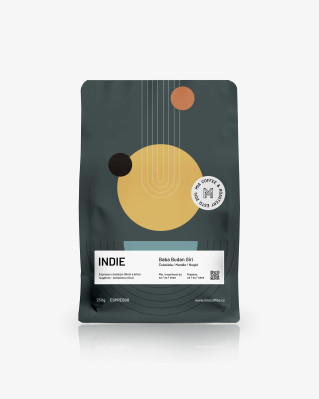
Grown in the Western Ghats around Chikmagalur in Karnataka — where, by legend, coffee first reached India — at roughly 1,000–1,600 m. A washed Arabica with a rounded, full body and notes of cocoa, nuts, nougat and spice; built for espresso, including fully automatic machines. Source: miacoffee.eu
Chocolate, almonds, nougat
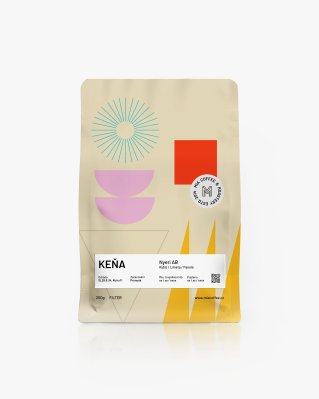
Nyeri Hill Farm, on the foothills of Mount Kenya, is one of East Africa's oldest coffee estates — first trees planted in 1914, still owned by the Catholic Archdiocese of Nyeri, with revenues long supporting local schools and a hospital. Over 1,400 hectares of volcanic soil at high elevation; only ripe cherries are depulped, fermented, washed and dried on raised beds. Juicy and bright — blackcurrant, lime and panela. Source: miacoffee.eu
Blackcurrant, lime, panela
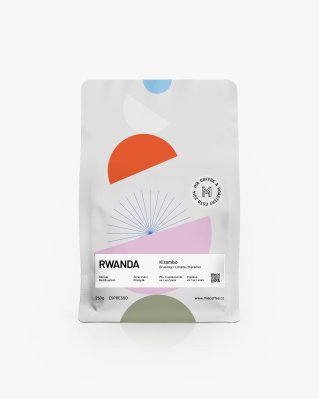
The Kirambo washing station sits on a slope above Lake Kivu in Nyamasheke, built in 2008 and turned around after RTC took it over in 2017, investing in farmer training and certification. Hundreds of smallholders bring cherry from plots under a hectare; it's sorted and dried up to 30 days on raised beds, turned regularly and covered at night. Clean and elegant — cranberry, lime and caramel. Source: miacoffee.eu
Cranberries, lime, caramel
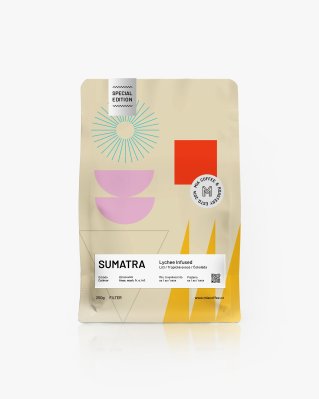
From Bang Silalahi, a Toba-region innovator who started with one hectare in 2004, and his community of nanolot producers. After hand-sorting, the coffee goes through anaerobic maceration with fruit enzymes — here lychee — for an intense exotic aroma, then is washed and dried up to 14 days to 13% moisture. Juicy and distinctive: lychee, tropical fruit and chocolate. Source: miacoffee.eu
Lychee, tropical fruit, chocolate