
Roasteries / Paso Paso
Paso Paso
Hannover, Germany
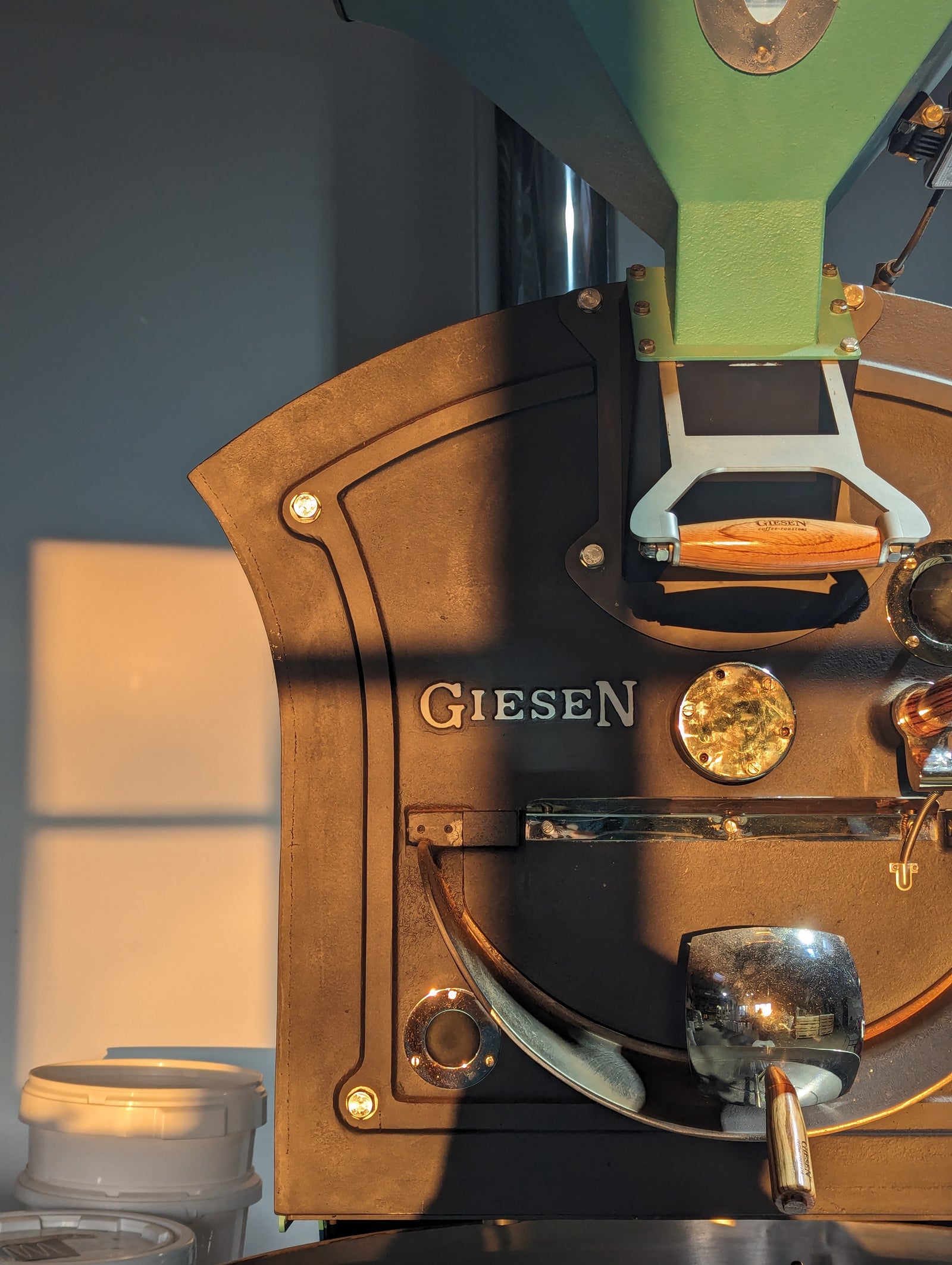
Paso Paso is a farmer-owned specialty roastery in Hannover, launched in September 2023 by Bram de Hoog — formerly a sourcing director at Ally Coffee — together with five producer partners who are majority shareholders and take part in monthly decisions: Diego Robelo (Aquiares Estate, Costa Rica), Diego Baraona (Los Pirineos, El Salvador), Jorge Vásquez (Roble Negro, Costa Rica), Silvio Sánchez (Nicaragua) and the Syoum family (Ethiopia). Registered as Istmo Producers Collective GmbH, it took over an existing roastery and its Giesen roaster in Linden; the previous owner, Thomas Brinkmann, kept a stake and runs a coffee school in the same building. Light-to-medium profiles let each origin show; the branding won the SCA Best Branding Award in Copenhagen. You can drop in for a coffee at the roastery. Sources: paso-paso.com, Sprudge, thewaytocoffee.com.
13
coffees
Germany
base
Location
Coffees
13 coffees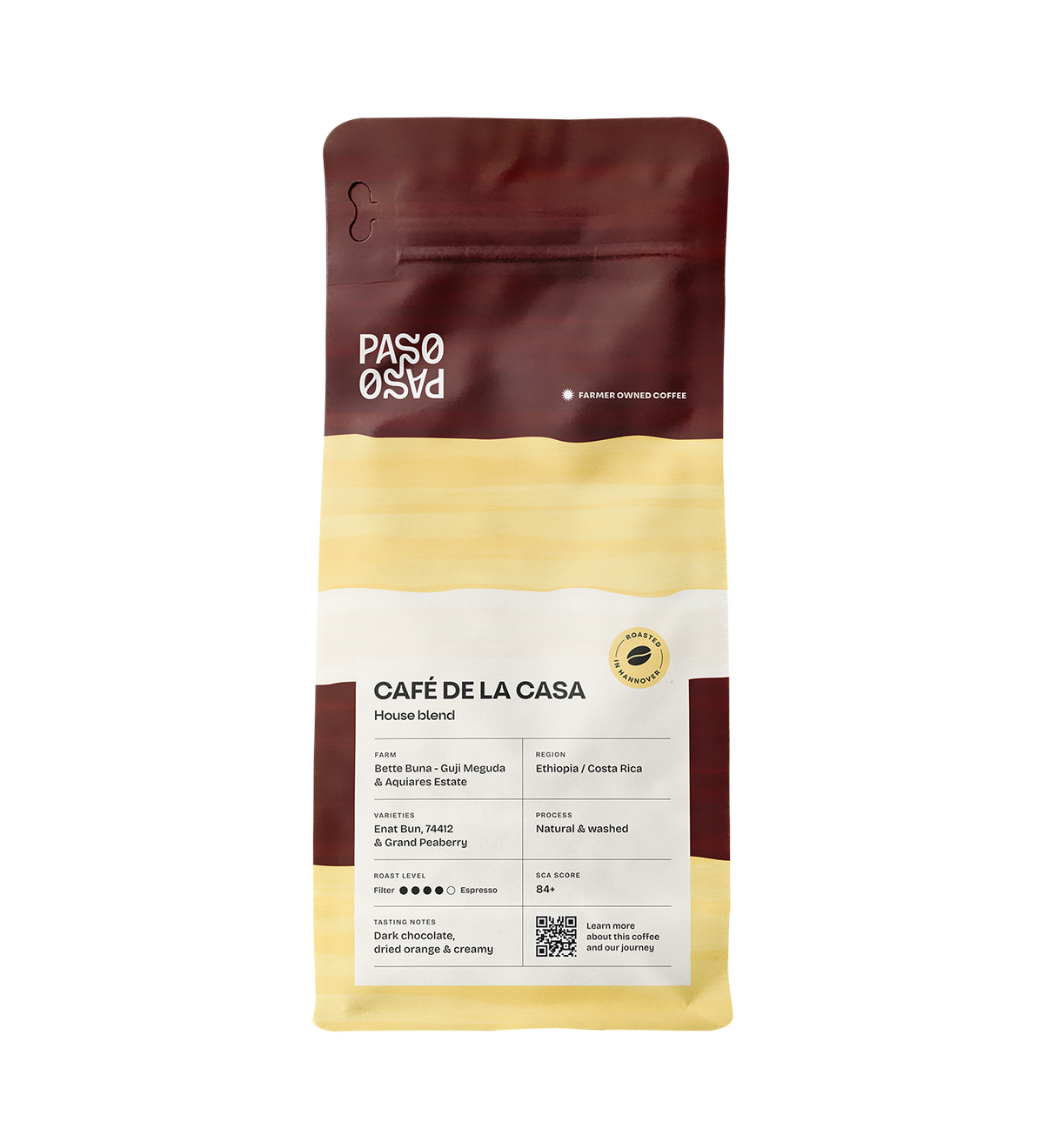
Paso Paso’s house blend, entirely from its shareholder farms: 75% washed Costa Rica peaberry from Diego Robelo’s Aquiares Estate for almond sweetness and clean acidity, plus 25% Syoum family Guji natural roasted darker for deep chocolate. Together: rich dried-orange notes, a balanced crowd-pleaser for filter or espresso.
Almond, chocolate, dried orange
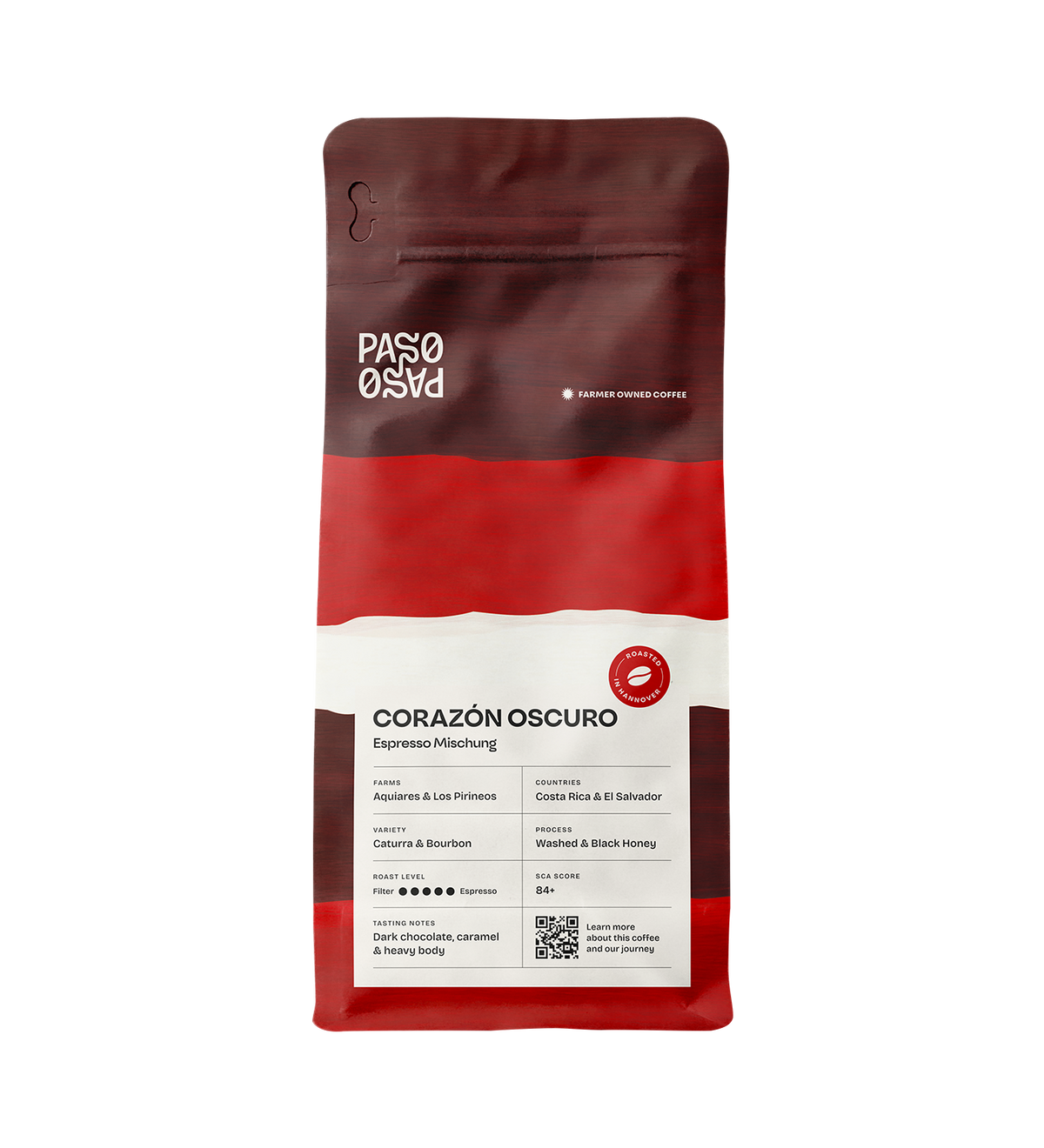
“Dark heart”: a fully traceable dark roast — 60% Costa Rica peaberry from Diego Robelo’s Aquiares Estate and 40% washed Bourbon from Diego Baraona’s Los Pirineos. Built like a traditional Italian espresso: low acidity, caramelised sweetness, heavy syrupy body and thick crema; made for automatic machines and milk drinks.
Caramel, syrupy body, low acidity
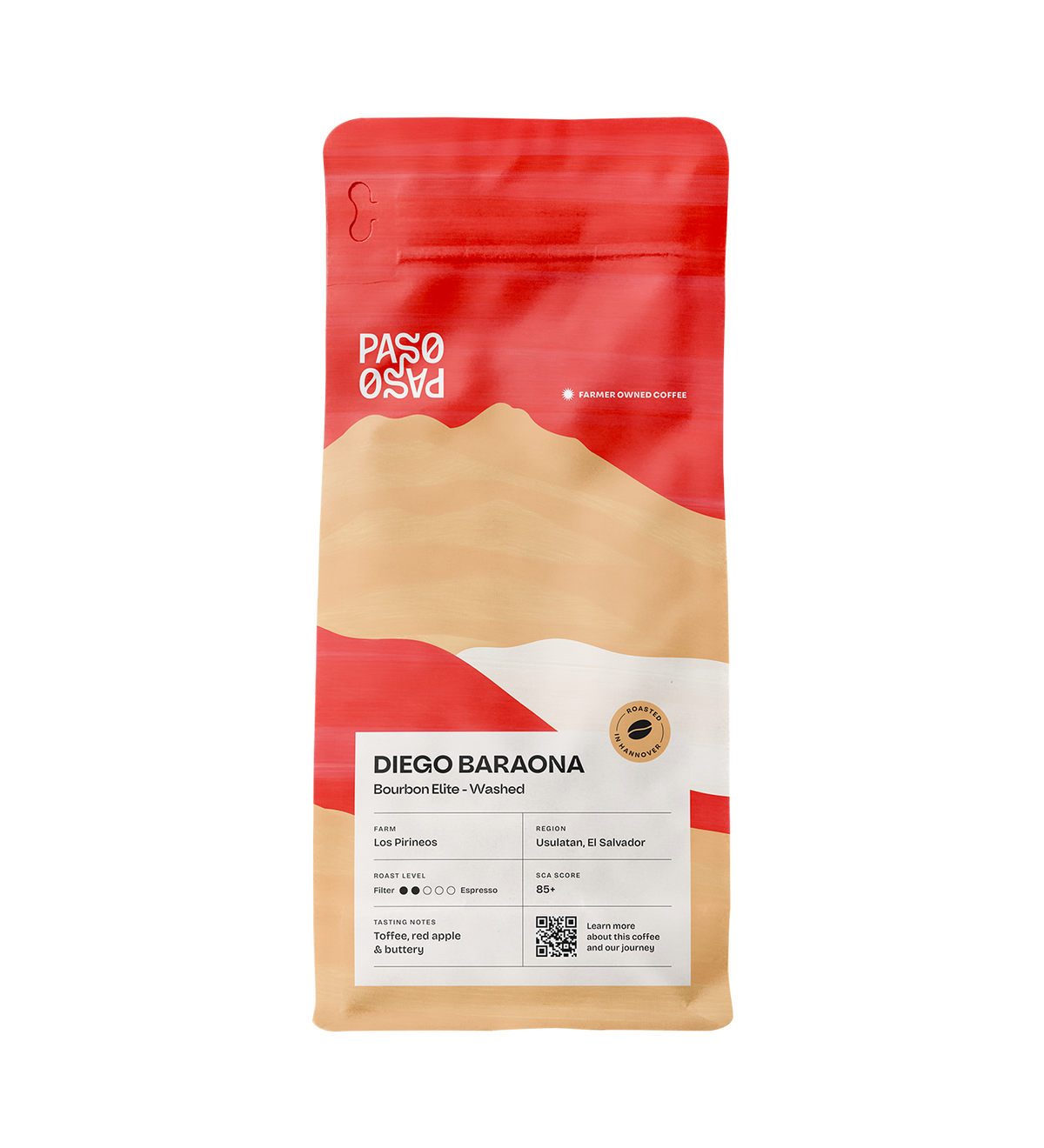
Century-old Bourbon Elite trees (a Typica mutation) planted by Diego Baraona’s forefathers at Los Pirineos and kept despite leaf rust. Washed with a mechanical demucilager instead of fermentation, dried 10–14 days on raised beds and rested three months in hermetic bags. Toffee-like sweetness, light apple acidity and a buttery body; works as filter and espresso.
Toffee, apple, buttery body
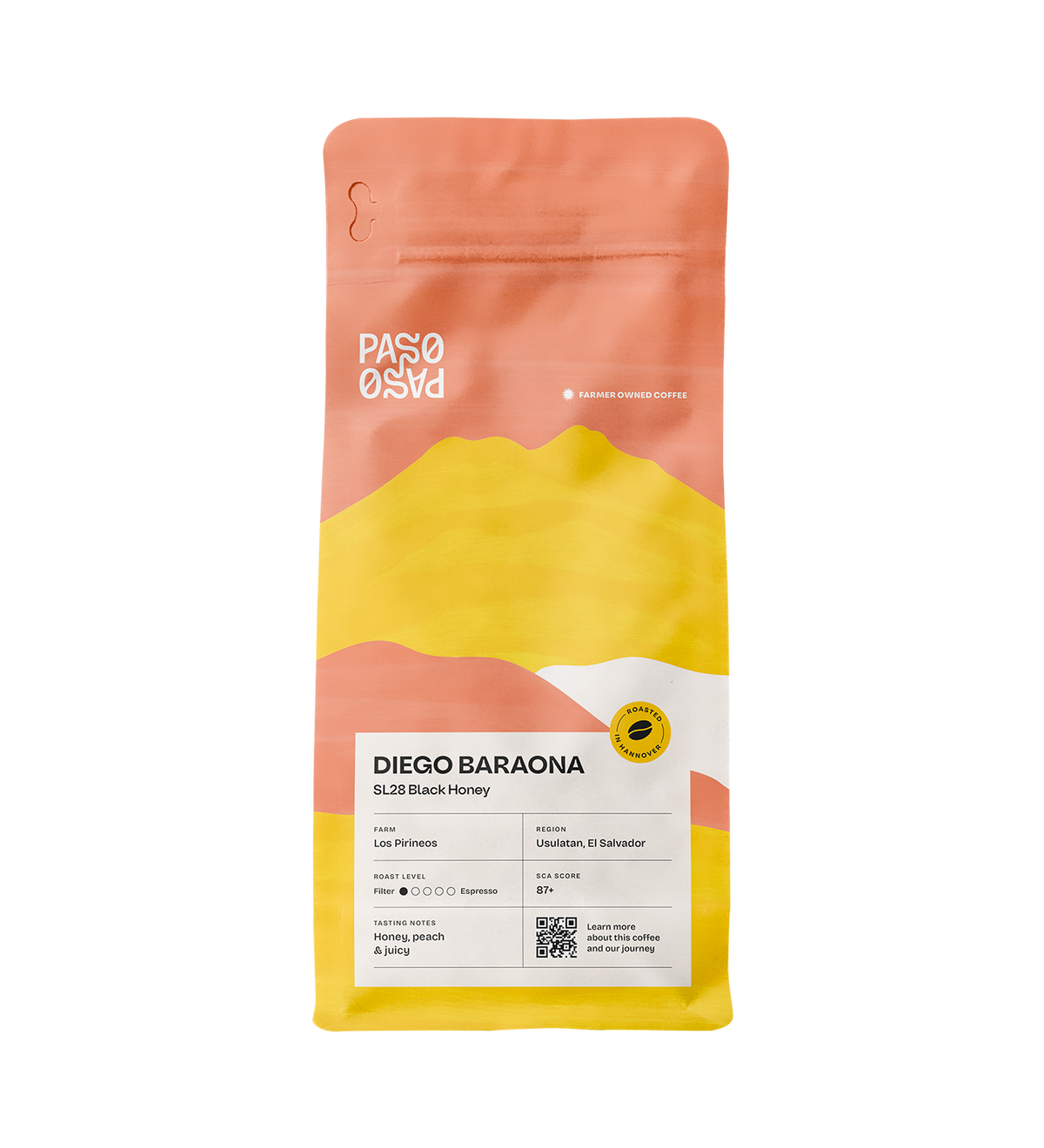
Kenyan SL28 grown on the highest part of Diego Baraona’s Los Pirineos farm in Usulután, combined with Baraona’s signature black honey: cherries are depulped without water and dried in thick piles on shaded beds so the mucilage ferments into a deep honey sweetness. Crisp acidity with notes of fresh peach and delicate florals. Ultra-light roast, best as filter or long espresso.
Fresh peach, floral
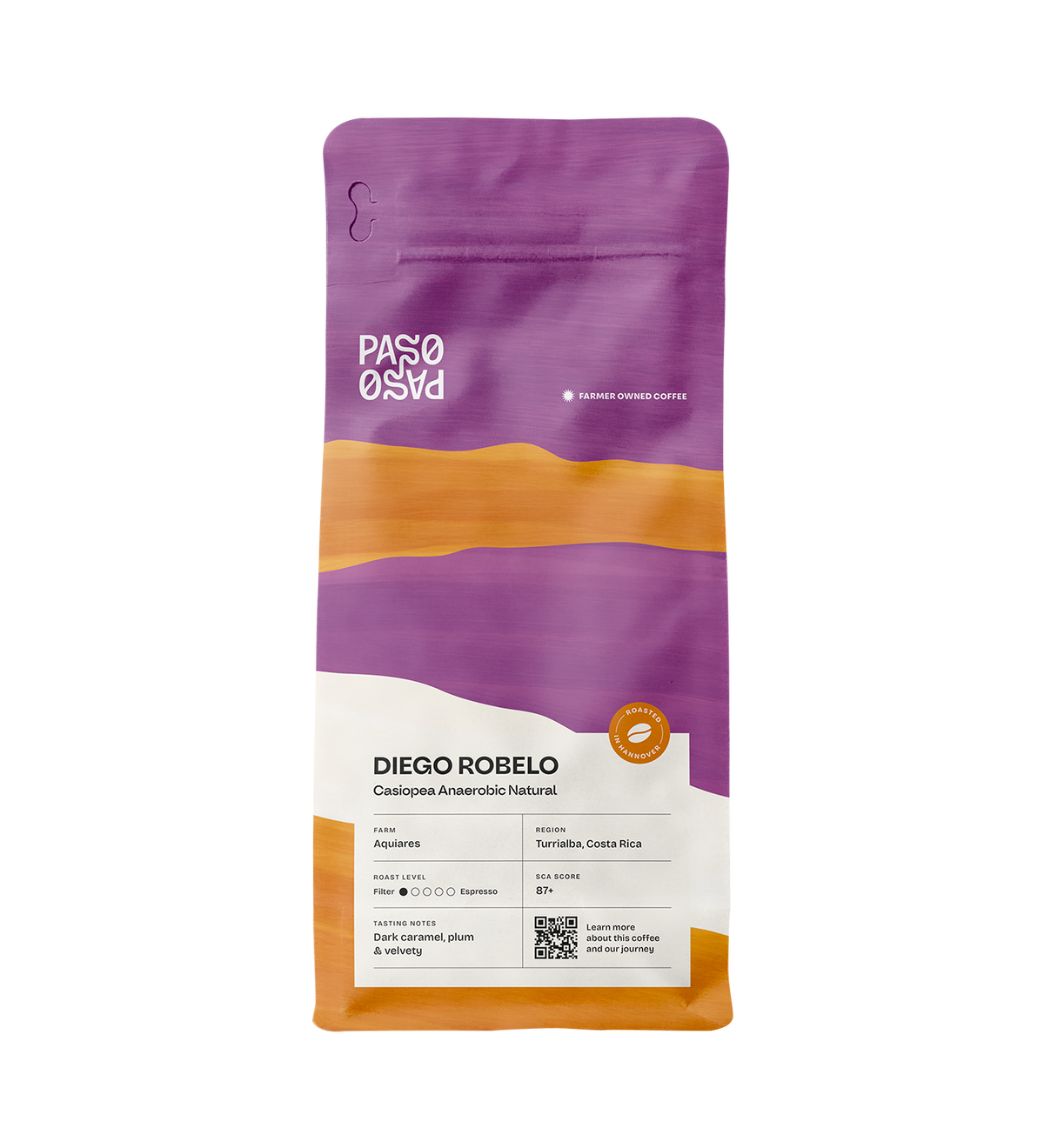
A Paso Paso exclusive: Casiopea is an F1 hybrid of Caturra and Ethiopia Landrace #41 from a World Coffee Research trial at Aquiares. It wasn’t chosen for commercial release, but the small plot remains and is harvested only for Paso Paso. Anaerobic natural, yet delicate and layered rather than explosive — clean with intense sweetness. Light roast to highlight the florals.
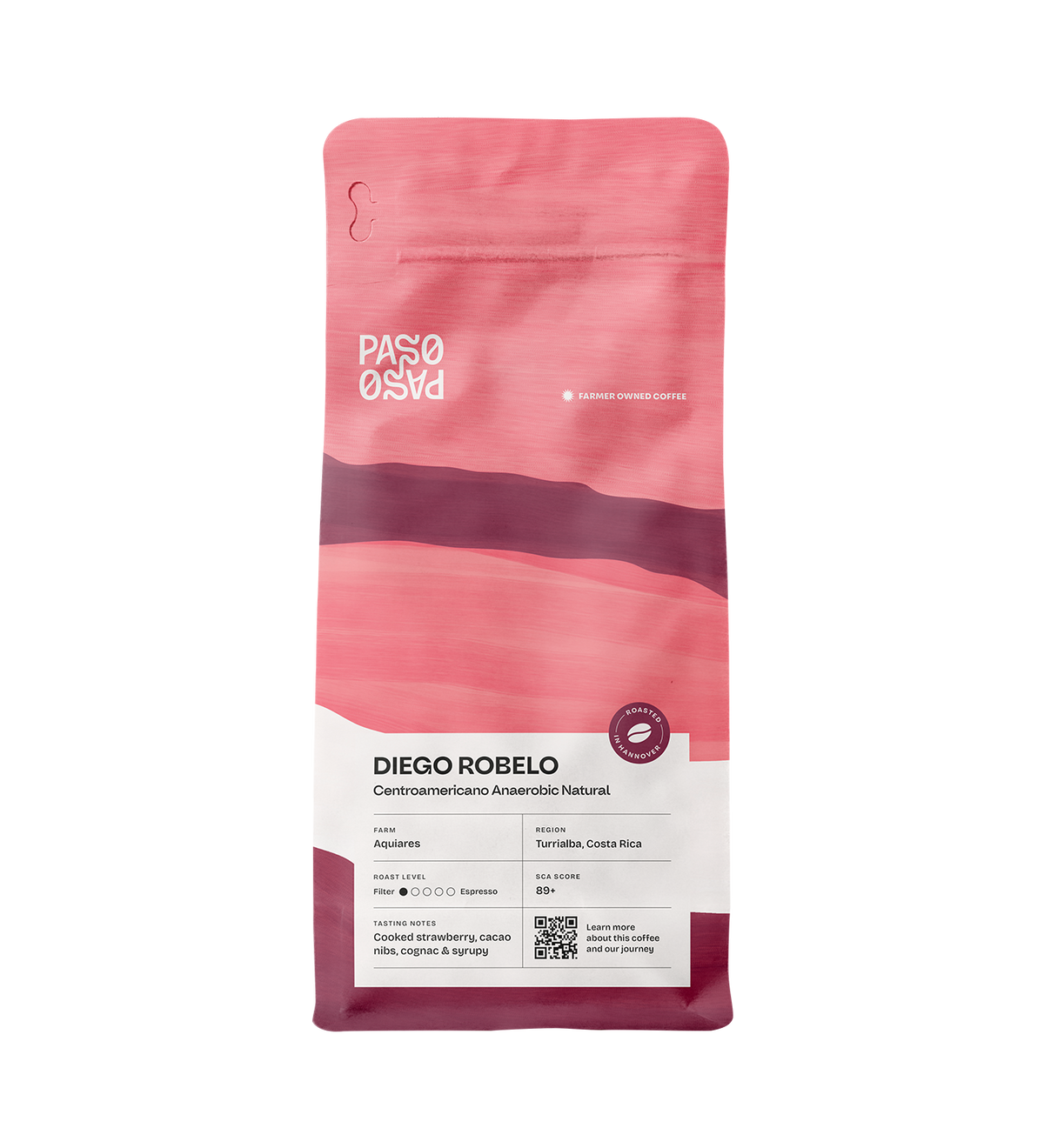
Paso Paso’s year-round anaerobic natural and its best seller of 2025. Centroamericano — introduced at Aquiares in 2013 and now replanting most of the farm for its yield, quality and climate resilience — fermented 46 hours in sealed barrels, then dried on raised beds in a climate-controlled greenhouse. Intense yet clean; Paso Paso’s lightest roast (196 °C in 9:19).
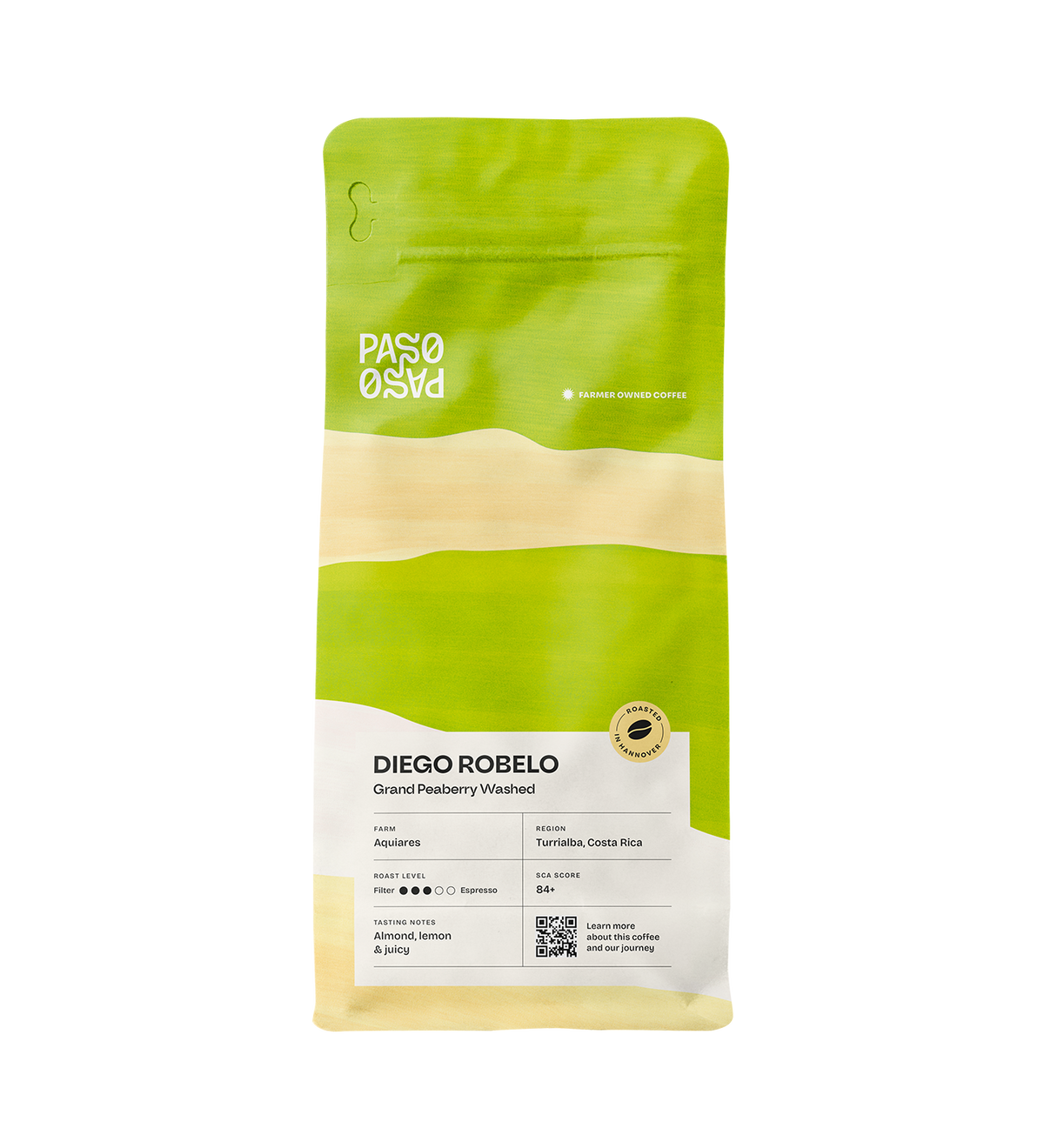
Peaberries — cherries that grow a single round bean — make up only about 7% of the Aquiares harvest; since 2018 Diego Robelo density-sorts them into this standalone lot. Washed, sweet with vibrant acidity and fruit clarity. The dense (800 g/L) beans get a dedicated medium espresso profile (11.5 min to 203 °C). Aquiares is Rainforest Alliance and carbon-neutral certified.
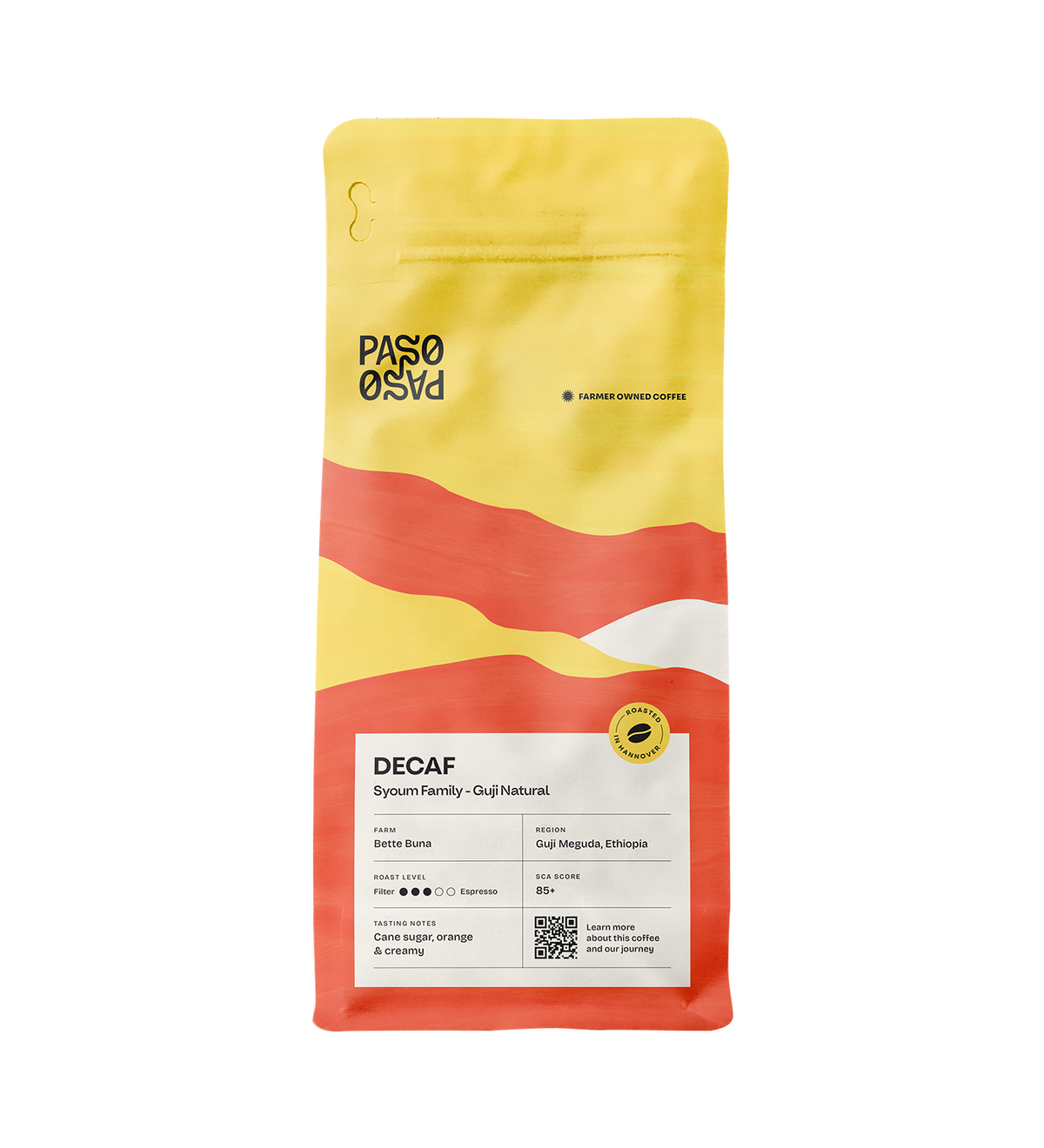
An extra lot of Paso Paso’s best-selling Guji Natural from Hester and Dawit Syoum, decaffeinated in Bremen with the sugar-cane ethyl acetate process. Creamy, with warm cane sugar and crisp orange; a gentle medium roast that works for both filter and espresso.
Cane sugar, orange, creamy
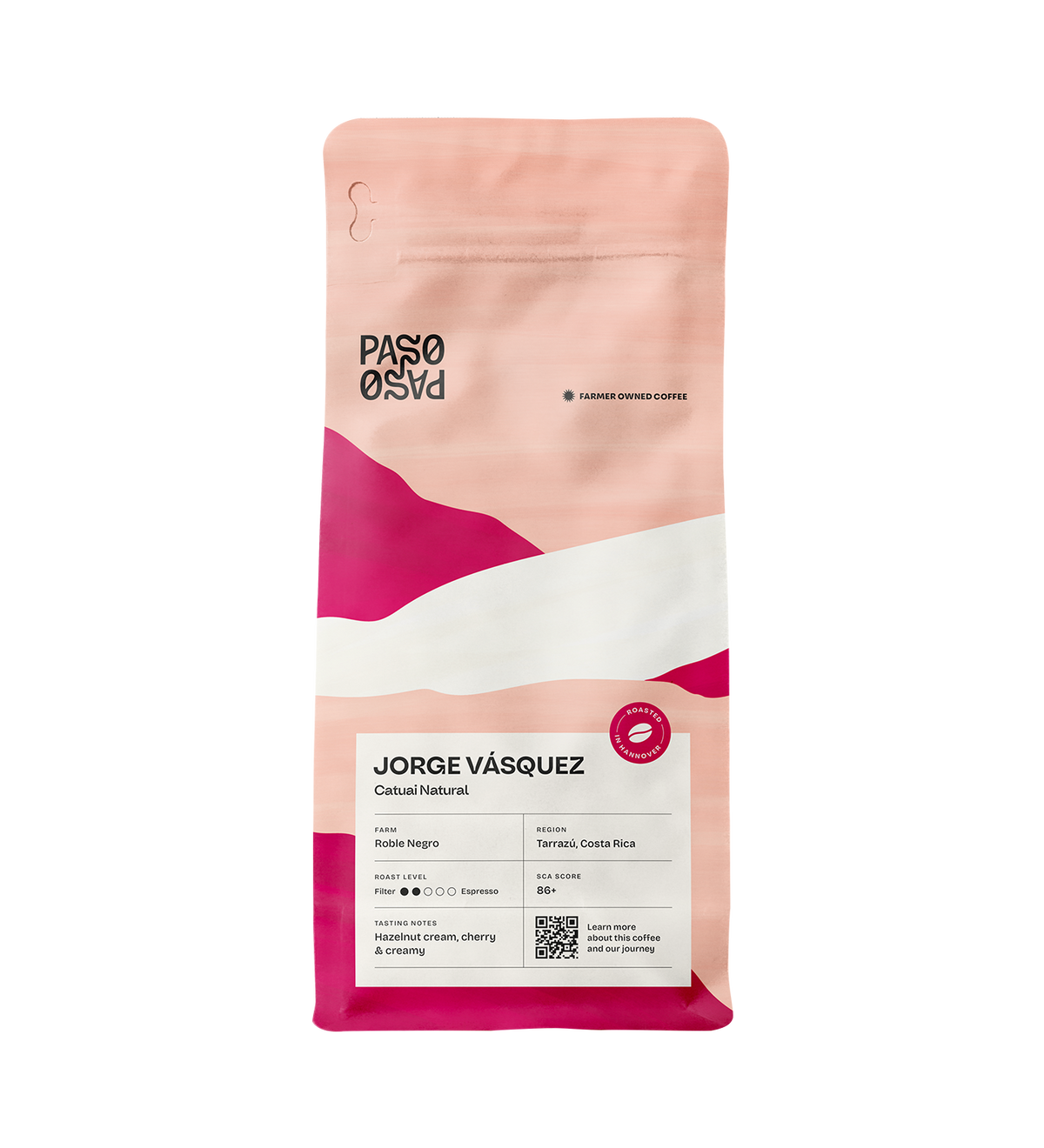
From Jorge Vásquez’s Roble Negro farm in Cedral Alto, Tarrazú, named for the region’s 200-year-old black oaks; over 80% of the land is kept as native forest and fertiliser is made on the farm. Whole cherries are sun-dried in their skin for up to four weeks. Exceptionally sweet, with hazelnut cream and fresh cherry and a heavy, creamy body.
Hazelnut cream, fresh cherry
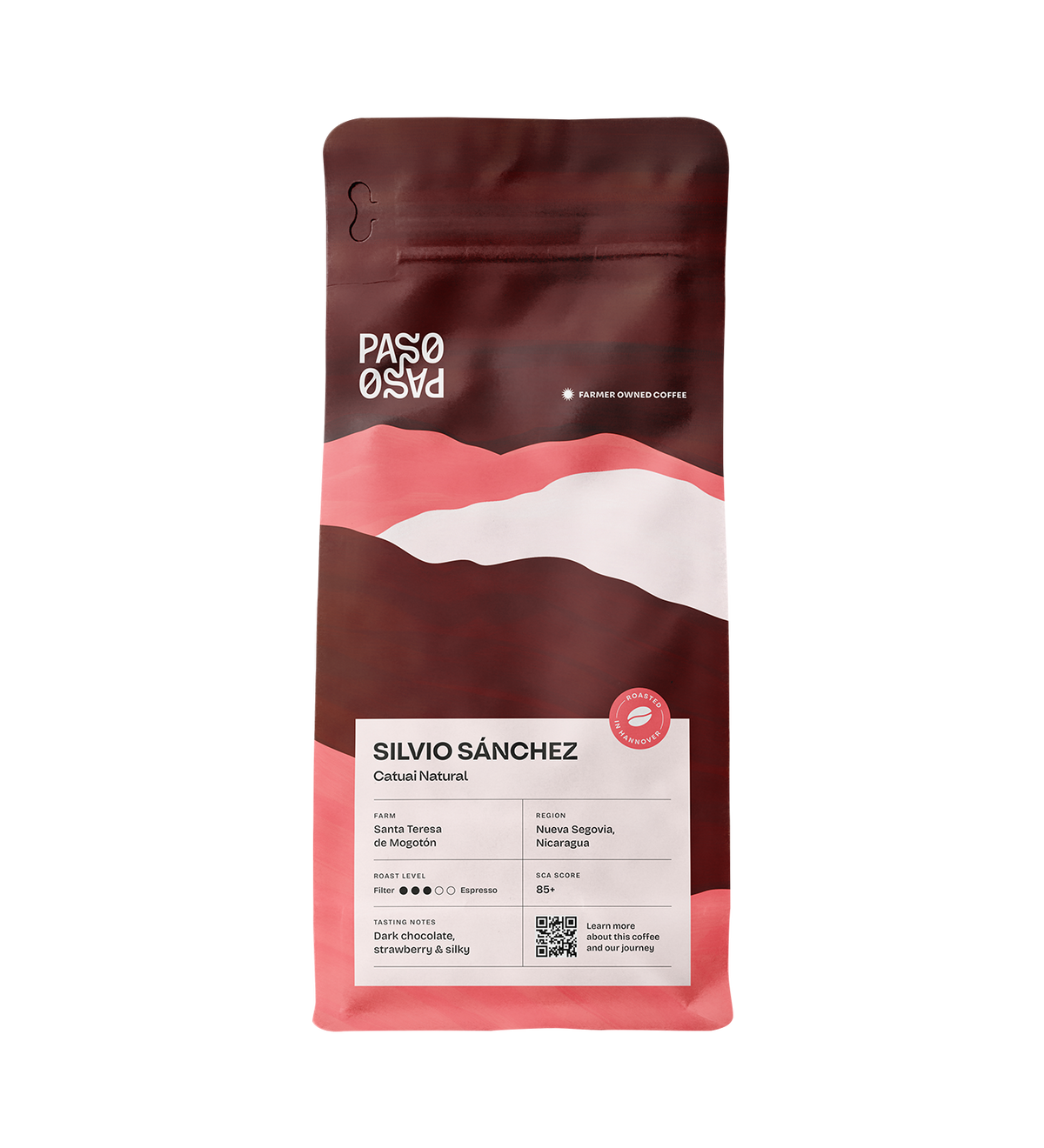
Grown under forest canopy on Cerro Mogotón, Nicaragua’s highest mountain, at Silvio Sánchez’s off-grid Santa Teresa de Mogotón farm — reachable only by 4x4. Silvio, a trained agronomist, is a Paso Paso shareholder. Dried as whole cherries for up to four weeks; an exceptionally sweet, chocolatey espresso for shots or cappuccino.
Chocolate, sweet
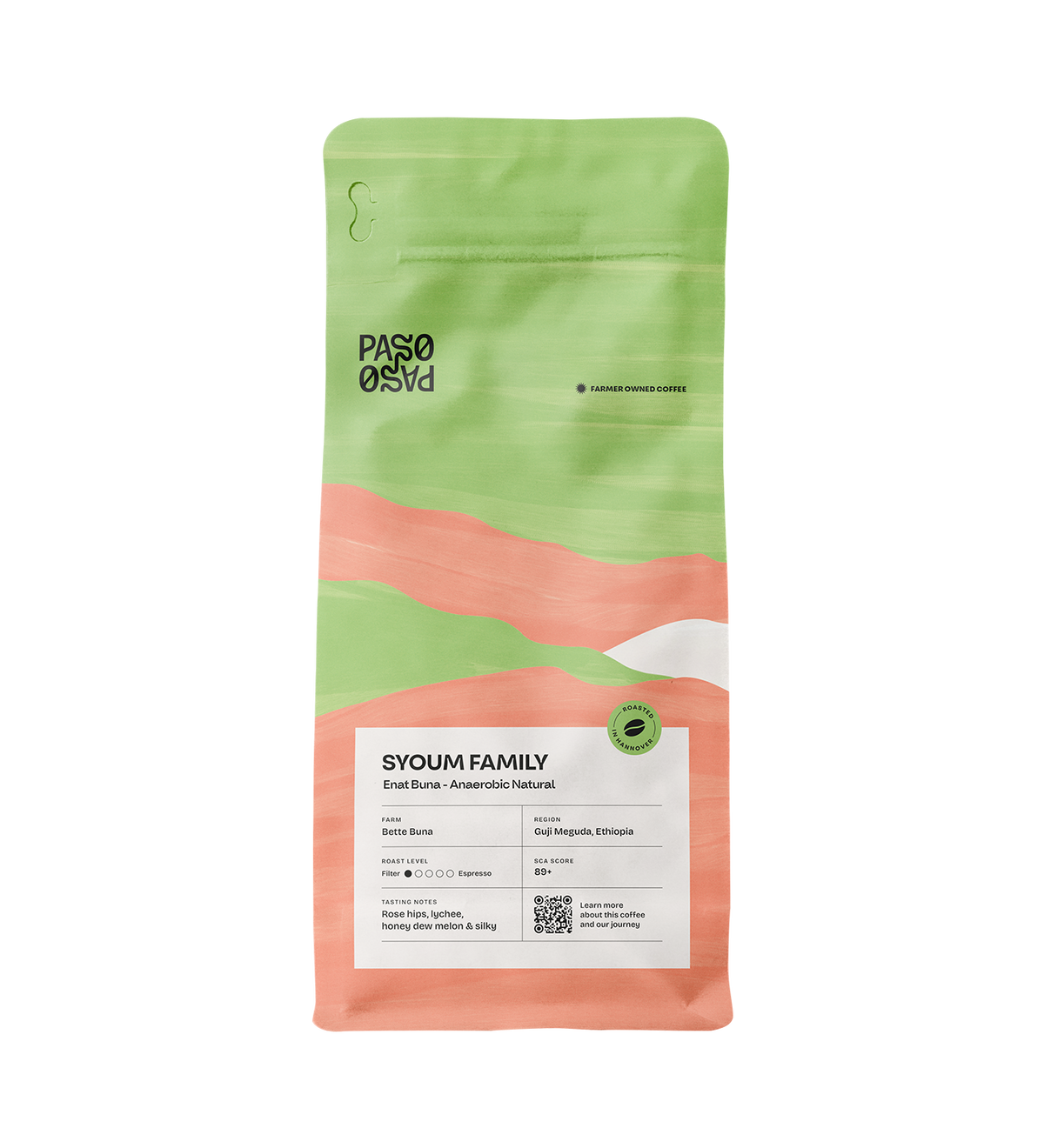
In 2026 the Syoum family went all-in on experimental processing at Bette Buna; Paso Paso picked this lot for its balance of intensity and cleanliness. Cherries ferment 48 hours in closed barrels, then dry 3.5 weeks on raised beds. Fruit-packed but clean — an adventurous filter and excellent as espresso with milk.
Tropical fruit
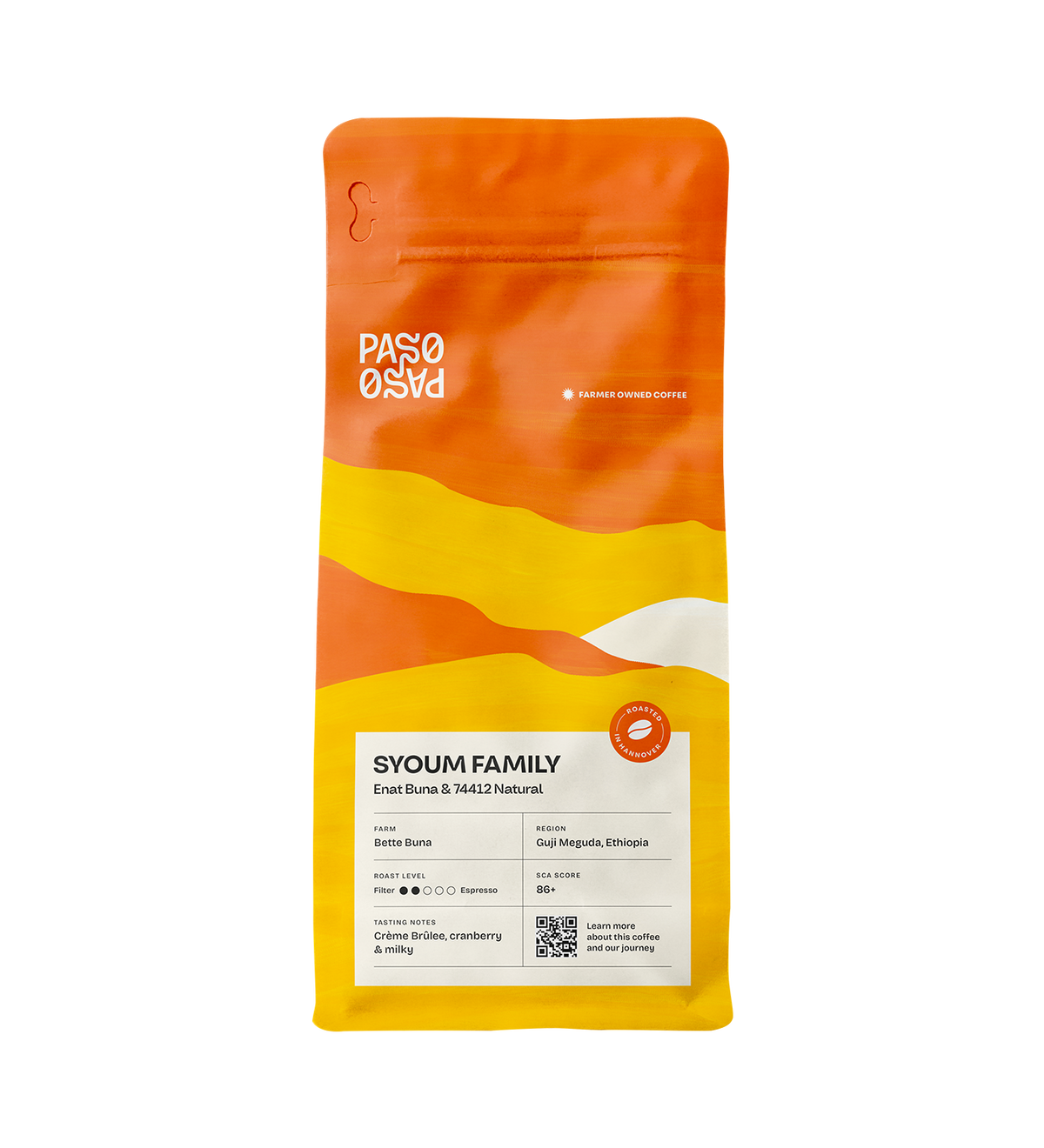
From the Syoum family’s Bette Buna farm in Guji Meguda — wild and semi-forest plots at up to 2,200 masl. Hand-picked red cherries are sun-dried on raised beds for 3.5 weeks. Sweet and balanced, with praliné, tropical fruit and delicate florals. Bette Buna pays living wages and provides housing, meals and schooling for workers’ families.
Praliné, tropical fruit, floral
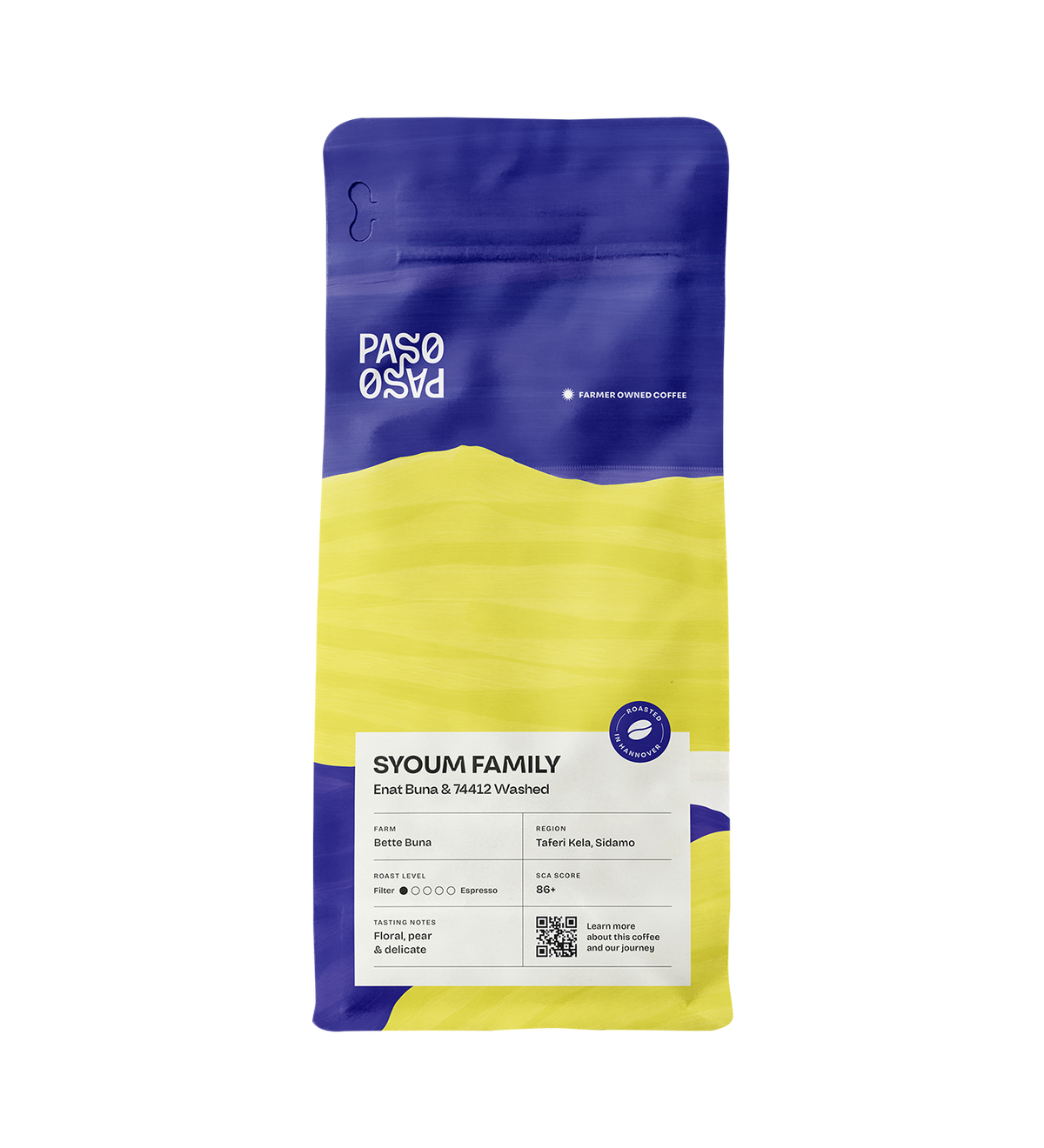
A washed Sidama from the Syoum family farm in Tefari Kela, a coffee tradition dating to 1939 and revived since 2019 by Dawit and Hester with a focus on regenerative agroforestry. Delicate florals and crisp fruit; Paso Paso recommends resting it a month after roast.
Floral, crisp fruit