
Roasteries / Gringo Nordic

Gringo Nordic
Gothenburg, Sweden
Specialty coffee roastery in central Gothenburg, founded in 2018 by Johan Ekfeldt (founder of Johan & Nyström, and owner of Finca La Tierra, a coffee farm in Colombia). Sources 100% specialty-grade coffee from individual farms and cooperatives, slow-roasting in small batches with energy-efficient air-flow roasting. Runs an on-site café and retail shop, plus monthly Saturday open houses with free tastings and cuppings.
37
coffees
Sweden
base
Location
Gringo Nordic
Varholmsgatan 12, 414 74 Göteborg, SwedenMonday: 08:00-16:00 Tuesday: 08:00-16:00 Wednesday: 08:00-16:00 Thursday: 08:00-16:00 Friday: 08:00-16:00 Saturday: Closed Sunday: Closed
+46 31 12 08 80Coffees
37 coffees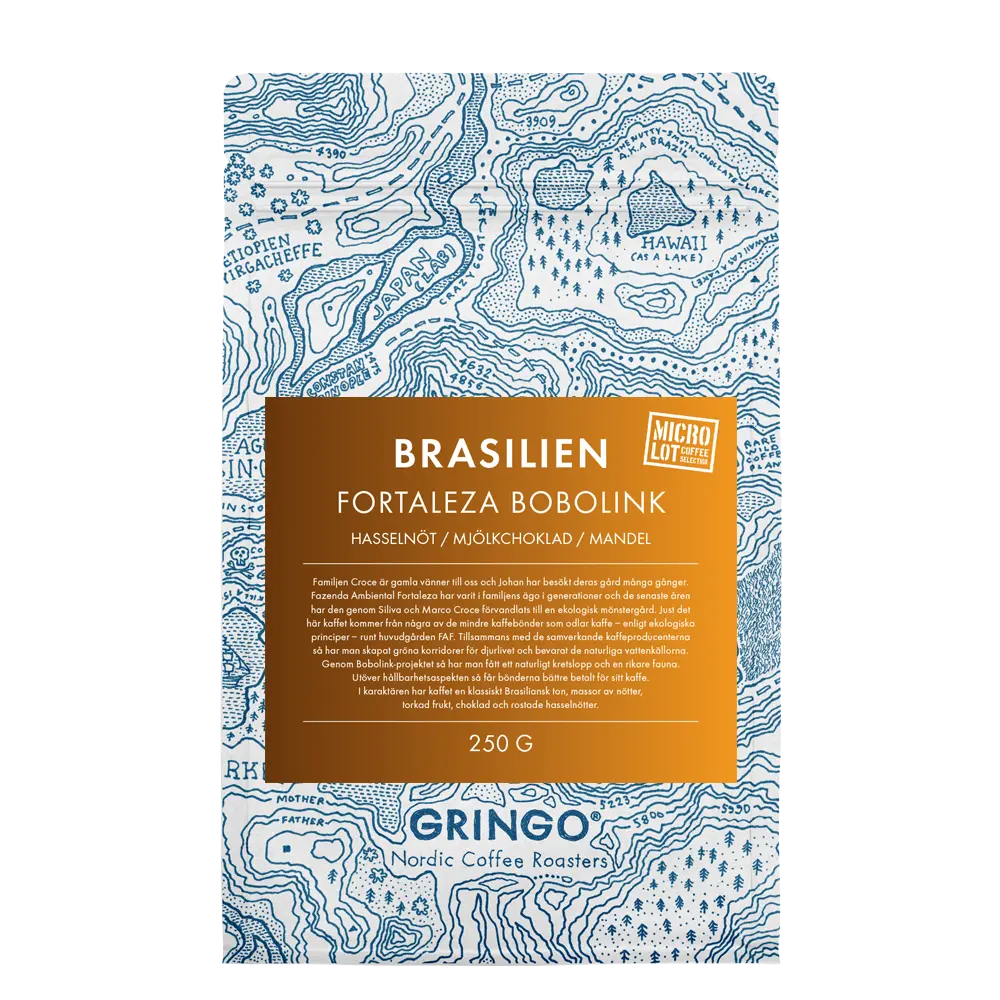
A natural Yellow Catucaí from the Bob-o-Link project of the Croce family's Fazenda Ambiental Fortaleza, an organic, regenerative model farm in Sul de Minas, which brings in coffee from neighbouring family farms in Serra do Caracol.
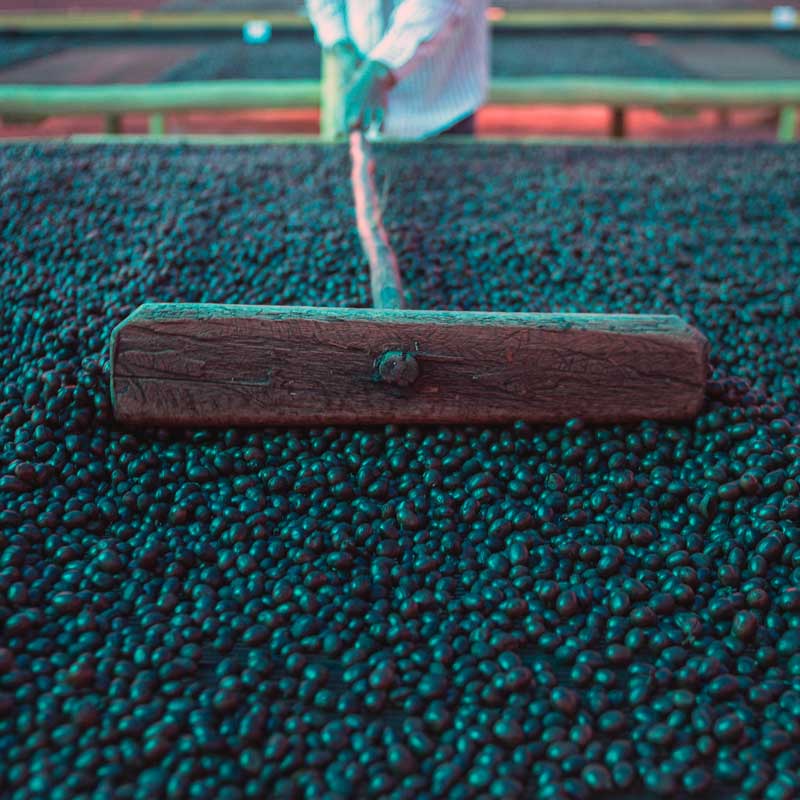
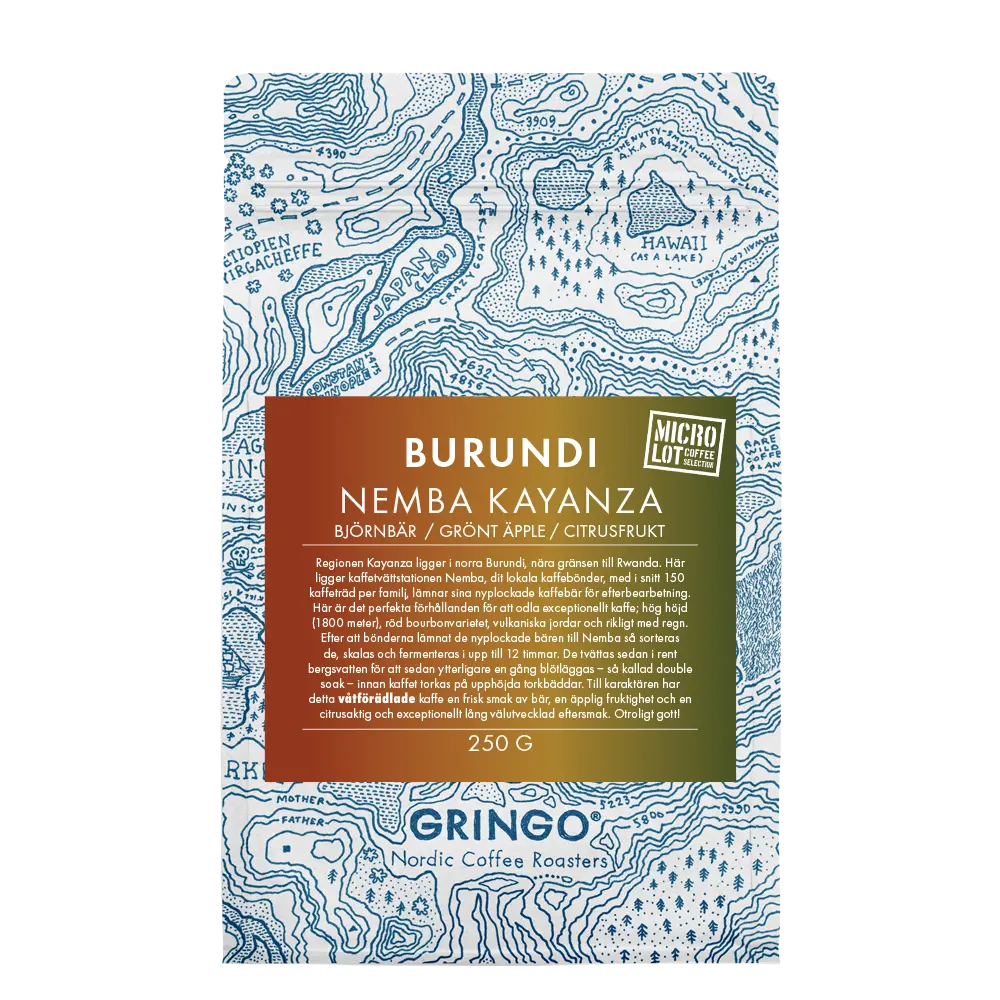
Red Bourbon from smallholders (around 150 trees per family) delivering to the Nemba station in Kayanza, northern Burundi. Fermented up to 12 hours, washed, double-soaked and dried on raised beds for a fresh, clean cup.
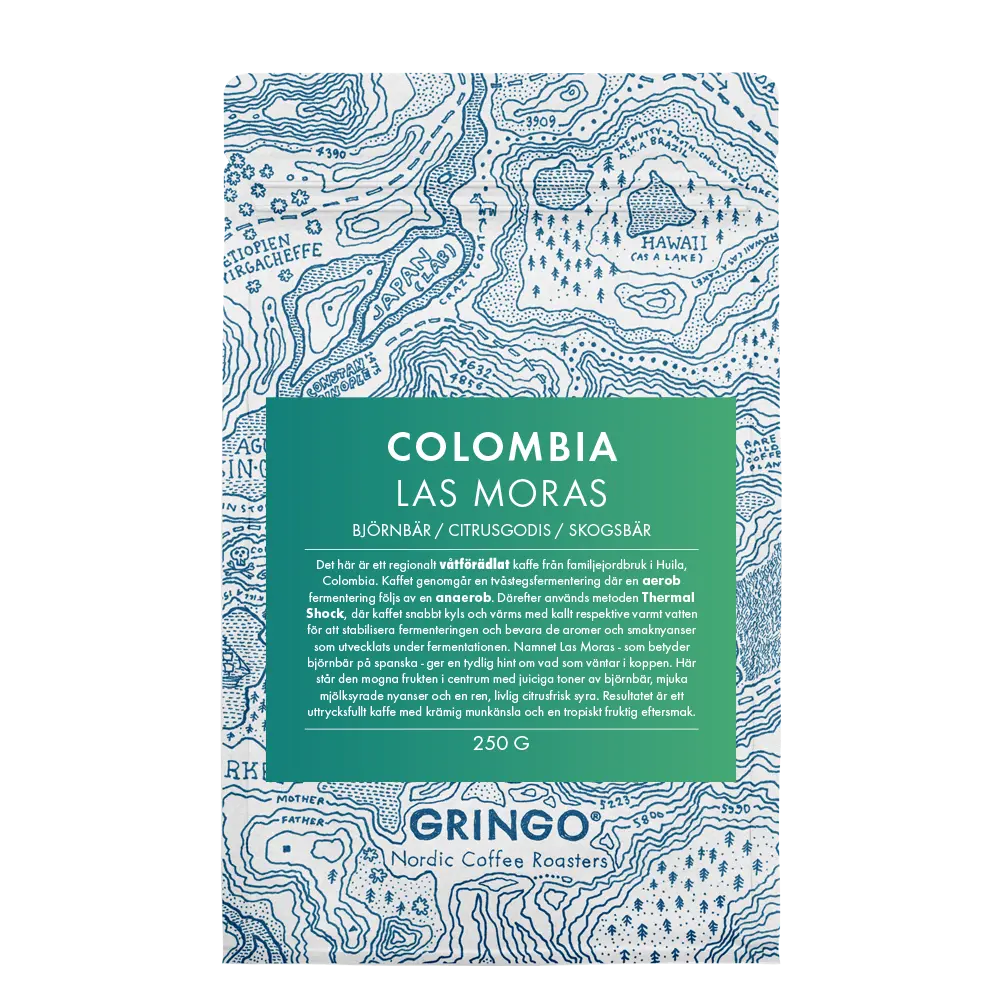
A regional Huila lot from family farms whose two-stage aerobic-then-anaerobic fermentation and thermal shock were developed by Jhoan Vergara (Finca Las Flores) and Néstor Lasso (El Diviso). "Las Moras" means blackberries, a hint of the ripe berry fruit in the cup.
Blackberry
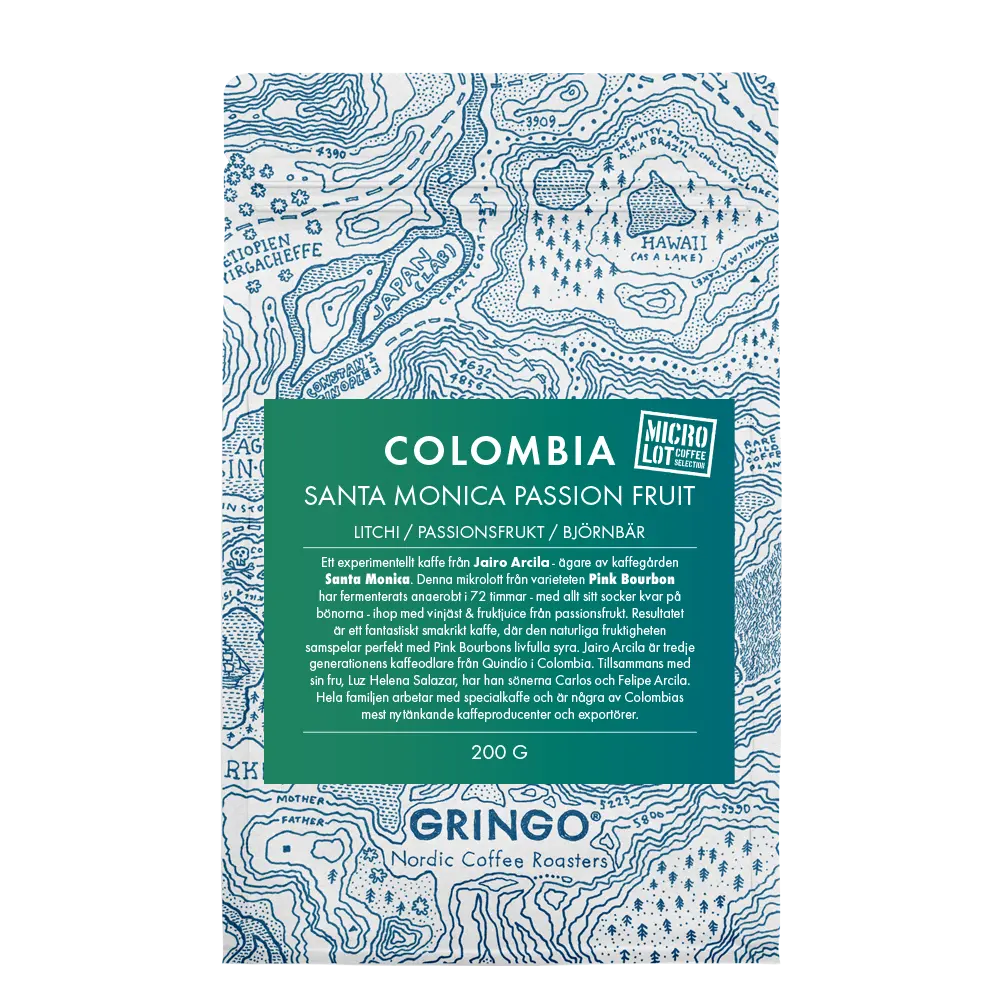
An experimental Pink Bourbon from third-generation Quindío grower Jairo Arcila's Santa Mónica farm, fermented anaerobically for 72 hours with its mucilage on, wine yeast and passion fruit juice, then dried on raised beds. Intensely fruity with Pink Bourbon's lively acidity.
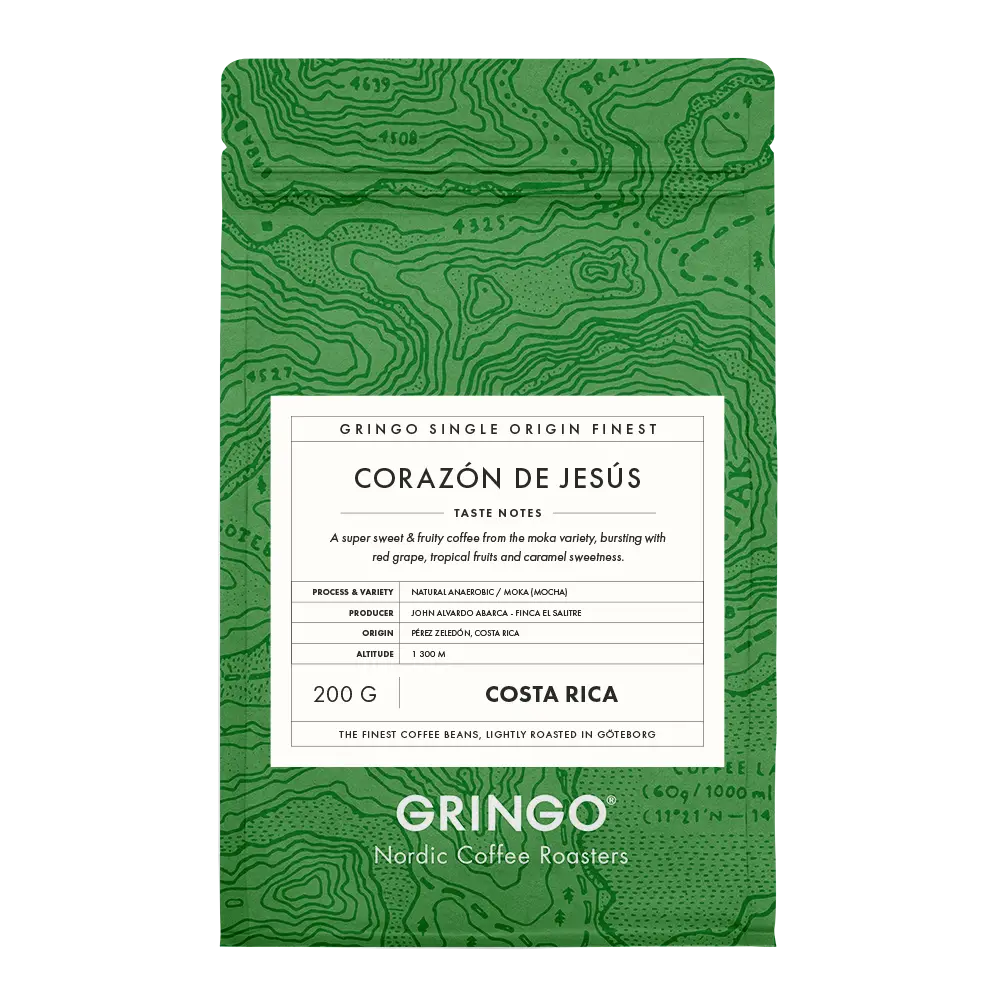
An anaerobic natural Mocha from Johnny Alvarado Abarca's El Salitre farm, processed at the family's Corazón de Jesús micromill in Pérez Zeledón. The mill placed third in Costa Rica's Cup of Excellence in 2022, second in 2024 and won both the washed and natural categories in 2025.
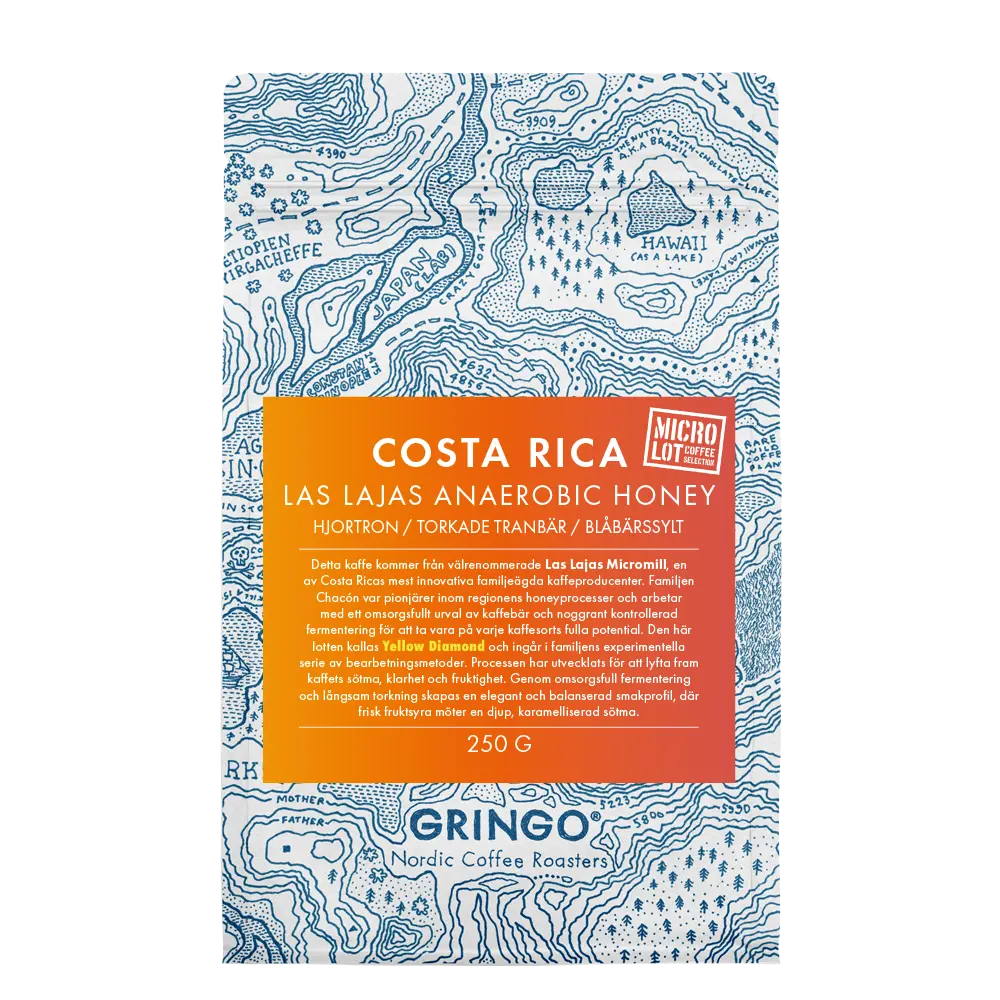
Las Lajas' "Yellow Diamond", an anaerobic honey of Villa Sarchi and Geisha from the Chacón family, pioneers of Costa Rican honey processing at the foot of Poás Volcano. Oxygen-free fermentation and slow drying under UV shade give fresh fruit acidity and deep caramelised sweetness.
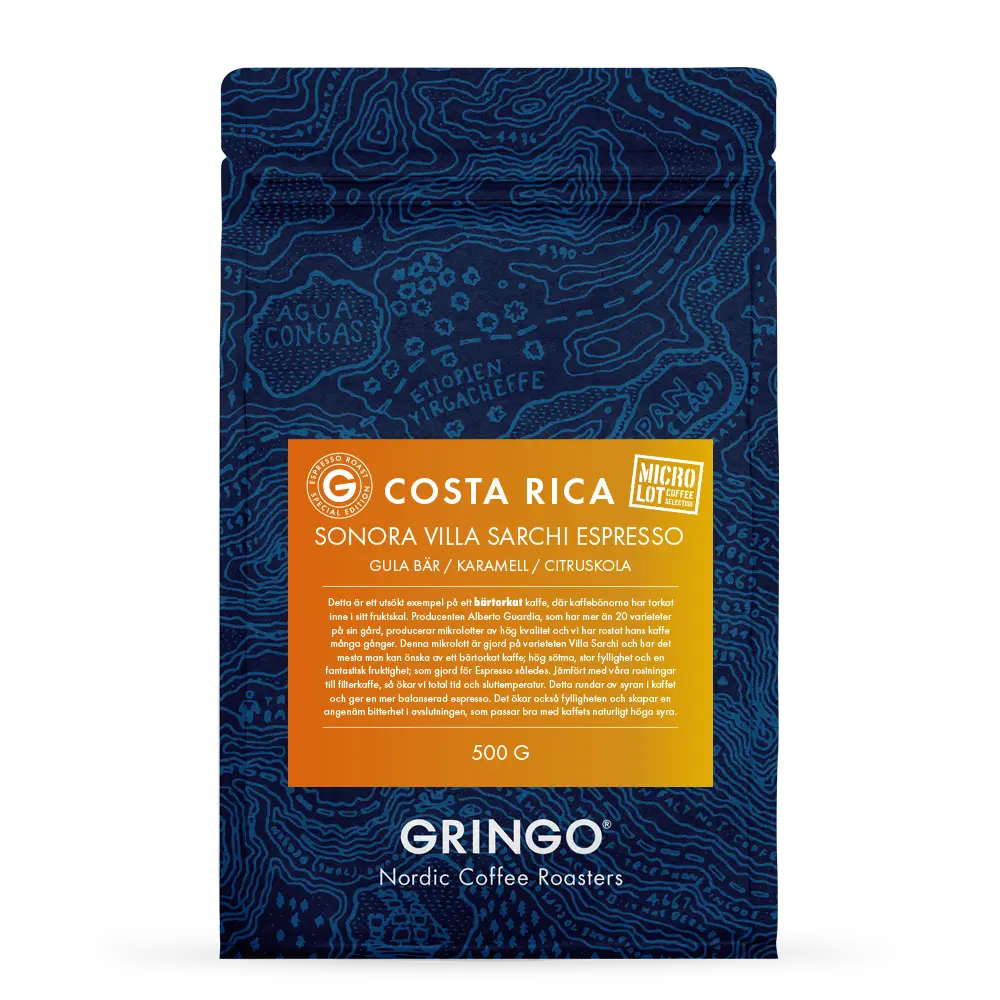
A natural Villa Sarchi microlot from Hacienda Sonora in Costa Rica's Central Valley, dried in the cherry on special drying cloths. Roasted longer and hotter than Gringo's filter roasts for a sweet, full-bodied, fruity espresso with a pleasant bitter finish.
A soft, balanced brew coffee built on two Brazilian naturals (Fazenda IP Acaia, Irmãs Pereira Yellow Bourbon) with washed Rwanda Nyamurinda and Colombia La Sierra. Roasted almonds, hazelnut and chocolate; made for fika.
Roasted almond, hazelnut, chocolate
Two Brazilian farms (Irmãs Pereira Yellow Bourbon natural, FAF Miltinho Reserva) seasoned with natural El Salvador San Andrés Pacamara: a chocolate-rich, gently fruity espresso.
Chocolate, caramel, soft fruit
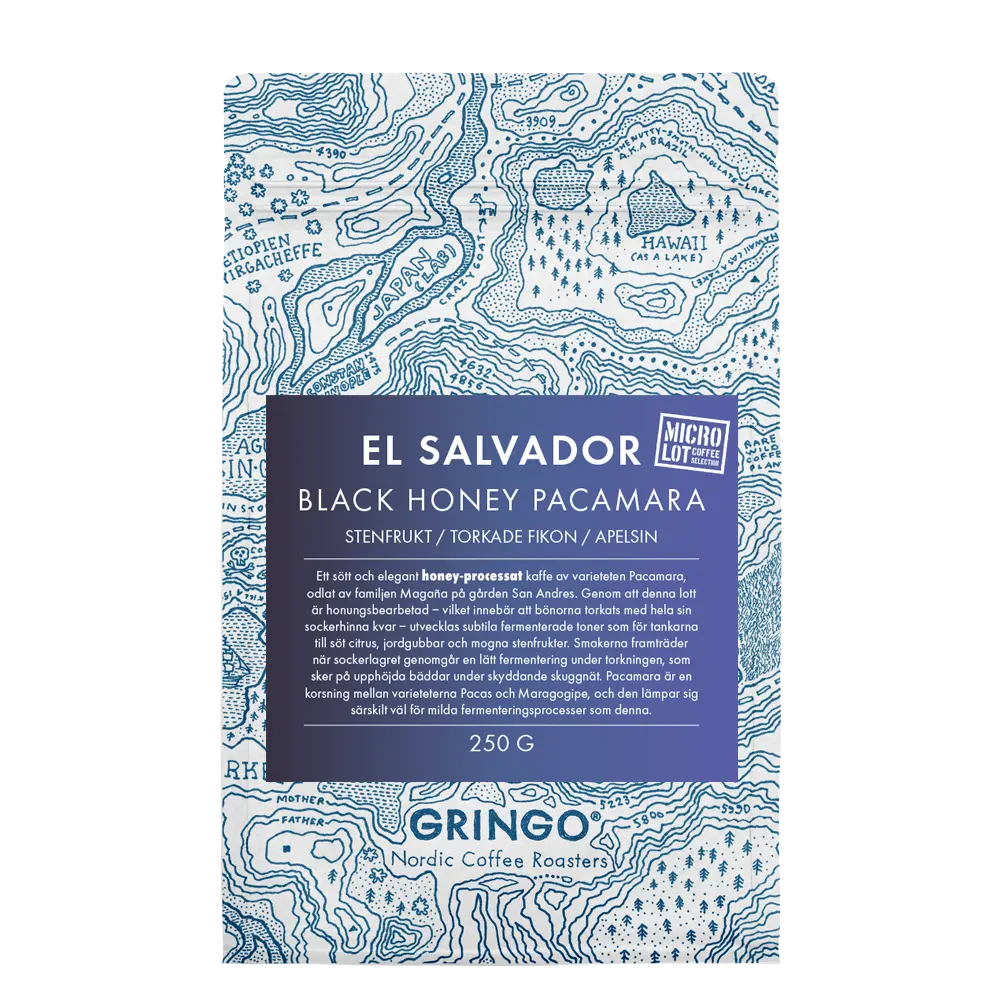
A honey-processed Pacamara from the Magaña family's San Andrés farm in Apaneca, dried on raised beds under shade nets. Gentle fermentation of the mucilage brings sweet citrus, strawberry and ripe stone fruit.
Sweet citrus, strawberry, stone fruit
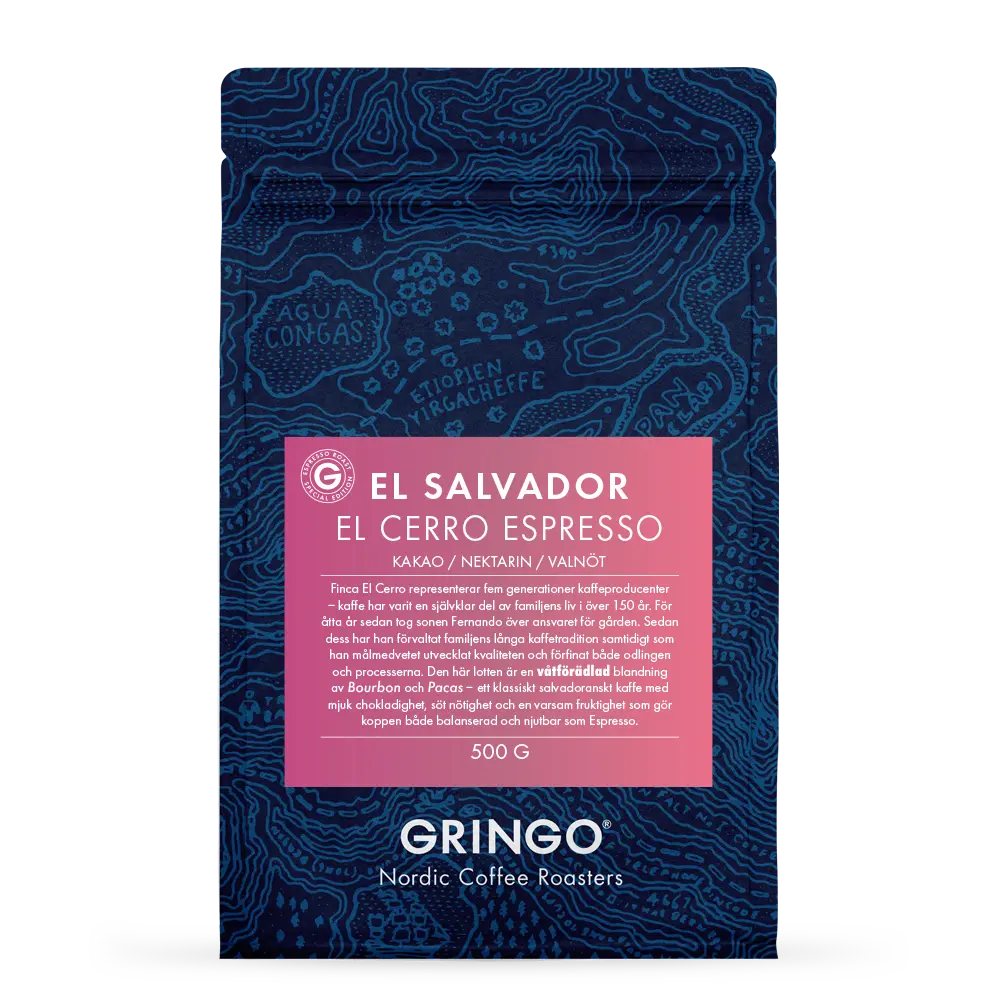
Washed Pacas and Bourbon from Fernando Escobar's Finca El Cerro, roasted for espresso: soft acidity balanced by sweet chocolate and caramel notes for a clean, balanced shot.
Chocolate, caramel, stone fruit
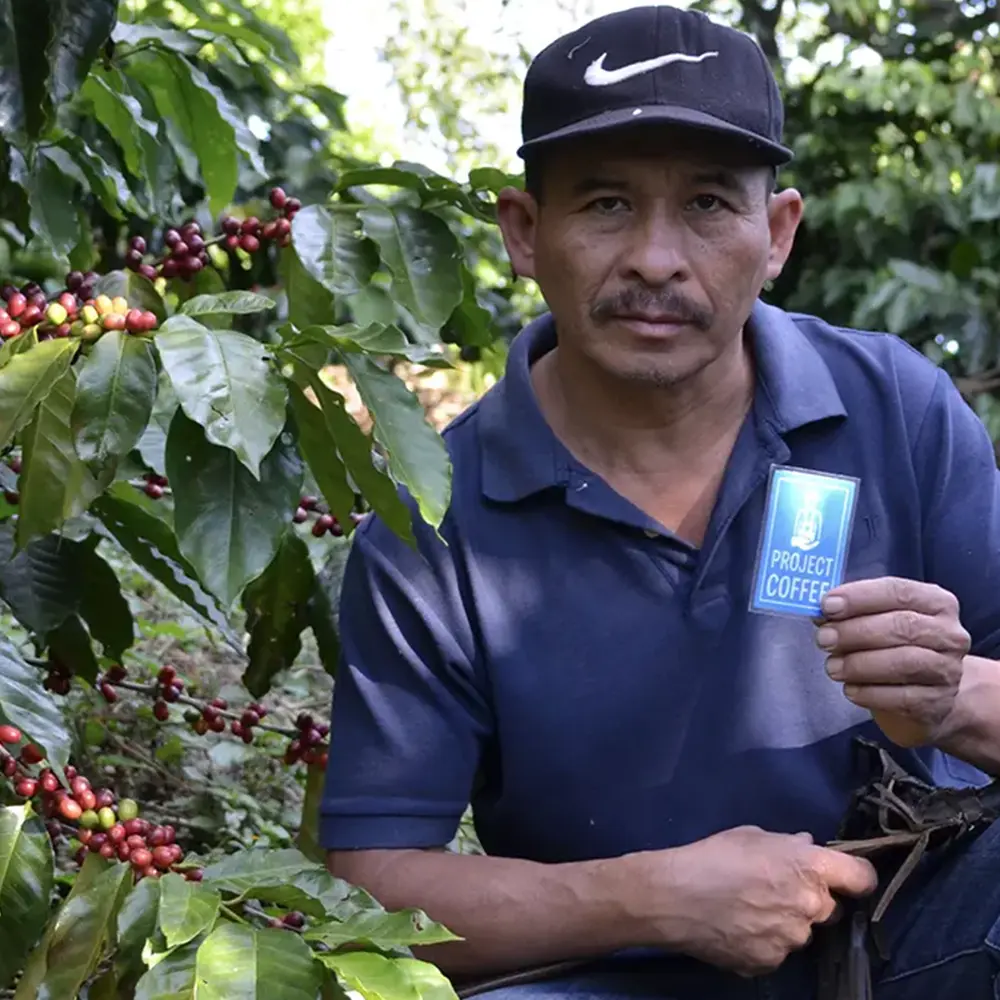
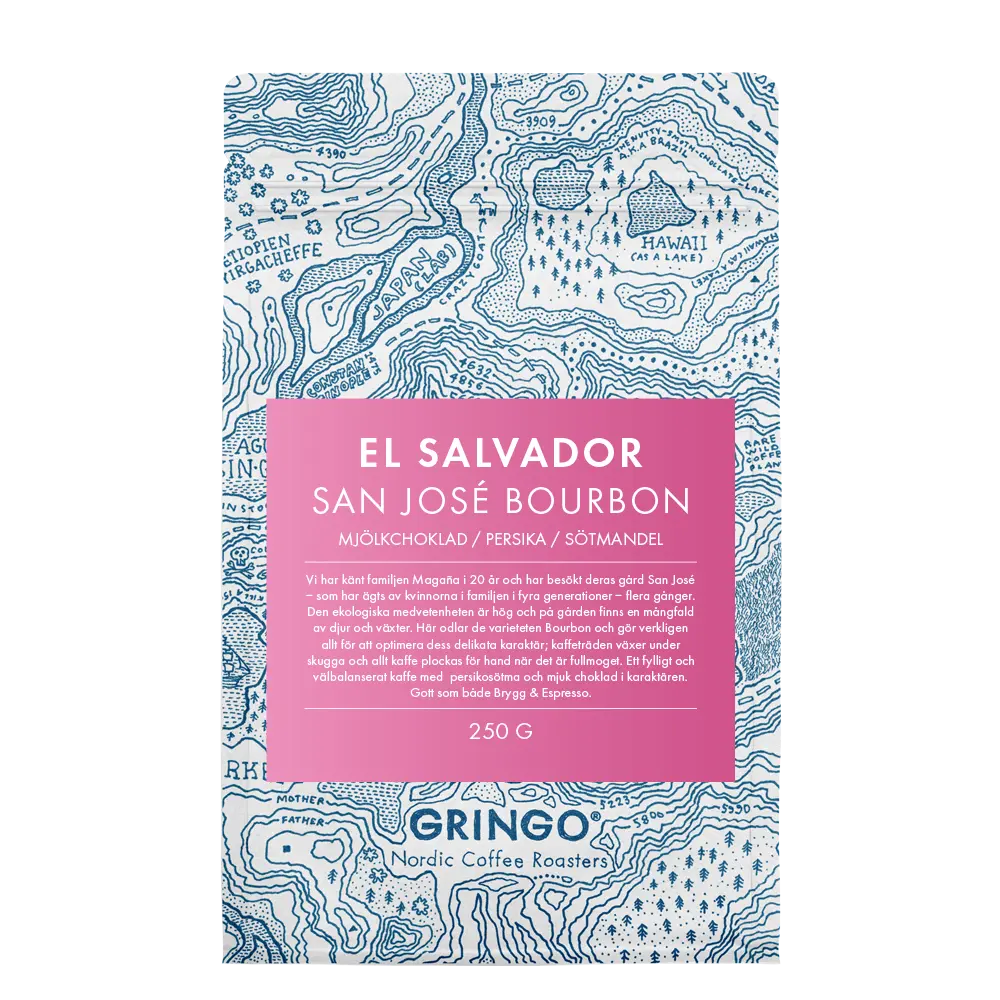
Washed Bourbon from Finca San José in Apaneca, run by four generations of women in the Magaña family; Gringo buys the whole harvest. Shade-grown and hand-picked, creamy and full with peach sweetness and sweet chocolate.
Peach, sweet chocolate
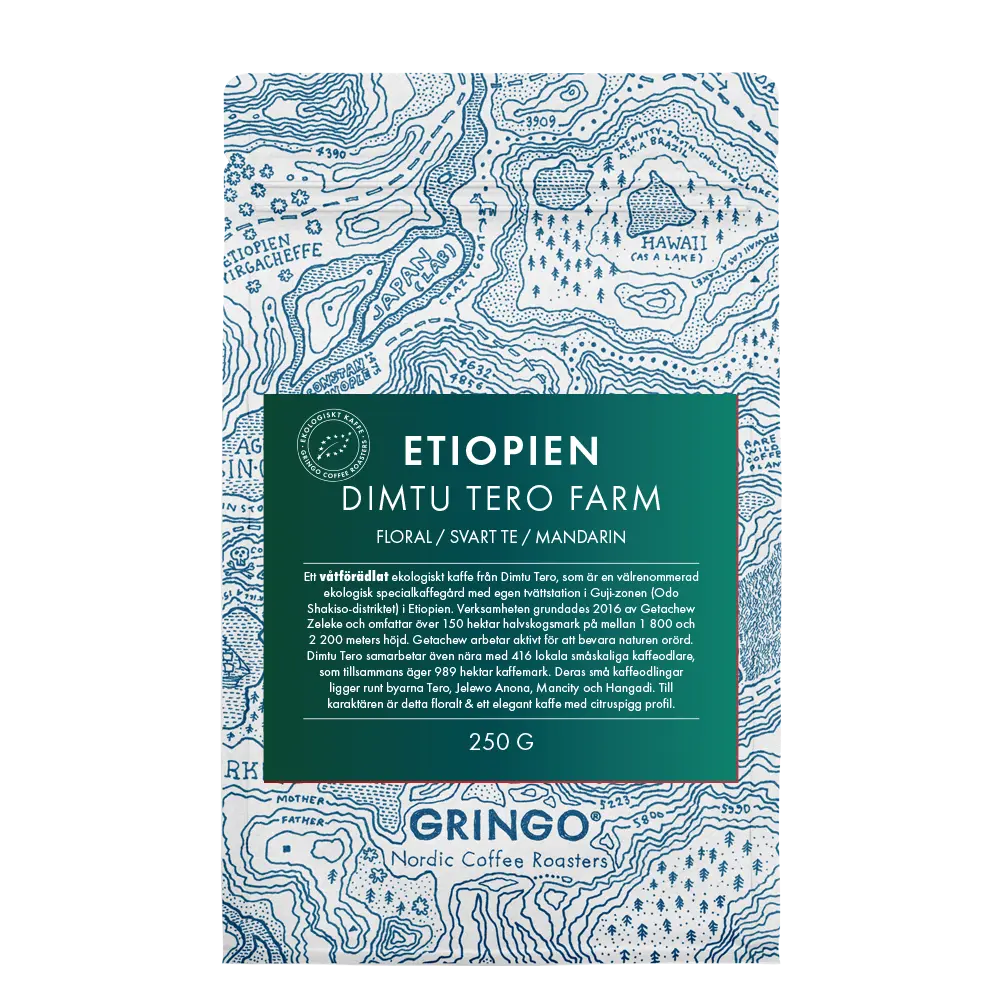
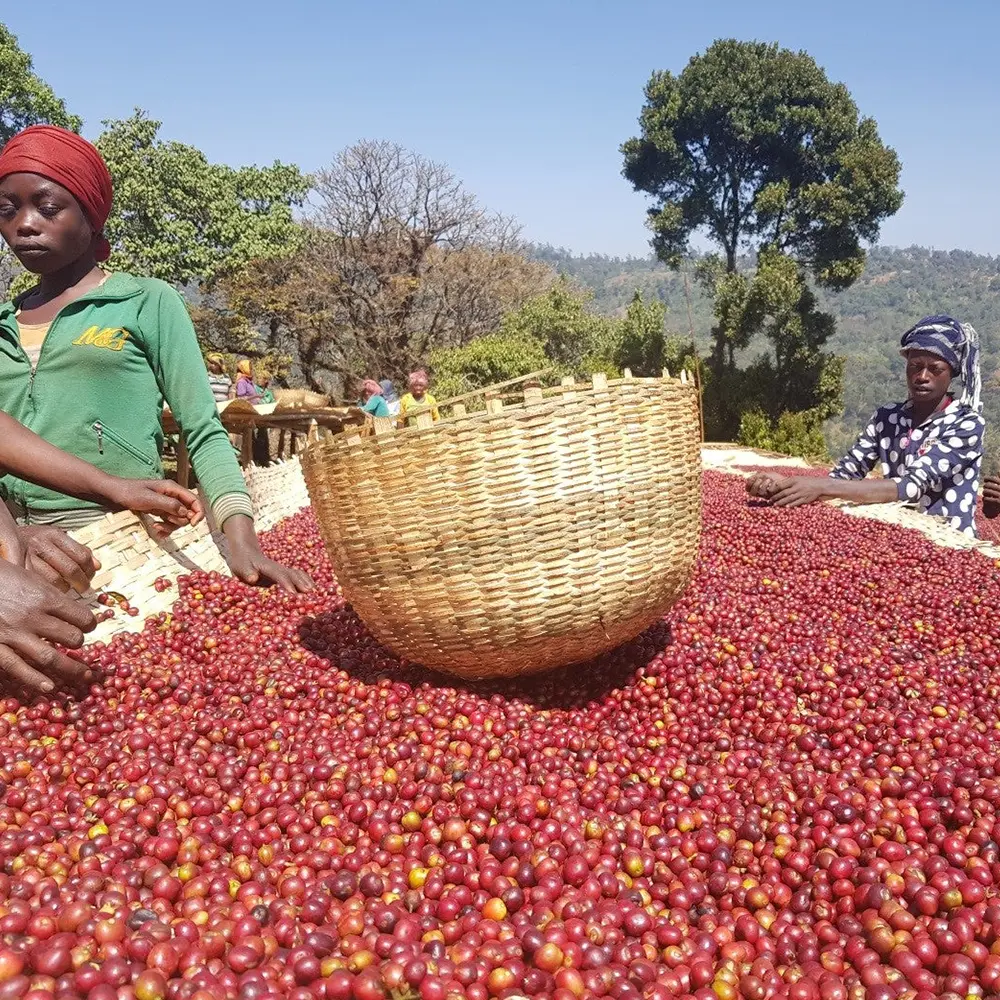
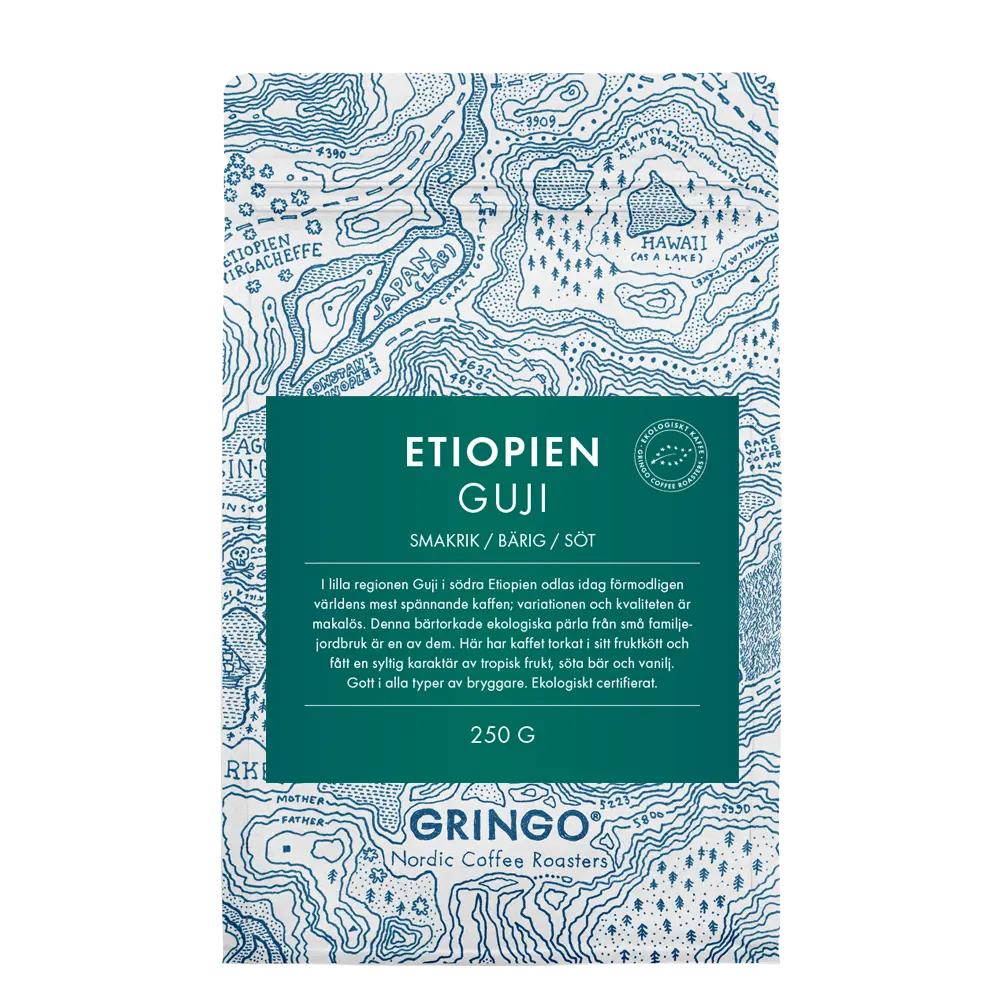
A washed organic coffee from Dimtu Tero, founded by Getachew Zeleke in 2016: 150 hectares of semi-forest in Odo Shakiso, Guji with its own washing station, working with 416 local smallholders. Tea-like and floral with fine citrus acidity.
Floral, tea-like, citrus
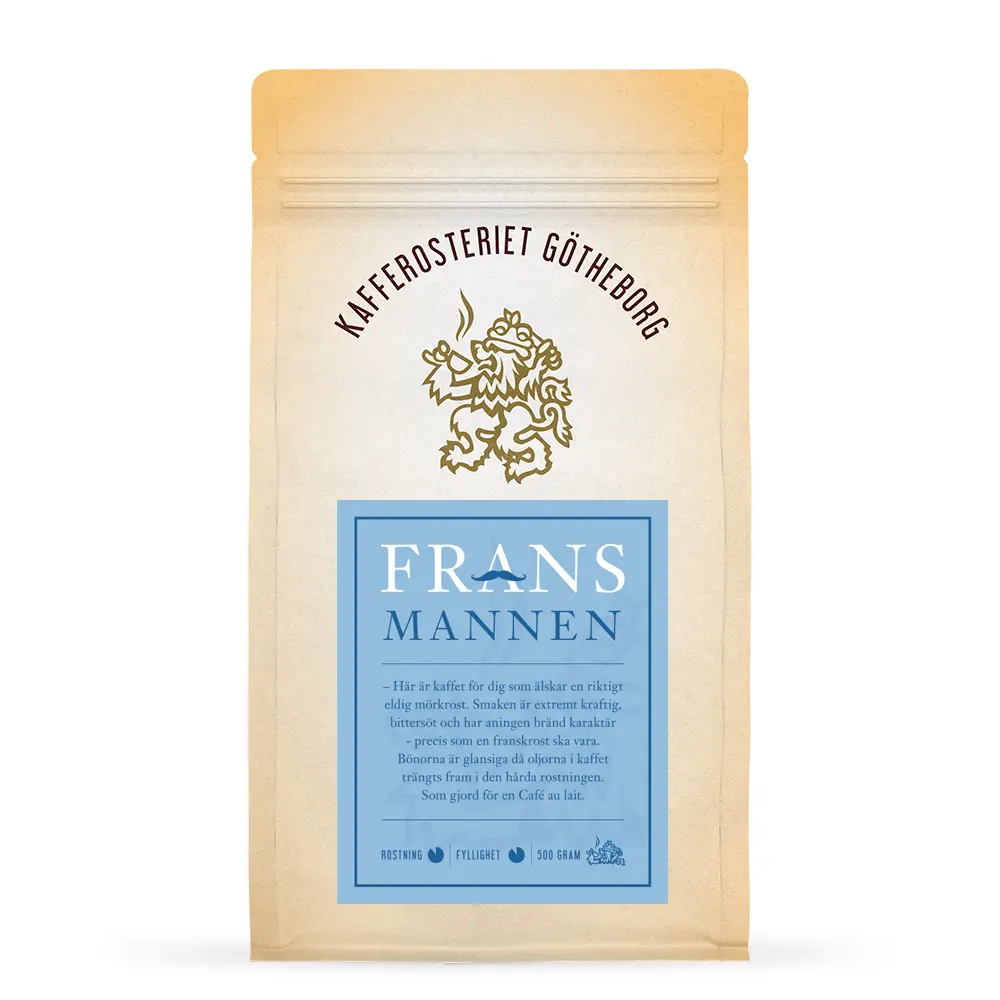
A fiery French roast from the Kafferosteriet Göteborg line (Brazil Fazenda IP, Colombia Finca La Sierra, Indian Kappi Royal robusta), roasted until the oils come through. Very strong, bittersweet and slightly burnt; made for café au lait.
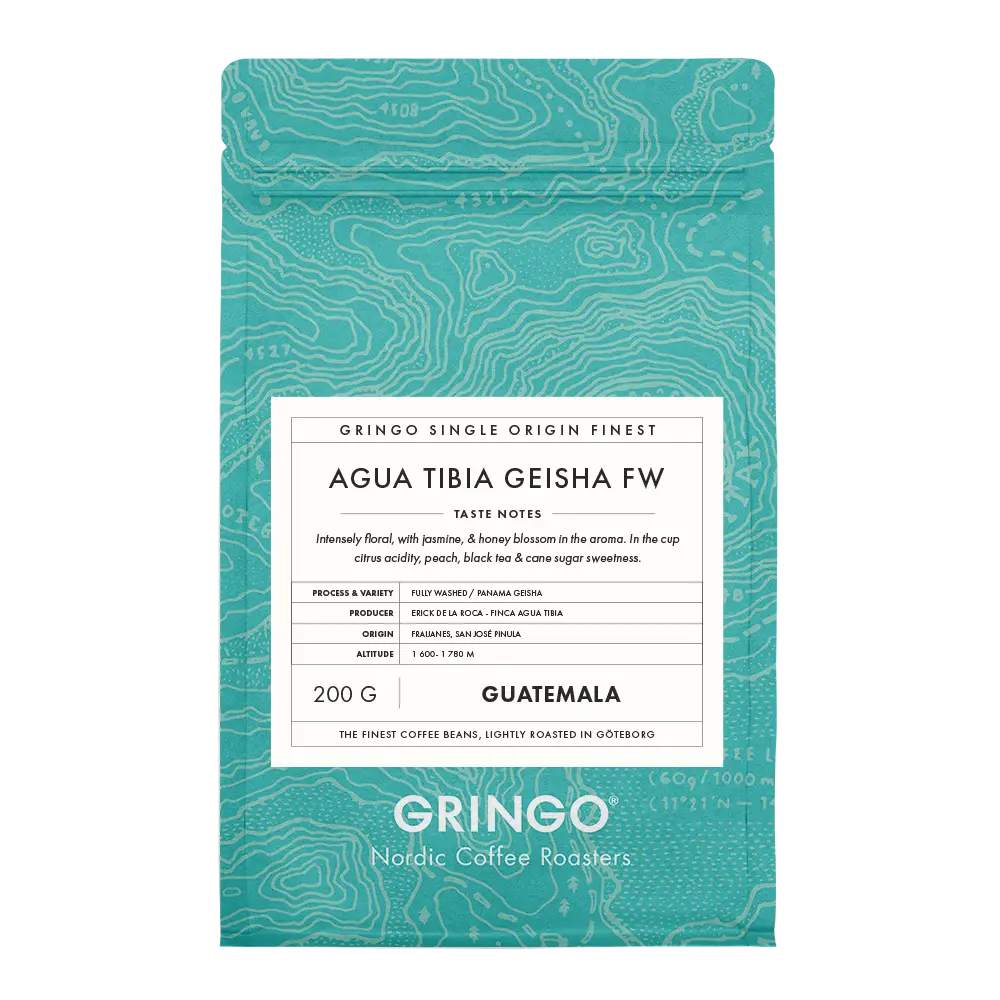
A 96 kg washed Geisha microlot from Finca Agua Tibia on the Fraijanes plateau just outside Guatemala City, owned by the Castillo family since 1886. The farm ran mostly as a cattle ranch until 2005; coffee was first planted there in the 1950s. Dried on raised beds.
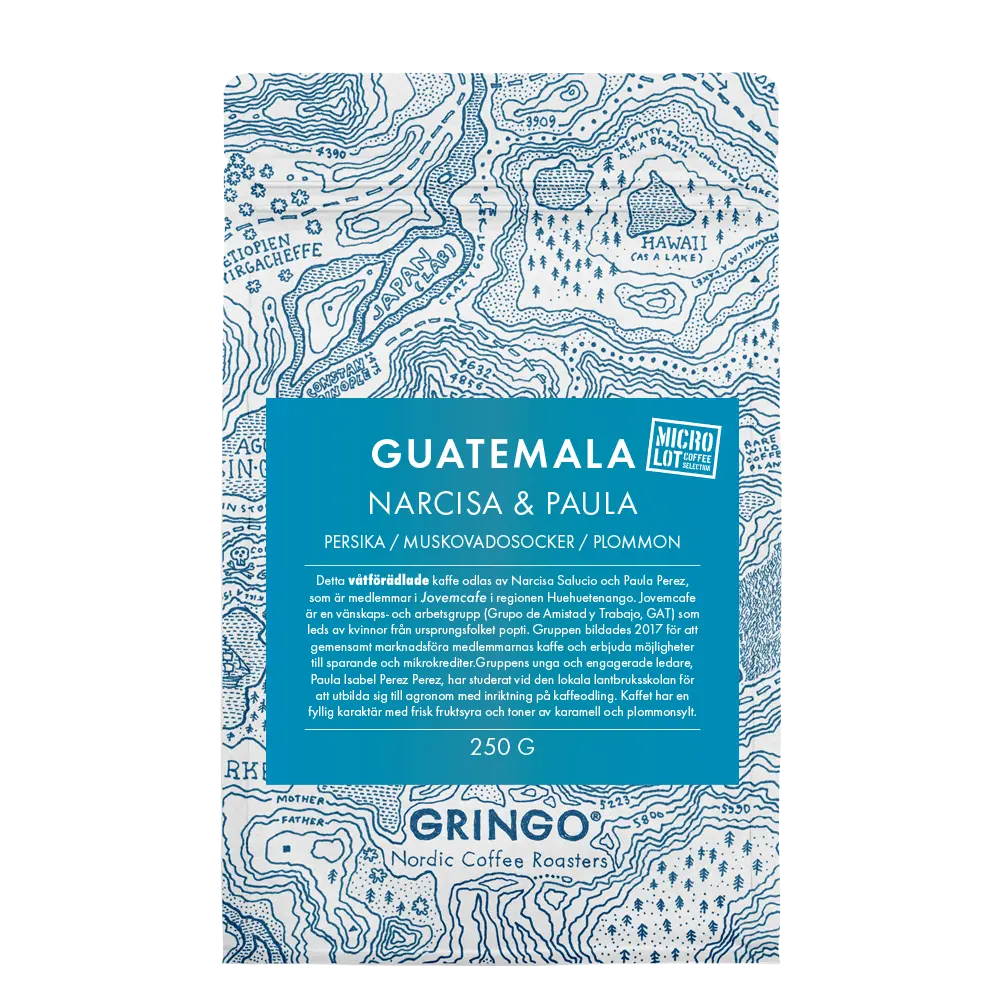
A slow-washed lot from Narcisa Salucio and Paula Pérez of Jovemcafe, a group of Indigenous Popti' women formed in 2017 in Huehuetenango to market their coffee and offer savings and microcredit. Full-bodied with fresh fruit acidity, caramel and plum jam.
Caramel, plum jam
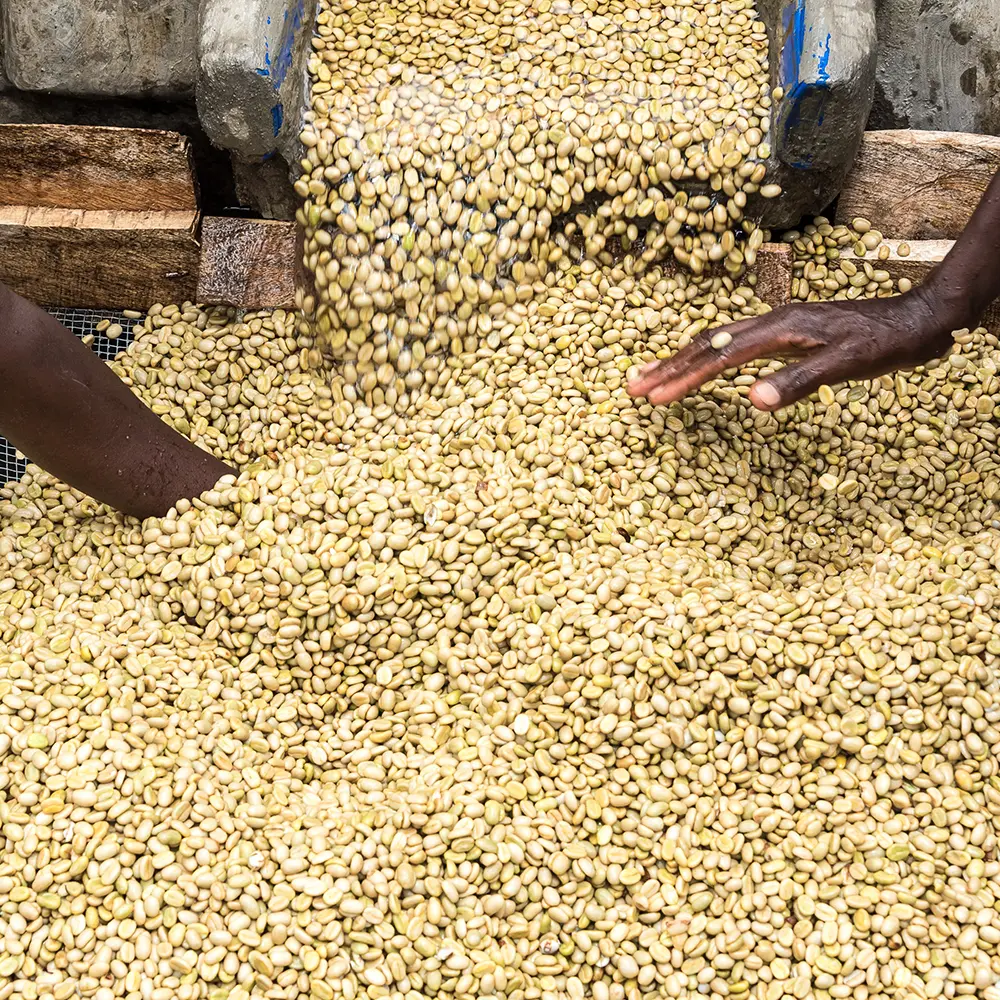
Grapefruit, raspberry, red currant, orange, apricot, tangerine, caramel
Indian Monsooned Malabar from the Kafferosteriet Göteborg line: beans exposed to the humid monsoon winds, as on the first coffee shipped from India in the late 1600s. Dark, soft, mild and without acidity.
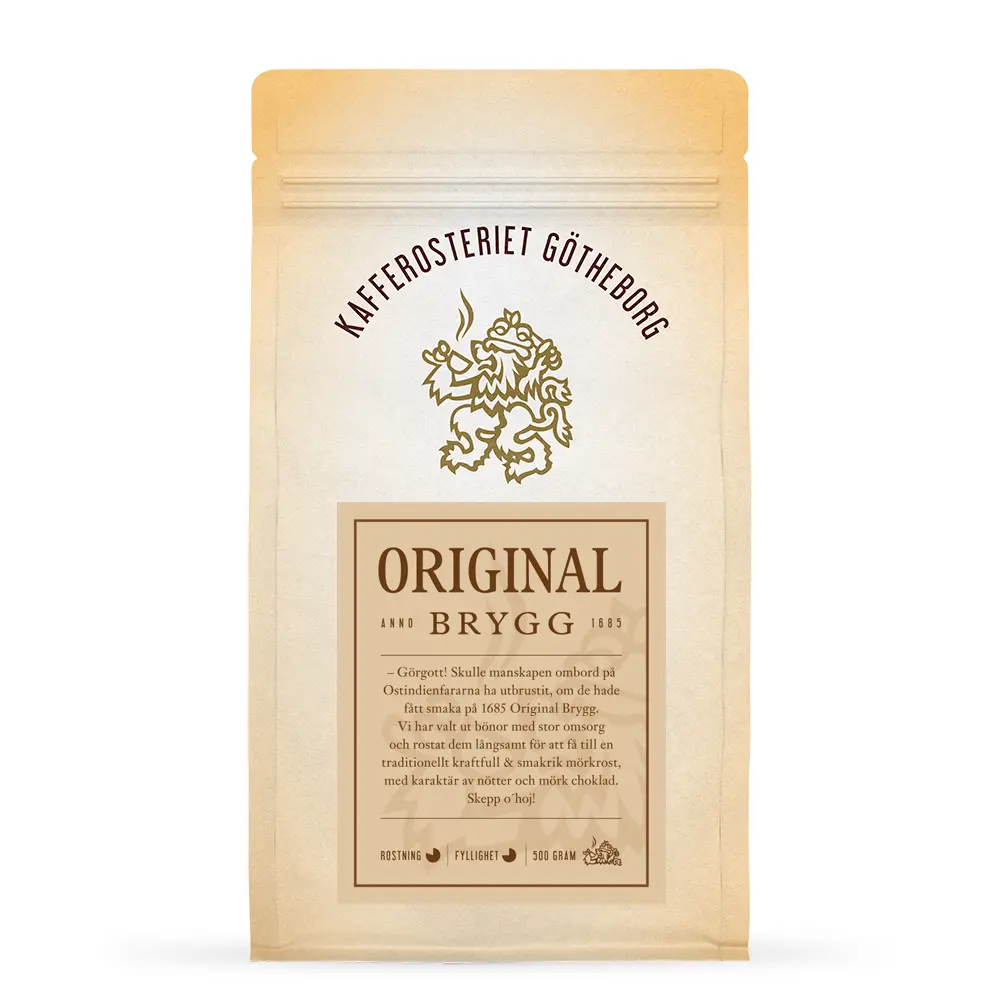
A traditionally strong, slow-roasted dark brew coffee from Gringo's Kafferosteriet Göteborg line, currently Brazil Fazenda IP and Colombia Finca La Sierra. Nuts and dark chocolate.
Nuts, dark chocolate
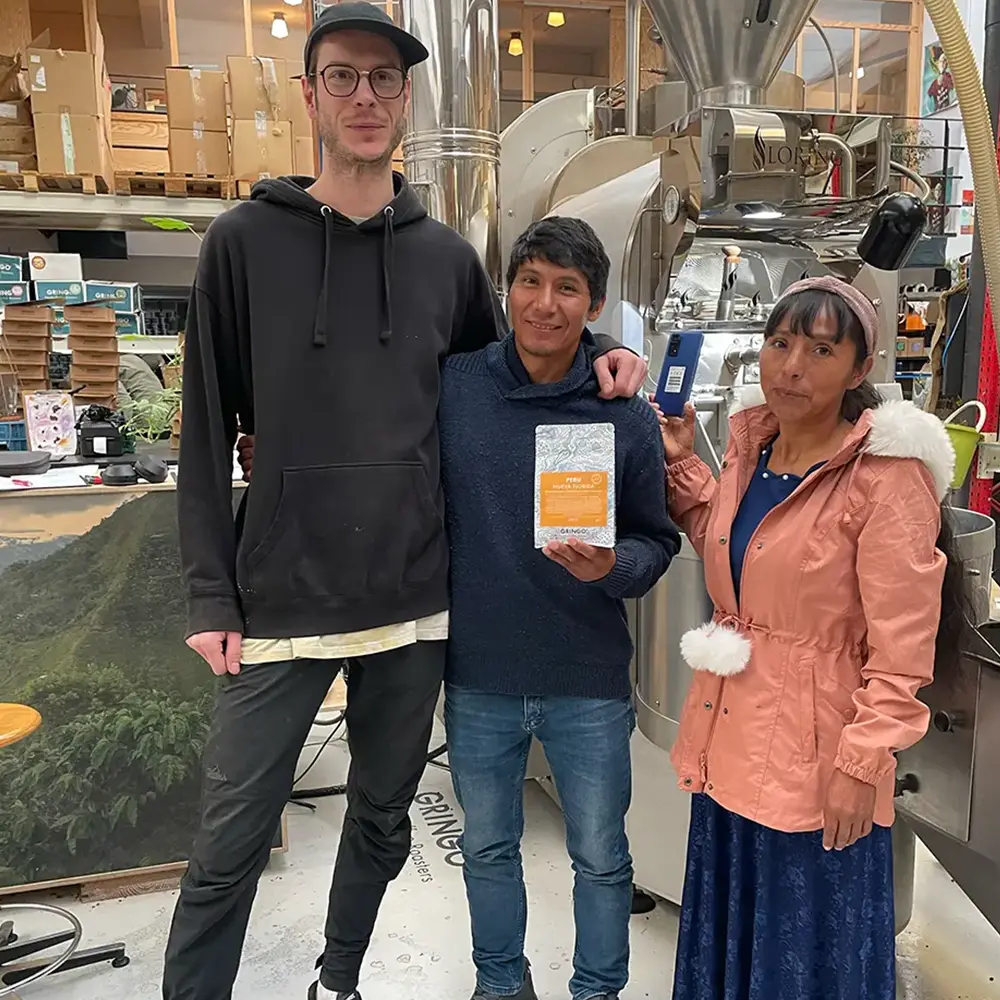
Tropically fruity, sweet berries, elegant and rich
Tropically fruity, sweet berries, medium-full creamy body, no bitterness
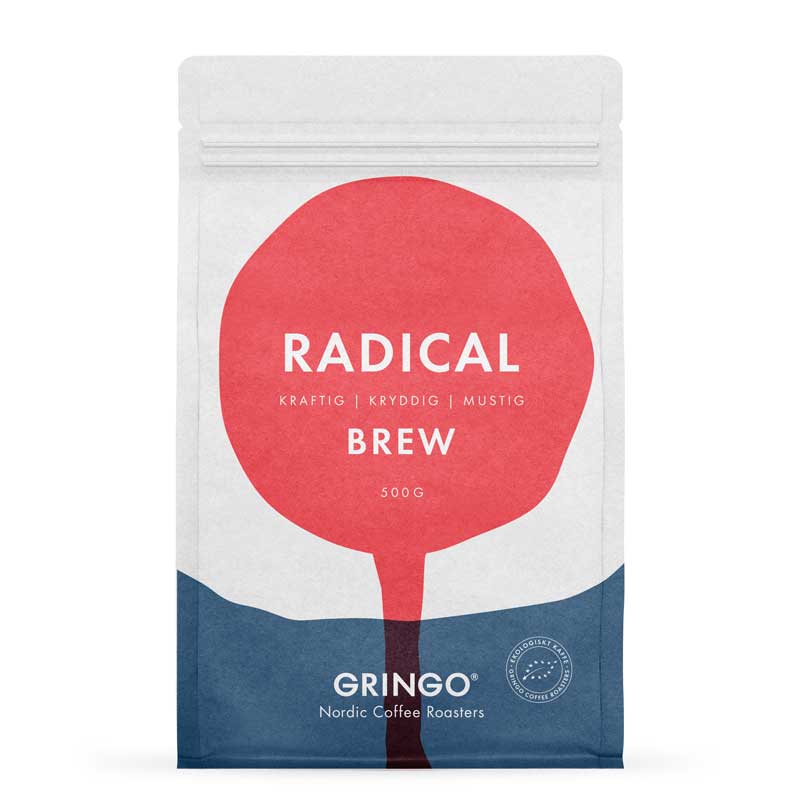
A powerful, balanced dark-roast brew coffee: organic Brazil Fazenda Dutra and Sumatra Gayo Ketiara with Ethiopian Guji Hambela natural and Suke Quto washed for fruit. Certified organic.
Bittersweet, fruity
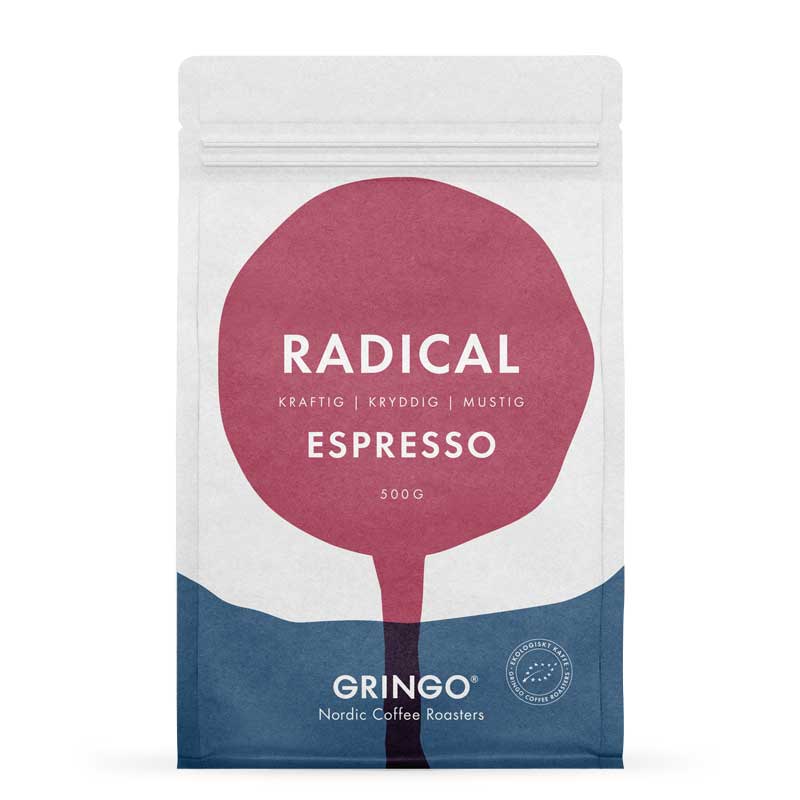
Bitter-sweet, mildly spiced, fruity, full body
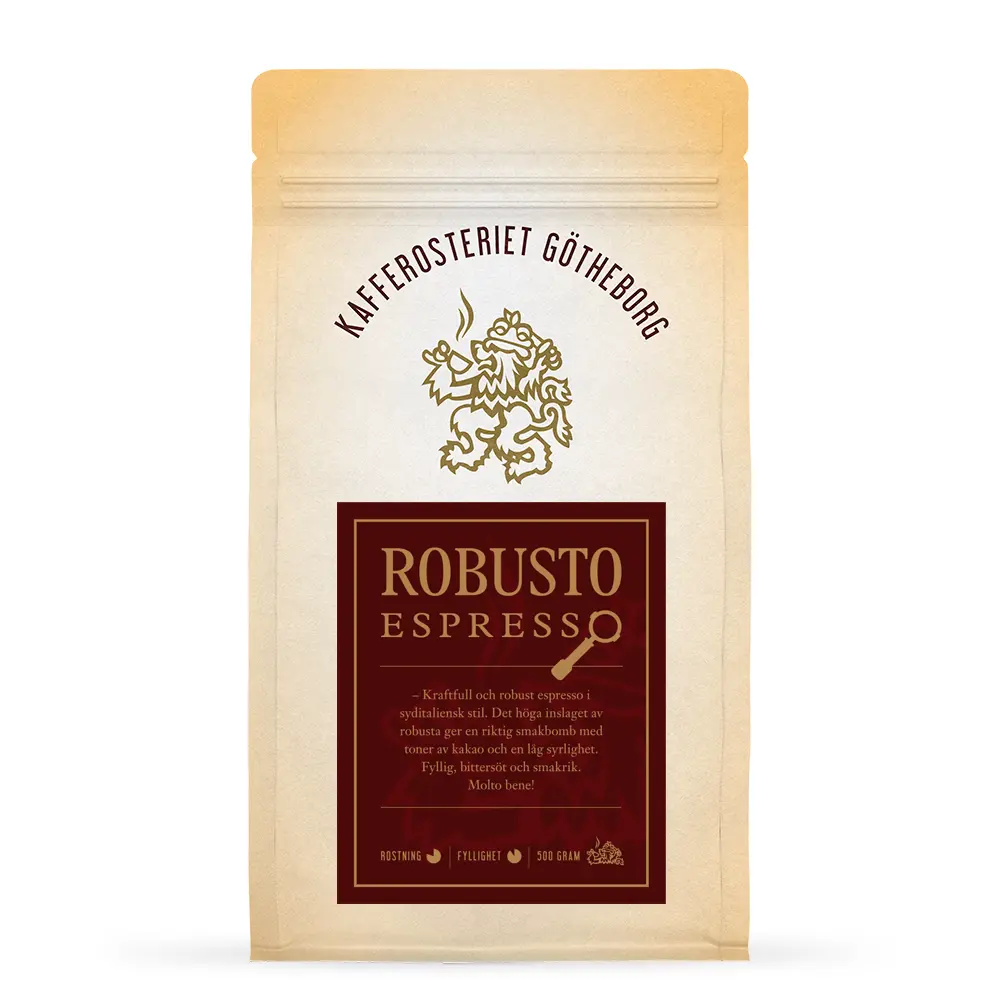
A southern-Italian-style espresso from the Kafferosteriet Göteborg line, with a high share of Indian Kappi Royal robusta alongside Brazil Fazenda IP, Ethiopia Hambela Guji natural and Colombia Finca La Sierra. Full, bittersweet and cocoa-heavy with low acidity.
Cocoa, bittersweet
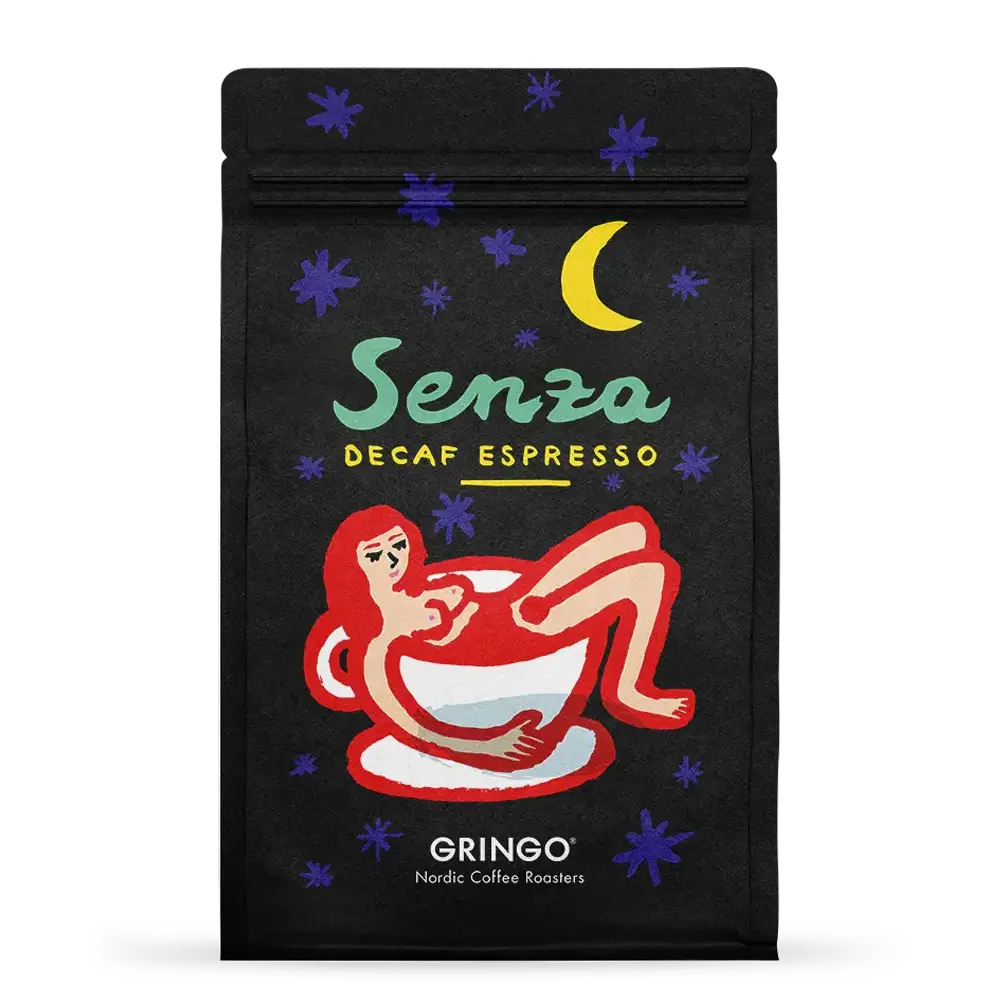
Chocolate, caramel, almond, soft fruit
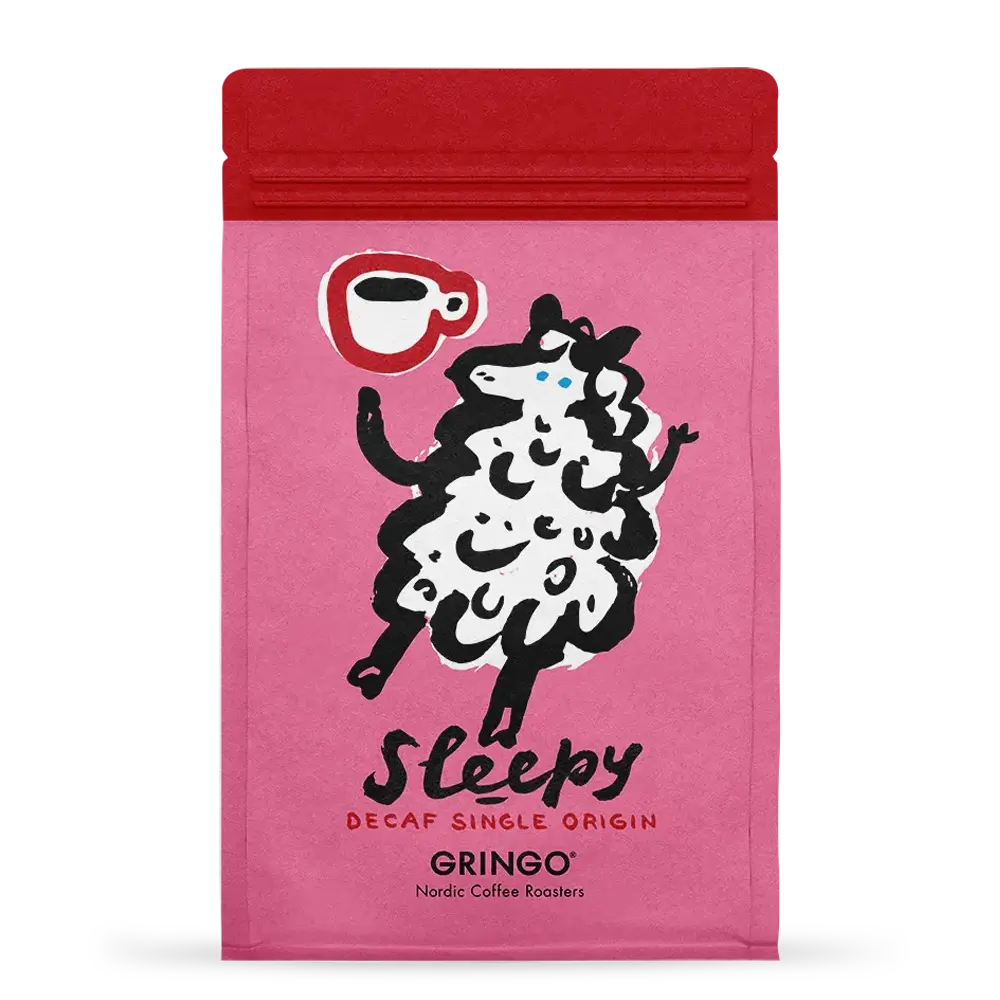
A specialty-grade (84-85 point) decaf from small family farms in Nariño, Colombia, decaffeinated with ethyl acetate derived from fermented sugarcane.
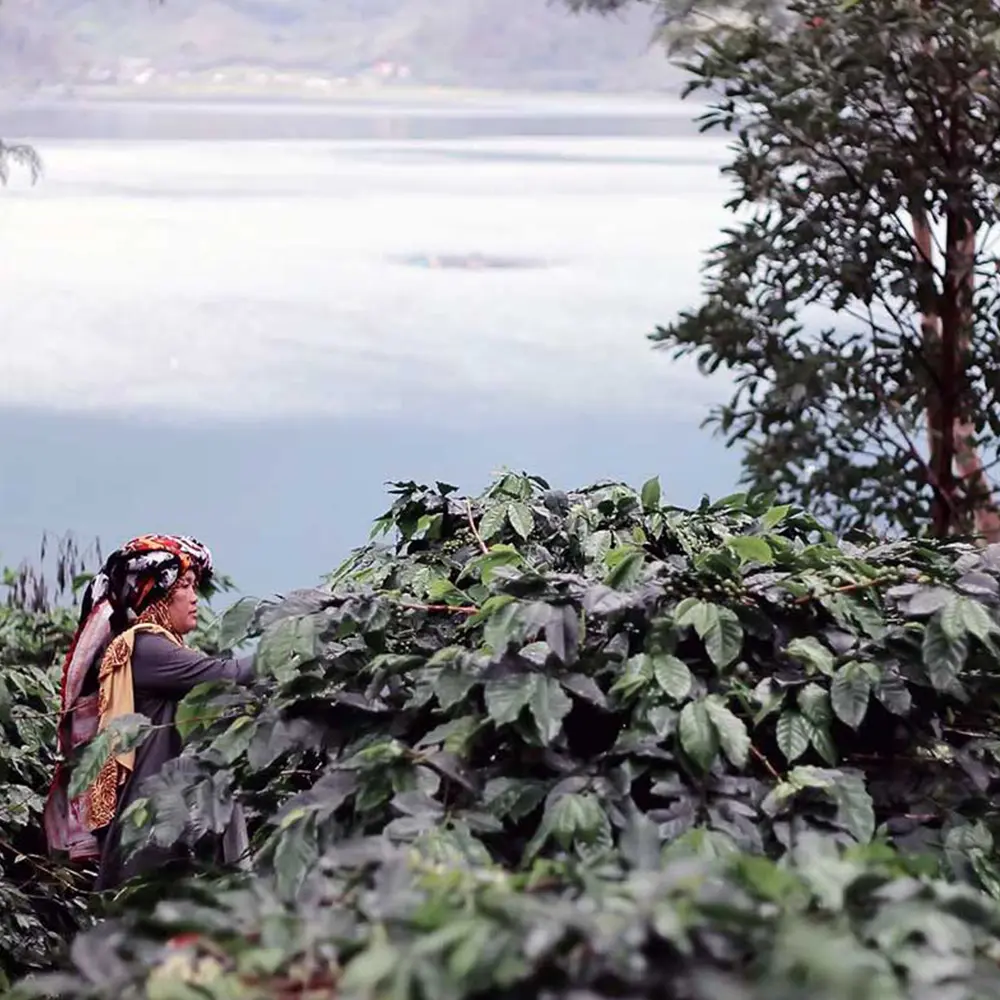
Dark chocolate, herbal spice, stone fruit
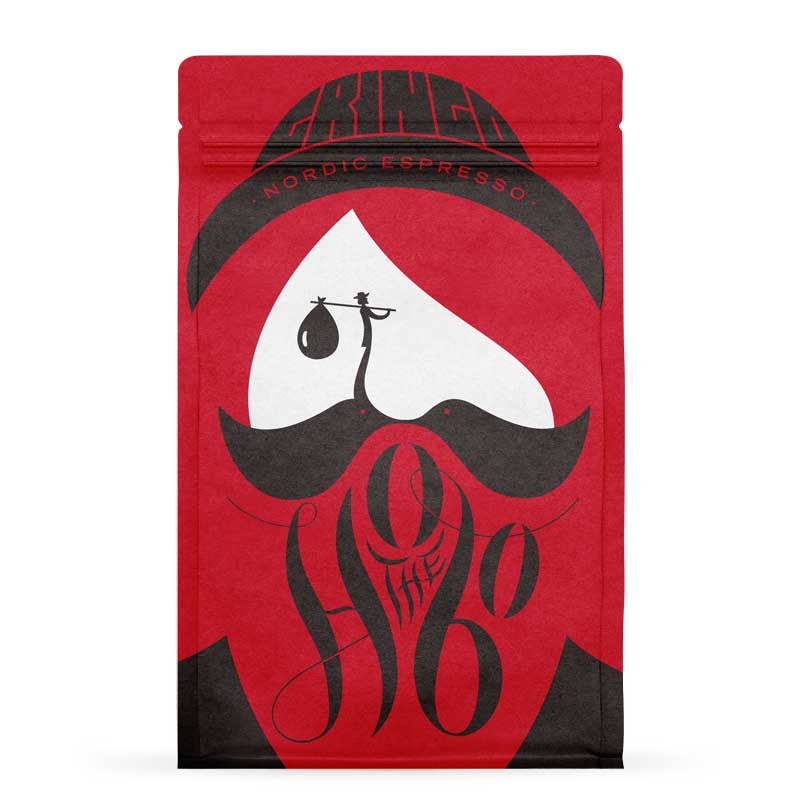
Gringo's most powerful espresso: Brazil Fazenda IP Acaia and Irmãs Pereira Yellow Bourbon naturals, Indian Monsooned Malabar and Indonesia Kerinci natural, roasted long and a little darker. Earthy, bold bitterness, huge body, nuts and dark chocolate.
Nuts, dark chocolate
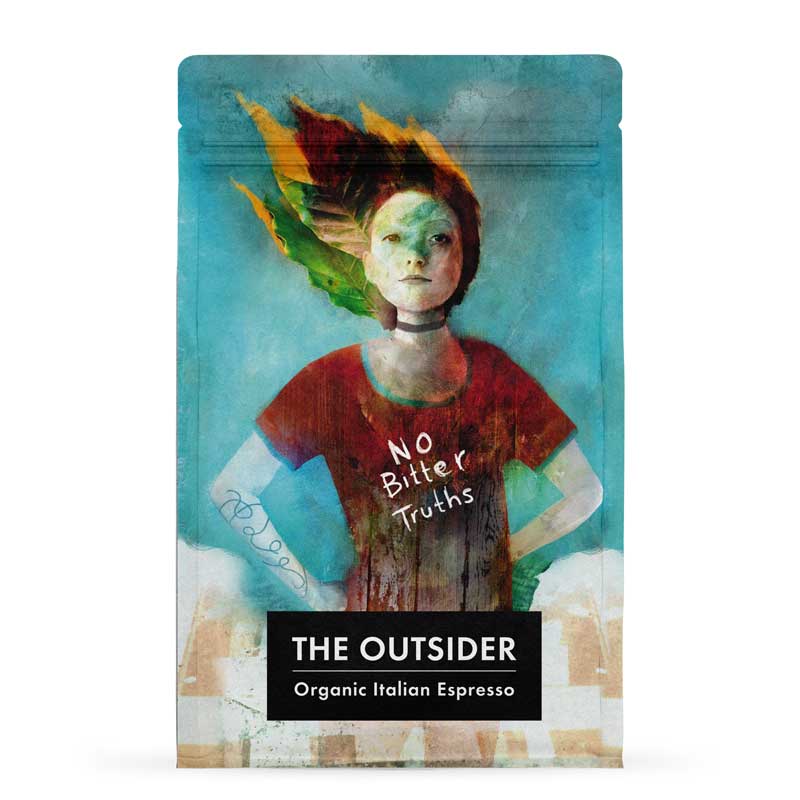
Gringo's take on an Italian caffè: organic Brazil Fazenda Ambiental Fortaleza, Sumatra Gayo Ketiara and Ethiopia Guji Hambela natural with a share of Indian robusta. Milk-friendly, creamy and bittersweet. Certified organic.
Bittersweet chocolate