
Roasteries / Clifton Coffee Roasters

Clifton Coffee Roasters
Bristol, England, UK
Clifton Coffee Roasters was founded in Bristol in 2001 by James Fisher, initially servicing espresso machines for the city's independent cafés before Ed Buston, Emma Russe and Miles Lenthall joined to grow it into a specialty coffee wholesaler. The team established an in-house production roastery in 2013, and today sources roughly 90% of its coffee directly from origin — including a decade-long direct-trade partnership (the "E1 Project") with the Lima family in El Salvador. Clifton became a certified B Corporation in 2023 and now supplies independent coffee shops, Michelin-starred restaurants and five-star hotels across the UK from its Avonmouth roastery, engineering workshop and SCA-accredited training academy.
19
coffees
UK
base
Location
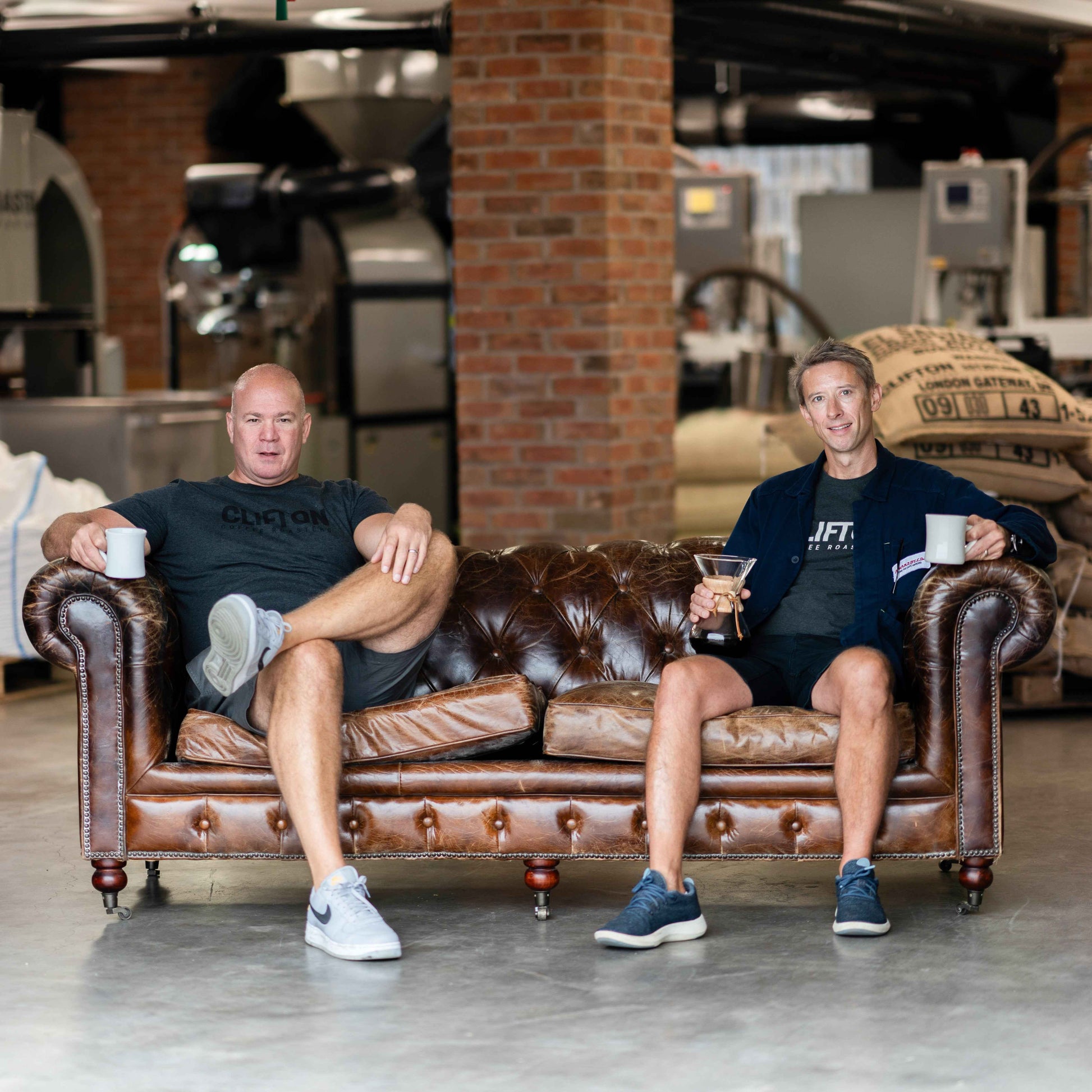
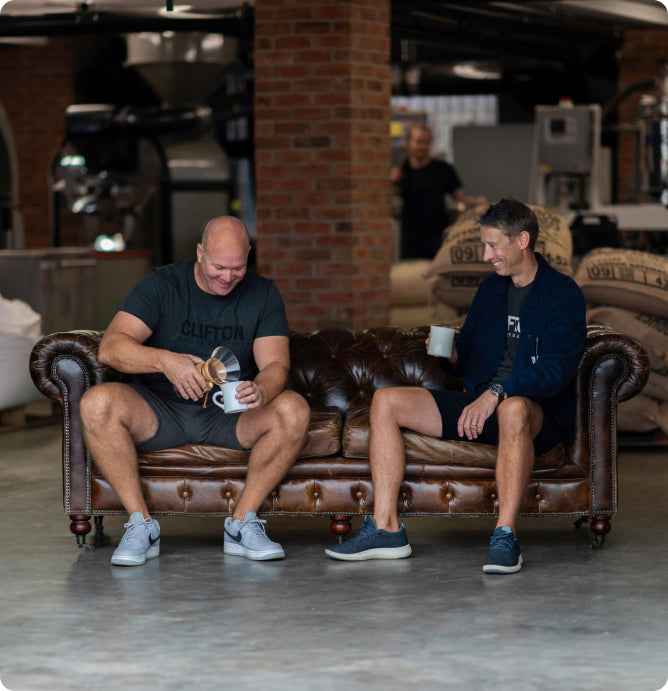
Clifton Coffee Roasters
C2 Island Trade Park, Bristow Broadway, Avonmouth, Bristol, BS11 9FB, UKMon-Fri: 08:00-17:00 · Sat-Sun: Closed
+44 117 982 0252Coffees
19 coffees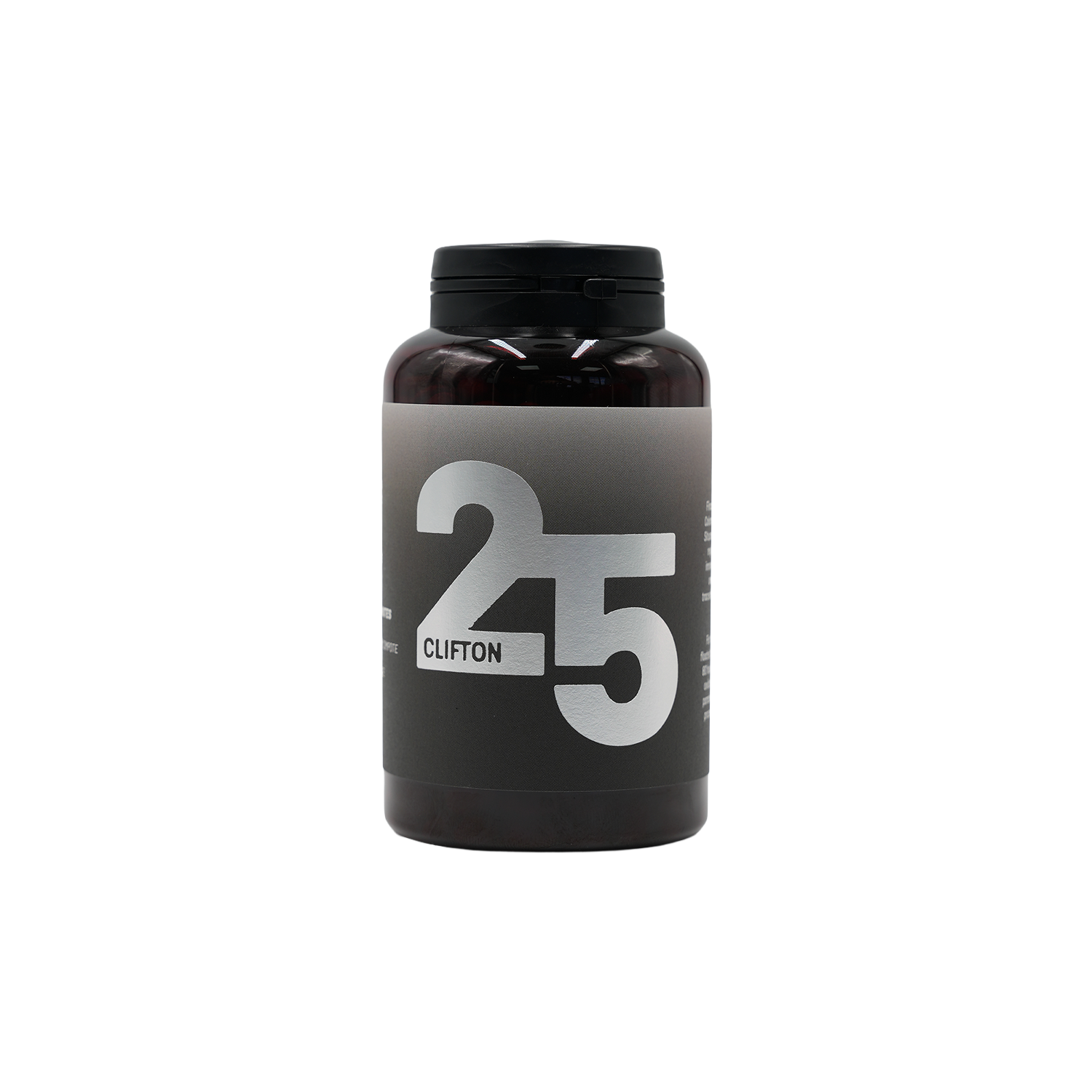
Clifton's 25th-anniversary coffee: a Pink Bourbon from Santiago Noriega's Finca Cultivares, a farm built around rare varieties and processing experiments. Floated cherries ferment sealed for 80 hours, rest 24 hours in an open tank, then dry parabolically for 22 days.
Lychee · Blackberry compote · Cardamom · Crème brûlée · Magnolia
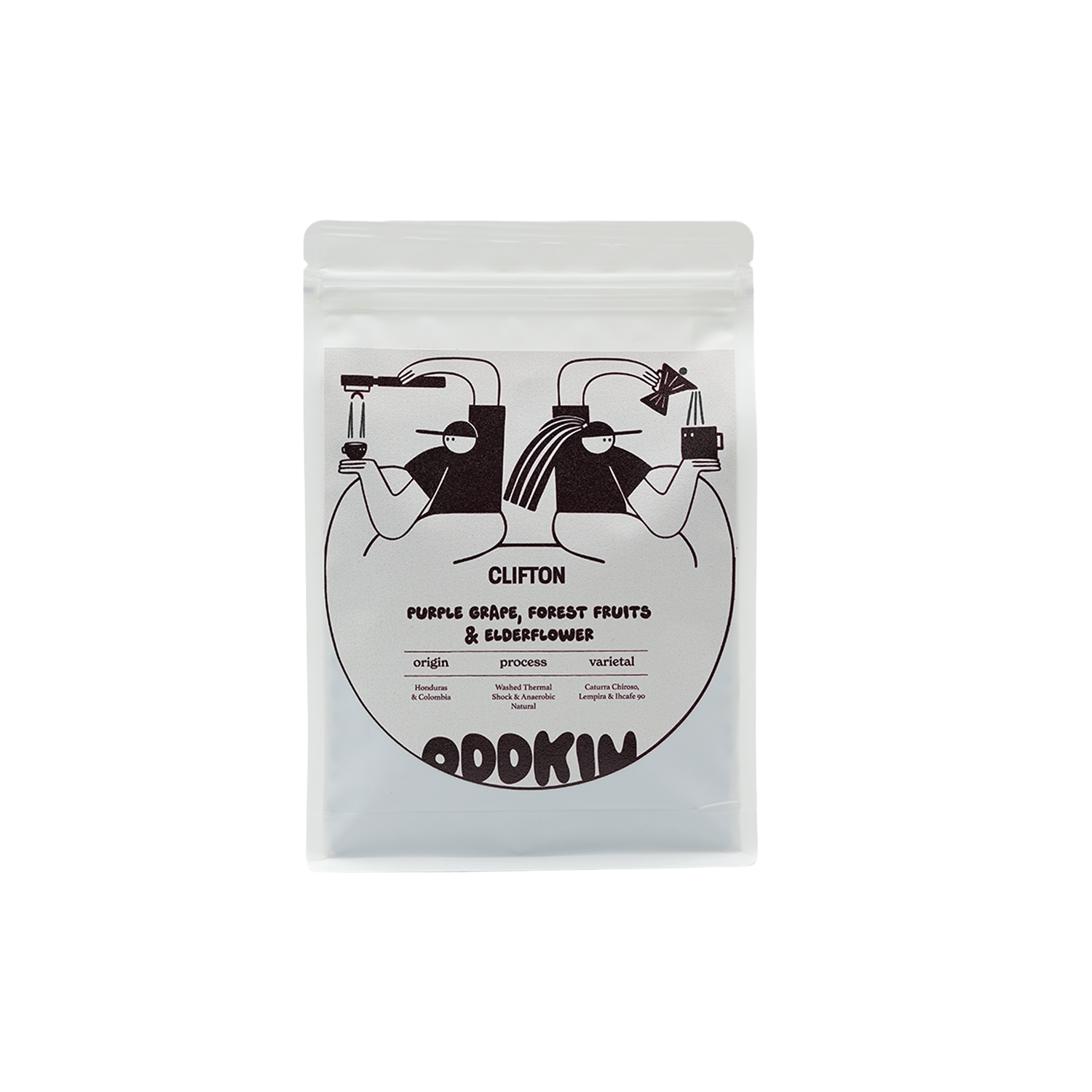
Episode 11 of Blend Friends, made with Bristol roastery Oddkin in a very limited batch. A washed anaerobic Caturra Chiroso from Las Flores brings fermented funk and bright acidity; a natural Honduras adds syrupy sweetness and body.
Purple grape · Forest fruits · Elderflower

From third-generation producer Nestor Lasso at the 18-hectare El Diviso farm. Ripe cherries (24-26° Brix) are thermal-shocked at 50°C then anaerobically fermented with Saccharomyces cerevisiae (T58) for around 80 hours, before mechanical drying and 15 days on African raised beds. Source: cliftoncoffee.co.uk
Red Currant Jam · Dulce De Leche · Peach
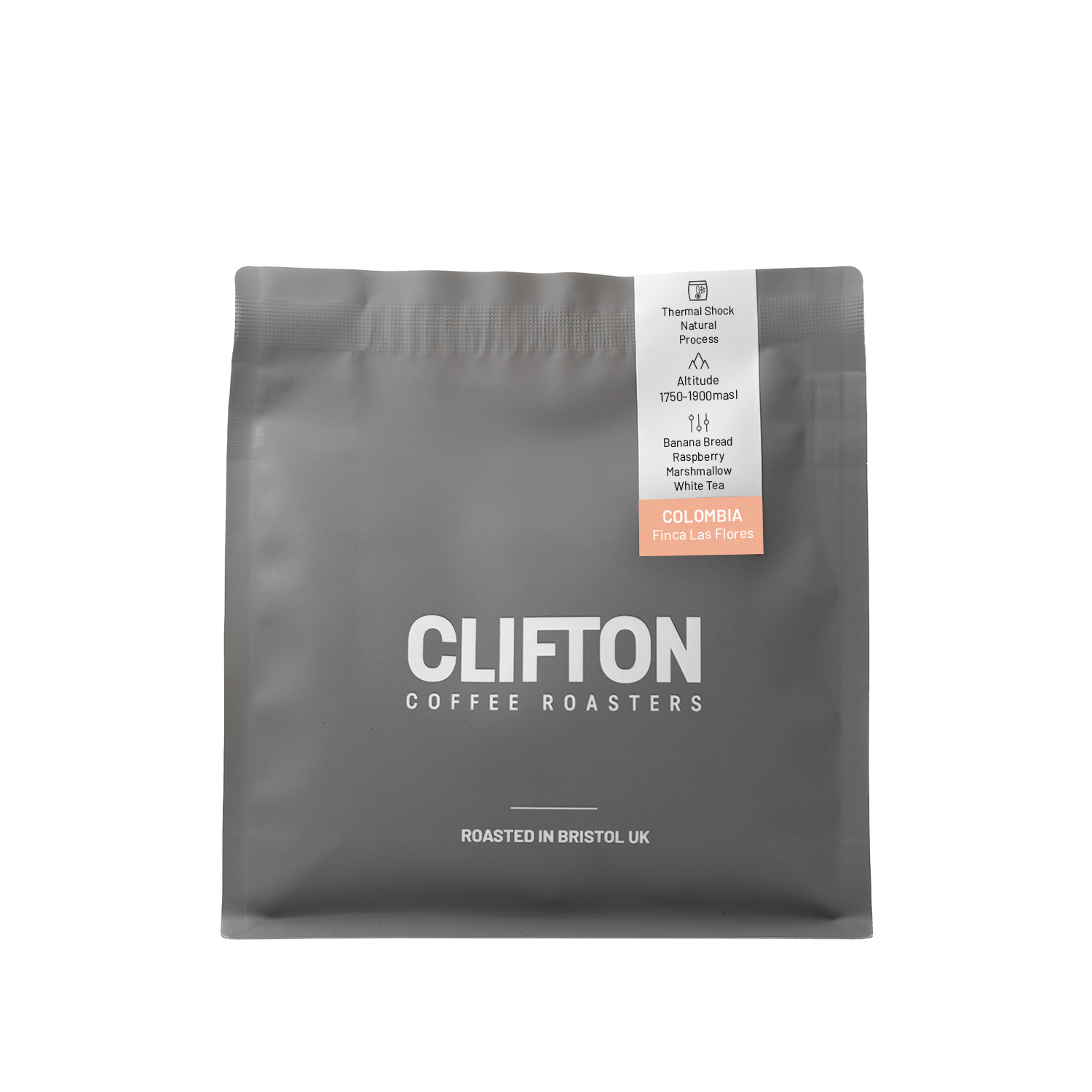
Grown by Jhoan Manuel Vergara Ayure and family. Cherries are thermal-shocked, then taken through 60 hours anaerobic fermentation, a 12-hour oxidative phase and a further 24 hours anaerobic fermentation, before drying in hermetic chambers — vibrant, layered and syrupy with a refined tea-like character. Source: cliftoncoffee.co.uk
Banana Bread · Raspberry Marshmallow · White Tea

The E1 Project began in 2015 as a direct-trade partnership with Ricardo Lima's family in El Salvador, aiming to build a long-lasting relationship for consistently great coffee at volume — it has since grown to represent around 90% of Clifton's total sourcing. Source: cliftoncoffee.co.uk
Cinnamon Roll · Marmalade · Baker's Chocolate
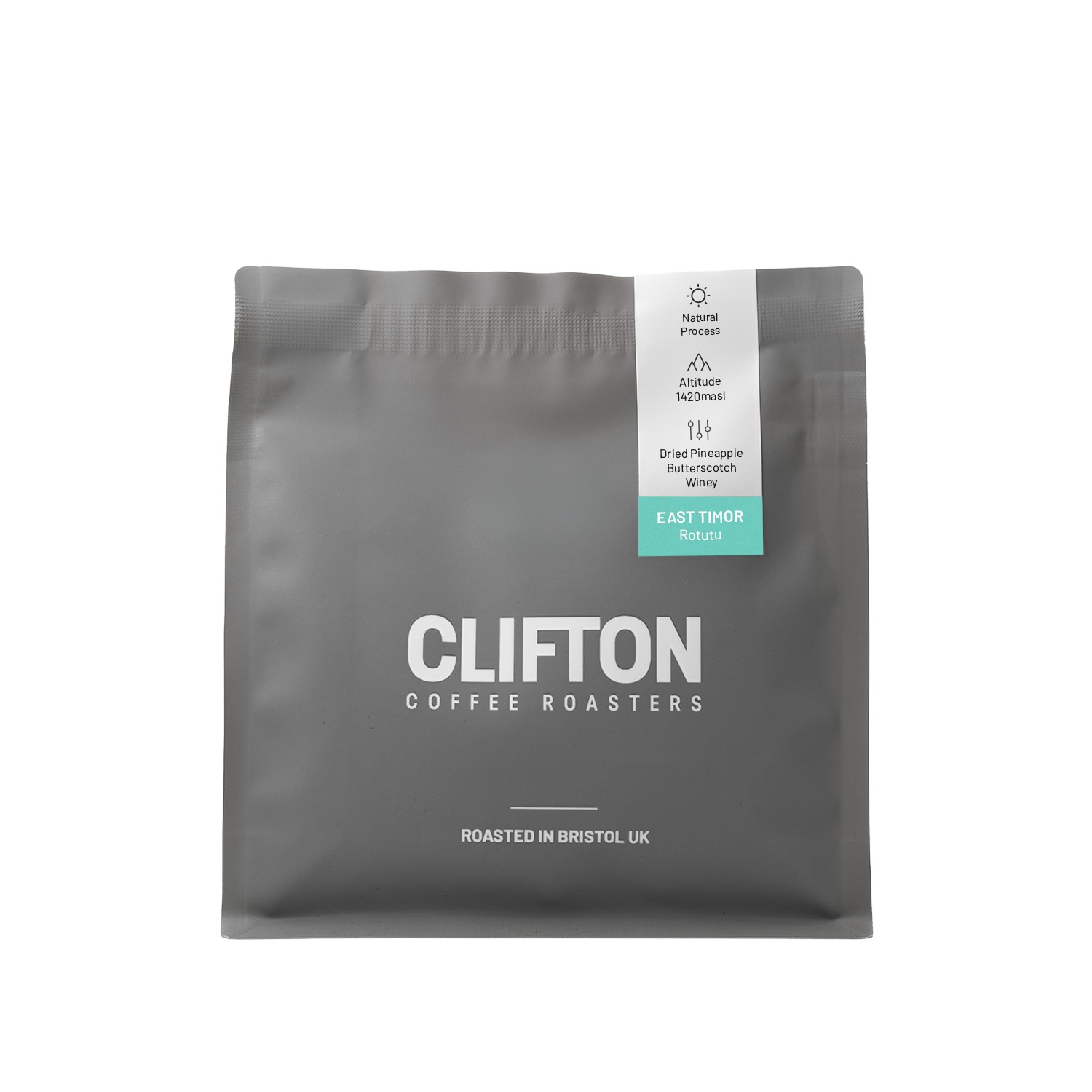
Back for a fifth year: a natural from 16 farmers in a region known for washed coffee. Field manager Simão Pedro de Deus sorts the cherries at the Daurfusu facility, ferments them 12 hours, then dries them for 34 days on raised beds under polytunnels.
Dried pineapple · Butterscotch · Winey
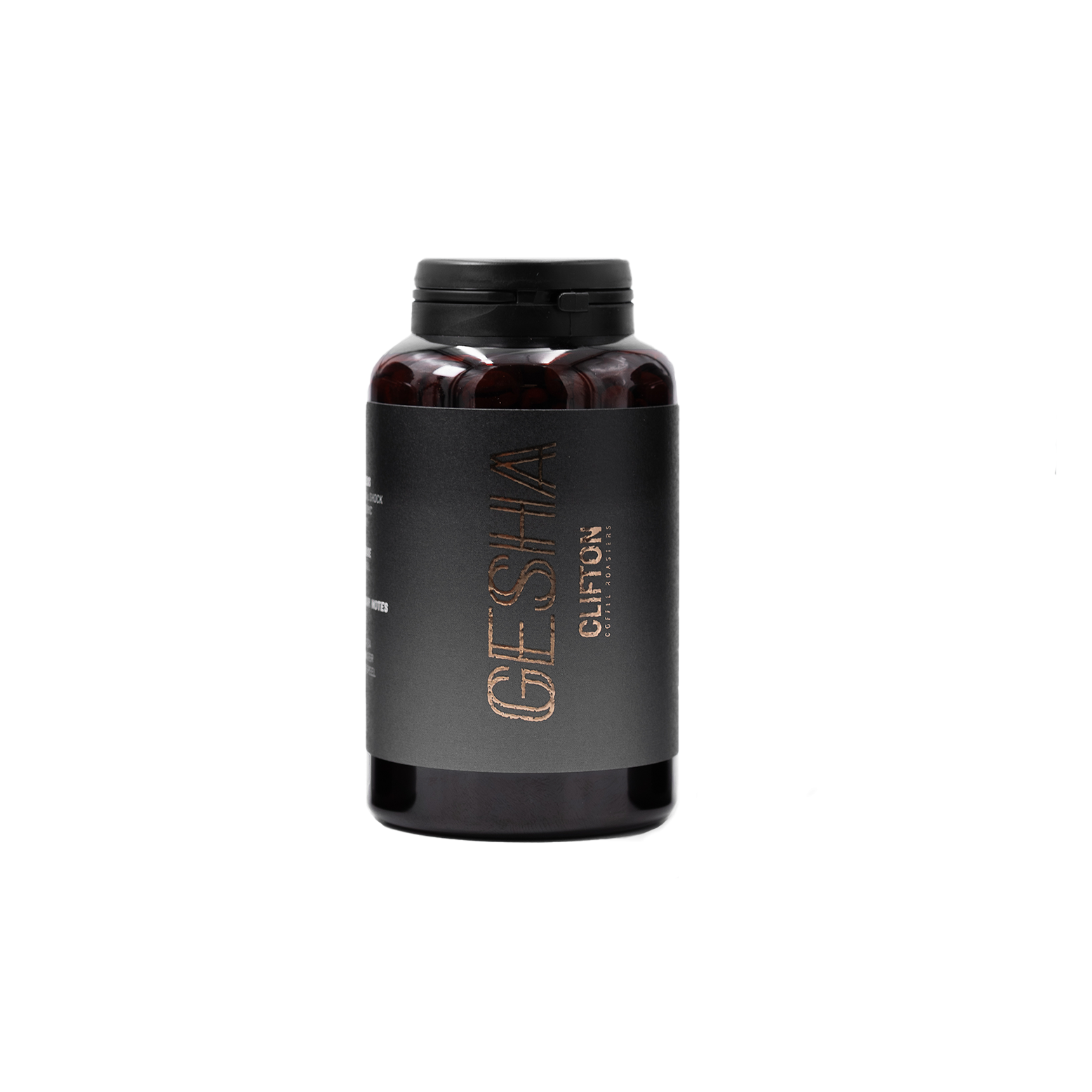
Wilton Benitez borrowed fermentation methods from wine, beer and cheese to control sugar, pH and fermentation time. Selected microorganisms at each stage, soaking and thermal shock shape his refined, distinctive cups.
Lychee · Peach · Black tea · Rose water · Orange peel
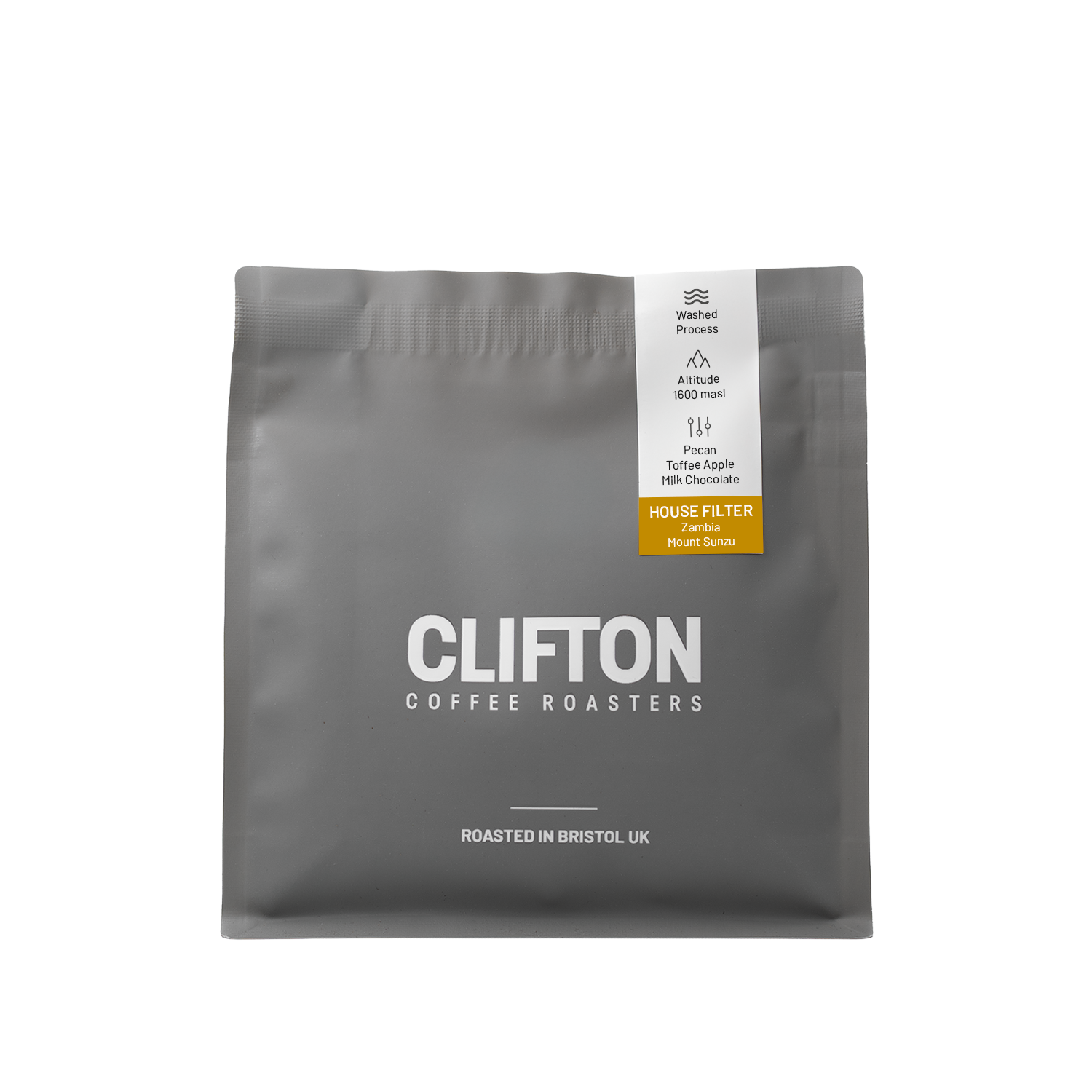
From the 780-hectare Mount Sunzu estate, revitalised with climate-smart, community-focused practices — solar-powered irrigation, a 600-hectare reforested Miombo forest, and fair wages for 240+ workers. Source: cliftoncoffee.co.uk
Pecan · Toffee Apple · Milk Chocolate
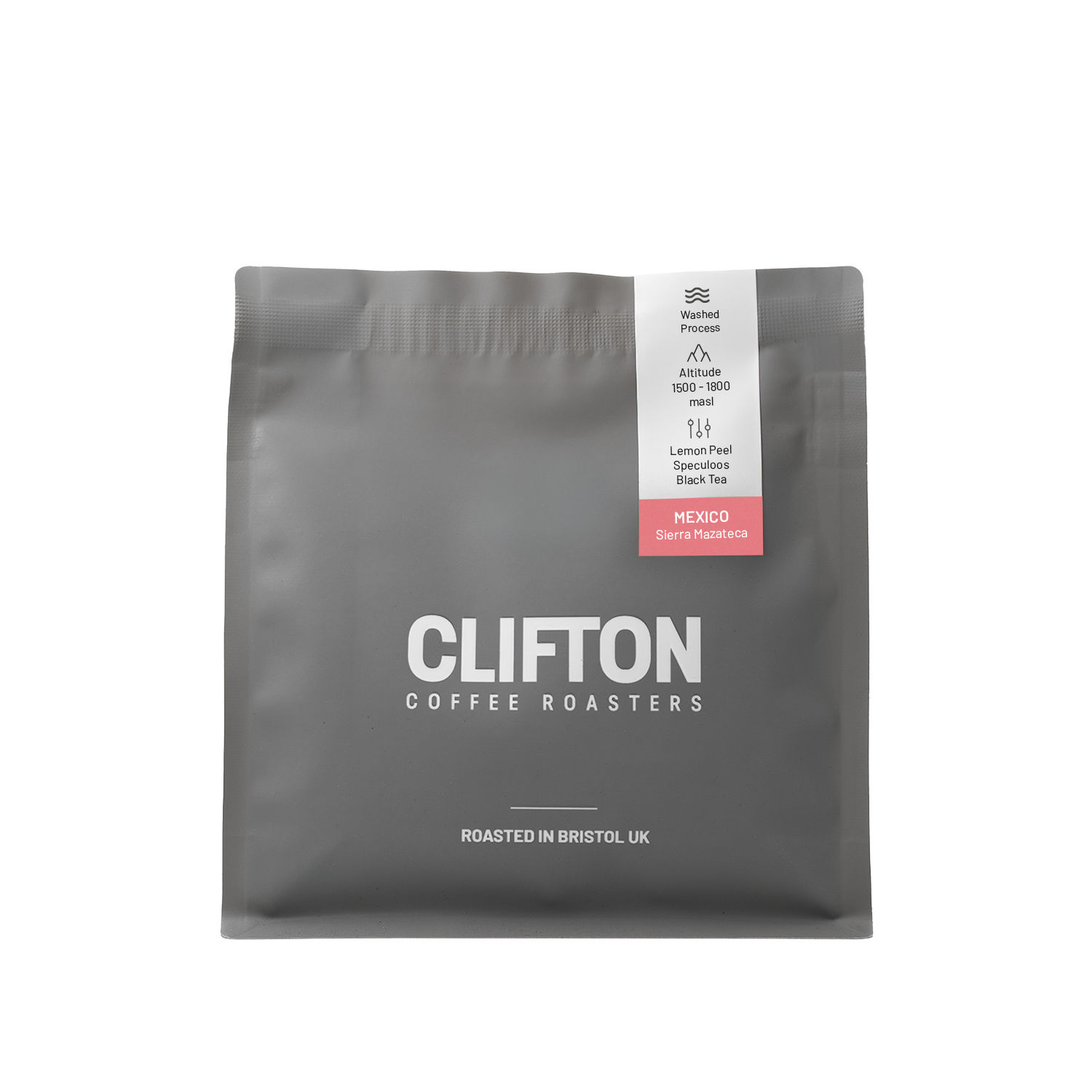
From the isolated Sierra Mazateca, home of the Mazatec people, where coffee grows under cloud-forest shade on farms of one to five hectares. Ripe cherries are pulped the same day, fermented 12–24 hours in tiled tanks, then patio-dried for 15–20 days.
Lemon peel · Speculoos · Black tea
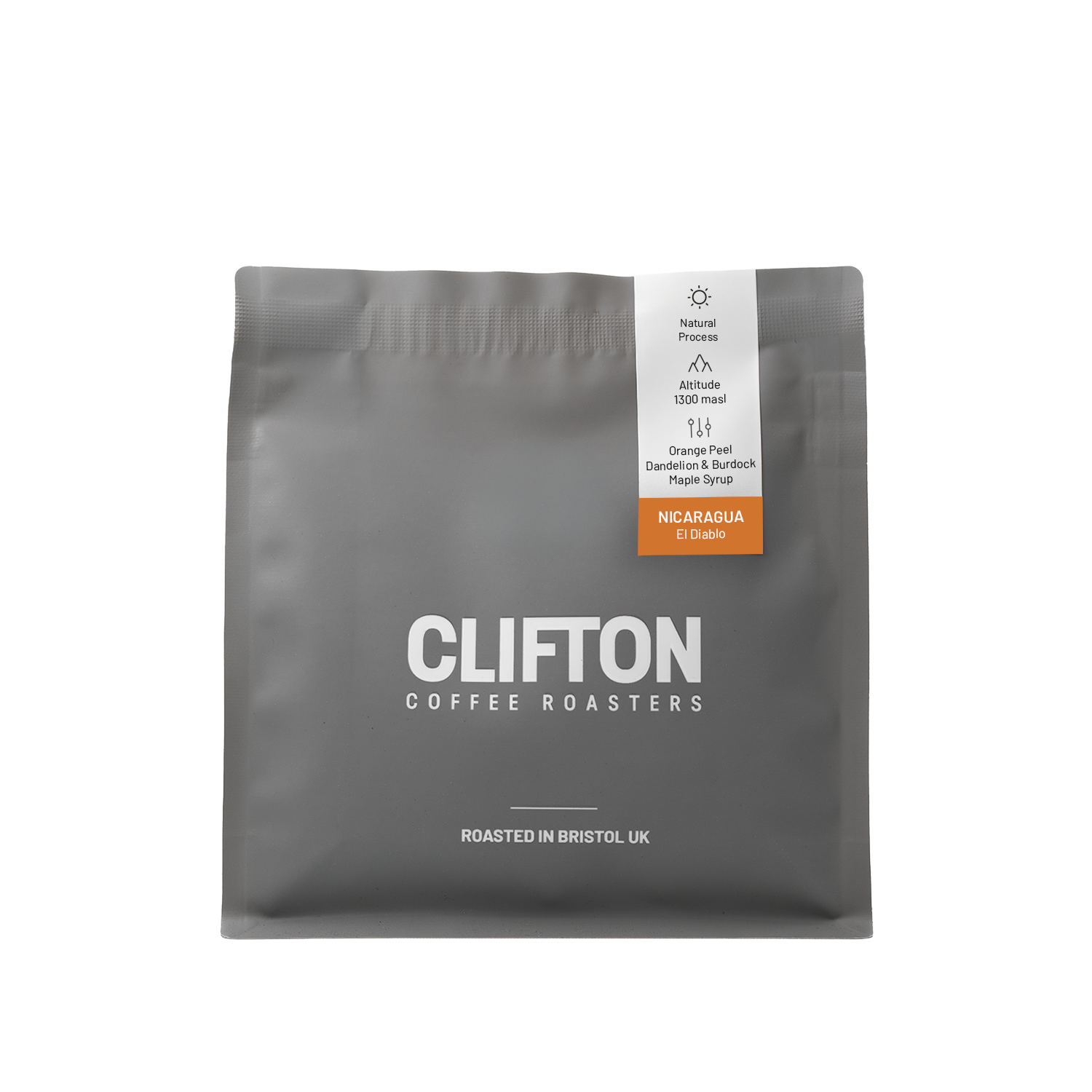
From the cloud-forest slopes of the Cerro Datanlí-El Diablo reserve ("Datanlí" means "where water falls"), on farms averaging 20 hectares. Hand-picked cherries are dried whole on raised beds for 30–45 days, building sweetness, fruit and a herbal depth.
Orange peel · Dandelion & burdock · Maple syrup
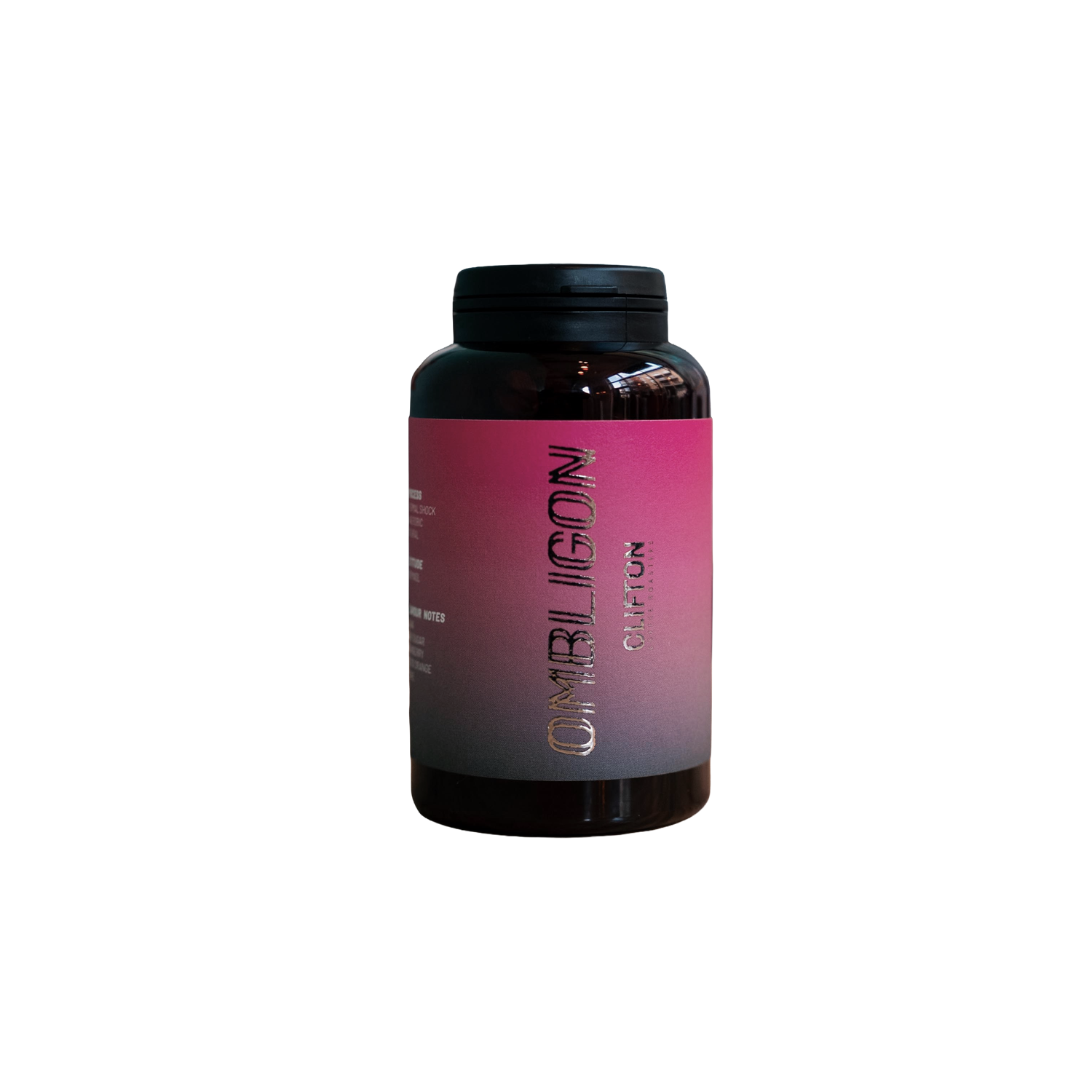
Ombligon, thought to be an Ethiopian landrace × Pacamara mutation, from the Lasso brothers. Two thermal shocks around a 48-hour oxidation with mosto, a sealed bioreactor ferment with brewer's yeast, then mechanical, rested and slow canopy drying. Dense and fruit-forward.
Guava · Cane sugar · Cranberry · Blood orange · Clove
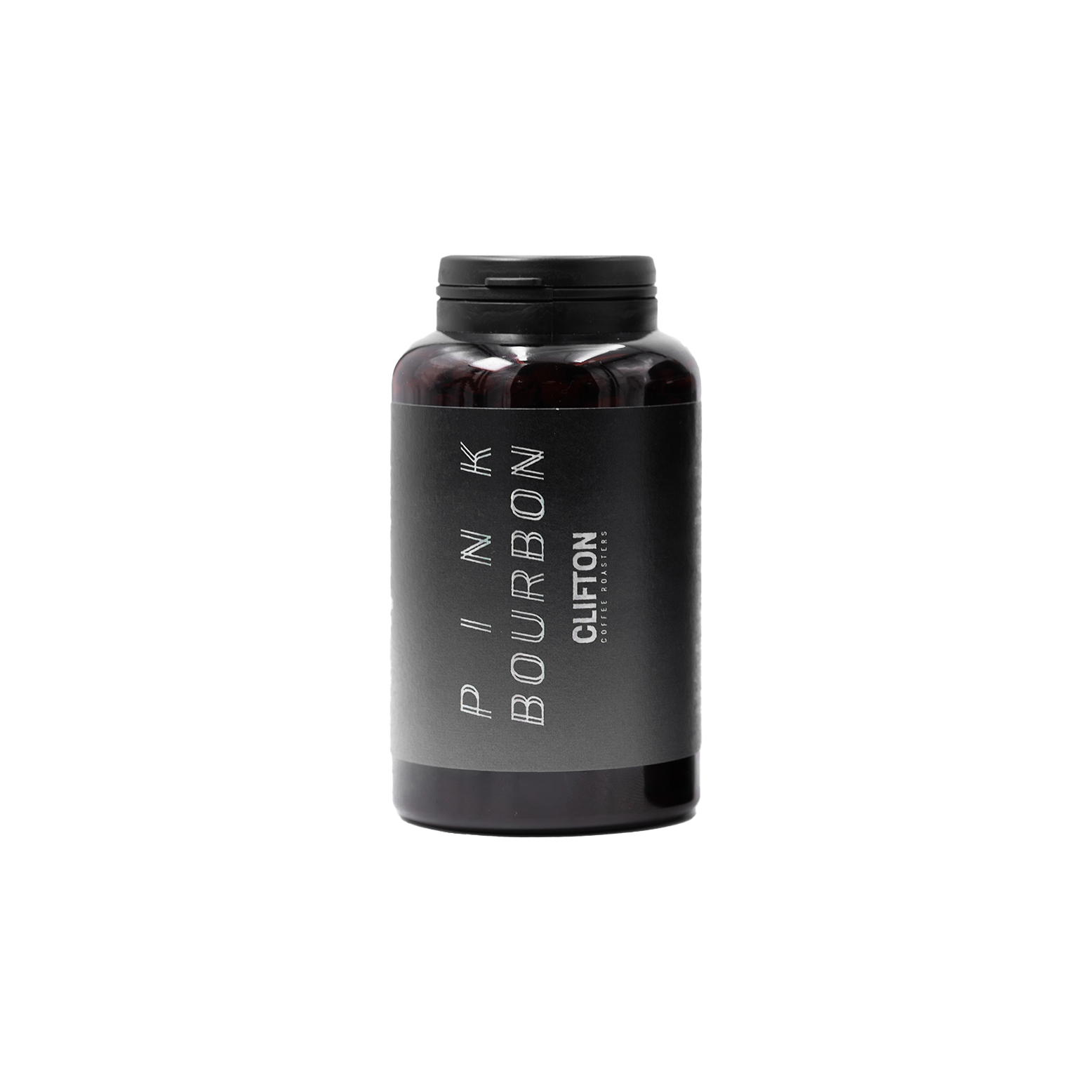
Cherries ferment for 200 hours at 18°C in sealed, CO₂-injected tanks with mosto from earlier Pink Bourbon cherries and a live culture isolated from plants on the farm, then dry about 25 days on raised beds under polytunnels.
Lemongrass · Rose · Plum · Kaffir lime
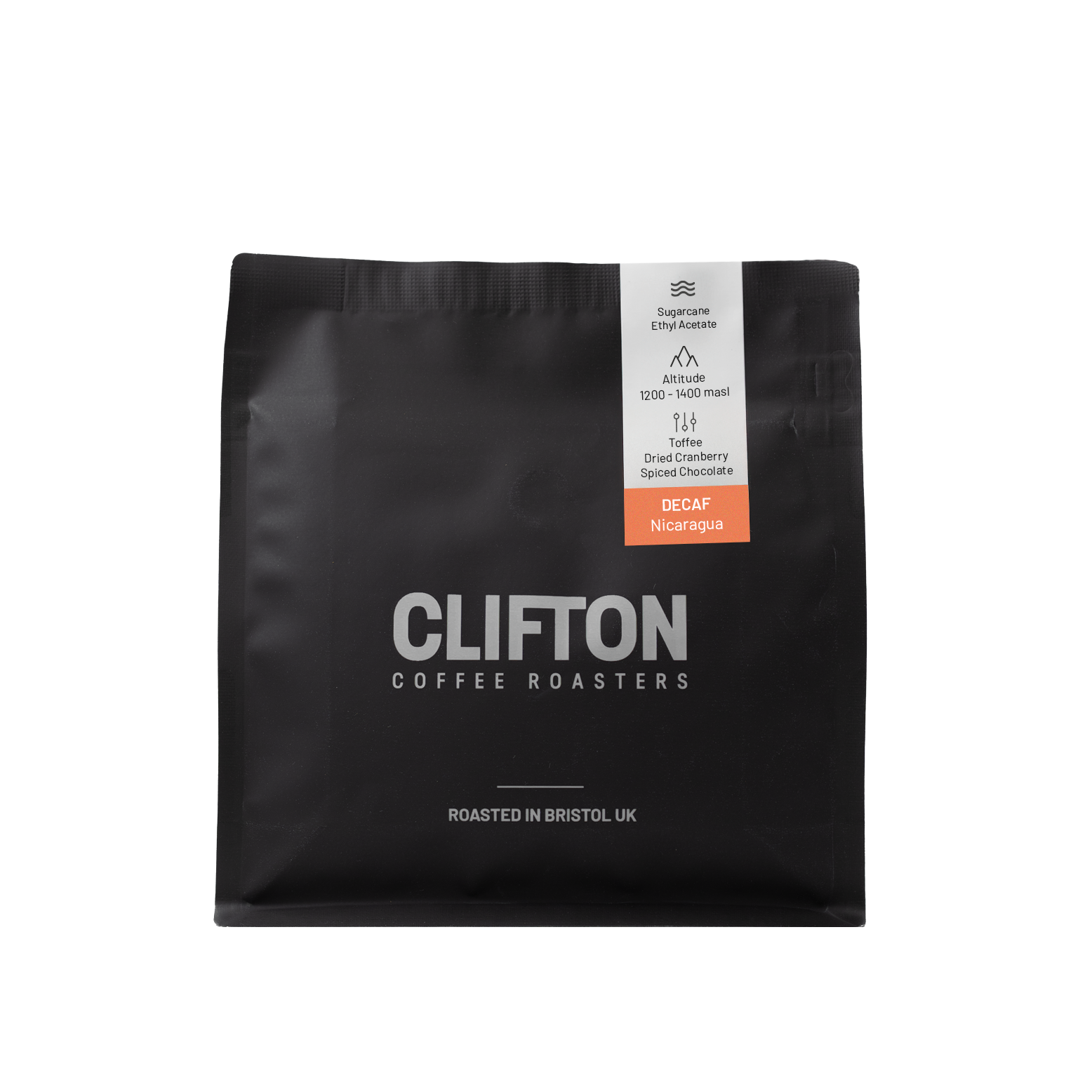
Hand-picked cherries from two family-run farms, washed and sun-dried before decaffeination with ethyl acetate naturally derived from sugarcane — preserving structure and flavour for a sweet, comforting, balanced cup. Source: cliftoncoffee.co.uk
Toffee · Dried Cranberry · Spiced Chocolate
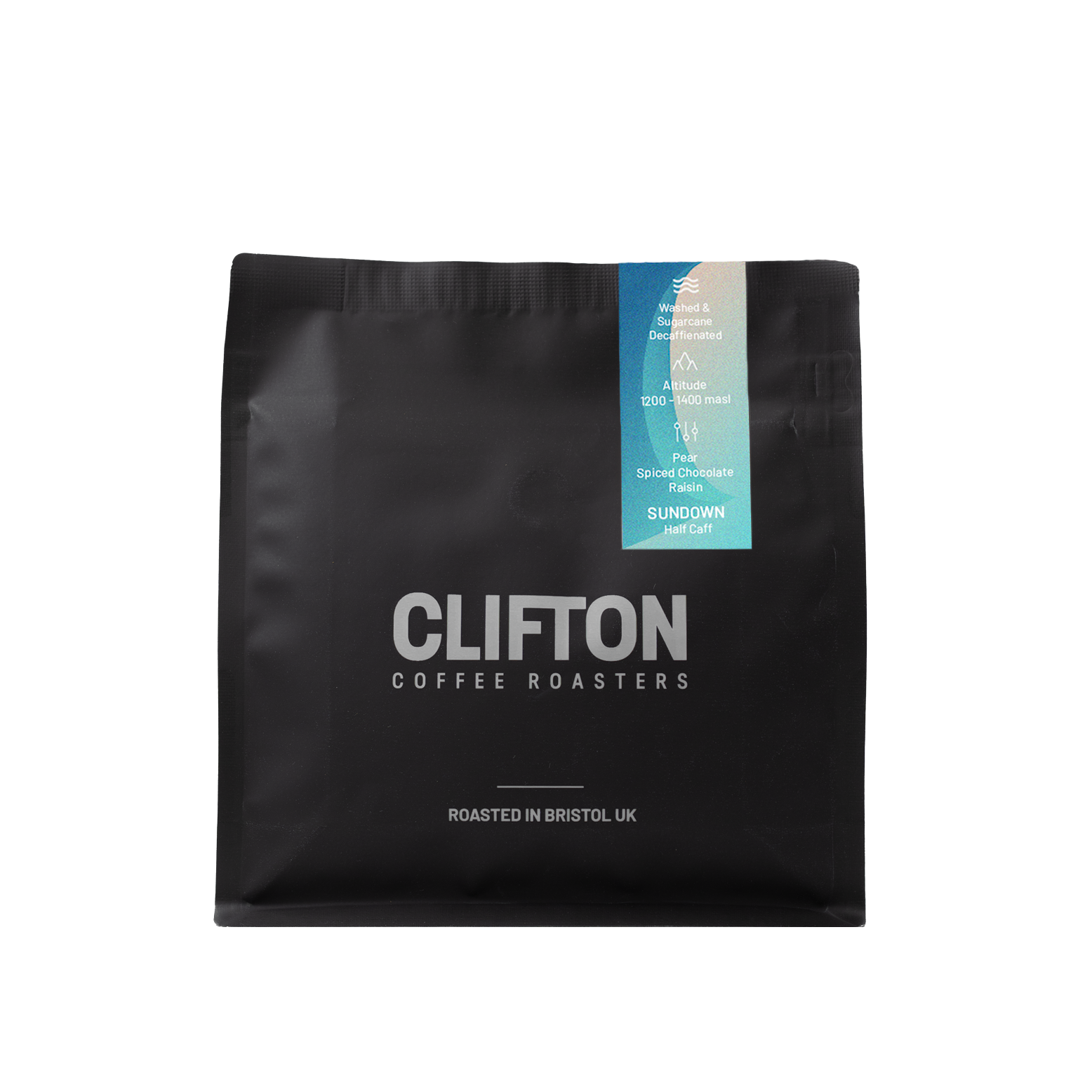
Clifton's half-caff, made from two lots from the same part of Nicaragua so it still tastes like one origin: a sugarcane-EA decaf from family farms San Luis and Santa Martha in San Ramón, and a caffeinated lot from Cafetos de Segovia, run by third-generation producers Ana and Martha Albir.
Pear · Spiced chocolate · Raisin
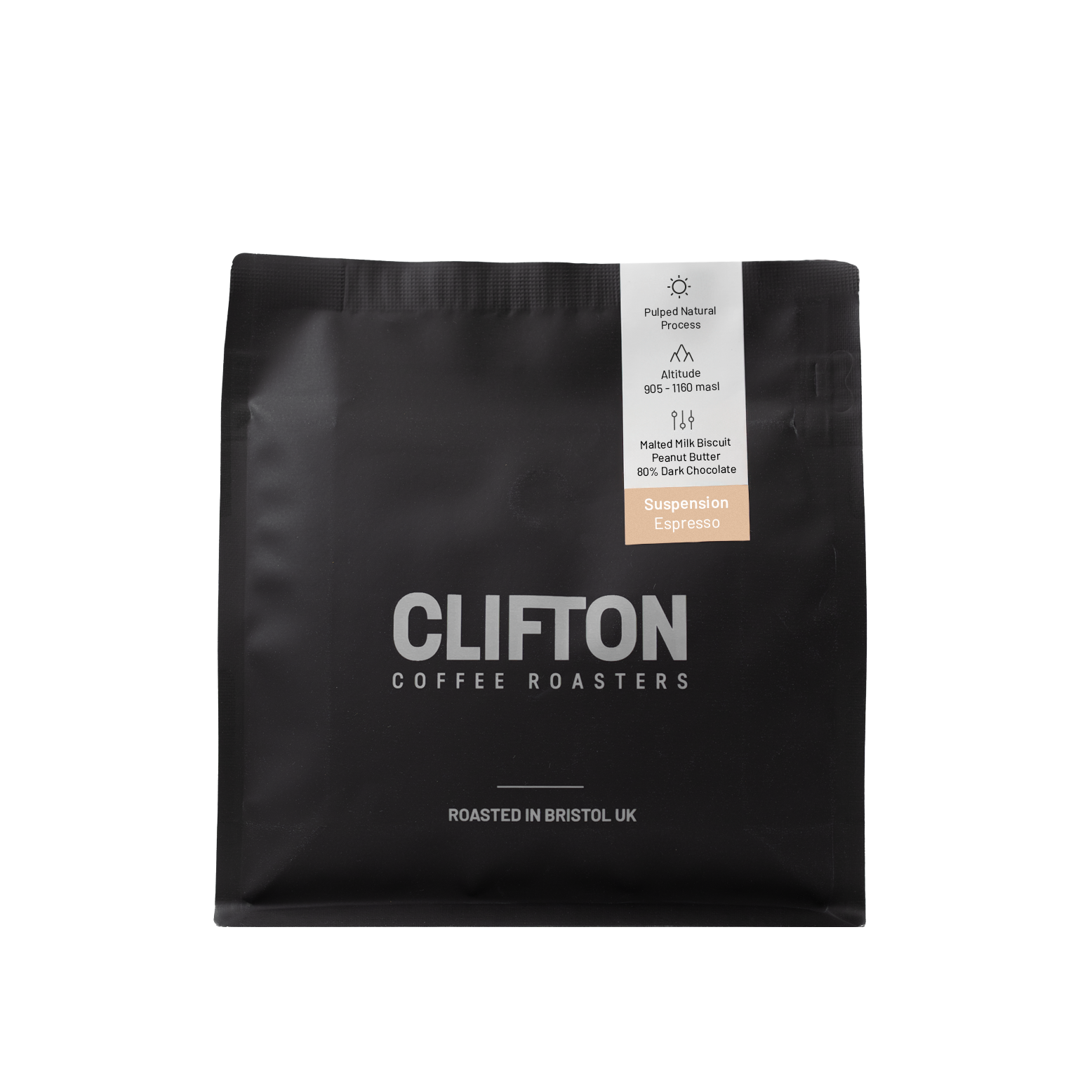
Named after Bristol's iconic bridge, Suspension is Clifton's well-balanced, easy-drinking house espresso. Grown by the Gabarra family (Pedro, João and Milau) at 100%-solar-powered Fazenda Pinhal, whose Wings Project rehabilitates local birds alongside coffee farming. Source: cliftoncoffee.co.uk
Malted Milk Biscuits · Peanut Butter · 80% Dark Chocolate
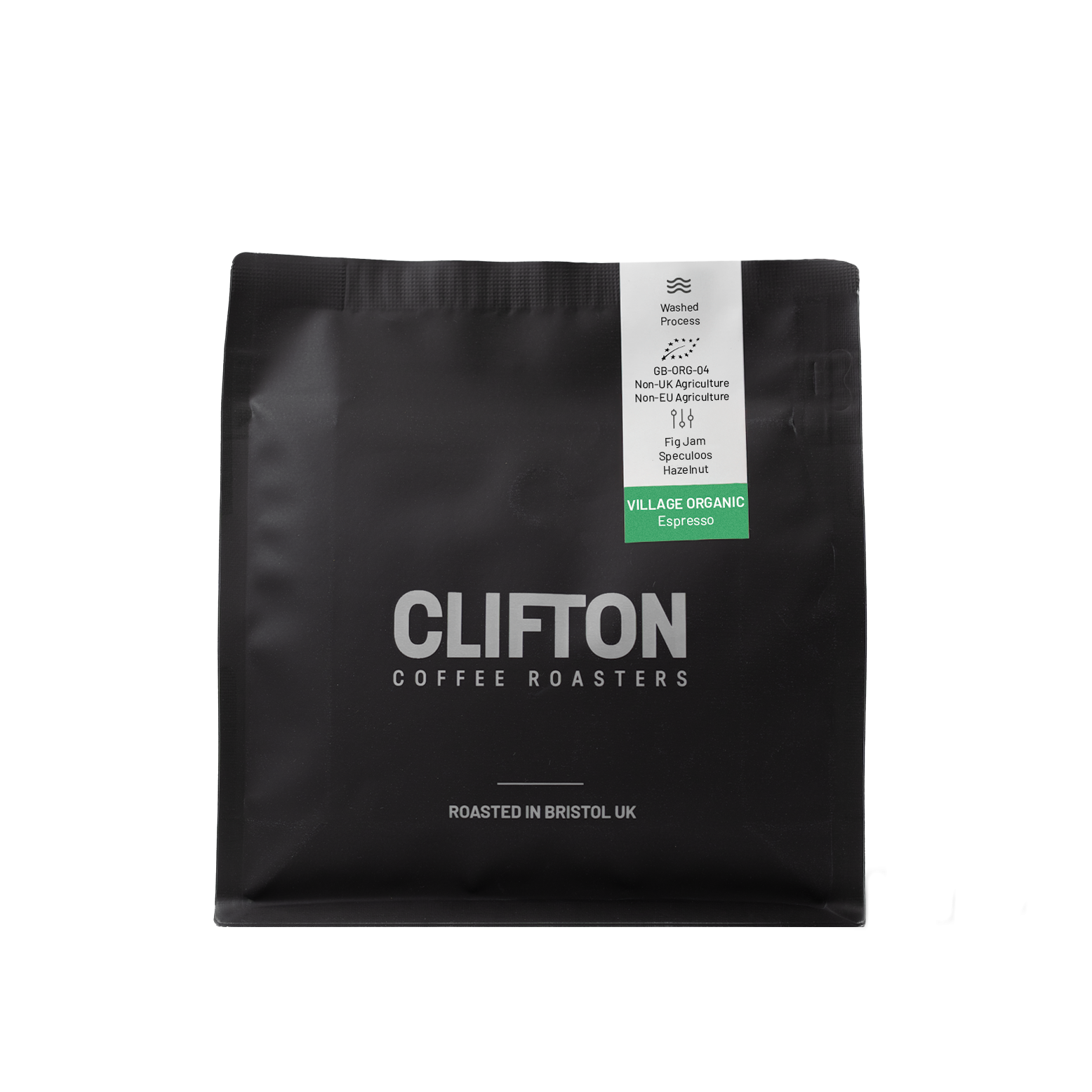
An espresso that's "been an integral part of Clifton since we began roasting in 2013," now sourced organically from COMUCAP — a cooperative of 200 female farmers in La Paz built around fair trade and sustainable practice. Rich, sweet and full-bodied. Source: cliftoncoffee.co.uk
Fig Jam · Speculoos · Hazelnut