
Roasteries / Kaffeemacher

Kaffeemacher
Basel, Switzerland
Has café location at Basel SBB station.
19
coffees
Switzerland
base
Location
Café Frühling
Klybeckstrasse 69, 4057 Basel, SwitzerlandMon–Fri 08:00–18:30 · Sat–Sun 09:00–18:30 (brunch until 14:00)
+41 61 689 16 23Coffees
19 coffees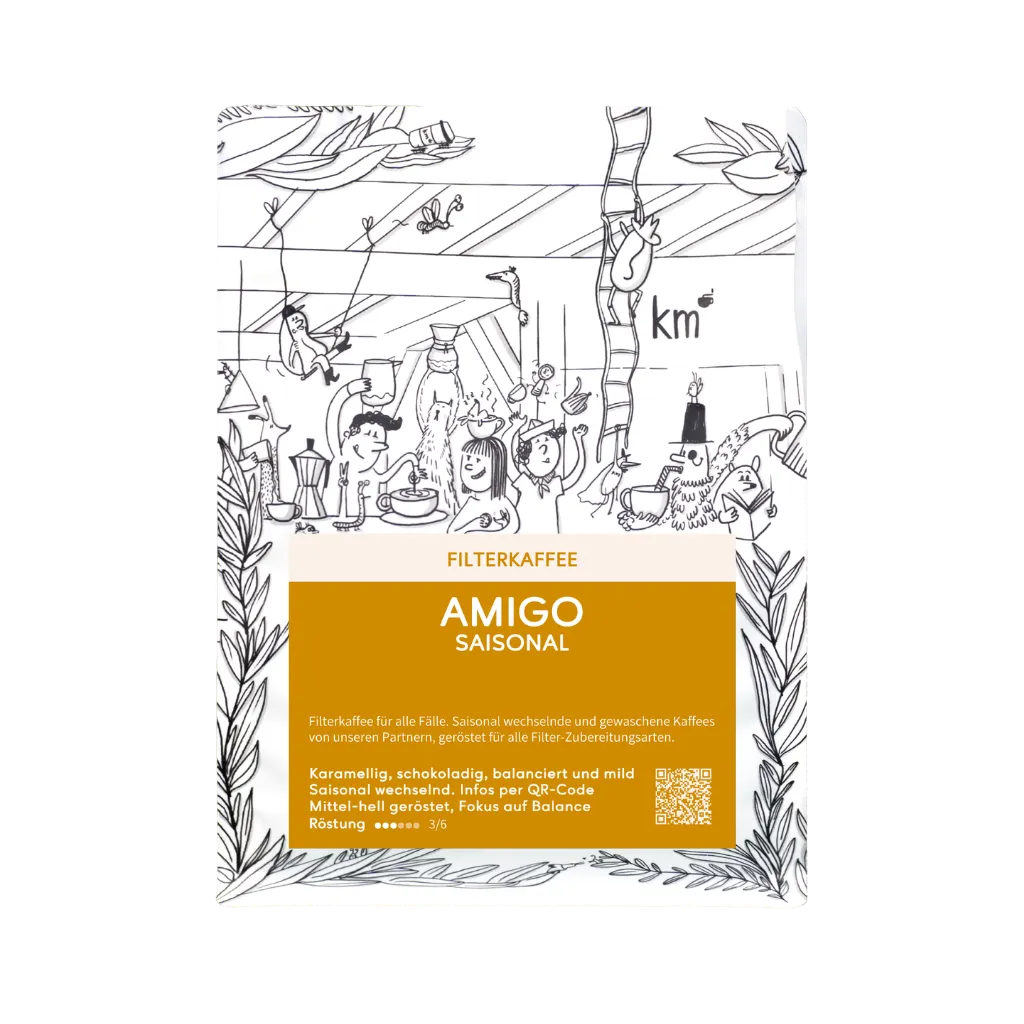
Kaffeemacher's seasonal, balanced filter coffee, rotated to the current harvest of a partner and roasted a little darker than their other filters. This lot comes from nine small farms: fermented 19-48 hours, pulped and washed, with panela, chocolate, creamy caramel and a hint of orange.
Chocolate, Caramel, Balanced
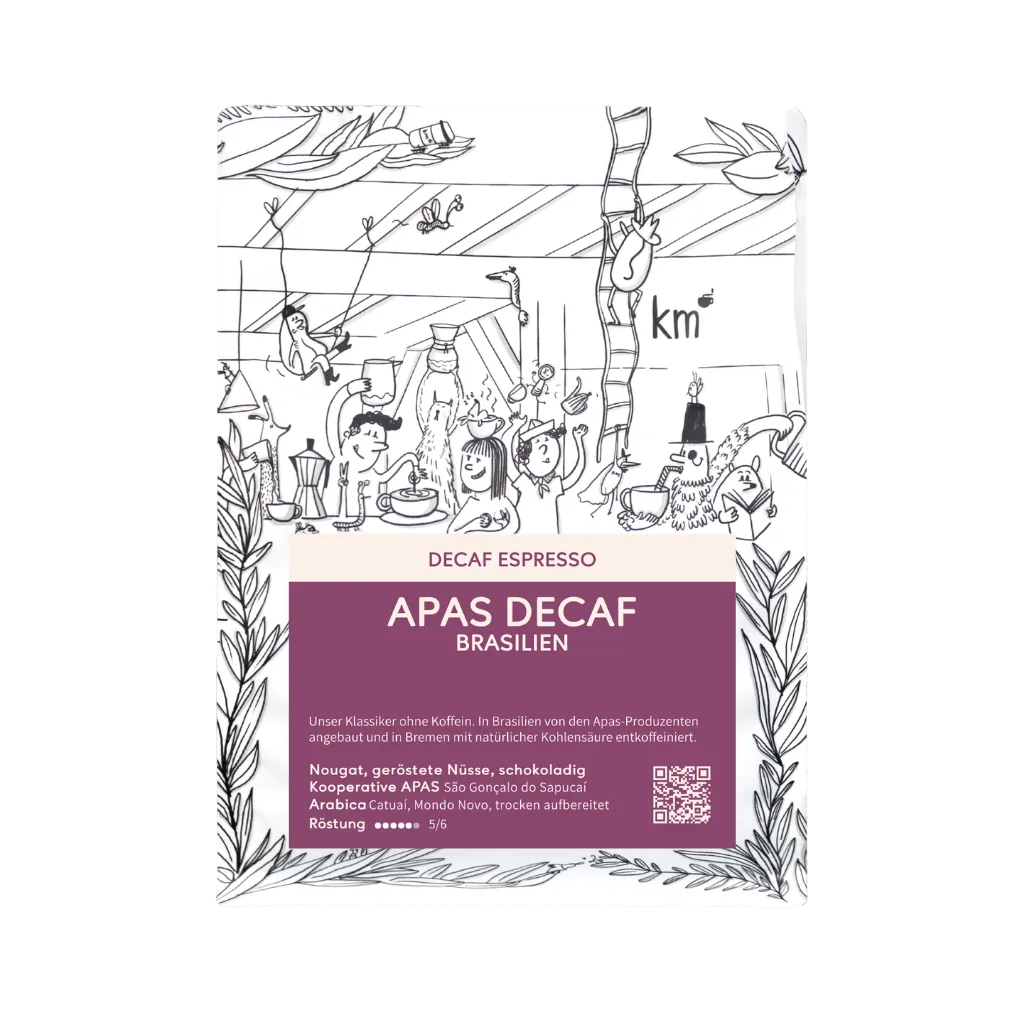
The APAS co-op blend decaffeinated with subcritical CO2 (natural spring carbonic acid) by CR3 in Bremen. Nougat, roasted nuts and chocolate.
Nougat, Roasted nuts, Chocolatey
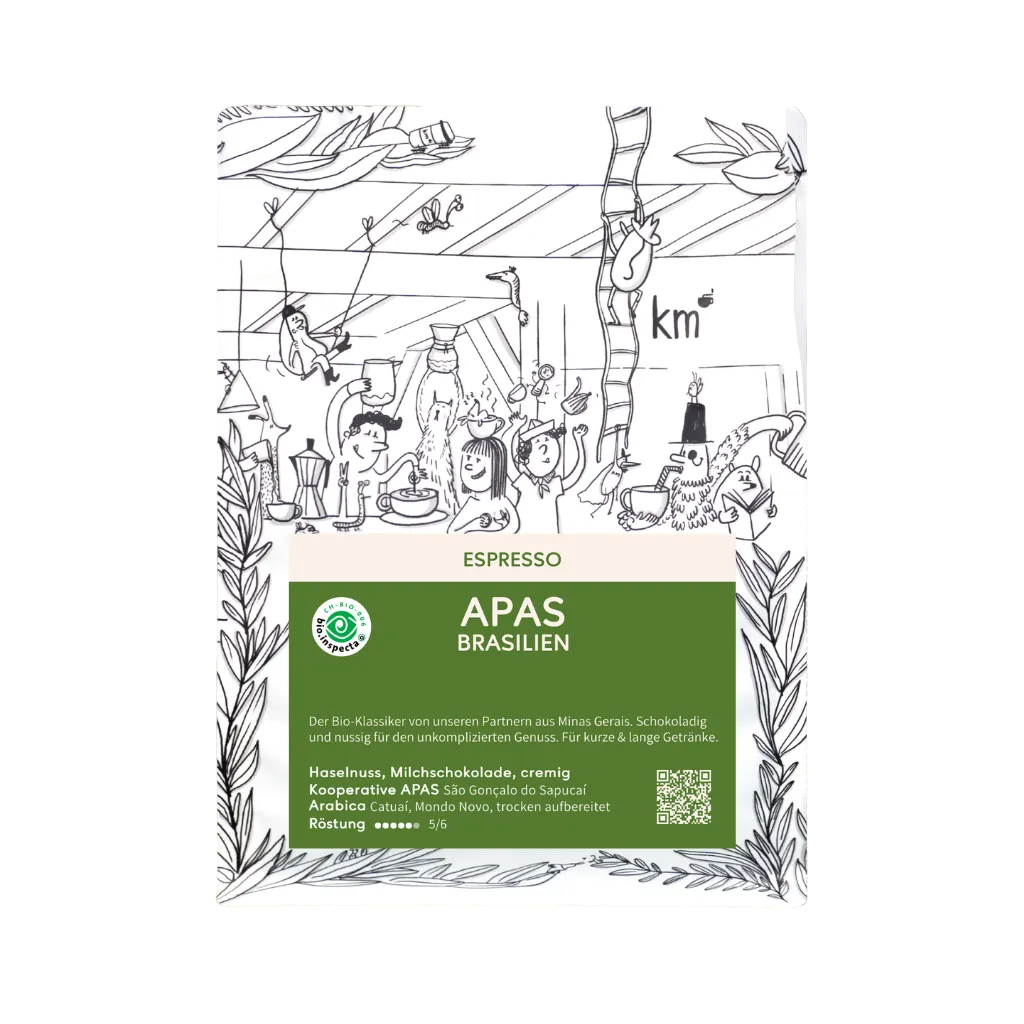
An organic blend from members of APAS, 71 farmers who market together, were Fairtrade pioneers in Brazil and are among the few Brazilian co-ops making organic coffee; several also place individually in Cup of Excellence. Dried in the cherry on members' farms, which brings out the nutty, chocolatey side.
Hazelnut, Milk chocolate, Creamy
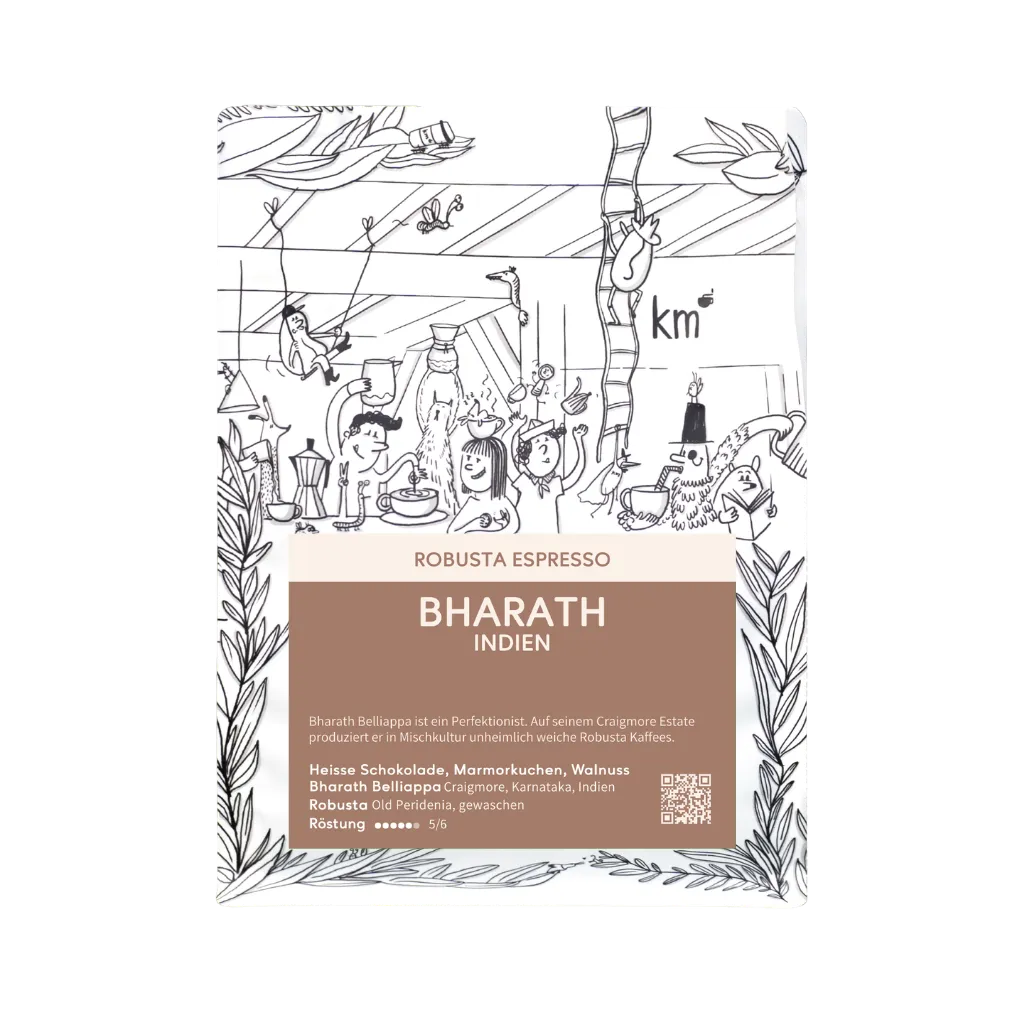
A washed Robusta from Craigmore Tinyspot, a third-generation family farm in the Western Ghats foothills, grown under dense native shade. Hand-picked, floated to remove defects, pulped, washed and sun-dried on concrete. Creamy.
Hot chocolate, Marble cake, Walnut
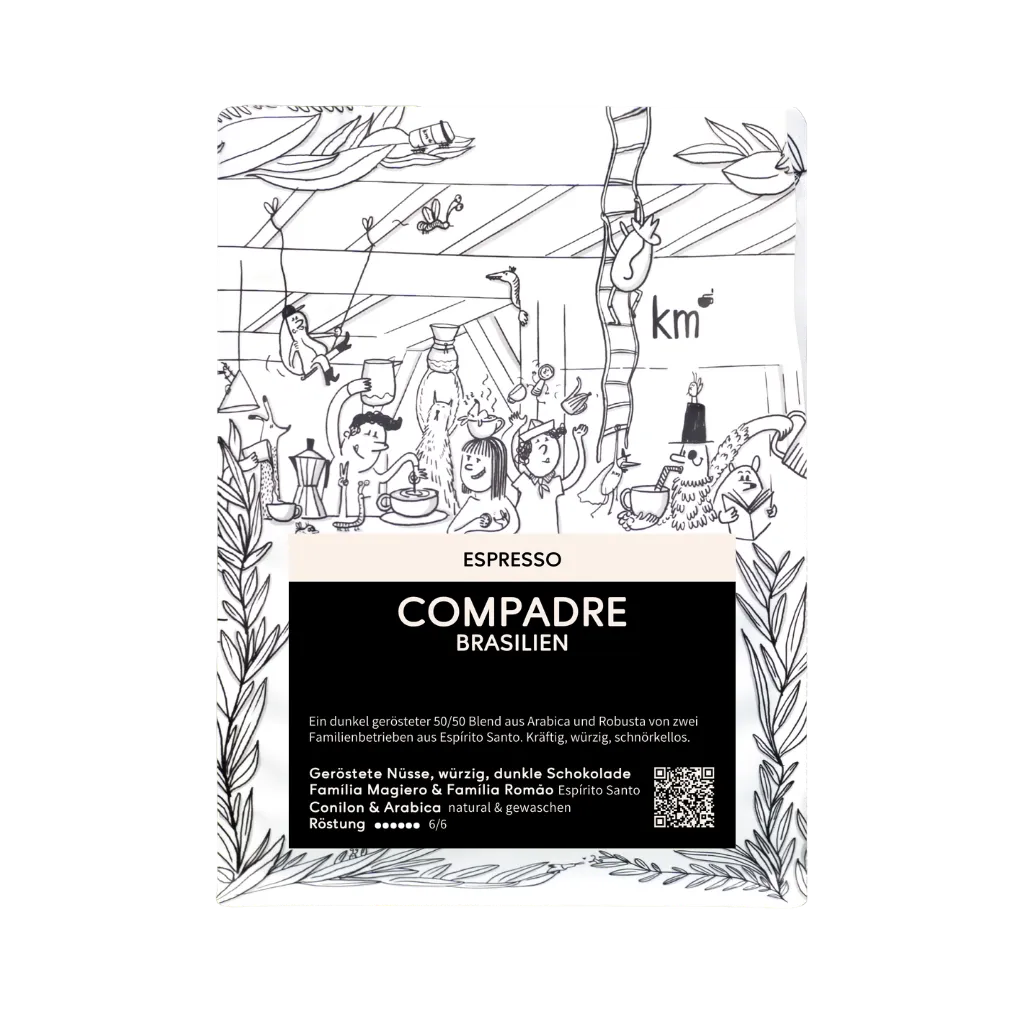
Kaffeemacher's darkest roast and most Italian espresso: 50% Conilon Robusta from Água Boa, São Mateus, for heavy body and spice, and 50% Arabica from Sítio Bela Vista in the Castelo hills for nuttiness and a soft texture. Sourced with Farmers Coffee in a region shaped by Italian immigration.
Roasted nuts, Spicy, Dark chocolate
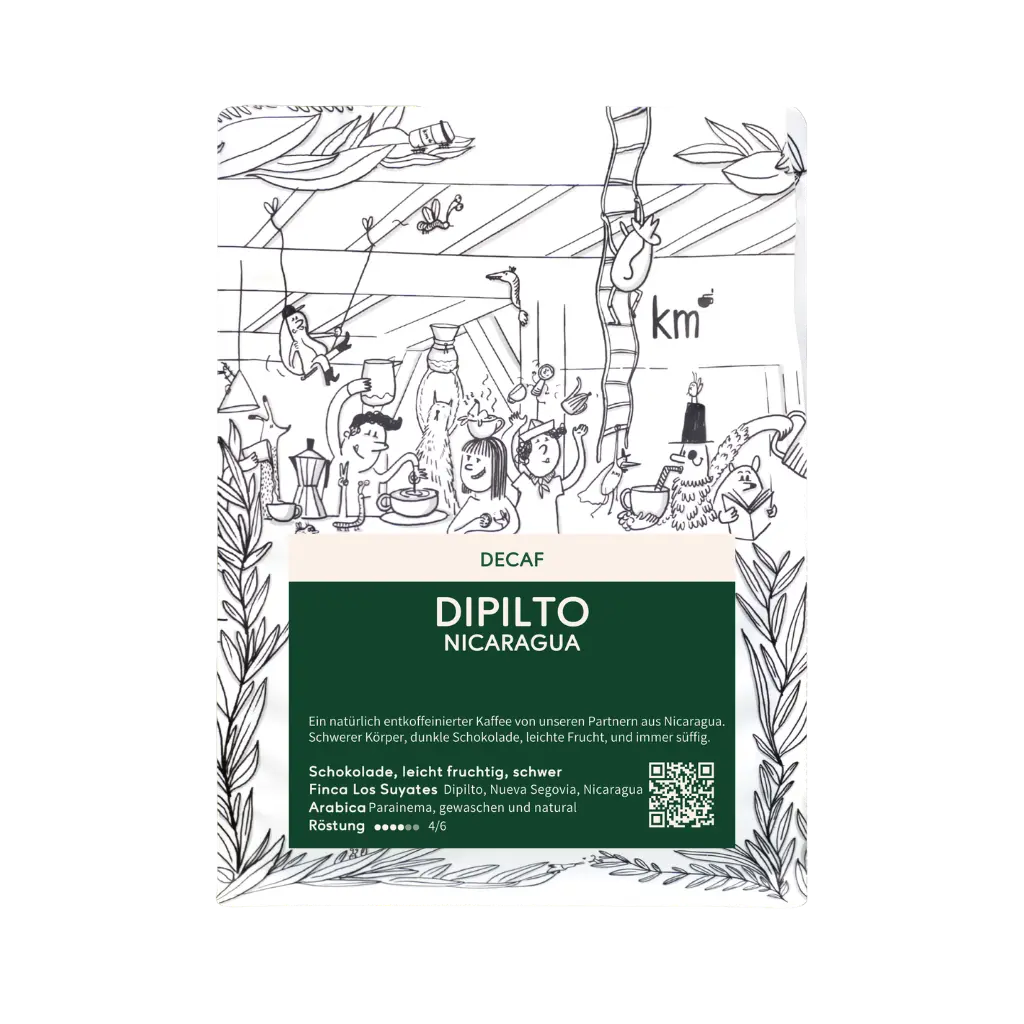
A decaf built by Claudia of BridAzul from two Dipilto farms, sized for large, even beans that roast evenly. The carbonic-maceration natural share brings light fruit; the washed share the classic Dipilto chocolate profile with fine acidity.
Chocolate, Light fruit
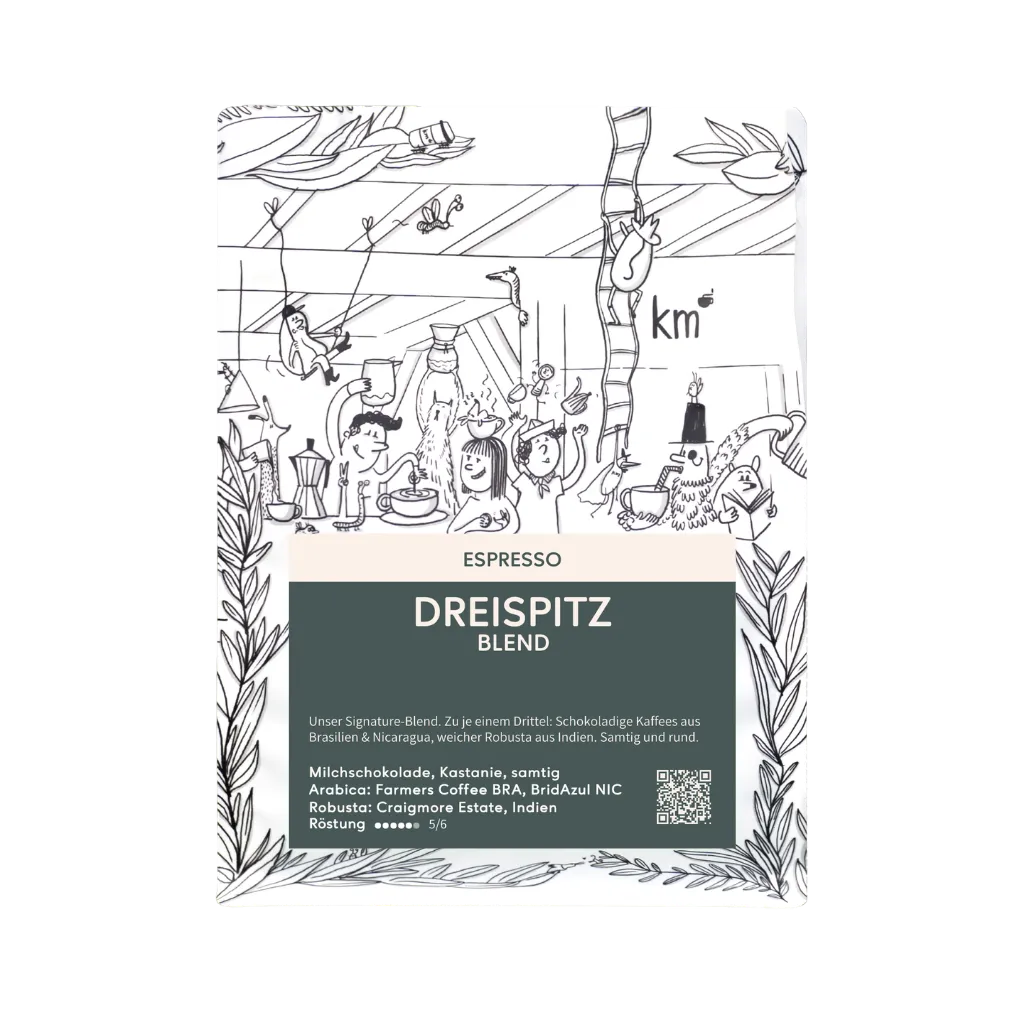
Named after the Dreispitz quarter on the edge of Basel where Kaffeemacher started roasting in 2016: a modern take on a classic espresso, a third each from Nicaragua (washed Caturra), Brazil (natural Catuaí/Mundo Novo) and India (washed Robusta). Velvety; works in portafilter and bean-to-cup machines.
Milk chocolate, Chestnut, Light citrus
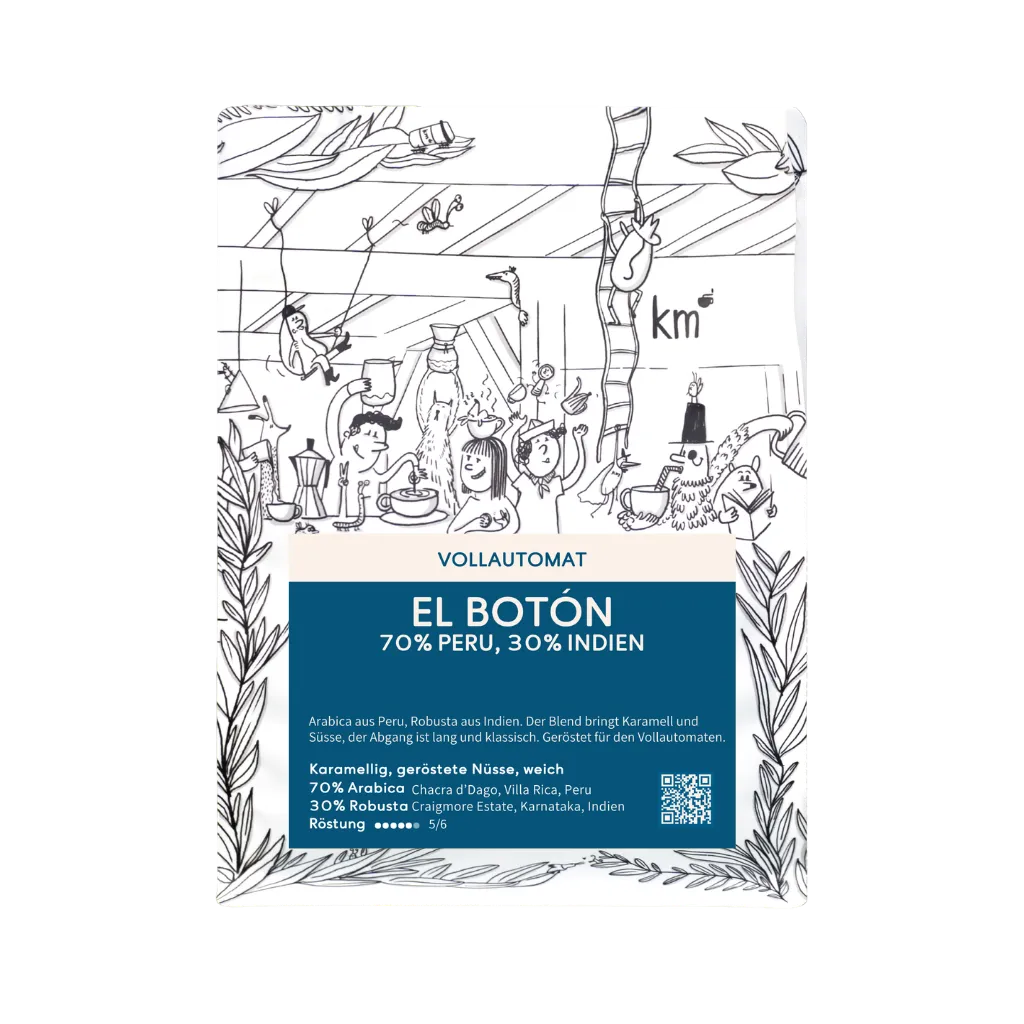
A roast profile developed for bean-to-cup machines: 70% Arabica from César Marin in Villa Rica, Peru, and 30% Robusta from Bharath Belliappa in Karnataka, roasted long rather than dark for body and a rich texture.
Caramel, Roasted nuts, Soft
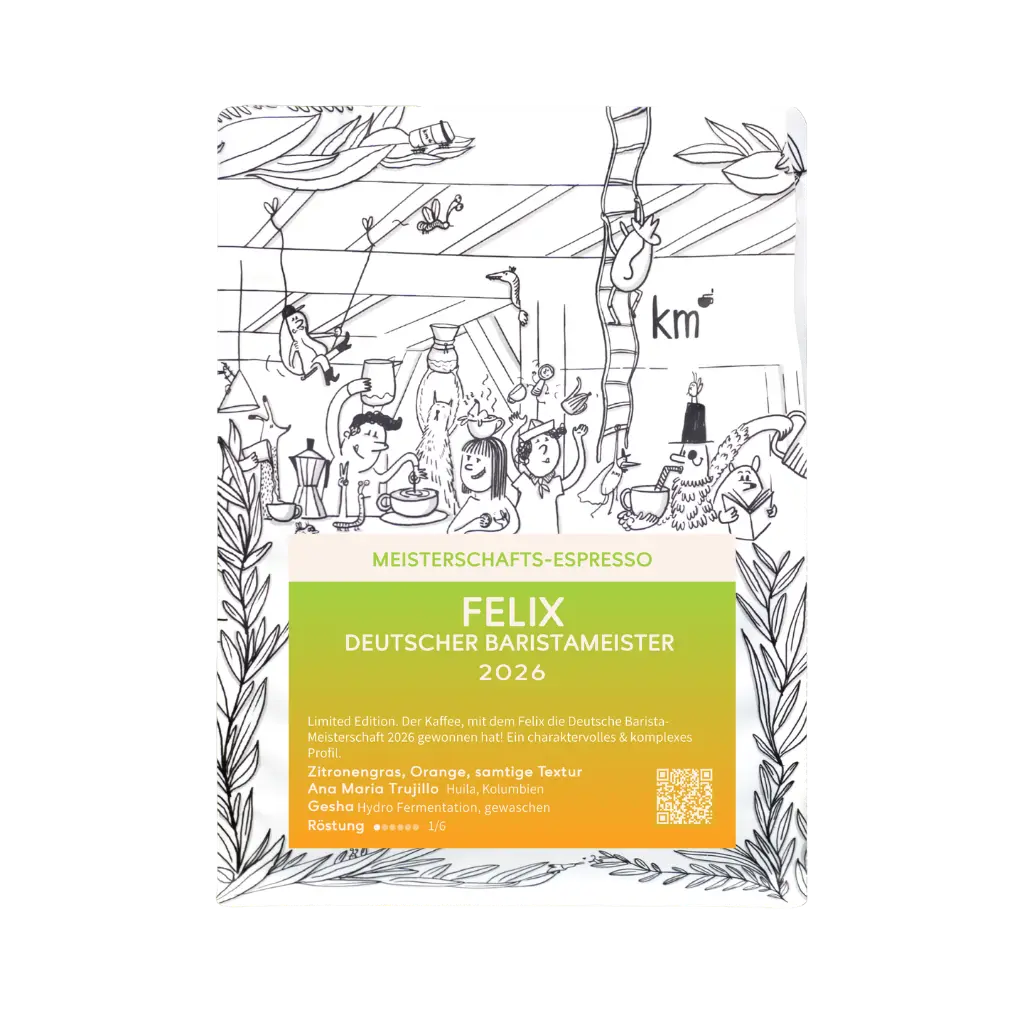
Felix's championship coffee: a Gesha from Ana Maria Trujillo's Finca Sinaloa, fermented anaerobically underwater in a sealed three-stage hydro process before washing. Exceptionally clean with elegant florals, lively acidity and balanced sweetness; velvety as espresso.
Lemongrass, Orange, Apricot, Floral
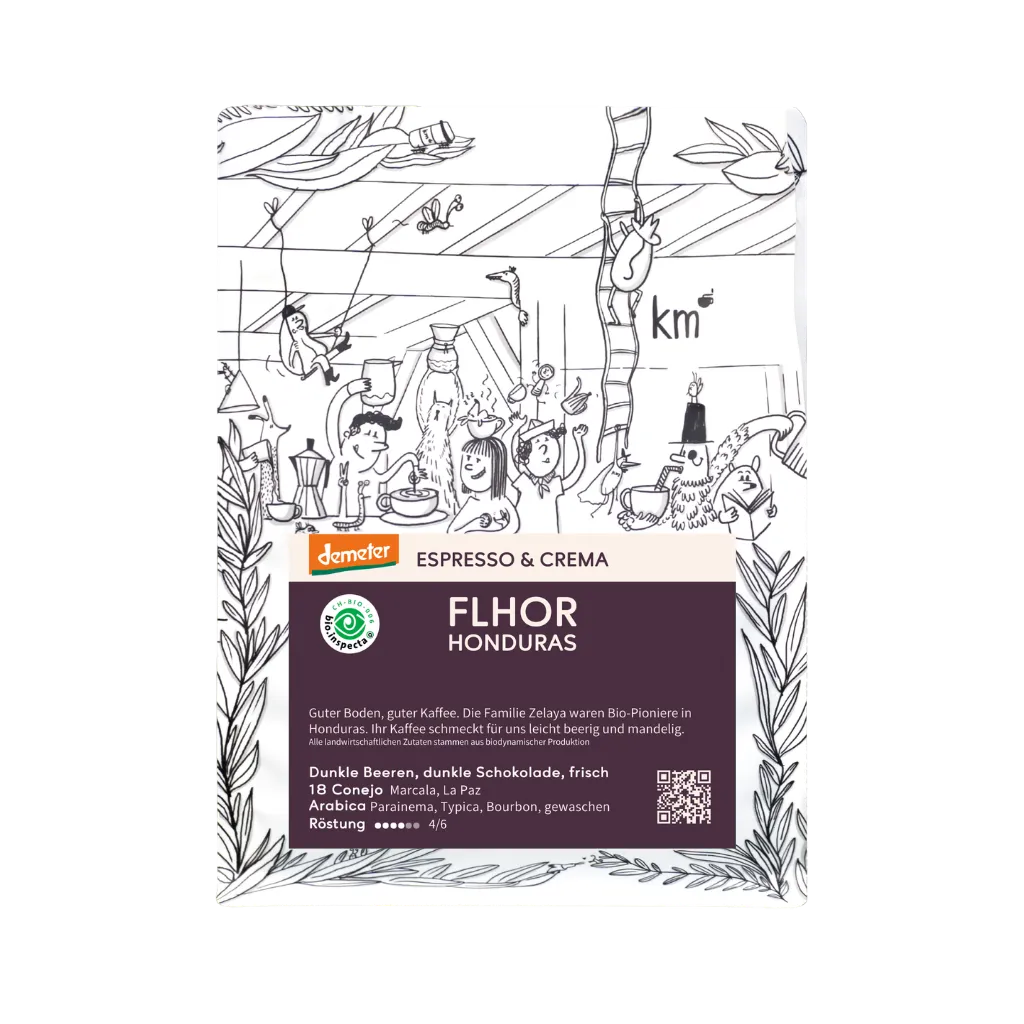
Flhor is the next generation of the Zelaya Contreras family, organic pioneers in Honduras 30 years ago; their 18 Conejo project focuses on soil health and regenerative farming. Dry-fermented about 20 hours, washed and patio-dried. For café crème or as a cheeky espresso.
Dark berries, Dark chocolate, Fresh
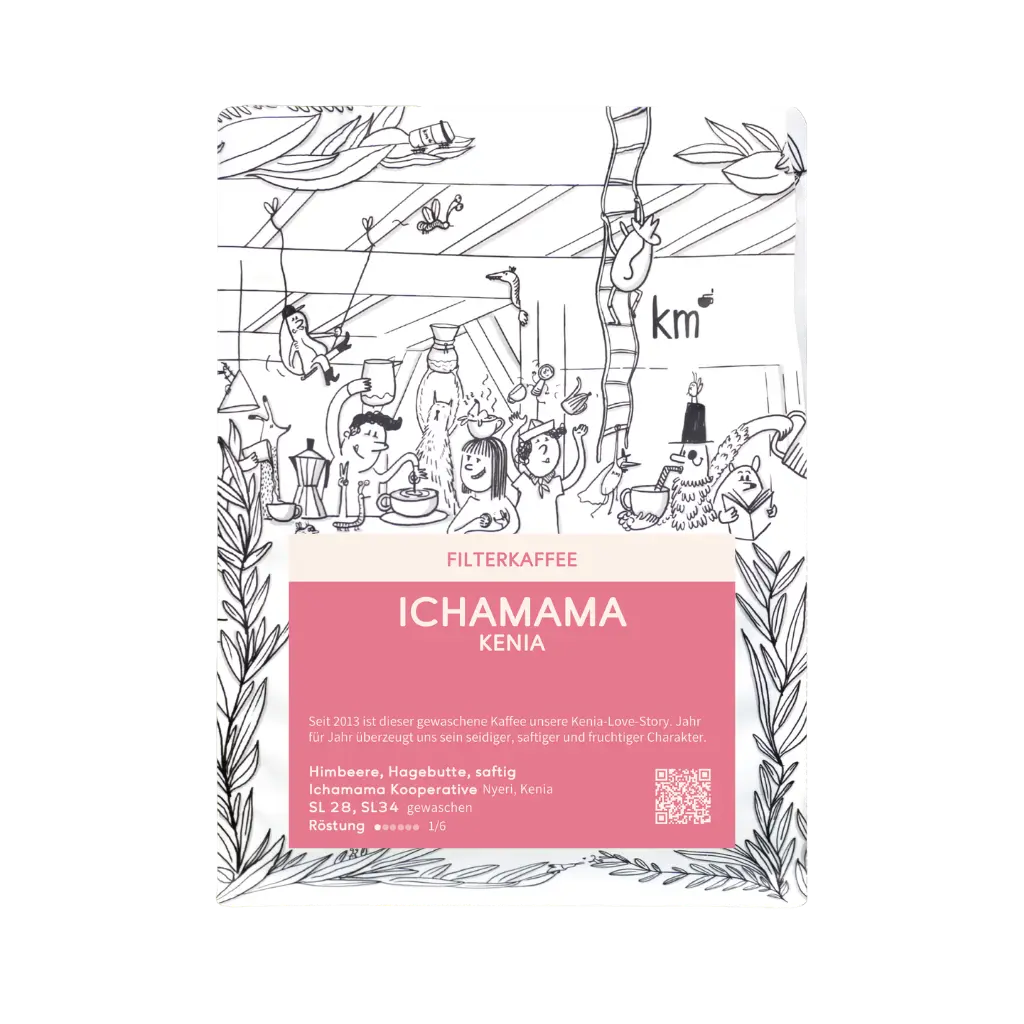
Kaffeemacher first visited the Ichamama cooperative in 2013 and have bought every fresh harvest since. Benjamin won the 2014 Swiss Brewers Cup with it, and Felix scored top marks with it at the 2022 Swiss championship. Pulped, fermented and washed.
Raspberry, Rosehip, Juicy
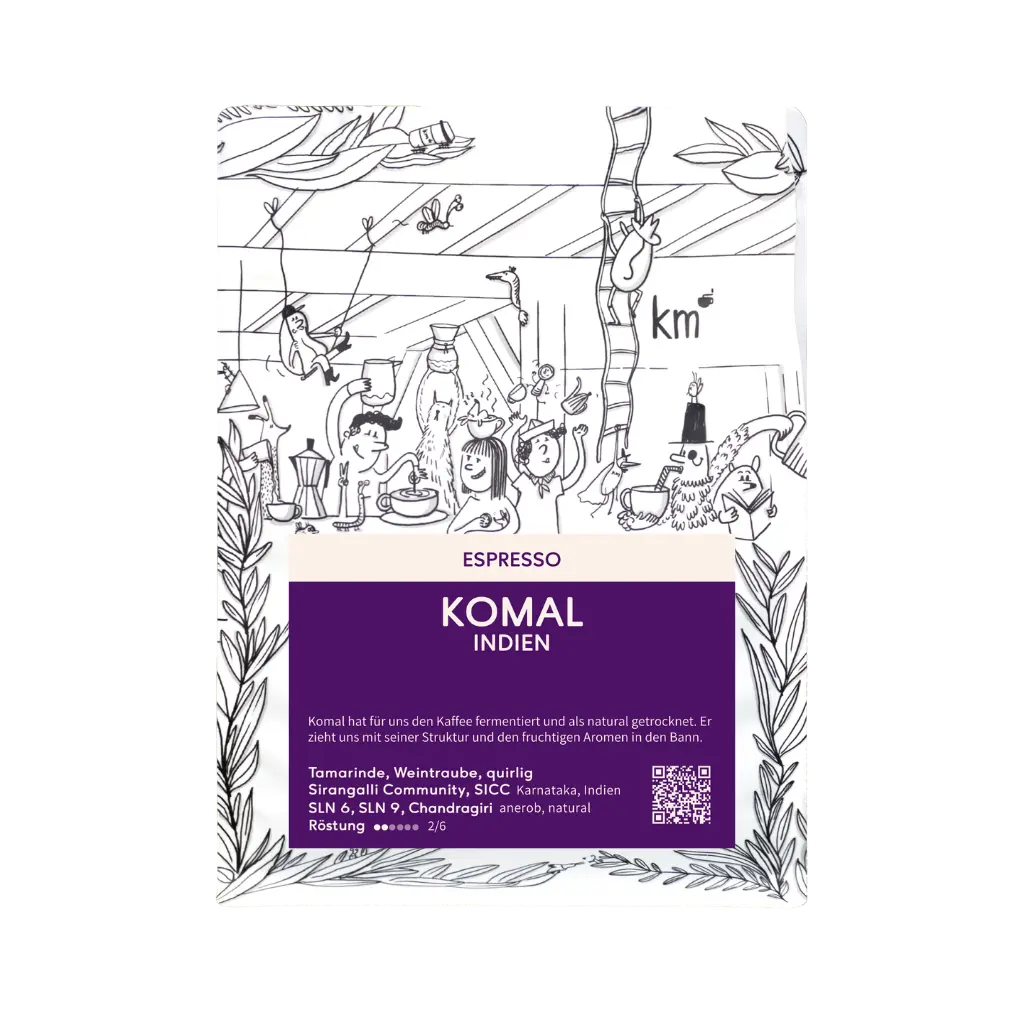
An anaerobic natural from the Sirangalli community, made with Komal and Akshay of the South India Coffee Company: five days in sealed tanks, 7-10 days' temperature-controlled drying, then two months' rest before hulling. Bought via This Side Up. Lively and dense.
Tamarind, Grapes, Lively
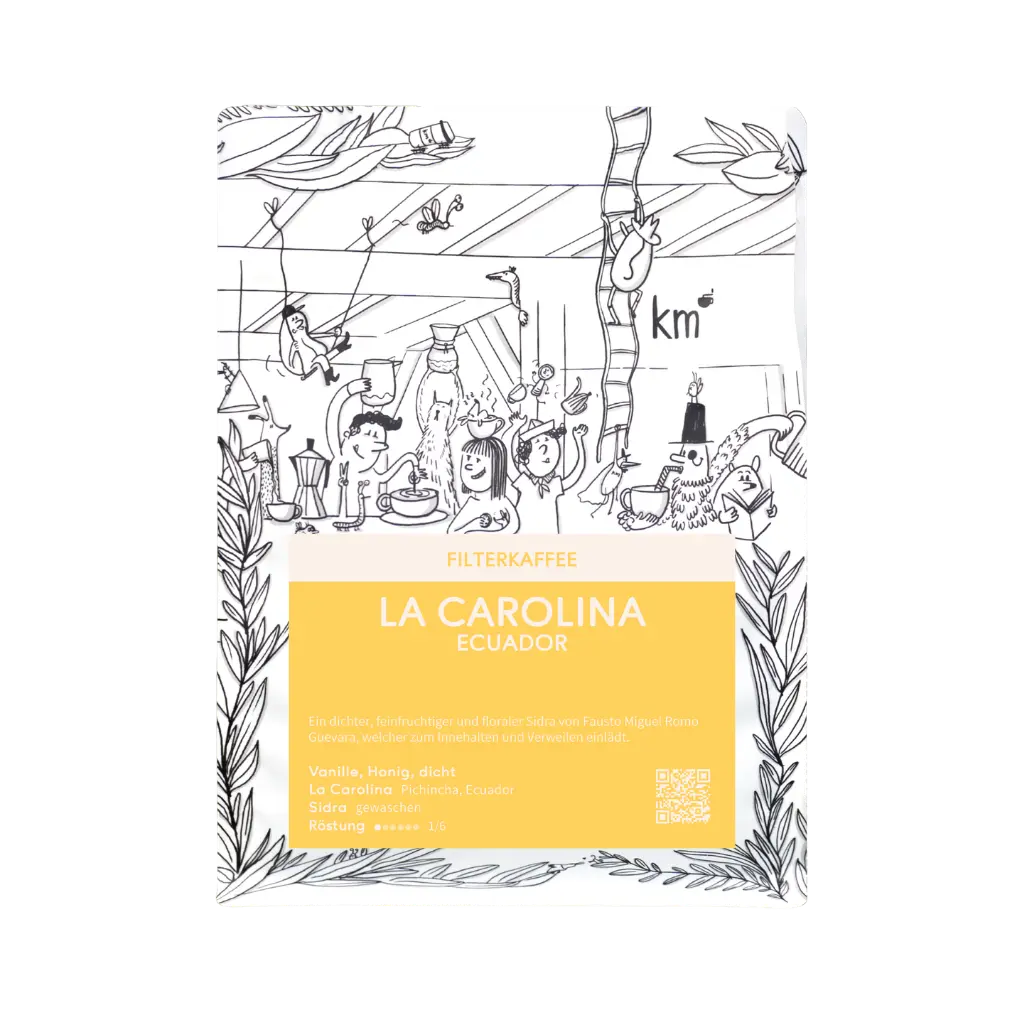
A washed Sidra from Fausto Miguel Romo Guevara's farm in a humid, misty microclimate, grown under guabo trees that shield the plants from heavy rain and sun so the cherries ripen slowly. Selectively picked and dried slowly for 15 days. Kaffeemacher's first Ecuadorian.
Honey, Vanilla, Sweet
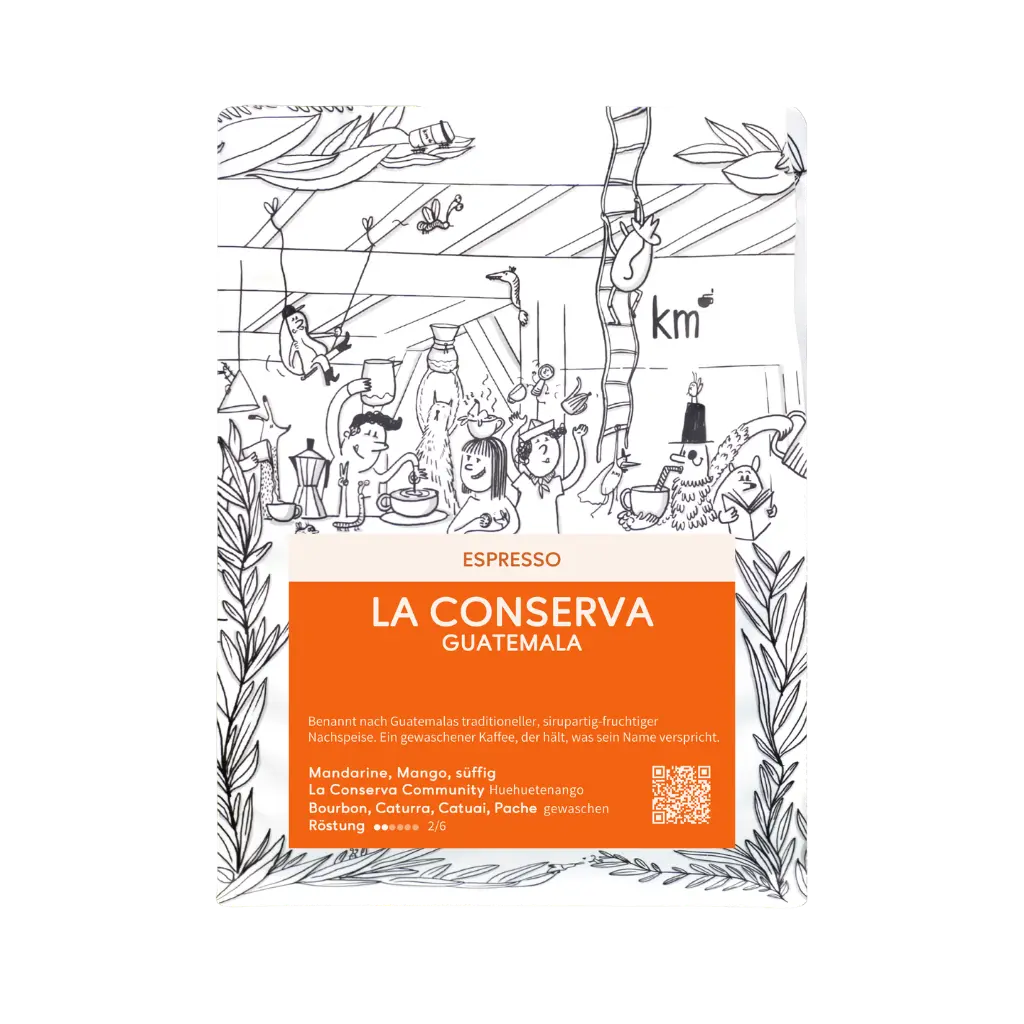
A community blend from 15 farmers around La Democracia, Unión Cantinil, San Pedro Necta and San Antonio Huista who grow coffee alongside fruit. Pulped, fermented 12-24 hours and washed: clear structure, very balanced, with elegant citrus-tropical sweetness. Kaffeemacher's seasonal fruity espresso.
Mandarin, Mango, Easy-drinking
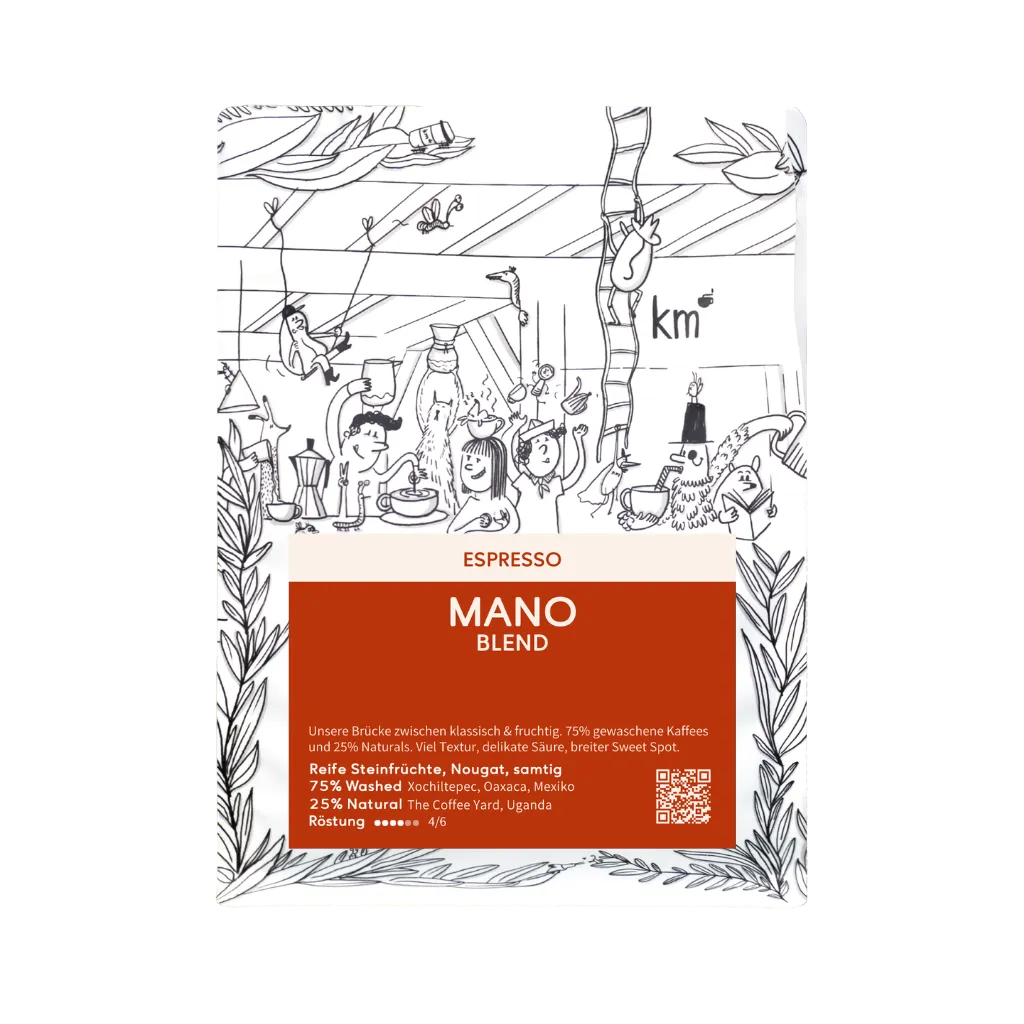
A blend that takes you by the hand (mano) and bridges classic dark espresso and fruity specialty: 75% washed coffees from Xochiltepec, Oaxaca (Mexico) for body and 25% natural from The Coffee Yard in Uganda for light fruit and mild acidity.
Dark stone fruit, Nougat, Velvety
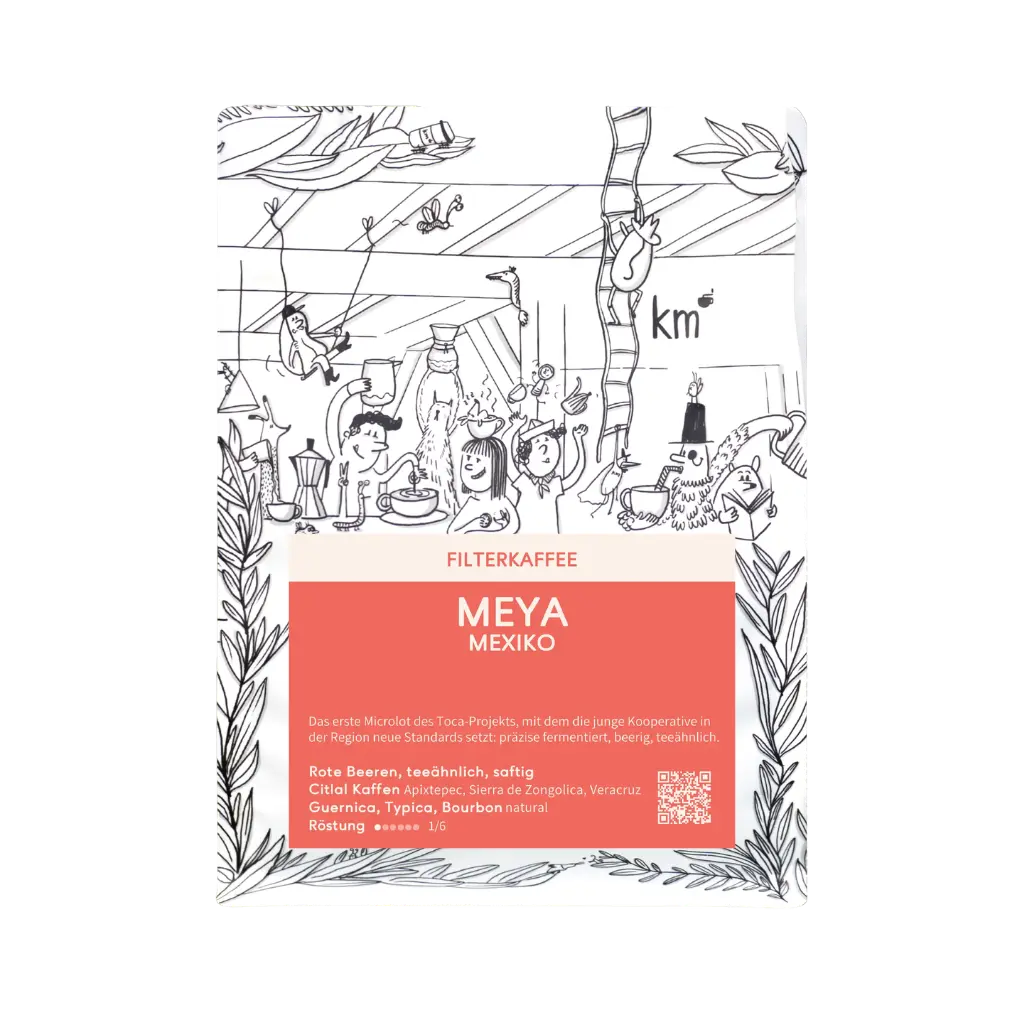
From the Citlal Kafen ("coffee star") cooperative in the steep, cloudy Sierra de Zongolica, where producers also grow fruit. Cherries ferment 90 hours in sacks before drying slowly on raised beds; the cool, damp climate makes naturals demanding and gives this one its fresh, juicy acidity.
Red berries, Juicy, Elegant
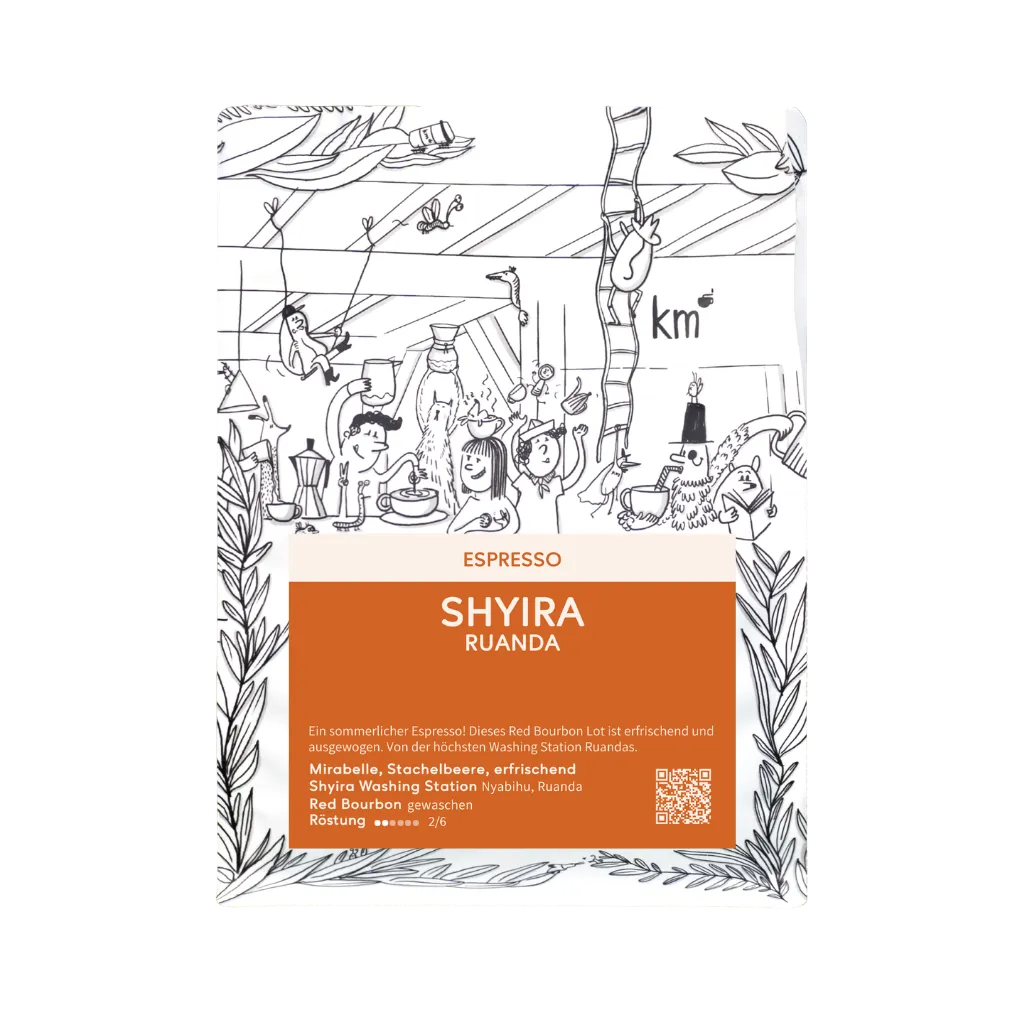
From the Shyira station, officially Rwanda's highest, with cherry grown up to 2300m. Depulped the traditional "ikinimba" way, with people treading the cherries in fermentation tanks to loosen the mucilage. Layered and refreshing, with a lemonade-like acidity.
Mirabelle, Gooseberry, Redcurrant
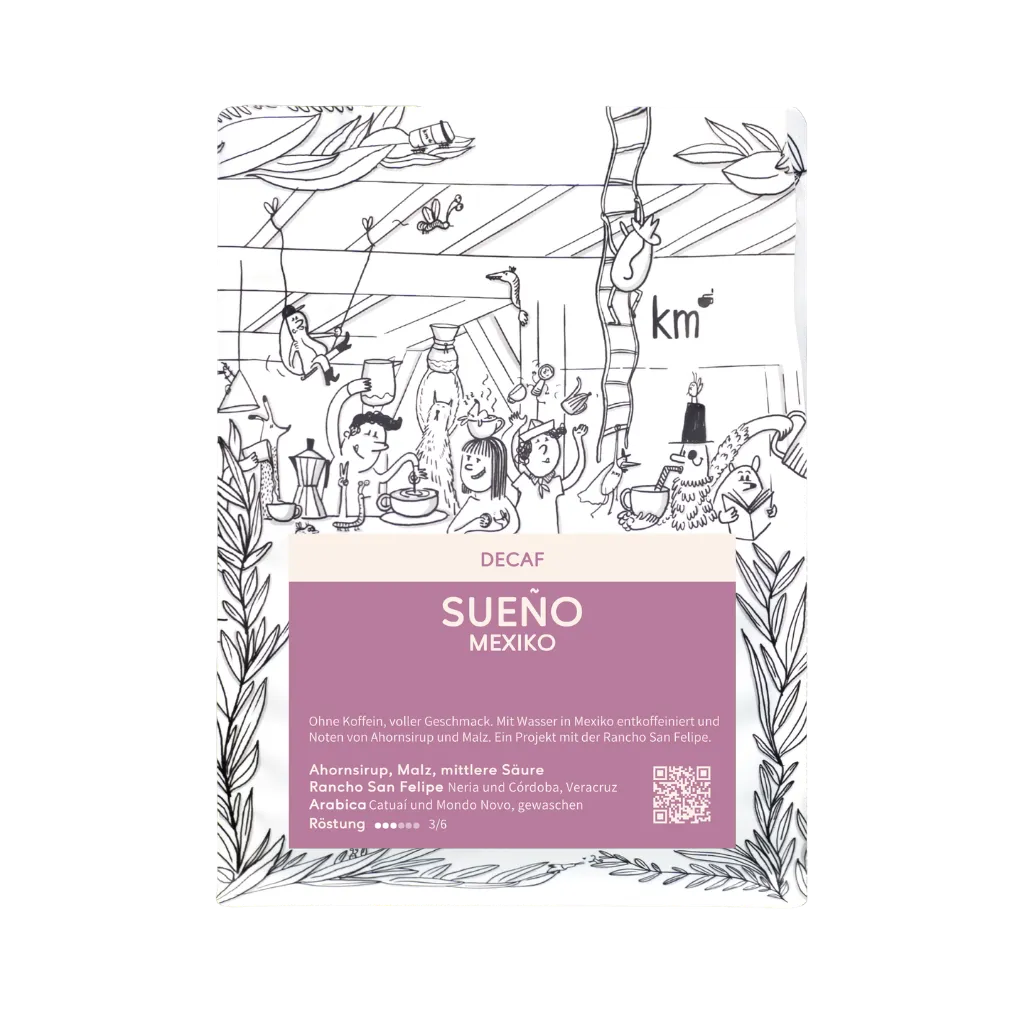
Kaffeemacher's attempt at the most regional decaf possible: grown by Rafael Reyes in Neria, processed at Rancho San Felipe and water-decaffeinated by Descamex, all within about 20km in Córdoba, then shipped from Veracruz. Descamex and Swiss Water are the only two water-decaf specialists.
Dark chocolate, Maple syrup, Malt
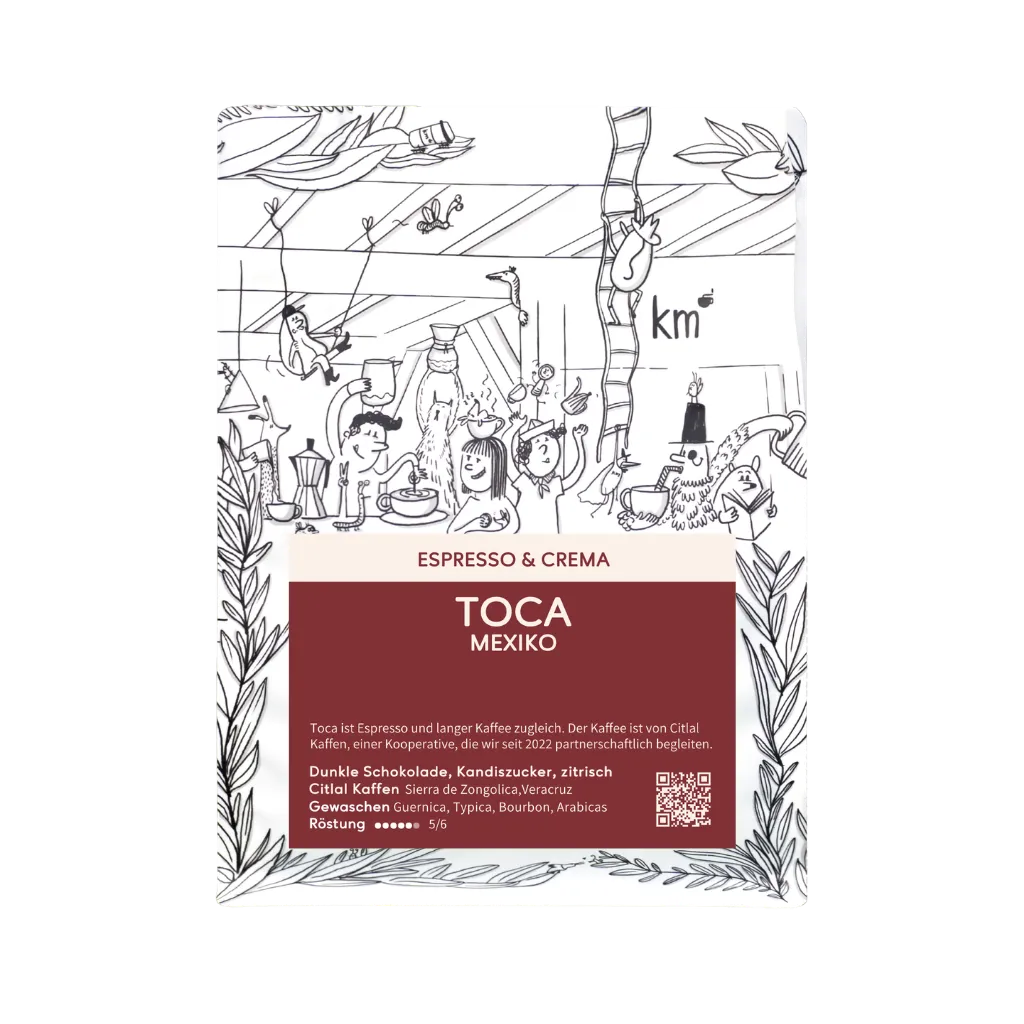
From the Tlapajti ("those who heal" in Nahuatl) project Kaffeemacher started in 2022 with Ensambles Cafés Mexicanos: a new cooperative, now working towards organic certification, with a micro-mill built in 2024 together with Black Hen roastery. Pulped, water-fermented and washed.
Dark chocolate, Rock candy, Citrus