
Roasteries / Kaffeekirsche Roastery
Kaffeekirsche Roastery
Berlin, Germany
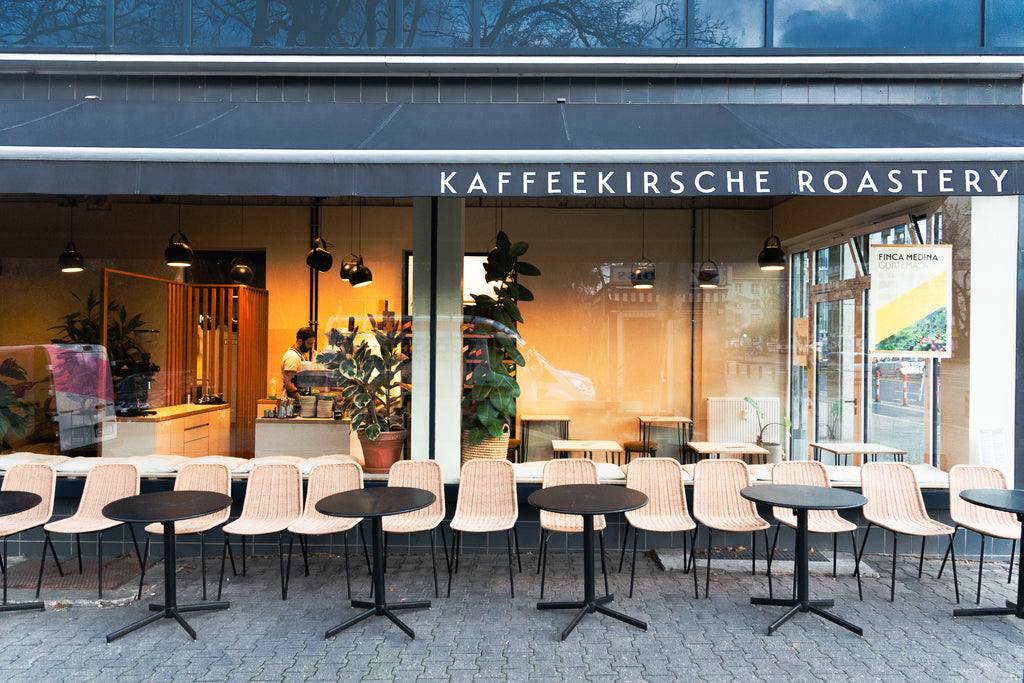
Kaffeekirsche is a Berlin specialty coffee roastery founded in 2014 by Turabi Kocadag, who left the restaurant world to run coffee end to end — with quality, transparency and a lot of heart. Coffee is drum-roasted daily and kept gentle enough to work across every brew method, from espresso to filter. The team sources directly, visiting farms in Colombia, Costa Rica and Nicaragua, and describes itself as an international crew as colourful and diverse as Berlin. Kaffeekirsche runs two locations: the roastery HQ at Tempelhofer Damm 160, where a glass-walled roastery, a café and a showroom of espresso machines, brewers and ceramics sit side by side; and the original Adalbertstraße 23 spot in Kreuzberg, a café and bakery since 2017. Beans ship across the EU from kaffeekirsche.berlin.
22
coffees
Germany
base
Locations
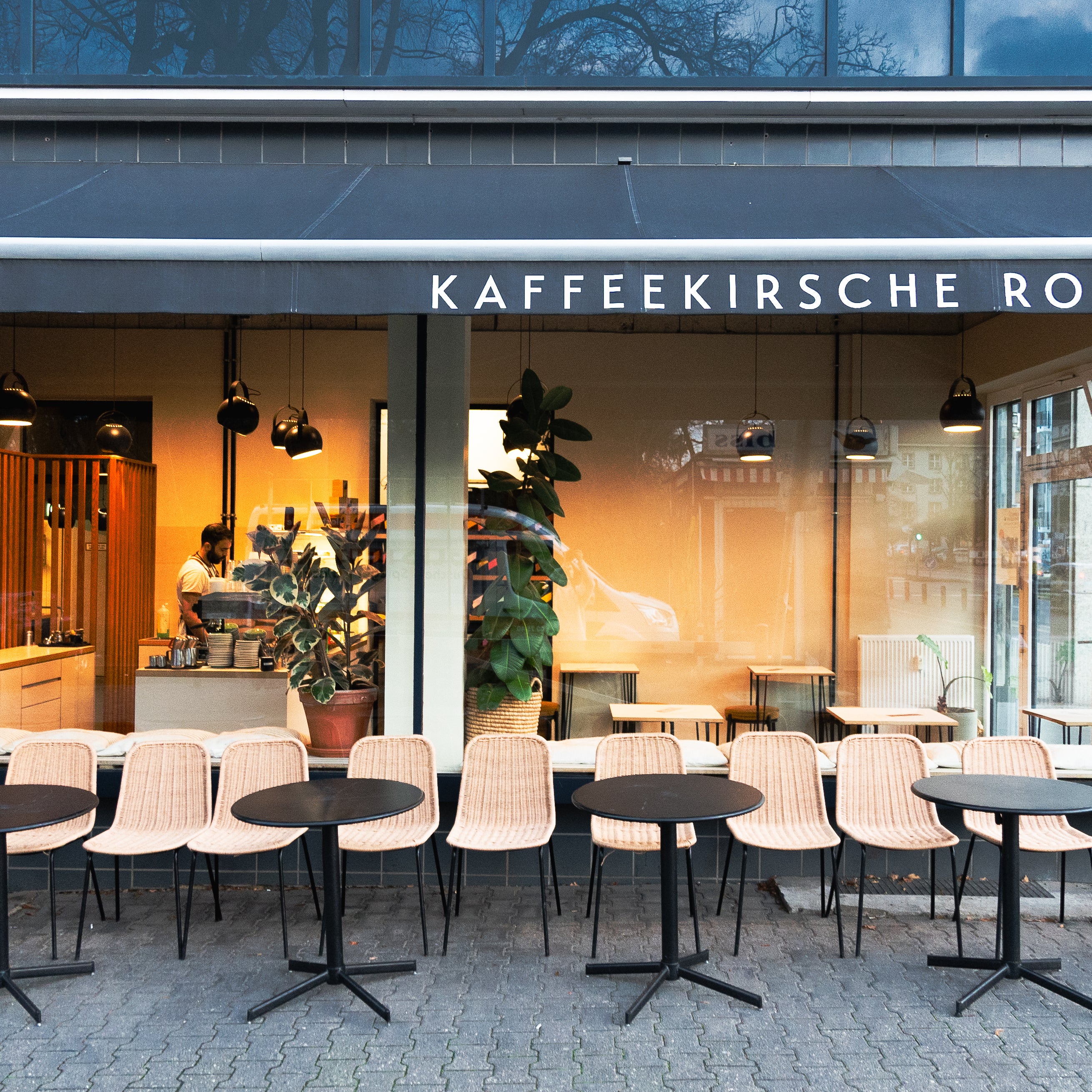
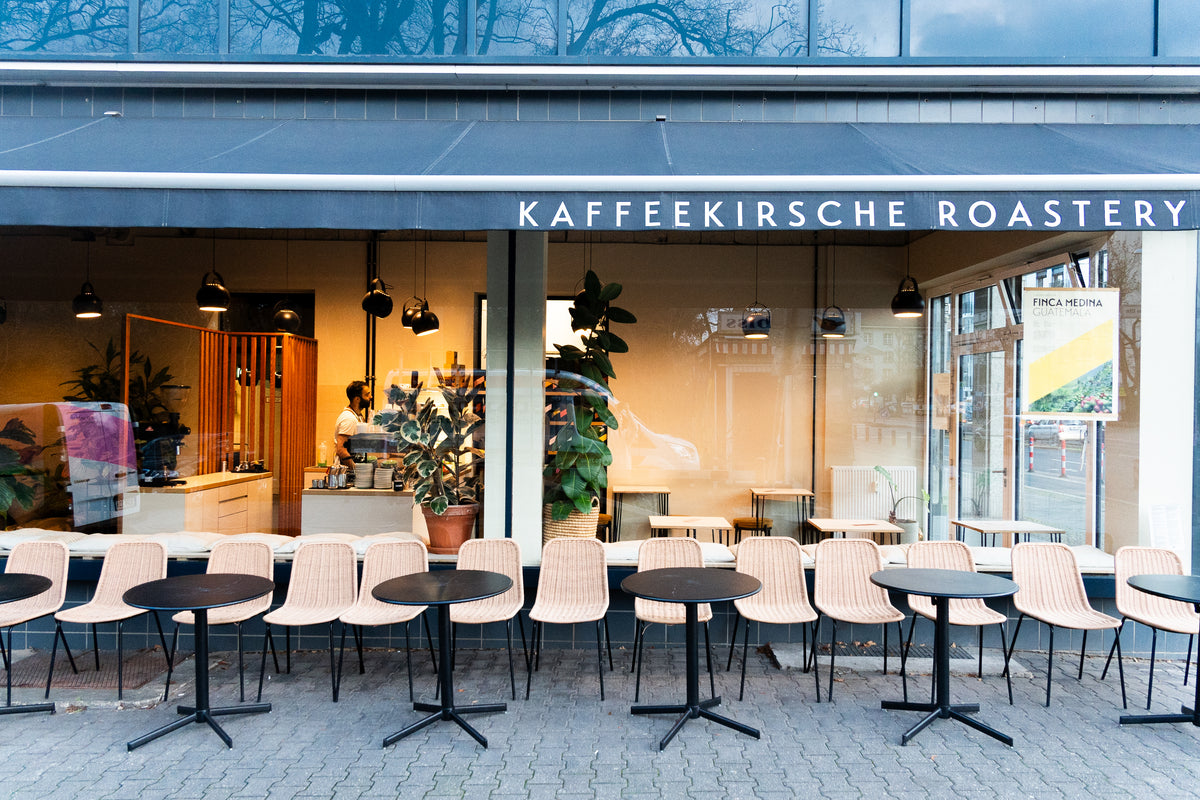
Kaffeekirsche Roastery — Tempelhofer Damm
Tempelhofer Damm 160, 12099 Berlin, GermanyMonday: 08:30-18:00 Tuesday: 08:30-18:00 Wednesday: 08:30-18:00 Thursday: 08:30-18:00 Friday: 08:30-18:00 Saturday: 09:00-17:00 Sunday: 09:00-17:00
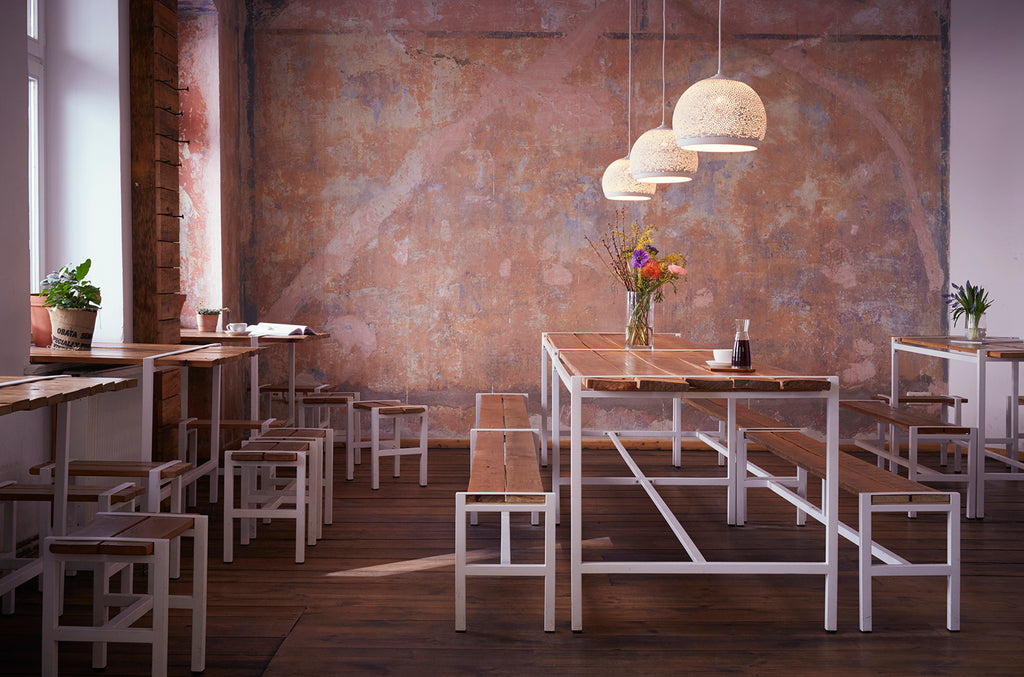
Kaffeekirsche — Adalbertstraße
Adalbertstraße 23, 10997 Berlin, GermanyMonday: 08:00-17:00 Tuesday: 08:00-17:00 Wednesday: 08:00-17:00 Thursday: 08:00-17:00 Friday: 08:00-17:00 Saturday: 10:00-17:00 Sunday: 10:00-17:00
+49 30 61627332Coffees
22 coffees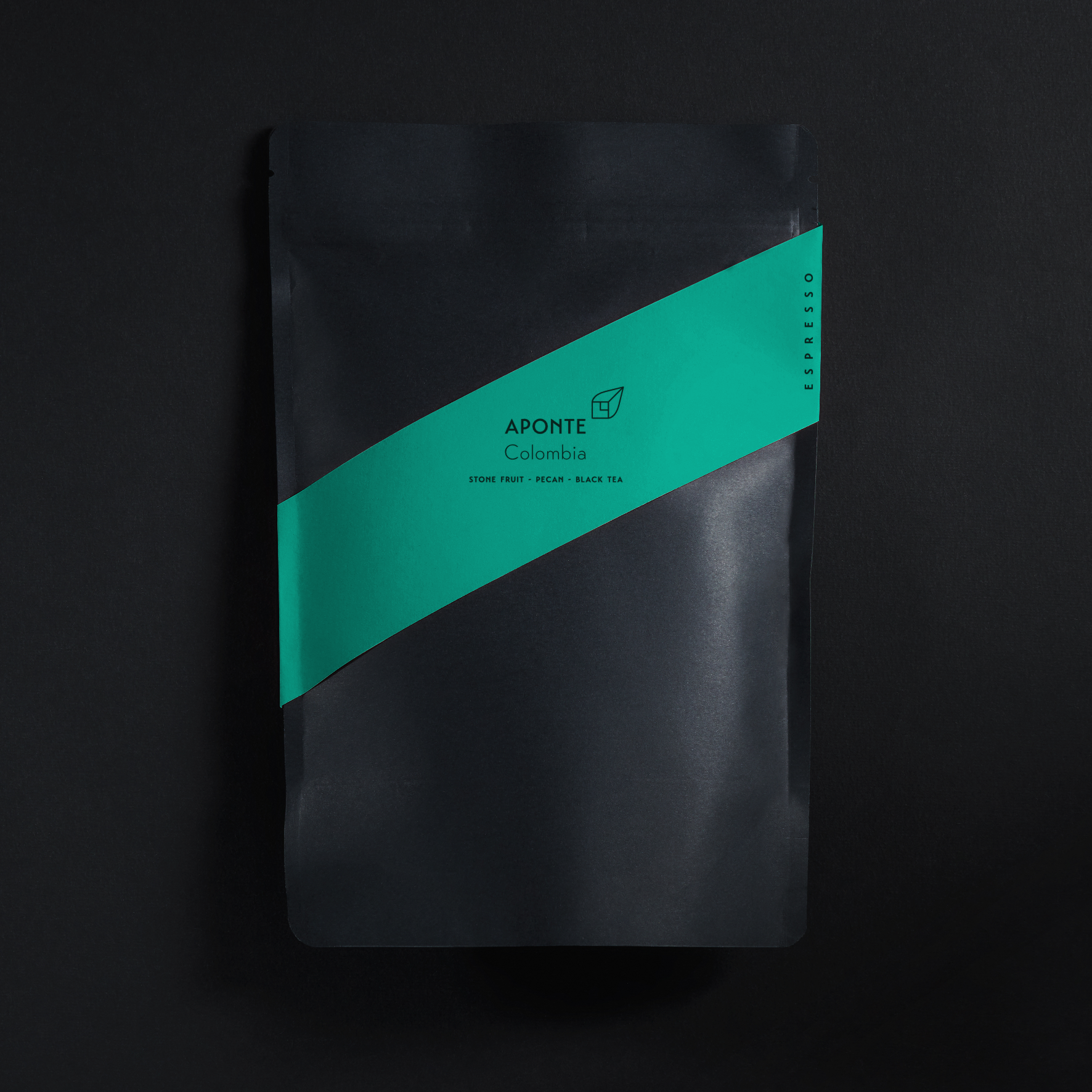
A honey-processed coffee from the Aponte indigenous reserve in Nariño, where around 200 smallholders have specialised in specialty coffee in recent years — many of them pioneers of honey processing in the region. At 1,700–1,800 m the cool, stable climate dries the cherry very slowly, giving a clean structure: full body, present sweetness, gentle acidity, with stone fruit, pecan and black tea.
Stone fruit, pecan, black tea
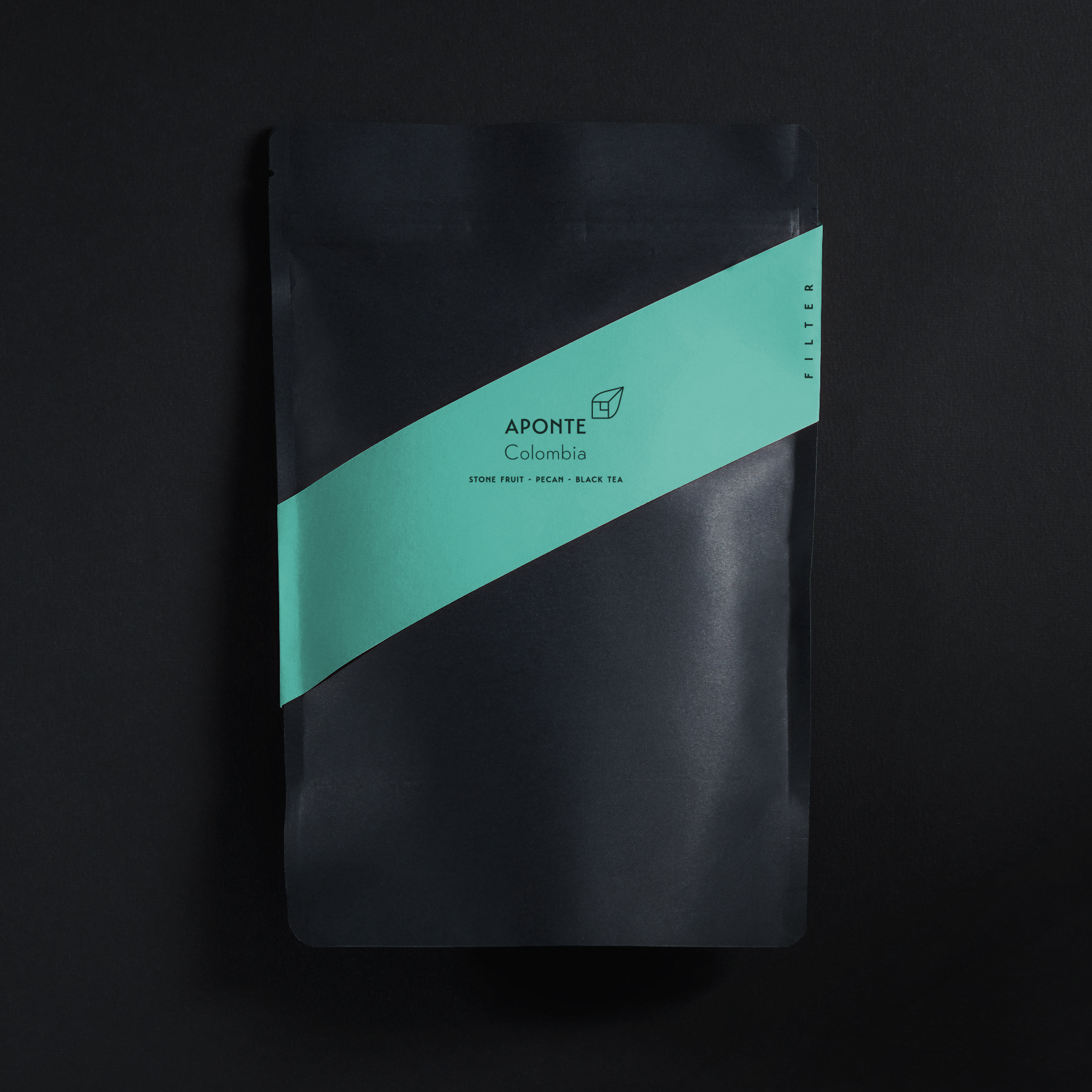
The filter roast of the Aponte honey lot from the indigenous reserve in Nariño, where ~200 smallholders, many of them honey-process pioneers, farm at 1,700–1,800 m. Slow drying in a cool, stable climate gives a clean structure: full body, present sweetness, gentle acidity — stone fruit, pecan and black tea.
Stone fruit, pecan, black tea
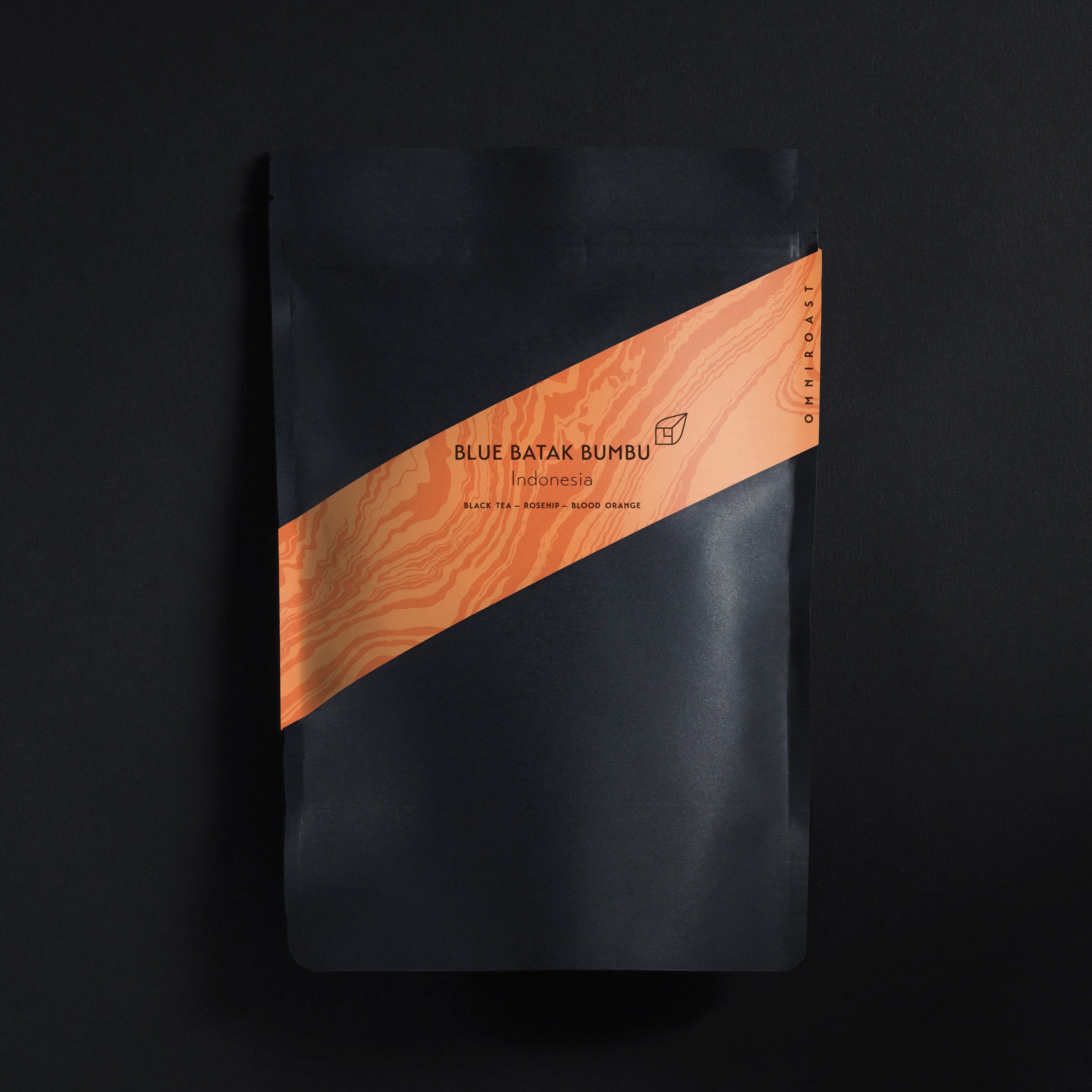
From the highland plateau of Lintong Nihuta near Lake Toba — volcanic soil laid down some 70,000 years ago by the Toba supereruption — where the indigenous Batak have grown coffee for generations on plots of under a hectare. Wet-hulled (Giling Basah) in the Sumatran style: full body, restrained sweetness, mild acidity, with black tea, rosehip and blood orange.
Black tea, rosehip, blood orange
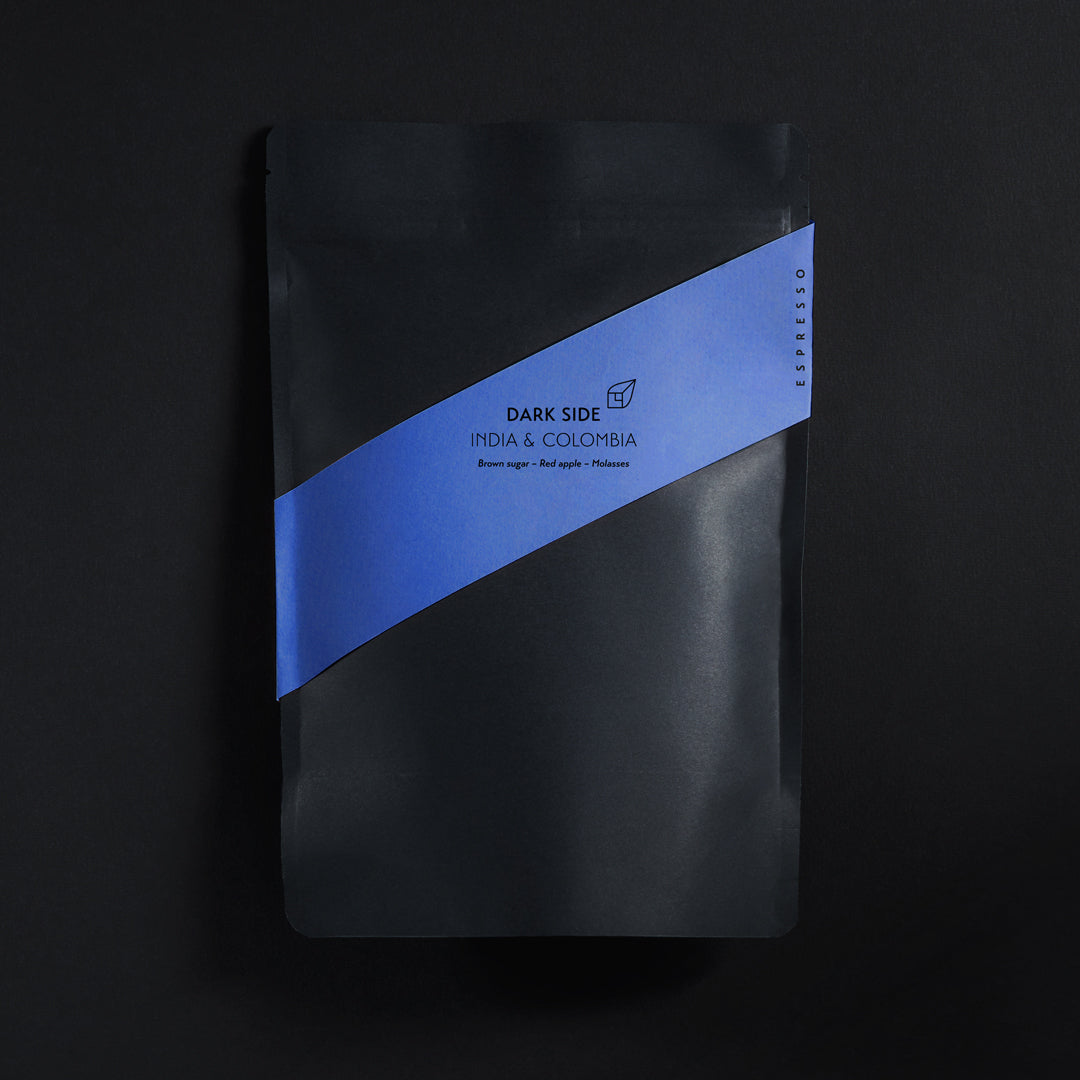
Dark Side does what the name says — a bold, dark espresso blend for anyone who finds everything else too tame, but still built to carry fine aromatic detail. The Indian component brings a full body and spicy-sweet notes of almond wood and liquorice; full body, caramelised sweetness, soft light acidity: brown sugar, red apple and molasses.
Brown sugar, red apple, molasses
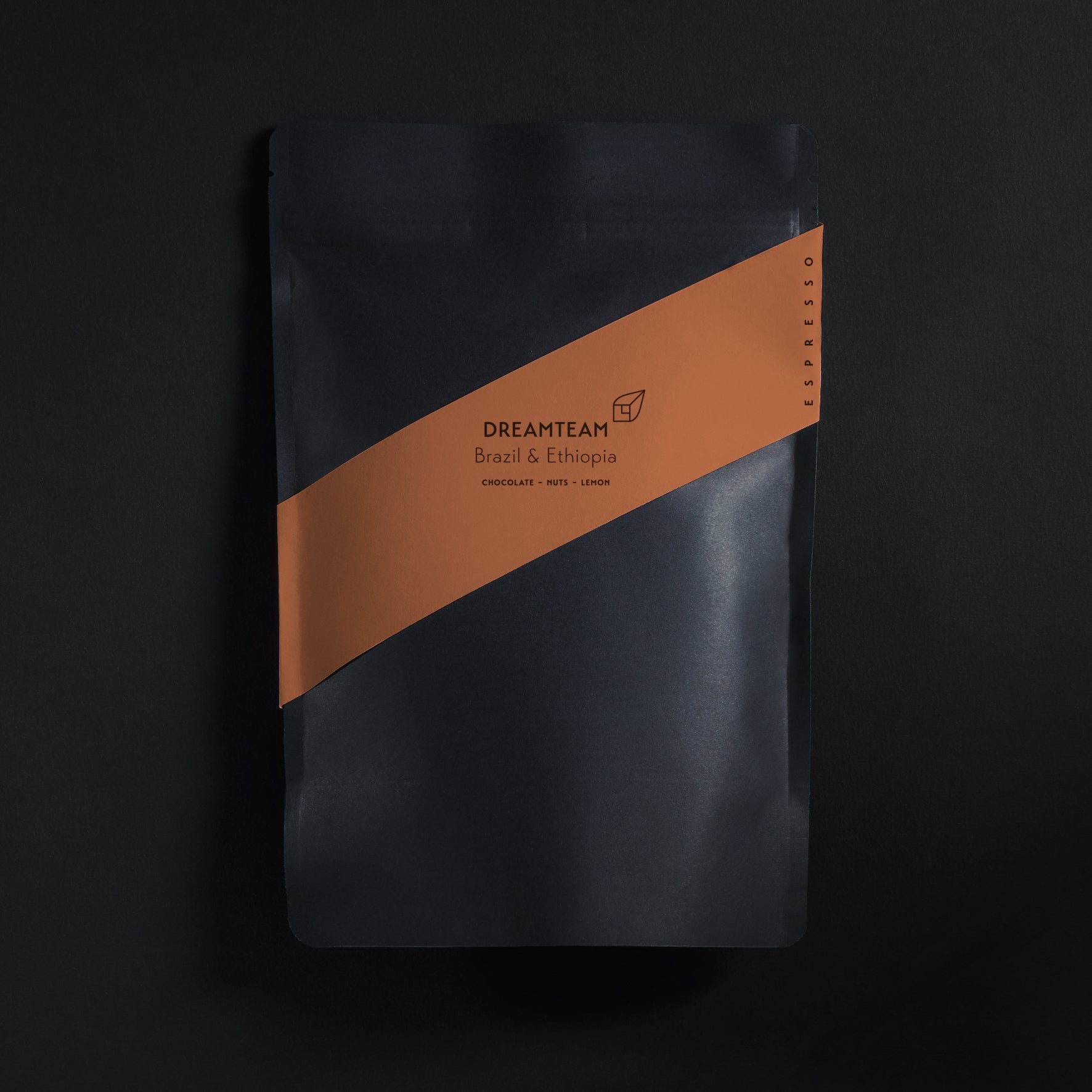
Kaffeekirsche's house espresso blend — 70% natural Brazil, 30% washed Ethiopia. Creamy body, lively sweetness and harmonious acidity: sweet caramel notes from the Brazil rounded out by the fine fruit of the Ethiopian. Works with milk but happily drunk black.
Chocolate, nut, lemon
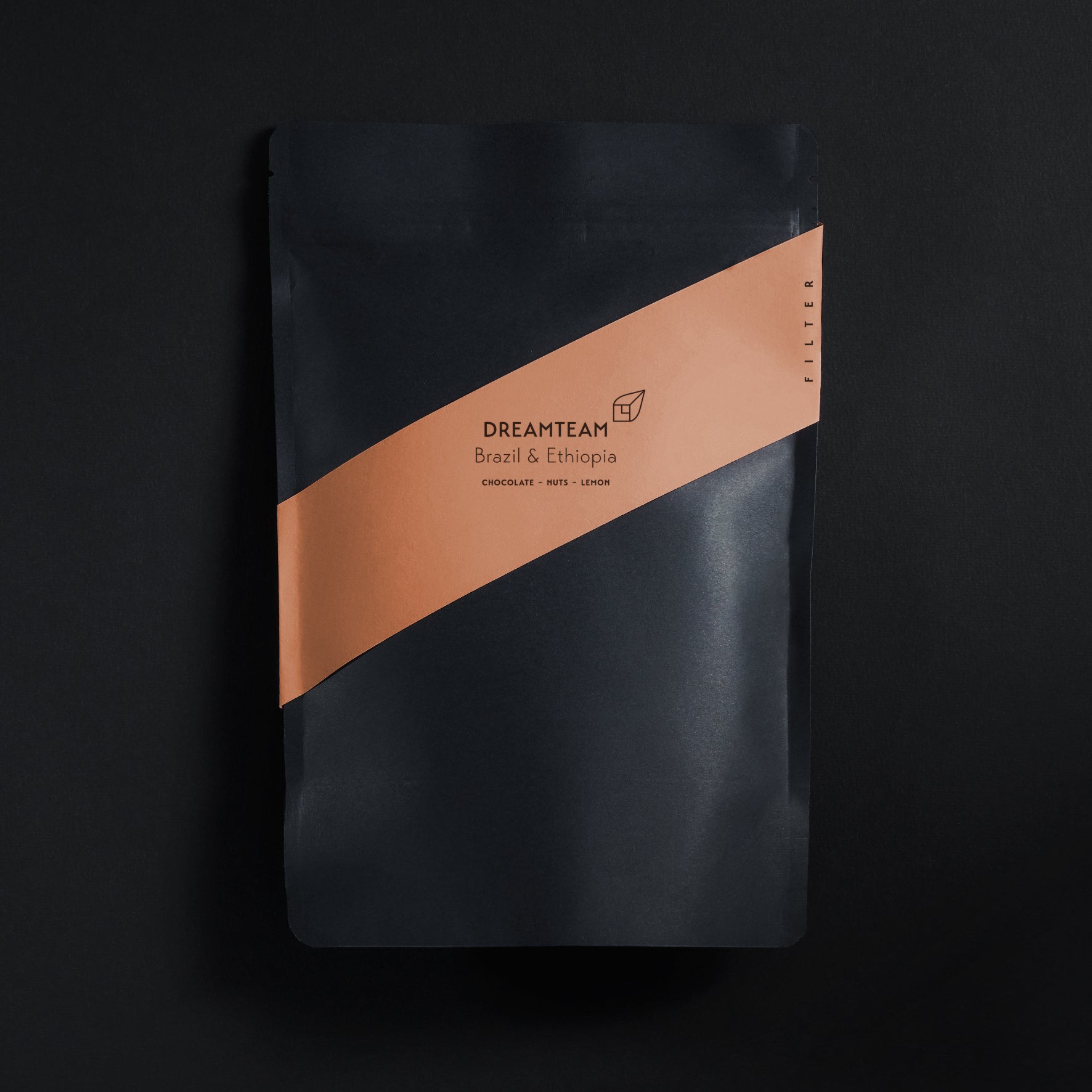
The filter version of the Dreamteam house blend — here a 50/50 split of natural Brazil and washed Ethiopia. Creamy body, lively sweetness, harmonious acidity: caramel sweetness lifted by delicate Ethiopian fruit. Chocolate, nut and lemon.
Chocolate, nut, lemon
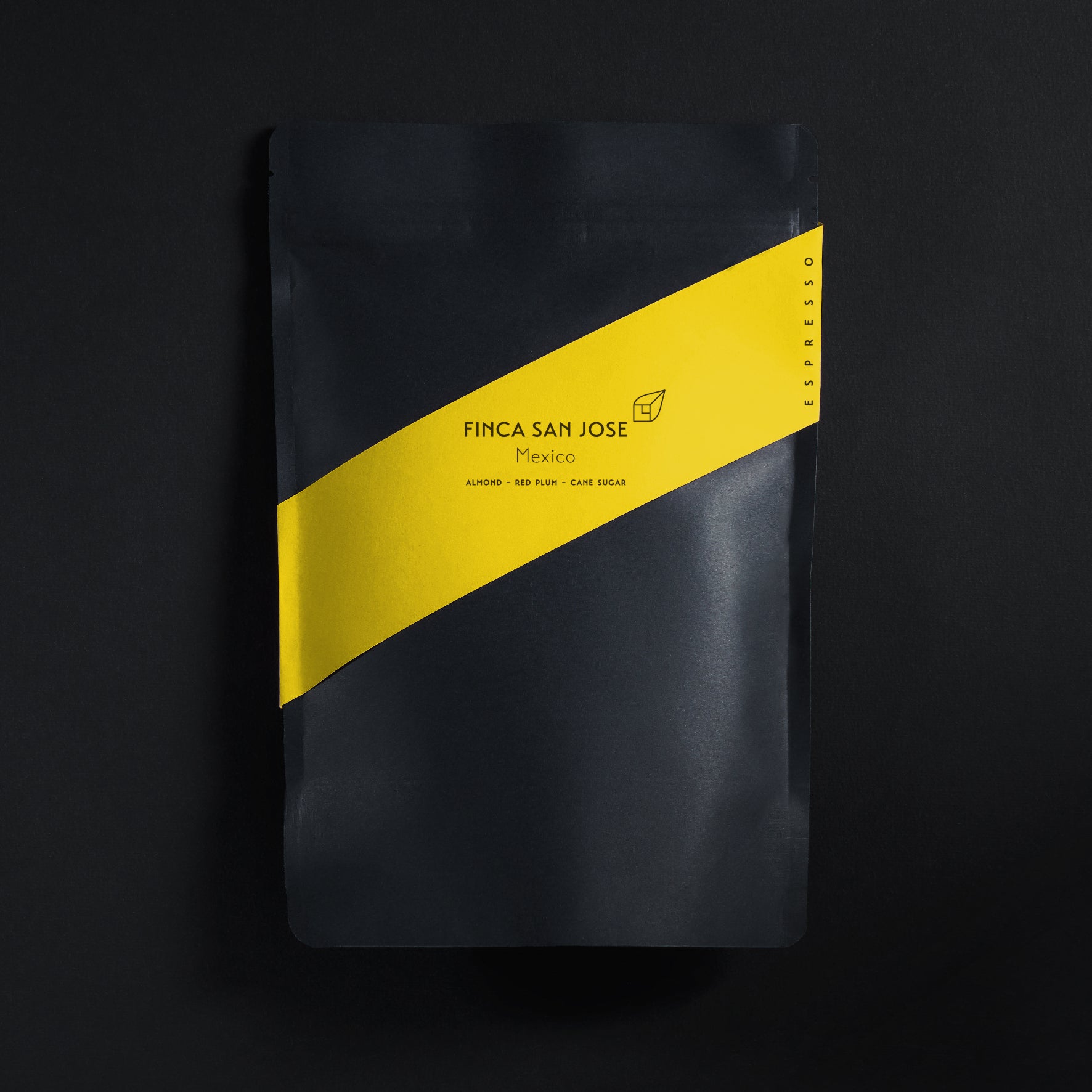
The espresso roast of Alejandro Martínez Anaya's Finca San José near Coatepec, Veracruz — 250 hectares with a focus on the Anacafe 14 variety, in the region where Mexican coffee first took root. Washed, full-bodied, balanced sweetness, restrained acidity: almond, red plum and cane sugar.
Almond, red plum, cane sugar
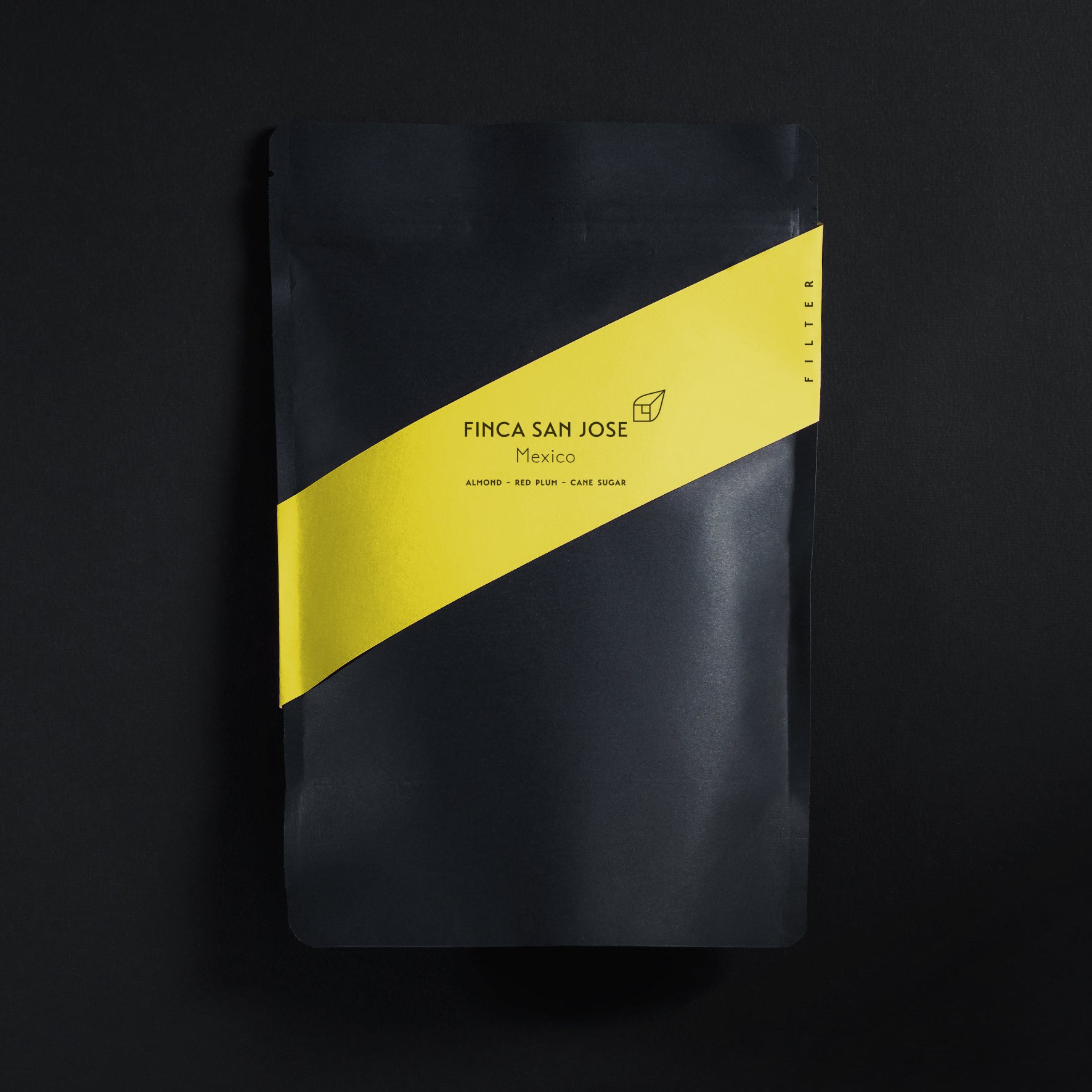
Veracruz rises from the Gulf coastal plain up into the mountains, and it is where Mexican coffee began. Near Coatepec, Alejandro Martínez Anaya farms 250 hectares at Finca San José with a particular focus on Anacafe 14, a naturally hybrid variety. Washed, full-bodied, balanced sweetness, restrained acidity: almond, red plum and cane sugar.
Almond, red plum, cane sugar
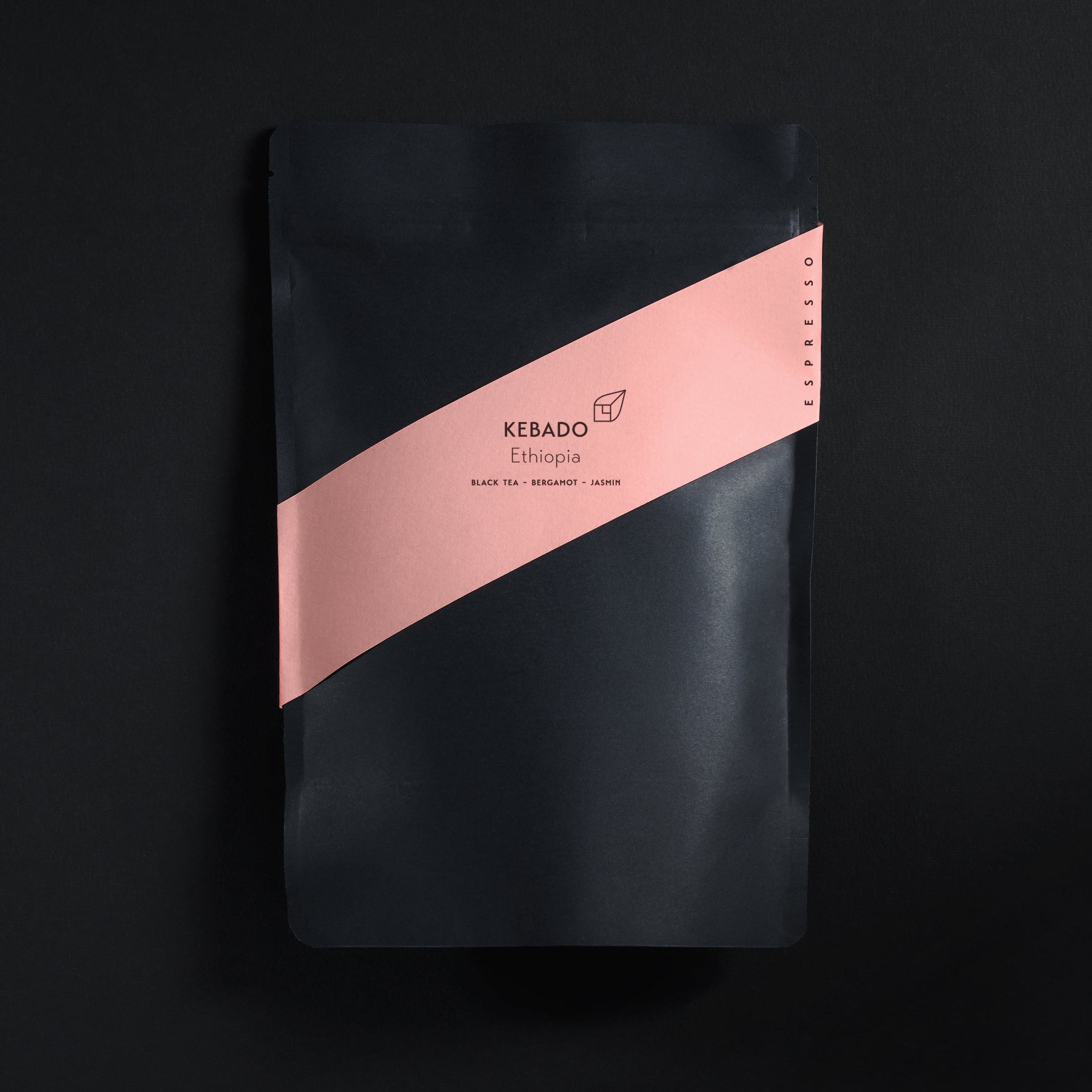
In the far south of Sidama, where the highlands cross into the Gedeo zone, lies the Dara district. Around the village of Kebado coffee is grown as "garden coffee" — trees right beside the farmers' houses, sheltered by larger crops like enset and avocado, in deep-red nutrient-rich soil. Washed: silky body, pronounced sweetness, bright acidity, with black tea, bergamot and jasmine.
Black tea, bergamot, jasmine
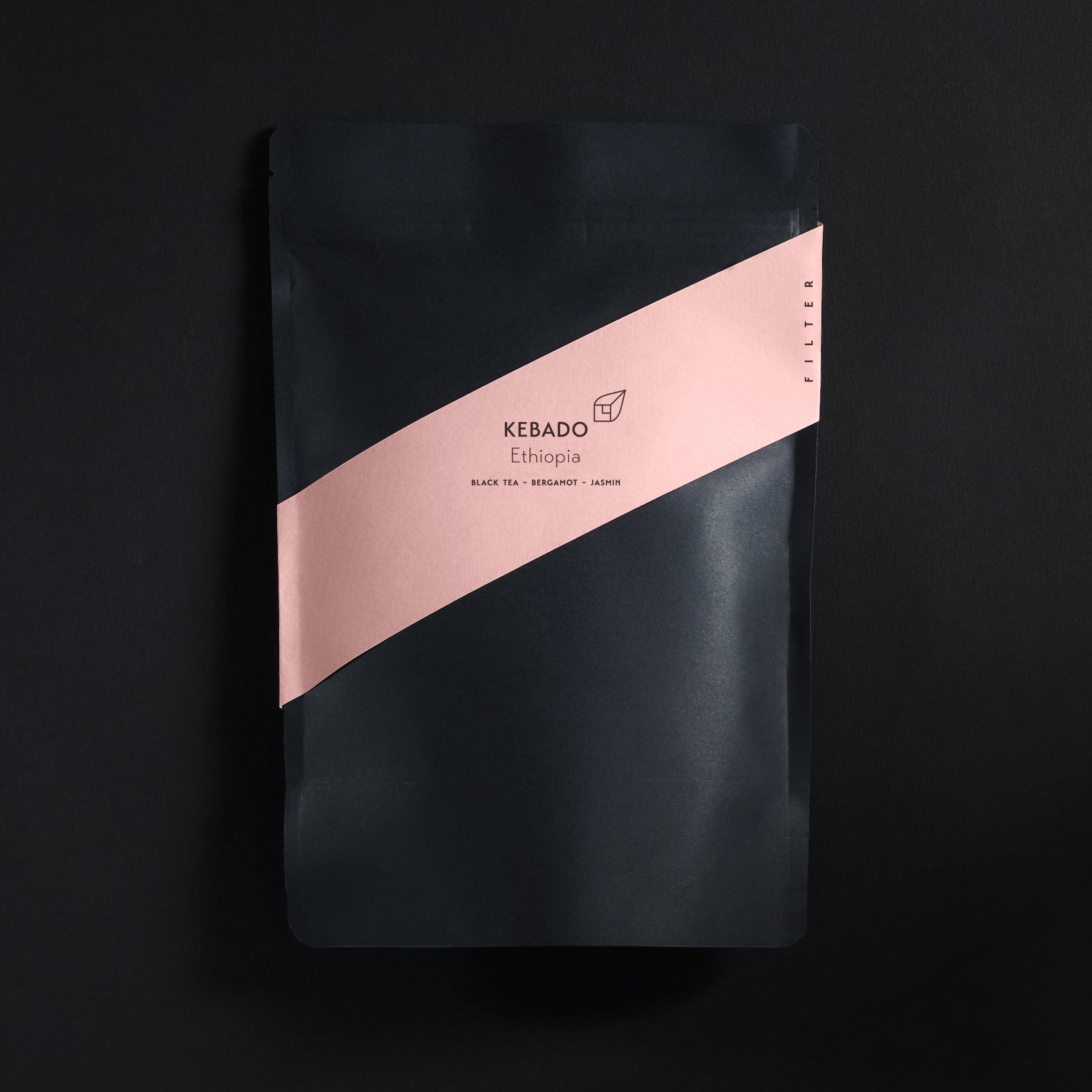
The filter roast of the Kebado garden-coffee lot from the Dara district of southern Sidama, where trees grow beside farmers' houses under enset and avocado shade in deep-red soil. Washed: silky body, pronounced sweetness, bright acidity — black tea, bergamot and jasmine.
Black tea, bergamot, jasmine
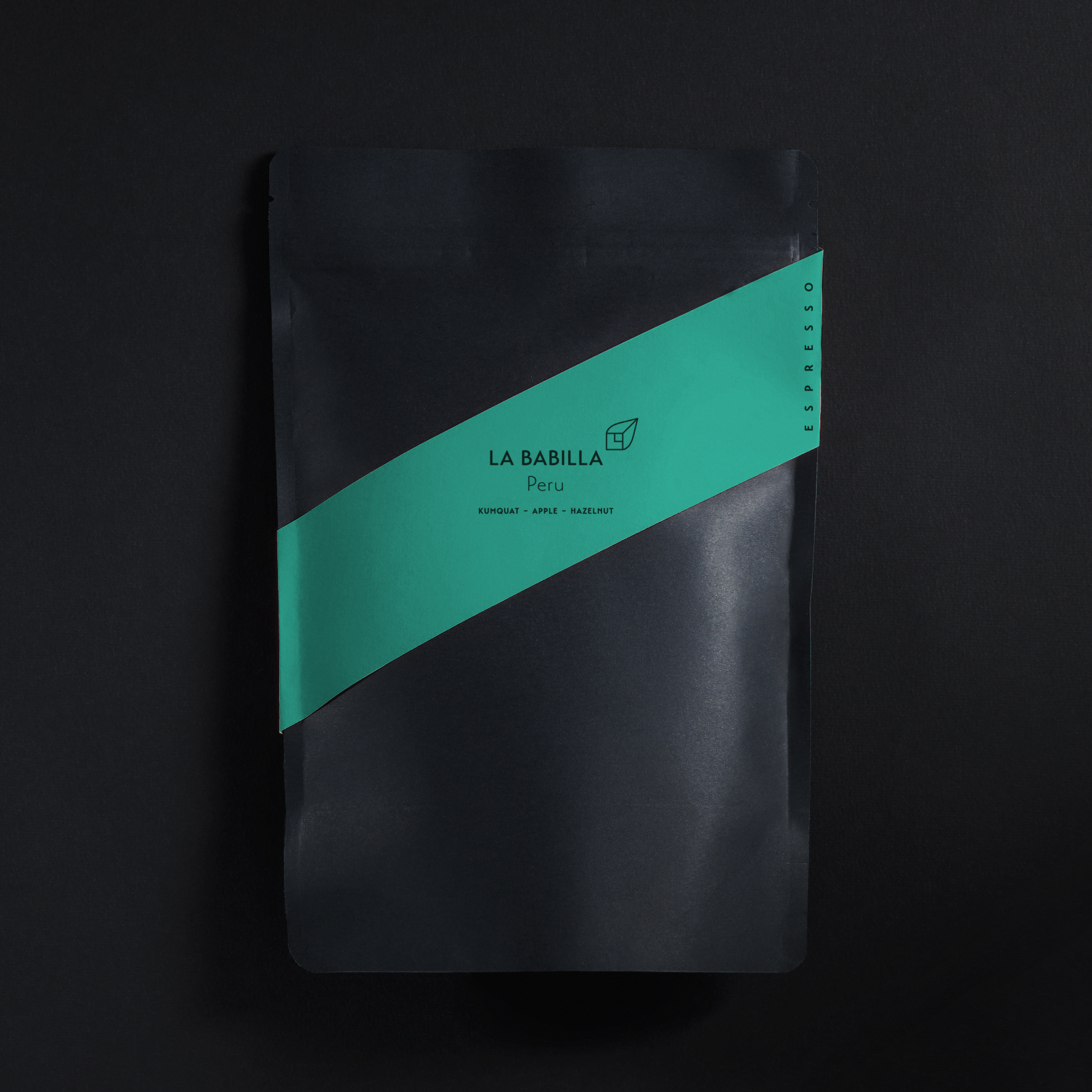
David Guevara Cotrina farms 4.5 hectares — 2.5 of them under shade trees — at Finca Flor de la Montaña in Cajamarca. He is an organic-certified member and board member of the young Lima Coffees cooperative, supported by importer Cafe Imports since 2017. Balanced body, intense sweetness, mild acidity: kumquat, apple and hazelnut.
Kumquat, apple, hazelnut
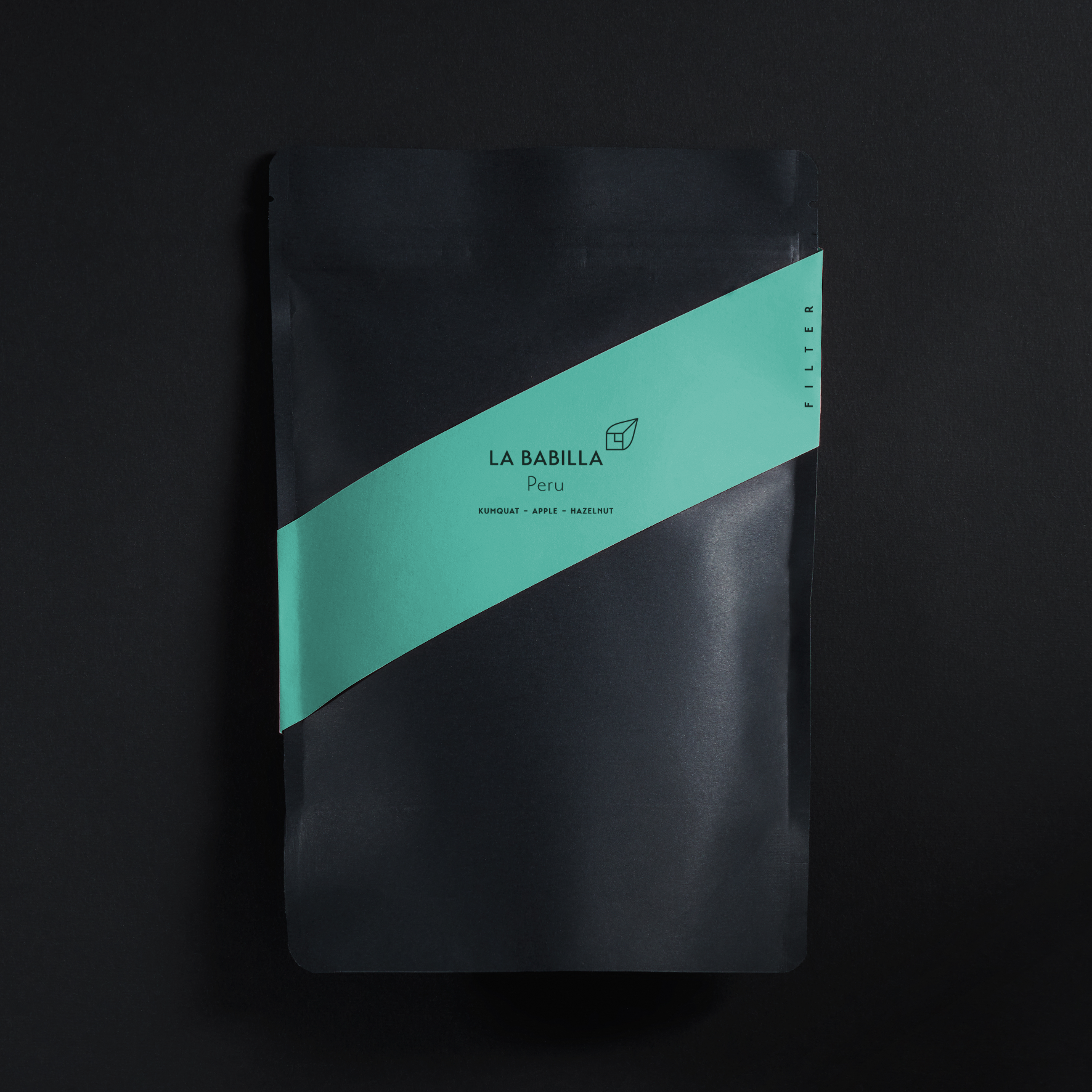
The filter roast of David Guevara Cotrina's Finca Flor de la Montaña in Chirinos, Cajamarca — 4.5 hectares, 2.5 under shade, organic-certified, part of the Lima Coffees cooperative. Balanced body, intense sweetness, mild acidity: kumquat, apple and hazelnut.
Kumquat, apple, hazelnut
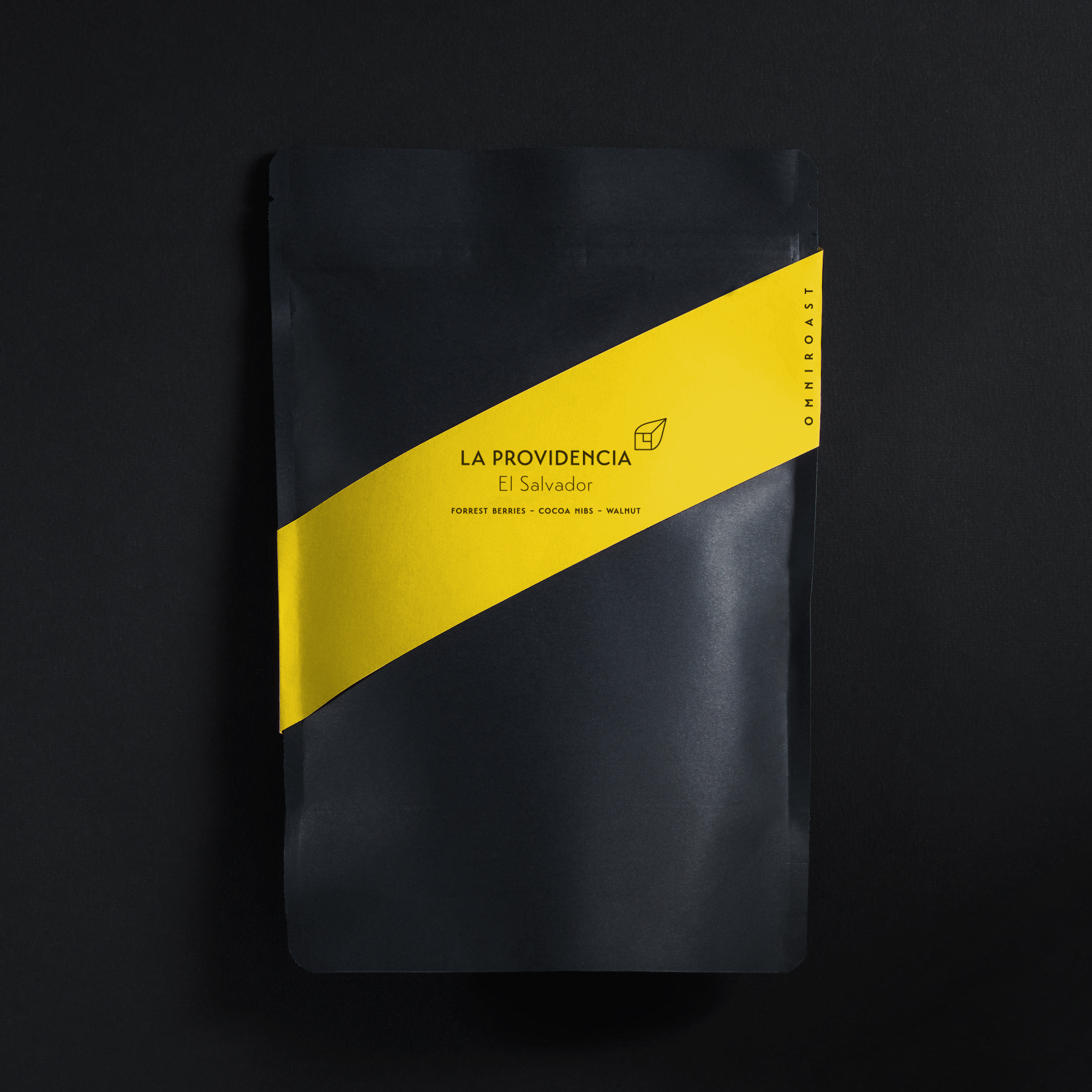
Finca La Providencia sits at around 1,500 m in the hills of Chalchuapa, one of El Salvador's oldest coffee towns. Café Pacas has farmed it since 2007 and runs it as an experimental farm, growing 54-plus varieties on small plots under scientific observation. Strong, long body, mild sweetness, restrained acidity: forest berries, cacao nibs and walnut.
Forest berries, cacao nibs, walnut
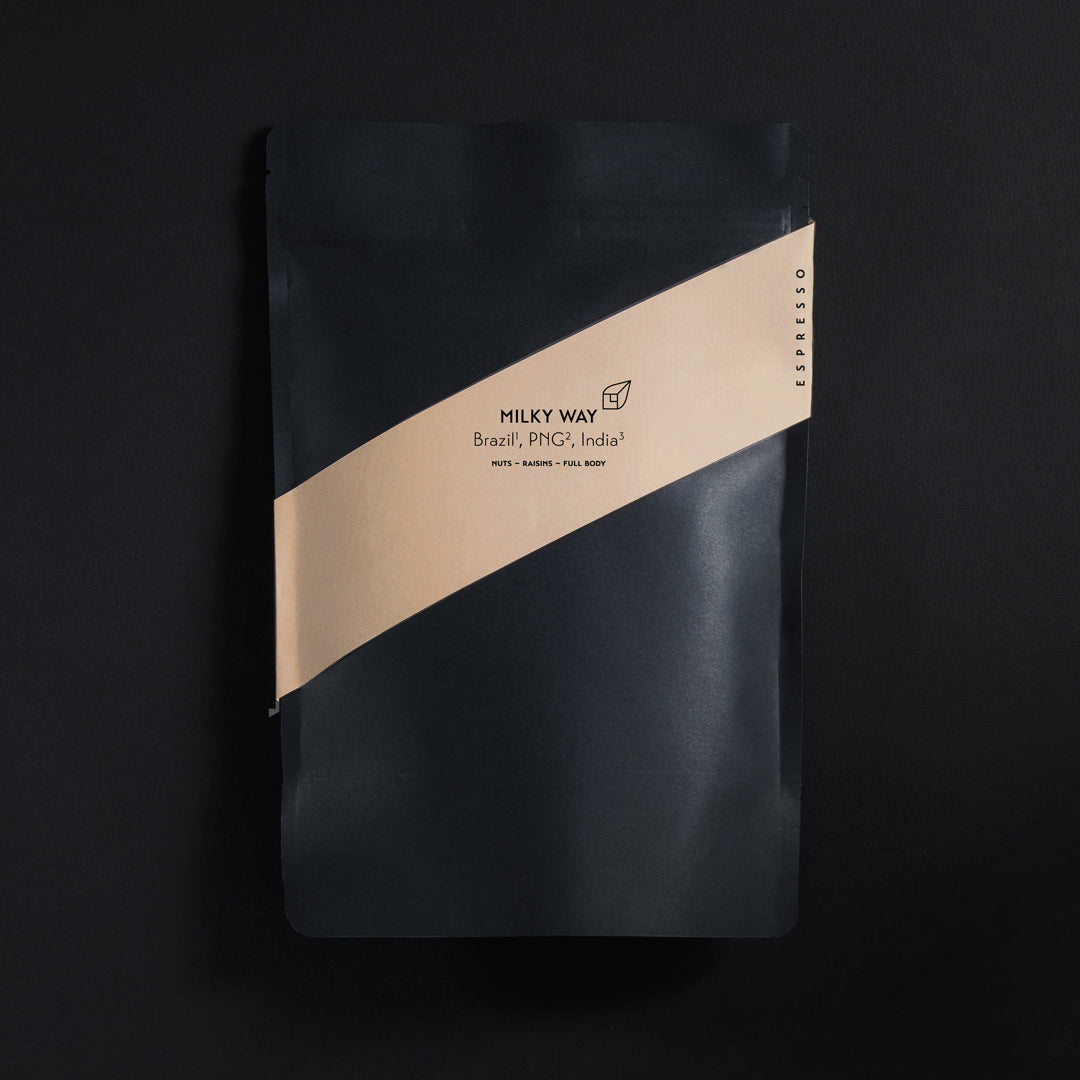
The Milchstraße house blend — Brazil, Papua New Guinea and monsooned India tuned for milk drinks. Full body, caramelised sweetness: nut and raisin, made for cappuccino and latte macchiato but comfortable straight too.
Nut, raisin, caramel
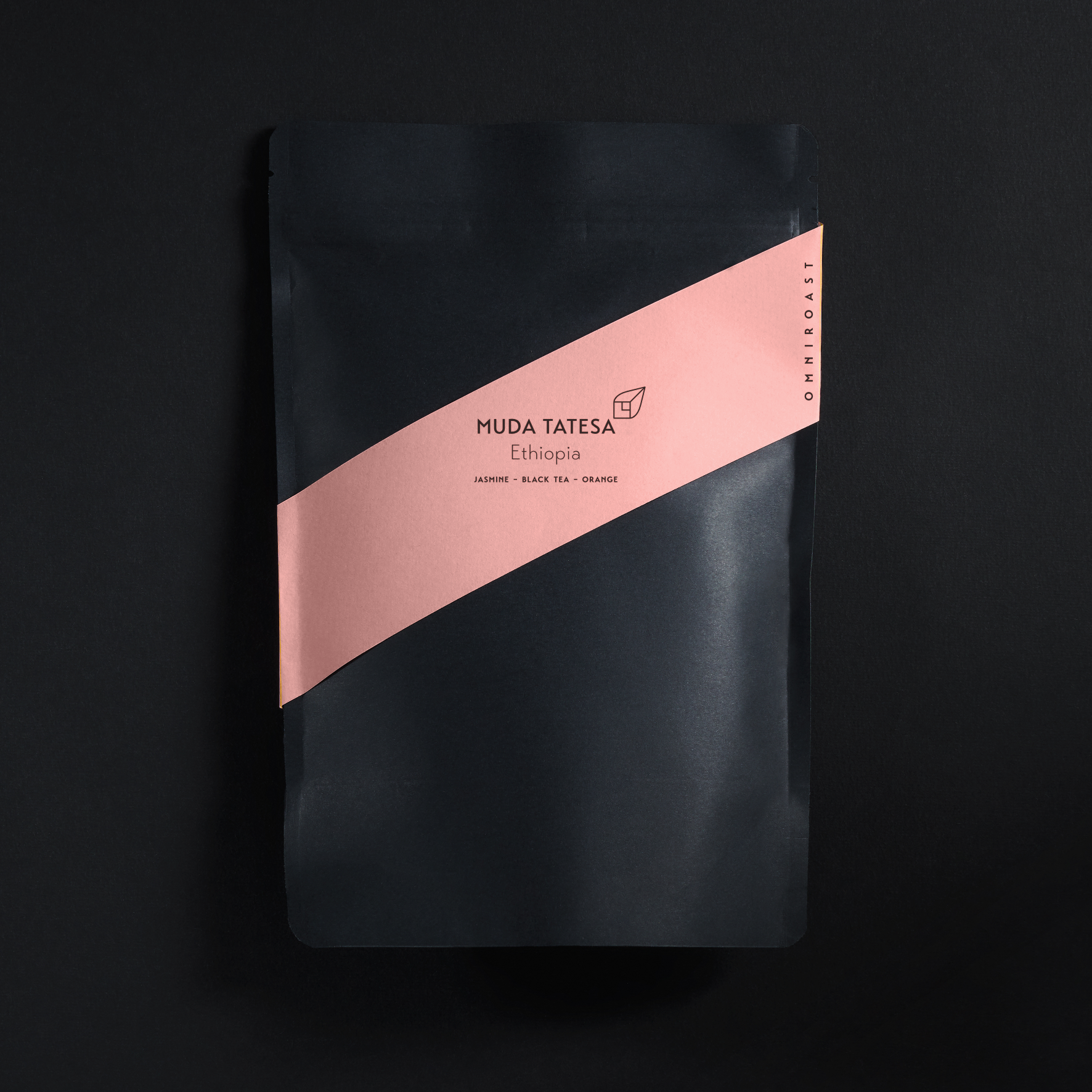
From the Uraga district in the Guji zone of southern Ethiopia: around 130 smallholders in the village of Muda farm small plots at about 2,170 m and deliver cherry to the Tatesa washing station, run by Addis Ababa company Welichu Wachu, which works with several hundred producers on quality, careful picking and farmer training. Natural process — silky body, intense sweetness, mild acidity, with jasmine, black tea and orange.
Jasmine, black tea, orange
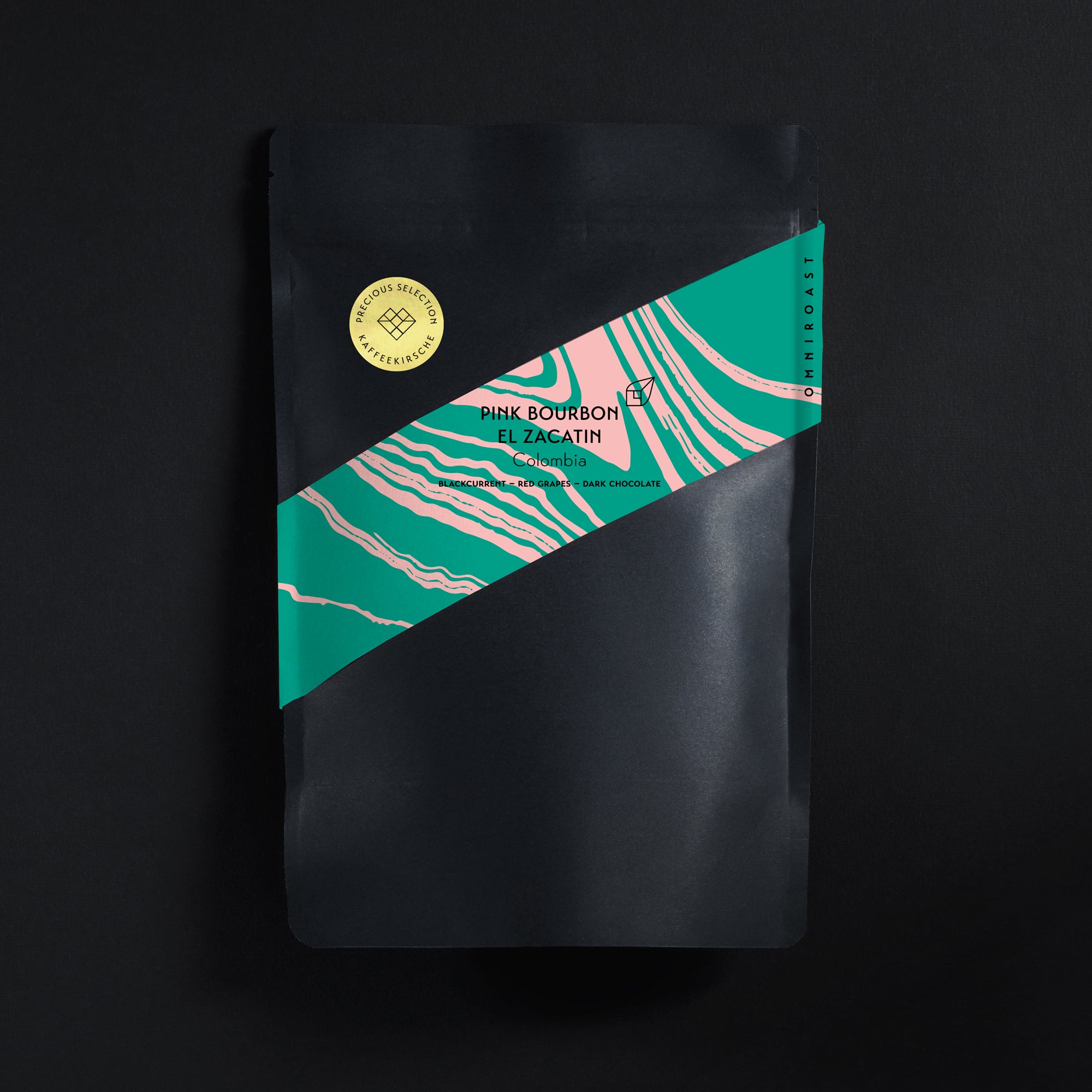
The second jewel of Finca El Zacatín, where Eduardo Fernández collects the most exclusive and exotic varieties in Colombia and gives them identity through modern, experimental processing. Natural Pink Bourbon at 2,100 m: intense, long body, dominant sweetness, a tart fruity acidity — blackcurrant, red grape and dark chocolate.
Blackcurrant, red grape, dark chocolate
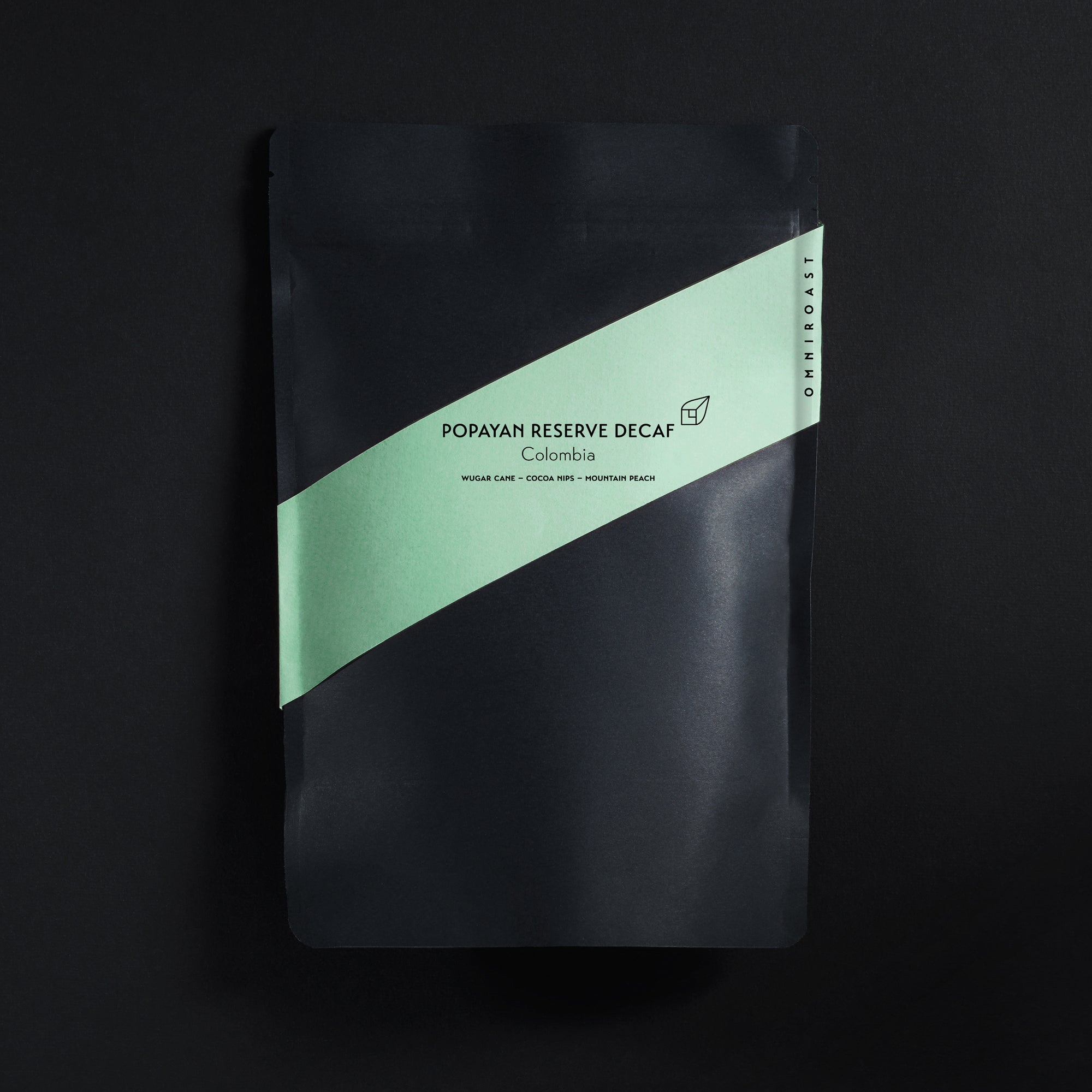
Decaf from selected farms around Popayán. The coffee is milled locally, taken to Caldas and decaffeinated with a natural sugarcane-derived ethyl acetate and water — a gentle, low-temperature process that keeps the cup intact. Fruity body, very present sweetness, mild acidity: sugarcane, cacao nibs and mountain peach.
Sugarcane, cacao nibs, mountain peach
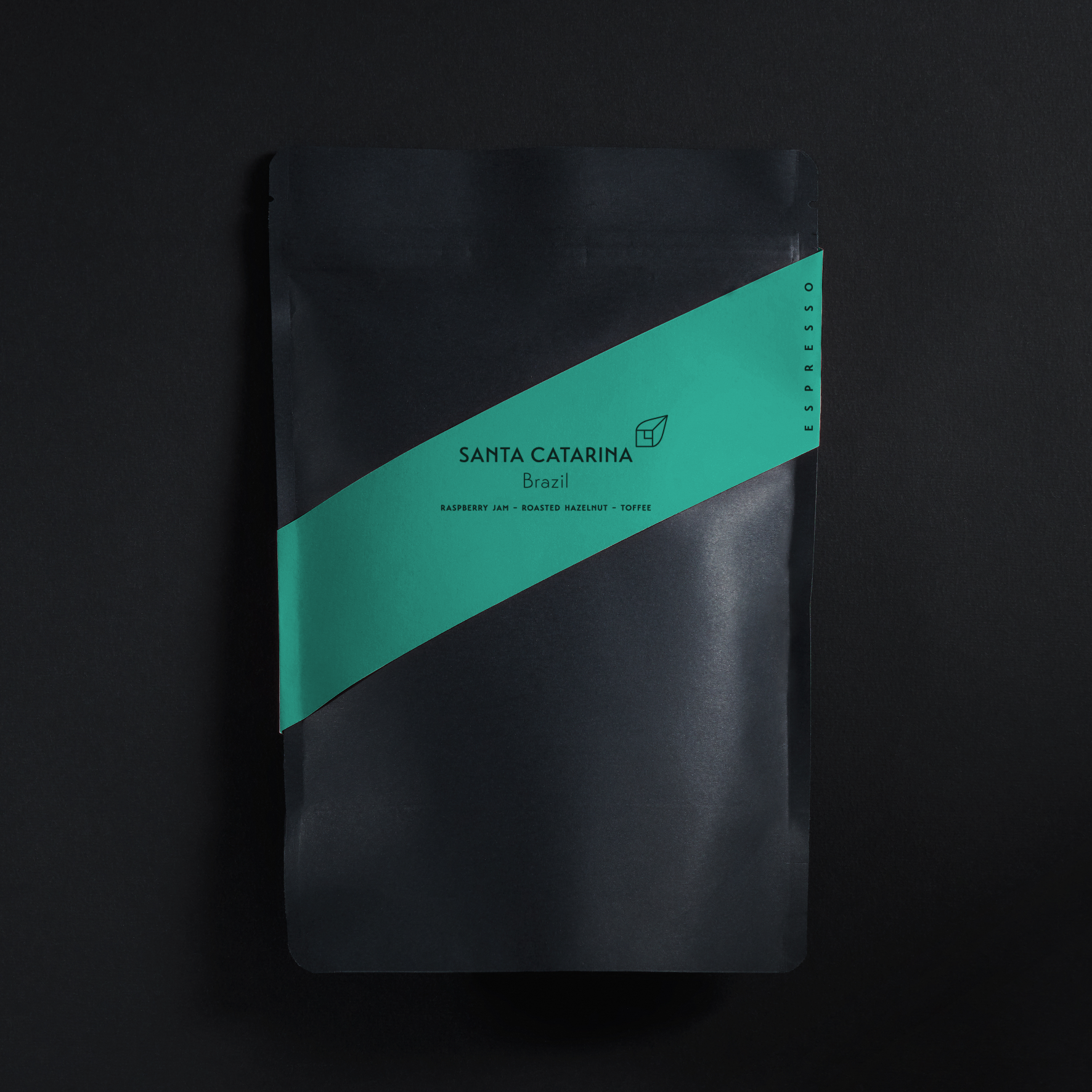
Sítio Santa Catarina is a five-hectare farm in Carmo de Minas, one of the best-known growing areas of Minas Gerais. It now belongs to Sebastião Alexandre da Silva, who took it over from his father Benedito, planter of the first trees in 1983; the family eventually moved the plantings much higher up the hill for the quality they wanted. An anaerobic natural with a strong, long body and very present sweetness — raspberry jam, roasted hazelnut and toffee.
Raspberry jam, roasted hazelnut, toffee
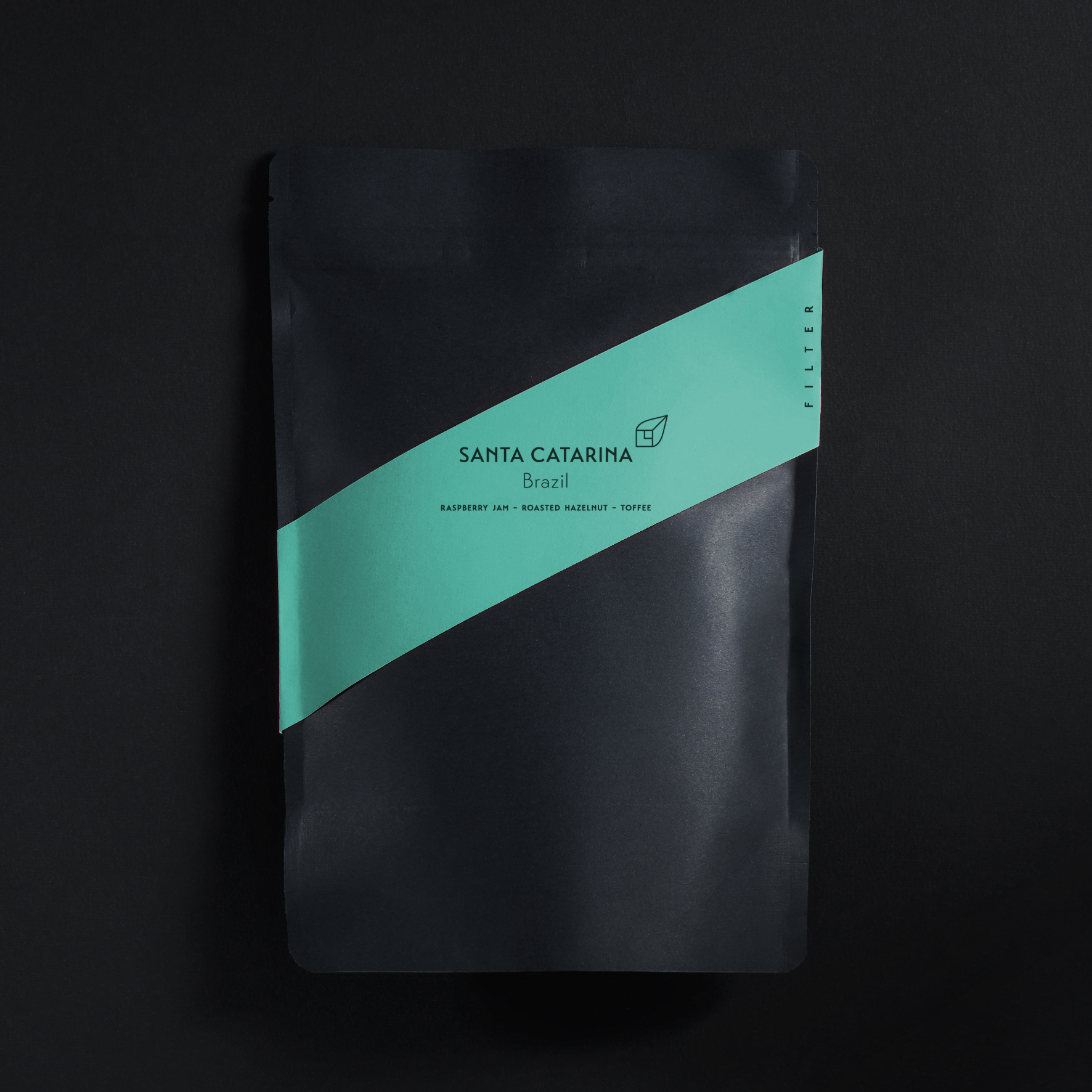
The filter roast of Sítio Santa Catarina — a five-hectare farm in Carmo de Minas, Minas Gerais, run by Sebastião Alexandre da Silva, who took it over from his father Benedito and moved the plantings higher for quality. Anaerobic natural: strong, long body, very present sweetness, with raspberry jam, roasted hazelnut and toffee.
Raspberry jam, roasted hazelnut, toffee
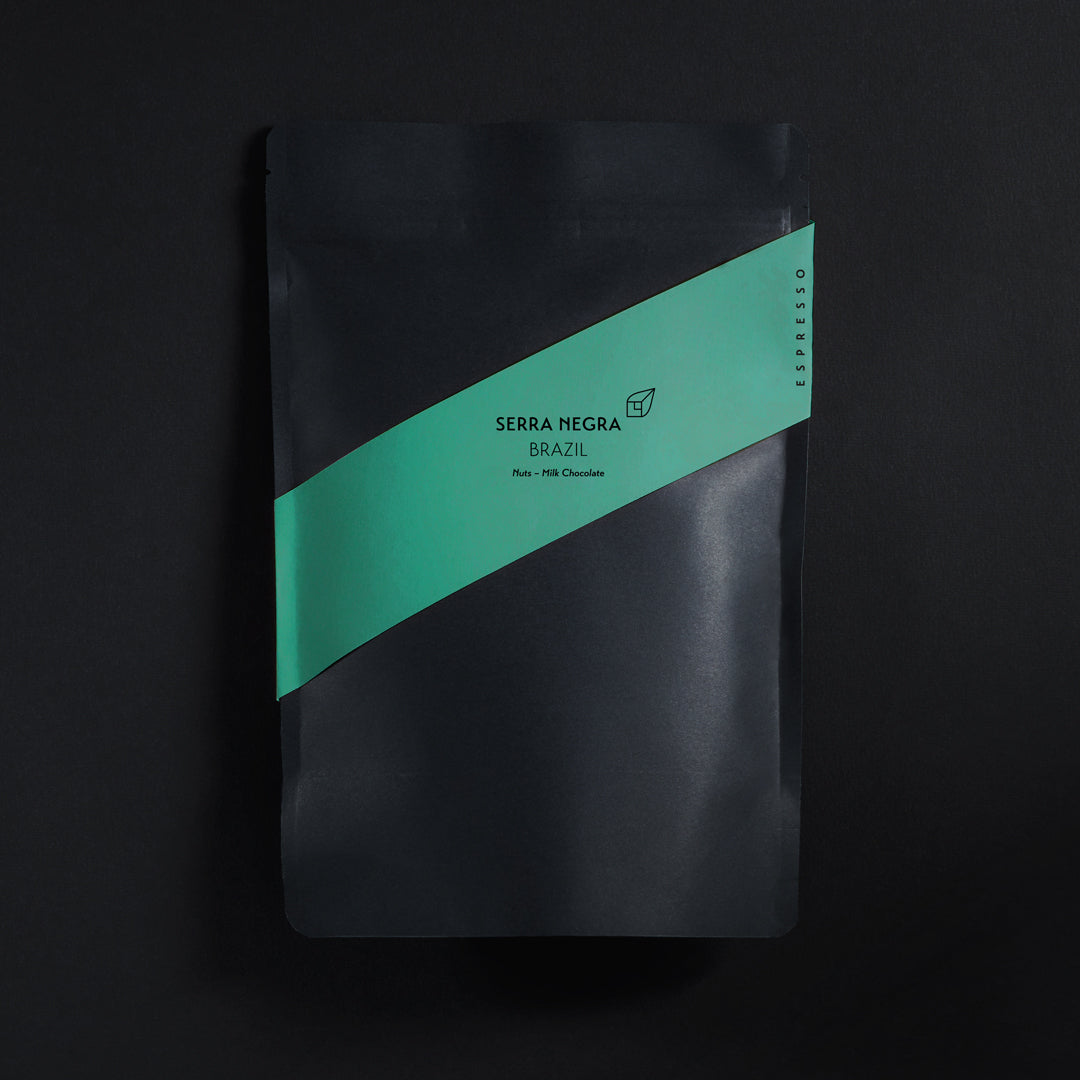
The espresso roast of Serra Negra — "Black Mountain" — a natural-processed Brazil from many farmers across southern Minas Gerais, tuned to the region's most classic profile. Smooth, strong body, caramelised sweetness, mild acidity: nut and milk chocolate.
Nut, milk chocolate
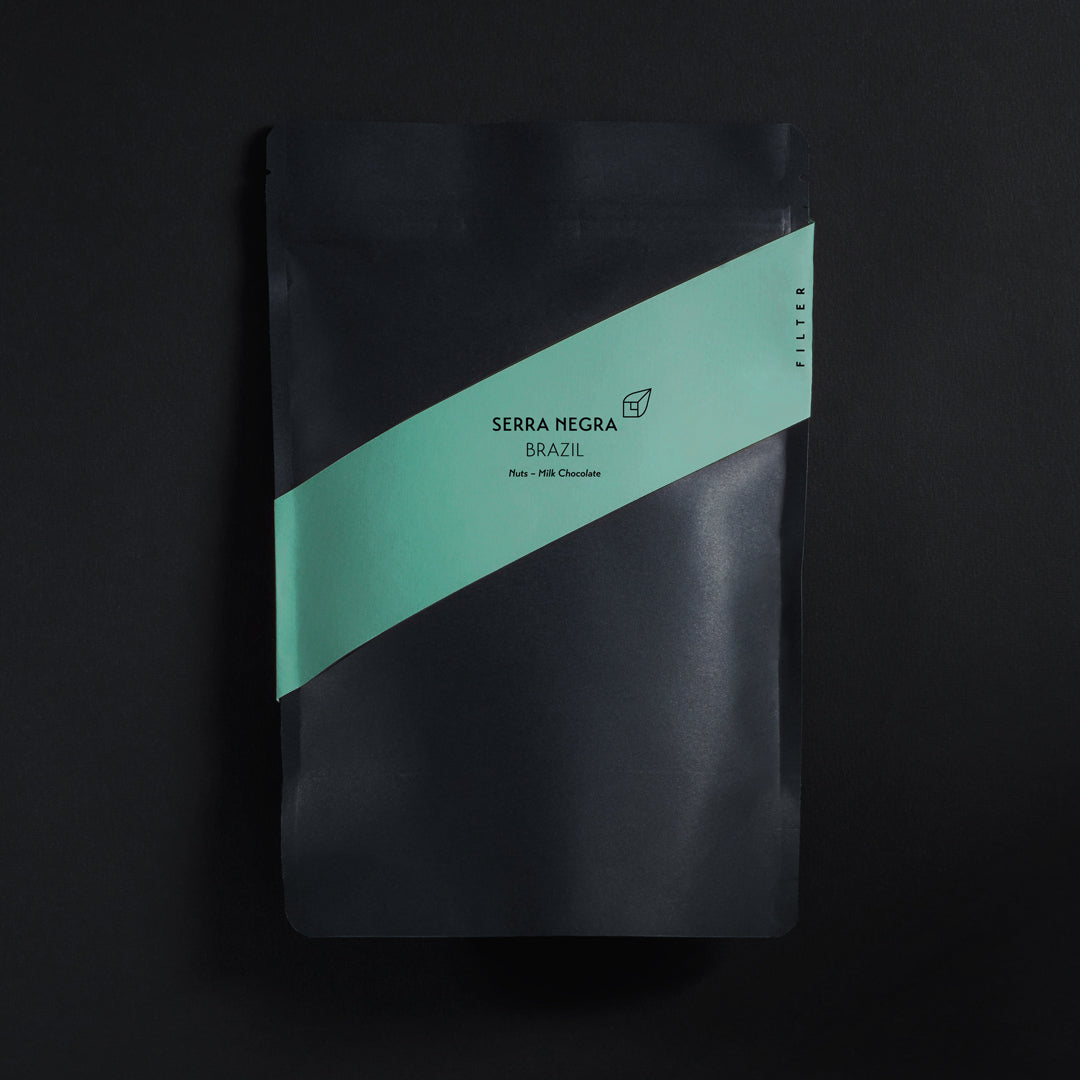
Serra Negra — "Black Mountain" — is a natural-processed Brazil from many farmers across southern Minas Gerais, built to hit the region's most classic profile. Smooth cup, strong body, caramelised sweetness, mild acidity: nut and milk chocolate.
Nut, milk chocolate
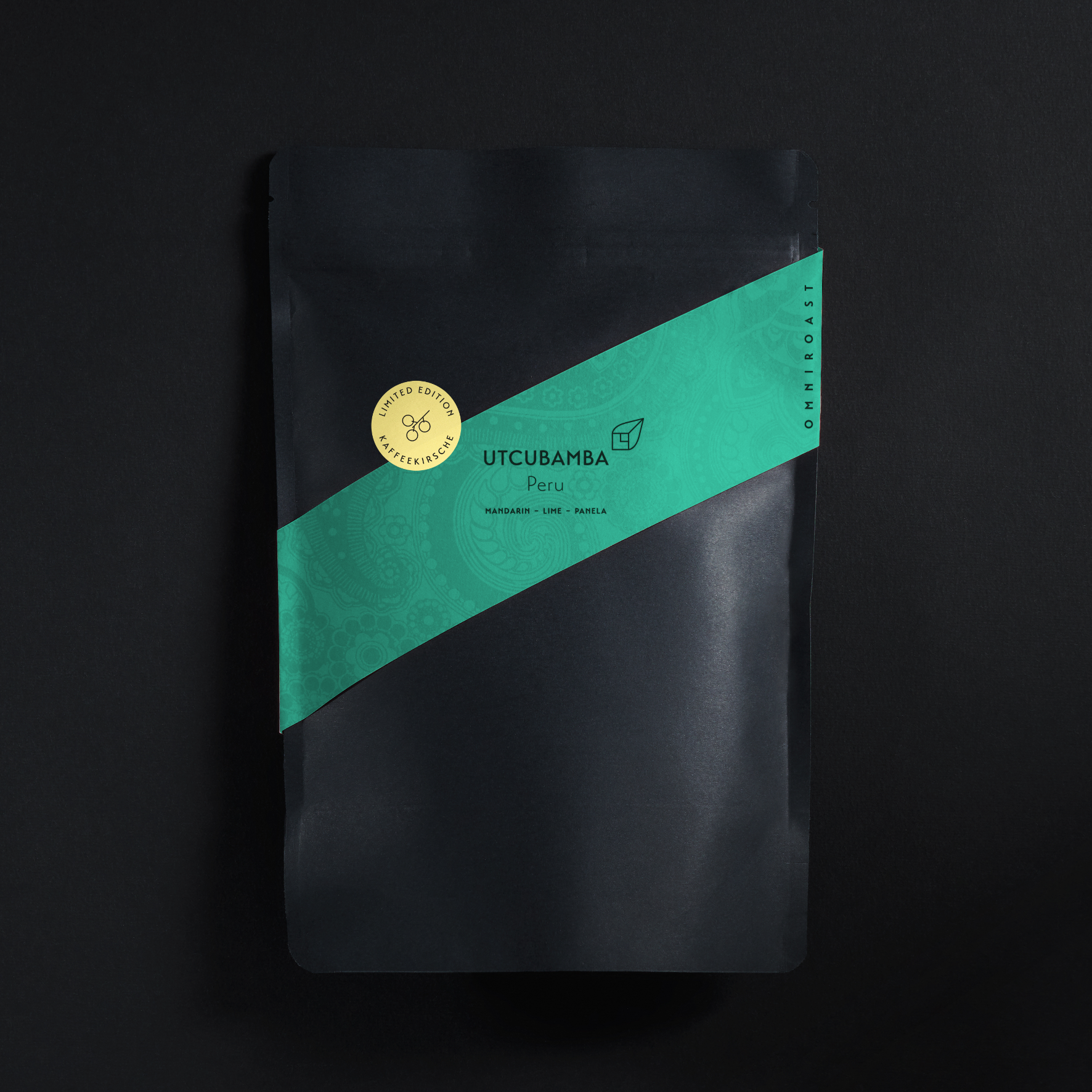
Ricarte Rojas Oblitas farms a 0.75-hectare plot in the Utcubamba province of the Peruvian Amazon, with around 3,200 Geisha trees at roughly 1,750 m, hand-picked and washed. Geisha is still rare in Peru, which makes microlots like this one exceptional — silky body, mild sweetness and subtle acidity, with mandarin, lime and panela.
Mandarin, lime, panela